FCC grants Intel waiver for foreign robots at domestic fabs
The emergency order suspends national security restrictions on cleanroom vehicle servicing for one year after the chipmaker warned that U.S. alternatives remain unavailable.
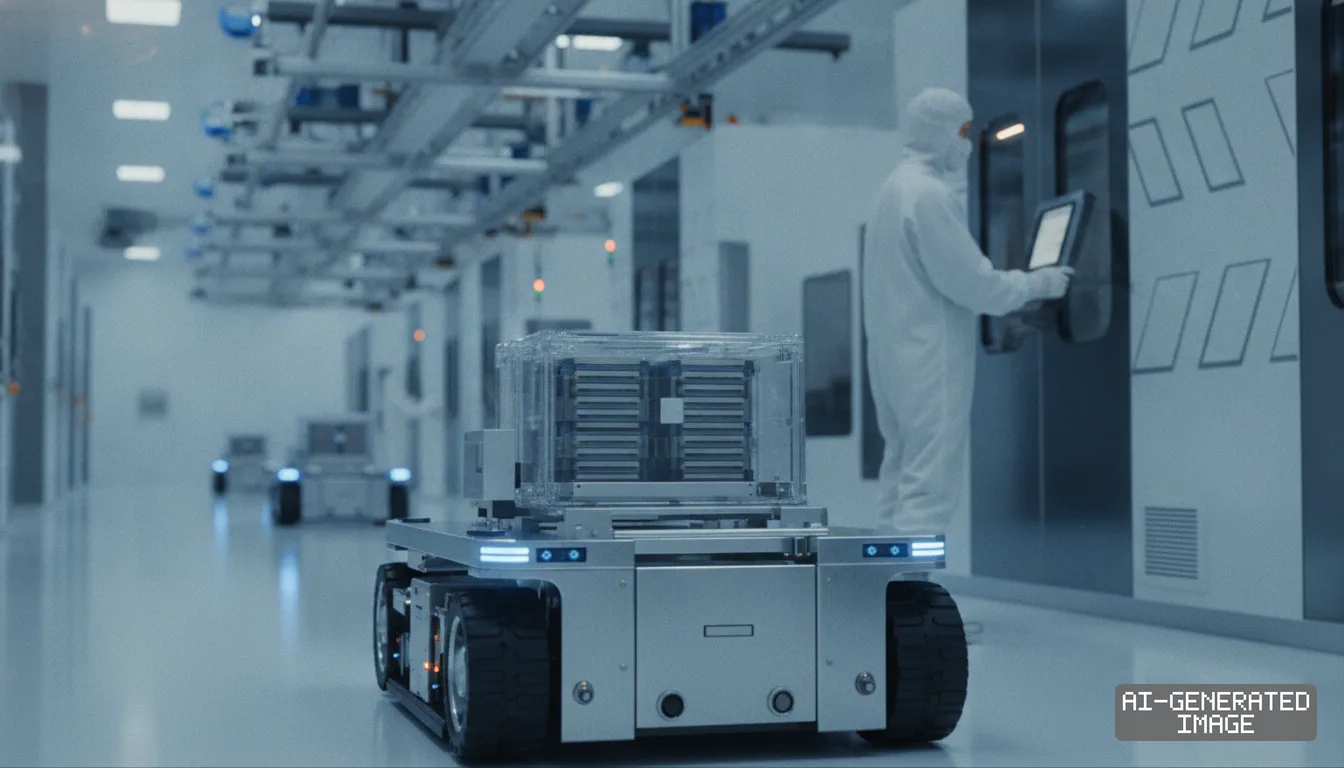
The Federal Communications Commission granted Intel a one-year regulatory waiver on Oct. 23, 2026, allowing the company to operate and maintain foreign automated guided vehicles across its domestic semiconductor fabrication plants.
The emergency order exempts Intel from equipment authorization rules that blocked routine modifications to communications hardware listed on the federal Covered List. Intel filed the petition on Oct. 16, warning that a sudden freeze on cleanroom vehicle servicing would disrupt wafer production lines.
The commission had revised its rules on Oct. 28, 2025, barring permissive equipment modifications for all hardware placed on the national security list. Those restrictions took effect on Dec. 26, 2025, removing standard regulatory pathways for servicing certified wireless hardware.
The regulator expanded that Covered List on July 28, 2026, adding foreign-produced advanced robotic devices under public notice DA 26-786. That designation flagged automated systems that rely on embedded wireless radios and external communications controllers as potential supply chain vulnerabilities.
A separate July notice had granted general software relief through Jan. 1, 2029, to keep foreign robots secure against digital threats. That blanket reprieve permitted software patches but prohibited routine hardware repairs and physical component swaps under federal rules.
Cleanroom automated guided vehicles transport front opening unified pods, which hold 25 silicon wafers during manufacturing steps. Halting maintenance on these carrier fleets would force automated fabrication facilities into manual handling or idle lithography lines.
Qualified American suppliers do not manufacture cleanroom automated transport systems capable of meeting high-volume wafer fabrication tolerances, according to the filing. Replacing the specialized fleets with uncertified domestic machinery would require years of retooling, Intel told the communications agency.
The agency determined that granting the one-year waiver served the public interest by protecting domestic semiconductor manufacturing continuity. The decision relieves immediate operational bottlenecks at Intel facilities in Arizona, Oregon and Ohio as advanced fabs come online.
The FCC order does not disclose the specific Asian manufacturers, model numbers or vehicle fleet counts deployed across Intel facilities. Those technical details remain sealed under a confidential appendix submitted alongside the chipmaker's expedited petition, the commission noted.
Semiconductor cleanroom automation is concentrated among Japanese and South Korean engineering conglomerates with decades of specialized track records. Japanese manufacturers such as Daifuku and Murata Machinery control roughly 90% of the global automated material handling market for advanced wafer fabs.
South Korean automated logistics vendors, including Semes and SFA Engineering, have built comparable wafer transfer systems for domestic memory cleanrooms. Both companies generate substantial revenue from cleanroom transport systems but face stringent security screening when targeting U.S. fabrication projects.
The Covered List framework subjects foreign-made mobile robots to national security determinations regardless of the specific country of origin. Japanese and South Korean suppliers must obtain conditional approvals from federal authorities to supply newly built American fabrication plants.
Under federal regulations 47 CFR §§ 2.932 and 2.1043, Class I changes permit minor equipment revisions without formal recertification. Because the Covered List removed that flexibility for foreign robotic systems, suppliers cannot swap wireless cards or motor controllers without agency clearance.
Foundry operators estimate that recertifying an entire cleanroom automation network adds tens of millions of dollars to capital expenditures. Wafer handling robots must maintain continuous particle-free operation, where a single mechanical failure risks ruining batches of processed silicon.
The order permits Intel to execute necessary firmware, software and physical component changes through the end of the waiver term. Intel must still verify that every hardware revision remains strictly within the scope detailed in its confidential petition, the regulator said.
East Asian automation makers are exploring partnerships with American electronics fabricators to assemble cleanroom carriers domestically. Japanese robotics executives have flagged that localizing mechanical assembly will not eliminate compliance risks if core wireless controllers originate abroad.
Other semiconductor manufacturers building American fabs face identical restrictions as their cleanroom installations near completion. Foundry competitors operating facilities in Texas and Arizona also rely almost entirely on automated vehicle fleets imported from East Asia.
The emergency waiver granted under document DA 26-1146 expires on Oct. 22, 2027, giving federal agencies 12 months to review alternative suppliers. Federal authorities have scheduled regular interagency reviews to evaluate whether domestic manufacturers can qualify cleanroom-grade transport systems before the deadline.
The commission confirmed that any vehicle modification exceeding the parameters of the sealed petition remains strictly prohibited under existing federal law.
Impact map
How this development propagates across the region and out to global buyers.
| Event | Korea | China | Japan | Global impact |
|---|---|---|---|---|
| FCC Intel fab robot waiver | Semes and SFA Engineering face heightened federal scrutiny for U.S. fab contracts | Advanced robotics suppliers remain barred from domestic U.S. cleanroom integration | Daifuku and Murata Machinery gain a 12-month window to explore localized assembly | U.S. chipmakers avert immediate fab halts while cleanroom transport alternatives qualify |
In this story
- Companies
- Intel
- Tickers
- INTC
- Exposed
- DaifukuMurata MachinerySemesSFA Engineering
- Policy
- Standards
- Impact
- Supply ChainCapexCompliance
Track every Standards development →
Related briefings
- SFA targets 95% unmanned logistics as chip gear sales double Also on Daifuku, Murata Machinery
- SFA and Rainbow Robotics form pact on autonomous fab systems Also on SFA Engineering
- Daifuku expands cleanroom transport backlogs as Asian chipmakers accelerate fab builds Also on Murata Machinery
- SFA and Rainbow Robotics partner on AI manufacturing robots Also on SFA Engineering
Sources
Primary documents
Reporting
Confidence: high — how we grade this
The documents behind this briefing are linked above. East Asia Brief produces its English text with AI assistance under human editorial review, and does not translate or republish other outlets' articles. See our methodology and AI policy. Spotted an error? Tell us.
The Morning Brief
What changed in Korean, Chinese and Japanese industry overnight — and what it means for your supply chain. One email, weekday mornings, US time. Free.
The Morning Brief is in preparation. Leave your address and we will write to you once — when the first issue is ready. Nothing before that.