SFA targets 95% unmanned logistics as chip gear sales double
The South Korean automation supplier will deploy humanoid robots with Rainbow Robotics to reach 95% unmanned factory logistics by 2028 while lifting semiconductor revenue past 300 billion won.
SFA announced an automation roadmap on Oct. 1, 2026, targeting a 95% unmanned factory logistics rate by 2028 while projecting its annual semiconductor equipment revenue will more than double this year.
The South Korean industrial equipment manufacturer expects semiconductor automation sales to exceed 300 billion won ($225 million) in 2026. Annual revenue in that business segment previously hovered between 150 billion and 200 billion won.
Semiconductor handling systems generated 26% of SFA's 379.6 billion won standalone revenue in the first half of 2026. The division surpassed display equipment at 22% and secondary battery equipment at 16%.
SFA introduced the plan during the opening of its 3,600-square-meter AI Robotic Technology Innovation Center in Asan. Company executives estimated that factory logistics automation across primary client manufacturing facilities currently averages roughly 90%.
Closing the remaining 10% gap requires machines that can manipulate irregular workpieces, SFA Chief Executive Kim Sang-kyung said. Conventional vacuum suction grippers fail on 20% to 30% of uneven cargo entering industrial distribution hubs.
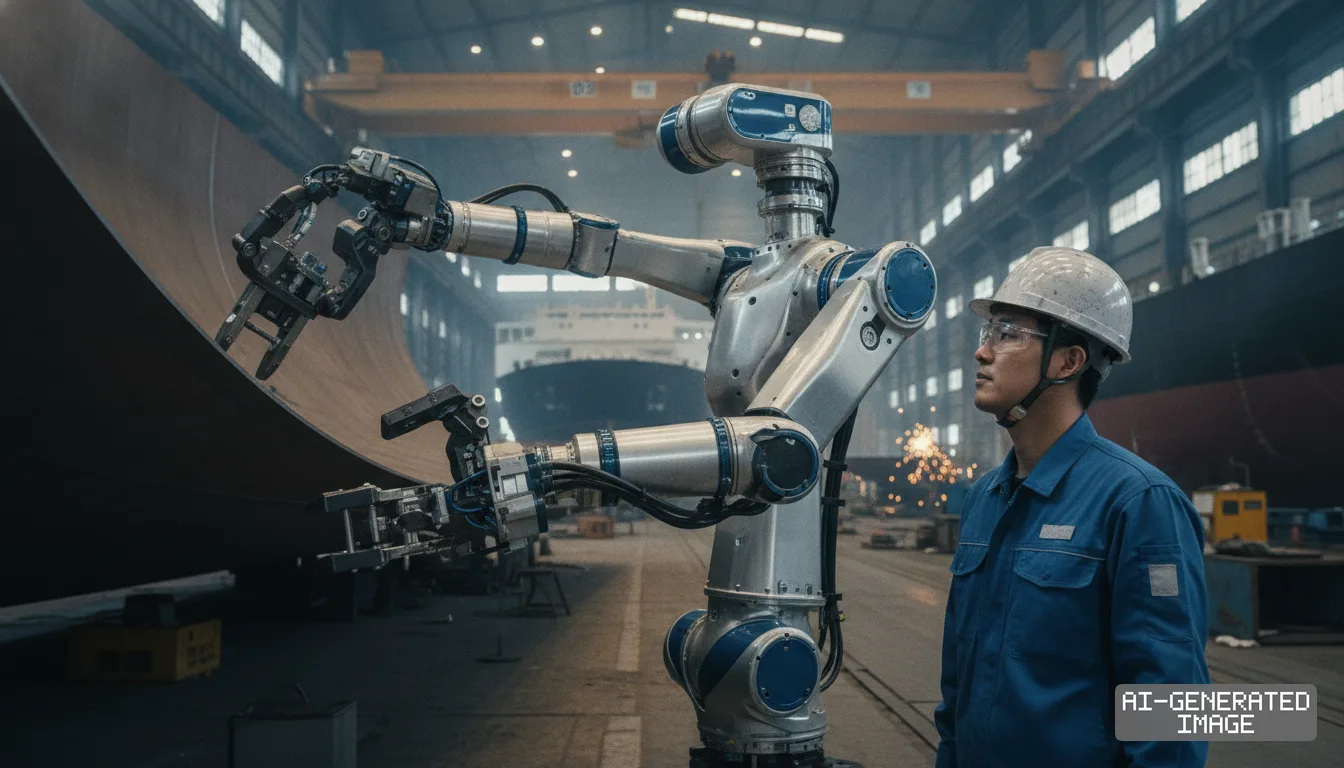
To bridge that gap, SFA developed multi-jointed robotic hands that mimic human fingers. The company also engineered dual-arm mobile platforms and autonomous vehicles capable of unloading freight trucks without human intervention.
The equipment maker plans to achieve 100% autonomous manufacturing across client facilities by 2030, Kim said. That milestone would eliminate manual labor from intake docking, warehousing, processing lines and final container shipment bays.
To accelerate commercial deployment, SFA signed a joint development agreement with Rainbow Robotics. The partnership pairs Rainbow Robotics mobile robot hardware with SFA artificial intelligence software, optical vision and centralized plant control systems.
Rainbow Robotics supplied two RB-Y1 wheeled semi-humanoid robots to the Asan demonstration center. The dual-arm machines are currently executing pick-and-place trials, lifting storage bins and transferring irregular components across simulated factory floors.
In the semiconductor sector, SFA is pushing beyond backend packaging lines into front-end wafer fabrication facilities. The company delivered lifter-based automated transfer equipment to multiple domestic semiconductor manufacturers earlier this year, Kim said.
Front-end silicon fabs rely on overhead hoist transport vehicles to move 300-millimeter wafer carriers along overhead tracks. Lifter systems move those carriers vertically between overhead rail lines and precision chemical processing tools on the cleanroom floor.
Japanese automation manufacturers Daifuku and Murata Machinery control the majority of cleanroom transport installations across East Asian fabs. SFA intends to capture domestic market share from those Japanese competitors in front-end wafer processing bays, Kim said.
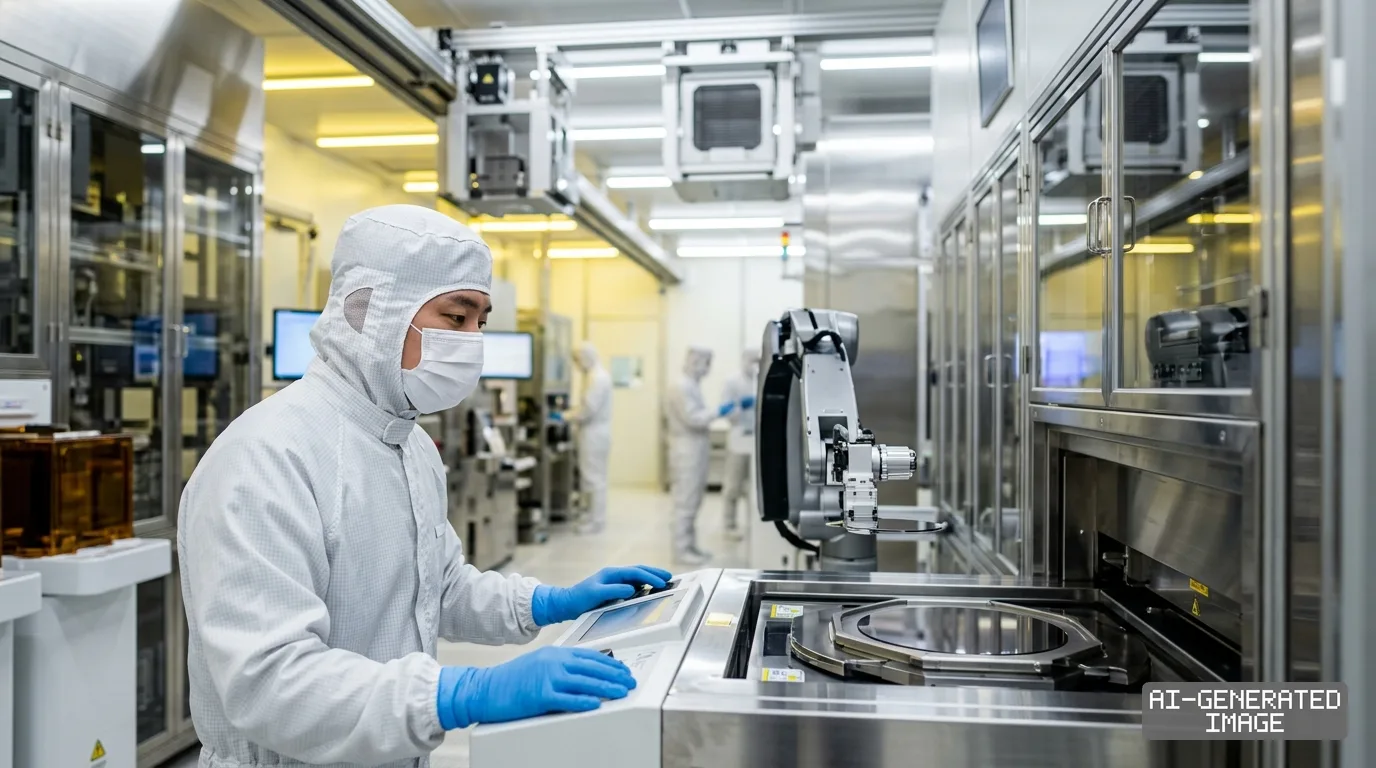
Backend chip packaging plants present an immediate commercial opening because many material transfer steps still require human operators. Advanced multi-die packaging requires cleanroom robotic carts to move fragile bonded wafers between thermal compression bonding cells and automated test sockets.
Manual cleanroom operations increase particulate contamination risks in advanced packaging facilities. Deploying mobile dual-arm robots allows chipmakers to maintain cleanroom cleanliness standards while running 24-hour material transfer cycles without operator shifts.
SFA projects its standalone order intake will reach 1.3 trillion won in 2026. That sales target represents a 77% increase compared with the standalone equipment orders booked during the previous calendar year.
The company established a corporate target to maintain an annual revenue compound growth rate of at least 12% through 2030. SFA also aims to sustain an operating profit margin of 12% or higher across that same period.
Management plans for annual standalone revenue to reach 3 trillion won by 2030. SFA expects semiconductor material handling equipment and autonomous factory robotics to generate the majority of that incremental revenue growth.
The corporate pivot toward semiconductor equipment shields SFA from capital spending cuts in the electric vehicle and flat-panel display sectors. Facility investments by domestic lithium-ion battery manufacturers slowed throughout 2025 and 2026, depressing cell assembly equipment orders.
The Asan innovation center also conducts operational trials on predictive maintenance software. The software monitors vibration frequencies and motor temperature signatures to detect mechanical rail wear before overhead carrier breakdowns disrupt production lines.
SFA and Rainbow Robotics will select specific customer production facilities for initial commercial field trials in early 2027. Initial commercial deployments will focus on high-throughput consumer goods distribution centers and backend semiconductor assembly plants.
SFA has not disclosed the contract values or customer identities for its front-end lifter equipment deliveries, and the company has not published a regulatory exchange filing regarding the 2028 roadmap.
Engineers at the Asan facility continue validation runs on the RB-Y1 semi-humanoid platforms this week. SFA plans to present operational reliability metrics from the test facility to domestic semiconductor and logistics customers in November.
Impact map
How this development propagates across the region and out to global buyers.
| Event | Korea | China | Japan | Global impact |
|---|---|---|---|---|
| SFA 2028 unmanned fab logistics roadmap | SFA targets 1.3 trillion won in 2026 orders while Rainbow Robotics deploys RB-Y1 humanoids | Domestic packaging lines face automated efficiency competition from Korean cleanrooms | Daifuku and Murata Machinery face front-end wafer lifter competition from Korean suppliers | Automated cleanroom logistics cuts manual contamination in advanced packaging fabs |
In this story
- Companies
- SFARainbow Robotics
- Tickers
- 056190.KS277810.KS
- Exposed
- DaifukuMurata Machinery
- Policy
- Economic Security
- Impact
- Supply ChainOrder BookCapex
Track every Economic Security development →
Related briefings
- Daifuku expands cleanroom transport backlogs as Asian chipmakers accelerate fab builds Also on Murata Machinery, Order Book
- Nabtesco adapts cycloidal gearboxes for heavy logistics robots Also on Daifuku, Order Book
- SFA and Rainbow Robotics form pact on autonomous fab systems Also on Rainbow Robotics, Order Book
- Samsung SDS develops robot orchestration platform for 2027 Also on Rainbow Robotics, Order Book
Sources
Reporting
Confidence: medium — how we grade this
The documents behind this briefing are linked above. East Asia Brief produces its English text with AI assistance under human editorial review, and does not translate or republish other outlets' articles. See our methodology and AI policy. Spotted an error? Tell us.
The Morning Brief
What changed in Korean, Chinese and Japanese industry overnight — and what it means for your supply chain. One email, weekday mornings, US time. Free.
The Morning Brief is in preparation. Leave your address and we will write to you once — when the first issue is ready. Nothing before that.