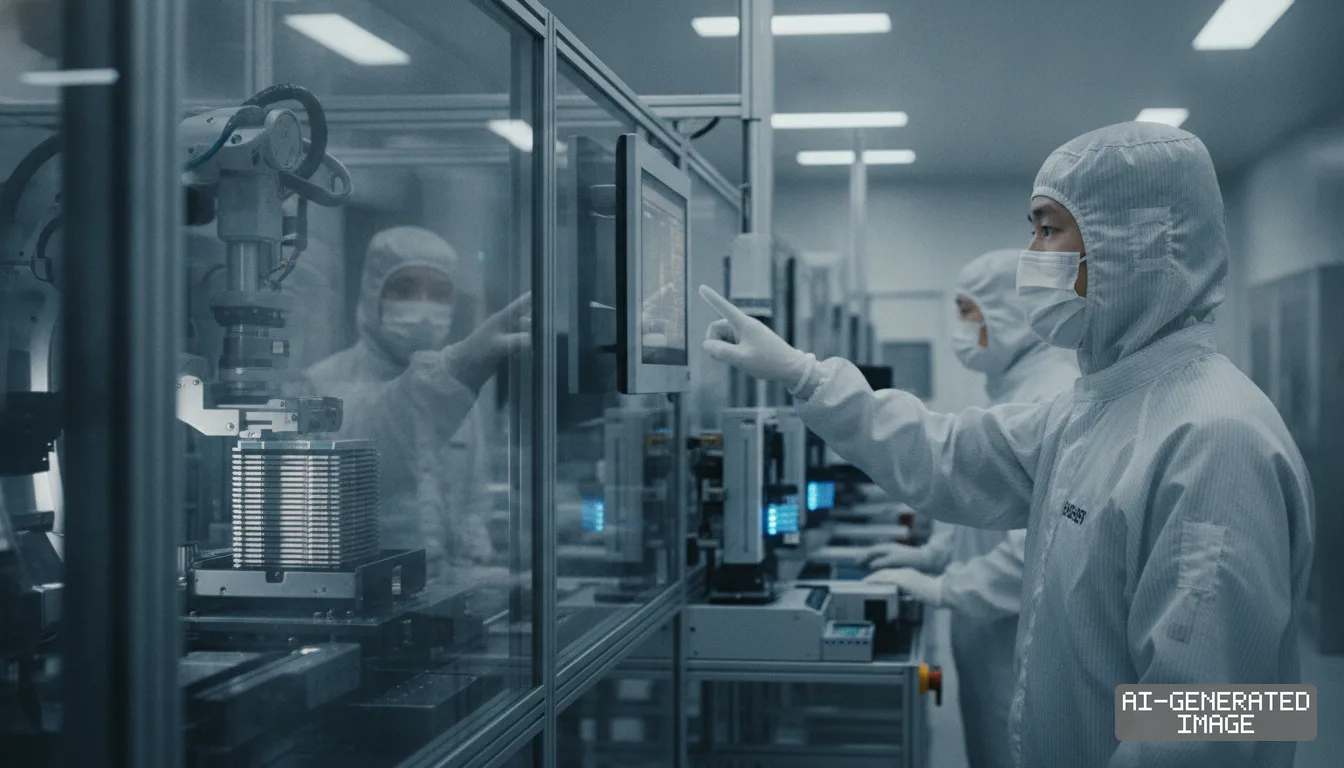
Chipmakers warn AI accelerator surge strains automotive silicon lines
Infineon and Nexperia reported bottlenecks at electronica in Munich as external foundries reallocate mature packaging capacity to data center gear.
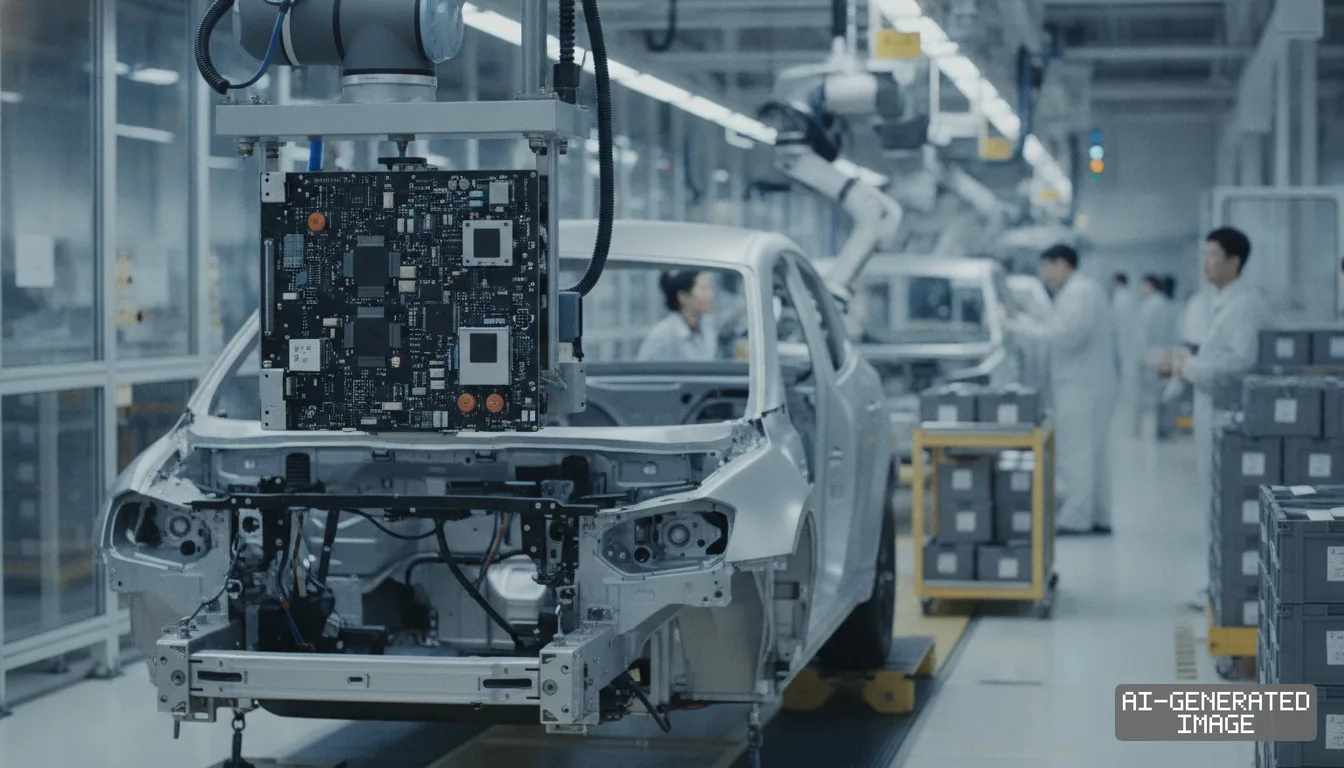
Global semiconductor executives warned on Nov. 11, 2026, that foundry lines shifting capacity toward artificial intelligence accelerators are reigniting severe component shortages across the automotive manufacturing sector.
The warnings emerged during the electronica trade exhibition in Munich, where chipmakers and component buyers gathered to review supply contracts. Bottlenecks are spreading from advanced silicon into mature manufacturing lines.
Infineon Technologies AG reported Nov. 10 that dedicated AI data center power-supply revenue reached €1.7 billion ($1.8 billion) in fiscal 2026. The figure accounts for more than 10% of the German chipmaker's €16.353 billion full-year revenue.
Infineon expects data center revenue to reach nearly €4 billion of its projected €20 billion top line in fiscal 2027. That rapid expansion absorbs manufacturing lines previously dedicated to automotive power discretes.
Infineon raised power semiconductor prices twice in 2026, pushing through contract adjustments in April and July. Supply scarcity has now spilled into adjacent product categories, Chief Operating Officer Alexander Gorski said.
The German chipmaker is negotiating volume and price terms with major vehicle manufacturers for calendar 2027. Order backlogs across power infrastructure and automotive lines continue to expand, Gorski said during an analyst presentation.
Dutch semiconductor manufacturer Nexperia is totally oversubscribed as external suppliers reallocate production capacity toward AI data centers, interim Chief Executive Officer Stefan Tilger said at the Munich exhibition.
The supply squeeze centers on mature-node components including diodes and power transistors, Tilger said. Semiconductor manufacturers have underinvested in basic commodity technologies for years while directing capital expenditure toward advanced computing.
Nexperia generated $389 million in third-quarter revenue from its operations outside China, up 9.3% from the prior three months. Assembly lines at its packaging plant in Malaysia cannot fulfill current market demand, the company said.
External foundries and assembly partners are actively disengaging from mainstream technologies, STMicroelectronics Chief Executive Officer Jean-Marc Chery said during an executive panel discussion. High-margin AI server programs are taking priority across the supply base.
The redirection of backend testing and packaging resources creates multiple supply choke points for automotive clients, Chery said. Foundries are reallocating equipment to higher-yielding server silicon rather than sustaining low-margin commodity runs.
German automotive component manufacturer Aumovio expects a gross earnings hit of about €1 billion ($1.1 billion) in 2027. Escalating semiconductor procurement costs represent the primary driver of that financial strain, the company said.
Aumovio, which separated from Continental AG in 2025, integrates electronic architectures and sensor modules for global vehicle assemblers. The company warned that uncontrolled semiconductor price inflation threatens vehicle manufacturing margins next year.
Automotive electronic architectures require thousands of basic semiconductors alongside centralized processing chips. A missing diode or power MOSFET stops vehicle assembly lines just as effectively as an unavailable central computing processor.
Contract foundries in Taiwan and South Korea have concentrated capital investments on cutting-edge nodes below 5 nanometers. Mature production lines between 28 and 90 nanometers have received minimal capacity expansion over recent quarters.
Wafers processed for artificial intelligence accelerators deliver gross margins exceeding 60%, compared to 30% to 40% for automotive grade silicon. Commercial incentives prompt contract manufacturers to favor artificial intelligence workloads over automotive commitments.
Outsourced semiconductor assembly and test providers have similarly converted packaging cleanrooms to handle multi-chip modules and advanced silicon interposers. That conversion curtails the capacity available for standard automotive leadframe packaging.
Microcontroller units (MCUs) that control automotive braking, steering and battery management rely on mature 40-nanometer and 28-nanometer planar wafer processes. These lines face direct capacity rationing as foundries reassign cleanroom footprint to artificial intelligence clients.
Automotive manufacturers in Europe, North America and East Asia are responding by placing defensive buffer orders. That duplicate ordering behavior risks artificially inflating lead times and exacerbating apparent shortages across component distributors.
South Korean chipmakers Samsung Electronics and SK hynix remain heavily committed to high-bandwidth memory production for AI accelerators. Their packaging and fab investments remain focused on high-margin memory rather than peripheral automotive logic.
Japanese automotive suppliers Renesas Electronics and Rohm Semiconductor face growing component competition as power infrastructure demand expands. Both companies maintain integrated device manufacturing facilities to insulate themselves from external foundry reallocation.
The executive disclosures do not state the exact wafer volume percentages that contract foundries have transferred away from automotive lines, and government trade regulators have not published formal allocation directives.
Contract negotiations for calendar 2027 automotive supply agreements will conclude before Jan. 1, 2027, when new pricing structures and locked wafer quotas take effect across global supply networks.
Impact map
How this development propagates across the region and out to global buyers.
| Event | Korea | China | Japan | Global impact |
|---|---|---|---|---|
| AI fab capacity reallocation | Samsung and SK hynix prioritize advanced packaging over automotive logic | Domestic foundries face higher orders for mature discretes amid Nexperia constraints | Renesas and Rohm deploy internal IDM lines against external foundry squeeze | Aumovio projects a €1 billion ( |
| AI fab capacity reallocation | Samsung and SK hynix prioritize advanced packaging over automotive logic | Domestic foundries face higher orders for mature discretes amid Nexperia constraints | Renesas and Rohm deploy internal IDM lines against external foundry squeeze | Aumovio projects a €1 billion ($1.1 billion) gross earnings hit in 2027 |
In this story
- Companies
- Infineon TechnologiesNexperiaSTMicroelectronicsAumovio
- Tickers
- IFX.DESTM.PA
- Exposed
- Samsung ElectronicsSK hynixRenesas ElectronicsRohm Semiconductor
- Impact
- Supply ChainPricingCapex
Related briefings
- Tata Electronics readies Assam chip plant with non-China network Also on Nexperia
- Metlen warns Europe may lose gallium supply to US buyers Also on STMicroelectronics, Infineon Technologies, Pricing
- TSMC and Japanese Auto Suppliers Scale 28nm BCD Power Chip Production Also on STMicroelectronics, Infineon Technologies
- East Asia accelerates 8-inch silicon carbide capacity race as power chip makers scale output Also on STMicroelectronics, Pricing
Sources
Reporting
Confidence: medium — how we grade this
The documents behind this briefing are linked above. East Asia Brief produces its English text with AI assistance under human editorial review, and does not translate or republish other outlets' articles. See our methodology and AI policy. Spotted an error? Tell us.
The Morning Brief
What changed in Korean, Chinese and Japanese industry overnight — and what it means for your supply chain. One email, weekday mornings, US time. Free.
The Morning Brief is in preparation. Leave your address and we will write to you once — when the first issue is ready. Nothing before that.