EU accelerates Vietnam critical mineral pact to hedge China risks
Internal documents urge Brussels to fund Vietnamese mining of defense metals as leaders prepare for bilateral talks ahead of a scheduled October 22 summit.
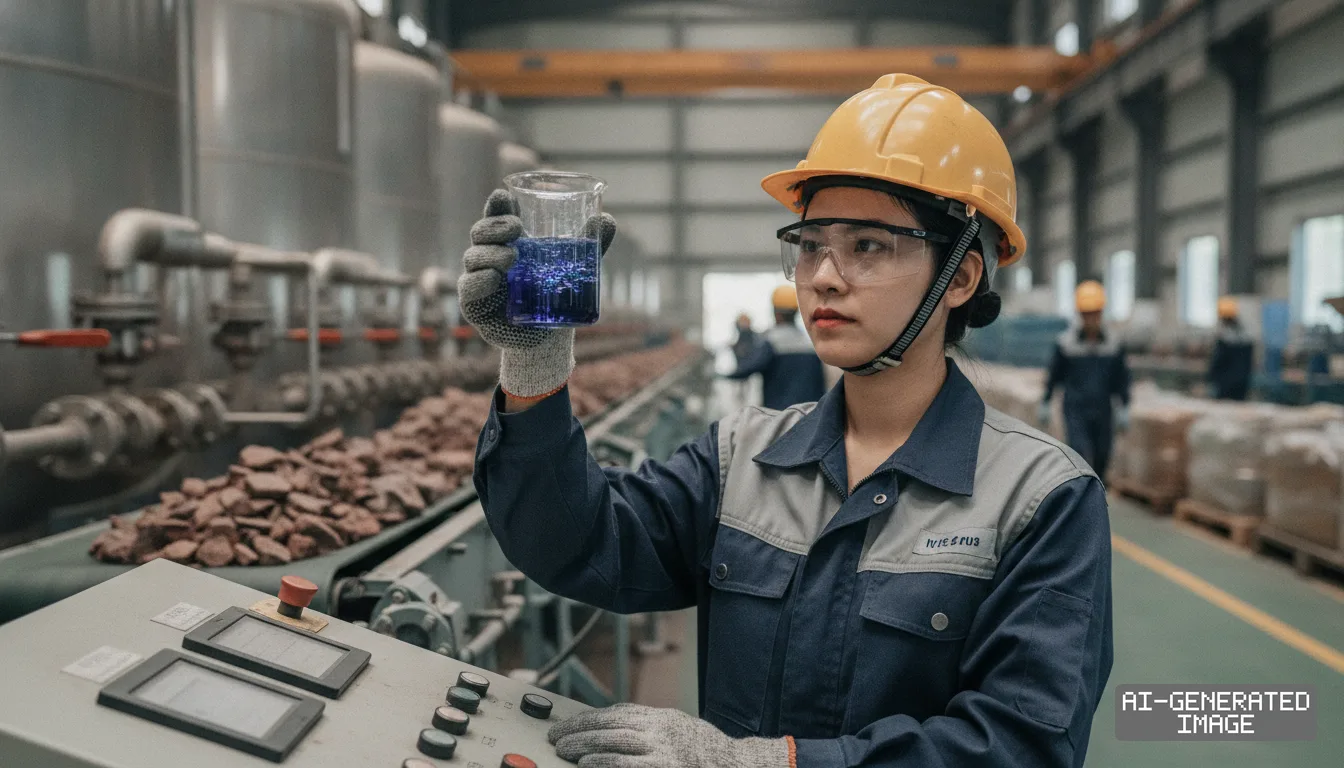
The European Commission moved on Oct. 14, 2026, to assess concrete cooperation on critical minerals with Vietnam, seeking alternative supplies to hedge against Chinese export restrictions.
The initiative aims to counter European supply chain bottlenecks caused by Beijing's trade limits, internal European Union documents dated June 2026 show.
Vietnam holds roughly 22 million metric tons of rare earth deposits, representing about 18% of the world's known reserves.
The European Union currently relies on China for 98% of its permanent magnet imports and the majority of its processed heavy rare earths.
Under the EU Critical Raw Materials Act, the 27-nation bloc cannot draw more than 65% of any strategic raw material from a single non-EU country.
The internal reports, prepared by the EU delegation in Hanoi, recommend direct financial backing for Vietnamese mining and processing facilities.
The European Union cannot afford to ignore Vietnam given Europe's urgent need to rearm and de-risk industrial supply chains, the delegation wrote.
Vietnamese mineral exports to Europe remain largely concentrated in tungsten and antimony, two metals vital for manufacturing defense munitions, armor and high-temperature alloys.
Masan High-Tech Materials operates the Nui Phao polymetallic mine in Thai Nguyen province, which provides approximately 33% of global tungsten output outside China.
Masan High-Tech Materials supplies European aerospace, defense and precision tooling manufacturers that consume thousands of tons of refined tungsten annually.
The internal European documents explicitly urge European policymakers to maintain and expand industrial access to Vietnamese bismuth, antimony, titanium and tungsten.
Competition from other consuming nations threatens to tie up Vietnamese mineral output before European buyers can lock in long-term procurement quotas, the delegation warned.
European officials are evaluating whether to integrate Vietnamese extraction projects into official procurement partnerships under the Global Gateway program.
The European Commission is evaluating specific potential cooperation with Vietnam in the field of critical raw materials, a commission spokesperson said Oct. 14, 2026.
Vietnam is not yet included in the European Union's list of 16 formal strategic raw material partner countries.
Brussels and Hanoi previously upgraded bilateral relations to a Comprehensive Strategic Partnership on Jan. 29, 2026, establishing principles for raw material and semiconductor coordination.
European defense spending and factory restocking have driven up the demand for minor metals used in explosive primers and armor-piercing artillery rounds.
China introduced tight export licensing across antimony, gallium, germanium and tungsten between 2023 and 2025, which disrupted deliveries to European defense contractors.
Western buyers saw European spot prices for antimony surge more than twofold over the past two years following Chinese customs quotas.
Vietnam possesses substantial bauxite deposits containing recoverable gallium, an input required by European semiconductor fabricators and radio-frequency module makers.
Most of Vietnam's critical mineral reserves remain undeveloped due to processing bottlenecks, regulatory uncertainty and inadequate capital investment.
The internal EU document urges European institutions to deliver concrete cooperative deliverables during an upcoming diplomatic visit to Brussels.
Vietnamese Communist Party General Secretary To Lam is scheduled to meet European leaders at EU headquarters on Oct. 22, 2026.
The bilateral discussions follow a European Council summit where heads of government reviewed programs to trim Chinese supply chain exposure.
European carmakers and wind turbine manufacturers require thousands of tons of neodymium-iron-boron magnets annually to comply with statutory clean energy mandates.
Vietnam has struggled to expand rare earth separation capacity after domestic regulatory probes halted several private mining concessions in late 2023.
European funding would target ore processing and environmental remediation technology to help Vietnamese state and private refiners clear international social governance standards.
The internal documents do not state the exact monetary value of the proposed financial aid package, and neither government has published a draft bilateral agreement.
Vietnamese trade officials continue to balance mineral agreements with Western partners against longstanding political and border trade relationships with Beijing.
Chinese processing enterprises still control over 90% of global heavy rare earth separation capacity, limiting alternative refining options for raw ore mined outside China.
Securing off-take contracts in Vietnam allows European defense and automotive manufacturers to establish legally compliant audit trails under the Critical Raw Materials Act.
Bilateral working groups in Hanoi and Brussels are negotiating technical cooperation protocols ahead of the scheduled high-level meeting on Oct. 22, 2026.
Impact map
How this development propagates across the region and out to global buyers.
| Event | Korea | China | Japan | Global impact |
|---|---|---|---|---|
| EU Vietnam critical mineral partnership push | Korean battery and magnet producers face tighter bidding for Vietnamese rare earth and tungsten feedstock | Beijing faces erosion of export control leverage as European buyers finance non-Chinese refining lines | Japanese trading houses co-investing in Southeast Asian separation assets gain European off-take counter-parties | Defense and EV supply chains secure an alternative source for antimony, tungsten and heavy rare earths |
In this story
- Companies
- Masan High-Tech Materials
- Tickers
- MSR.HN
- Policy
- Critical MineralsEconomic SecurityExport ControlsSubsidies
- Impact
- Supply ChainProcurementDefenseCapex
Track every Critical Minerals development → Track every Economic Security development → Track every Export Controls development → Track every Subsidies development →
Related briefings
- Pentagon awards Elmet $2.45B to cut China tungsten reliance by 2027 Also on Masan High-Tech Materials, Export Controls
- Mitsubishi Materials taps Vietnam tungsten to counter China curbs Also on Masan High-Tech Materials, Export Controls
- Malaysia curbs raw rare earth exports to force local refining in 2026 Also on Critical Minerals, Export Controls
- China and South Africa advance battery mineral refining pact Also on Critical Minerals, Export Controls
Sources
Primary documents
Reporting
Confidence: high — how we grade this
The documents behind this briefing are linked above. East Asia Brief produces its English text with AI assistance under human editorial review, and does not translate or republish other outlets' articles. See our methodology and AI policy. Spotted an error? Tell us.
The Morning Brief
What changed in Korean, Chinese and Japanese industry overnight — and what it means for your supply chain. One email, weekday mornings, US time. Free.
The Morning Brief is in preparation. Leave your address and we will write to you once — when the first issue is ready. Nothing before that.