Titan Mining plans $50 million Alabama anode graphite plant
The Canadian miner agreed to an Army base lease to refine domestic flake into battery-grade materials, countering Chinese control over anode mineral supply.
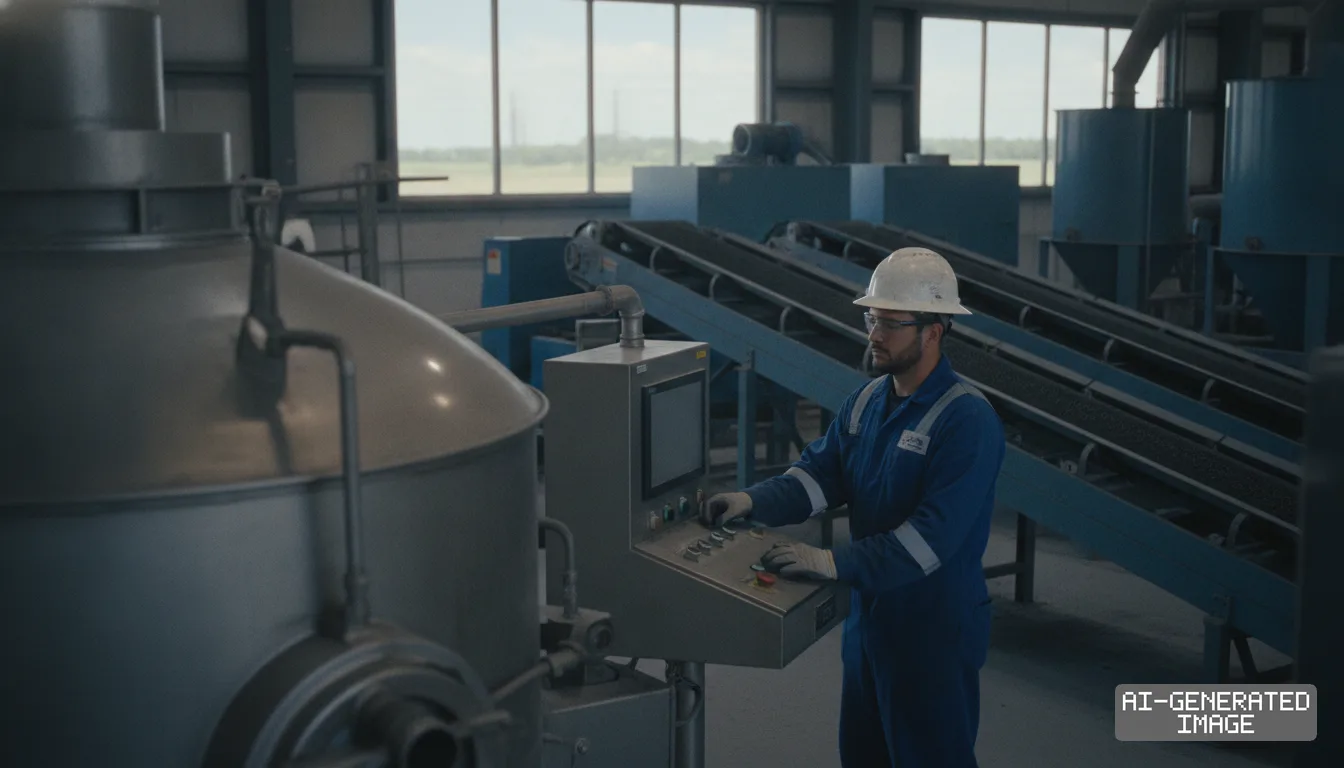
Titan Mining Corporation outlined an estimated $30 million to $50 million capital investment on Oct. 15, 2026, to construct a domestic graphite processing plant at an Alabama military depot.
The commercial refinery aims to establish an alternative to Asian refining channels. China processes more than 90% of the world's battery-grade coated spherical purified graphite, according to industry benchmark data.
Titan Mining signed a commercial framework term sheet on Oct. 7 with the U.S. Department of the Army. The agreement secures approximately 97 acres at Anniston Army Depot in Alabama under an Enhanced Use Lease.
The lease agreement establishes an initial 50-year operating term. It includes two additional 25-year renewal options, giving Titan Mining potential site tenure of up to 100 years, the company said in an exchange filing.
Empire State Mines, a wholly owned subsidiary of Titan Mining, will design, finance, construct and operate the facility. The company operates a zinc mining and milling complex in upstate New York.
Feedstock for the Alabama plant will arrive from the Kilbourne graphite project in New York. Titan Mining is developing the deposit to supply natural flake graphite to domestic buyers.
The proposed refinery will operate in two distinct stages. The first phase will mill and chemically purify raw graphite into purified micronized graphite for defense and industrial equipment.
The second phase will introduce coated spherical purified graphite — the processed graphite active material used in lithium-ion battery anodes — following customer qualifications with battery cell manufacturers.
The commercial term sheet gives the U.S. Army a right of first offer to purchase uncommitted output. The defense purchase right is capped at 10% of the facility's total annual production volume.
Graphite volumes committed under qualifying private offtake contracts, customer supply pacts or third-party project financing are exempt from the Army purchase option, according to the regulatory filing.
Titan Mining will pay fair-market base rent and post-startup participation rent to the military. The Army expressed a preference to receive consideration through in-kind infrastructure improvements inside the installation.
Western battery makers are reconfiguring supply chains to comply with tightening origin standards. The U.S. Inflation Reduction Act denies consumer tax credits to electric vehicles using critical minerals extracted or processed by foreign entities of concern.
China placed export licensing restrictions on natural and synthetic graphite in late 2023. The procedural controls increased delivery lead times for international battery cell manufacturers sourcing anode materials.
The United States responded by applying a 25% tariff on imported Chinese natural and artificial graphite under Section 301 trade rules, raising raw material procurement expenses.
Locating the refinery inside Anniston Army Depot provides existing heavy infrastructure, direct rail links and secure utility access, the company said. These installations lower development lead times compared with greenfield industrial parcels.
Titan Mining continues technical due diligence on secondary military installations. The company is assessing additional mineral processing capacity at Pine Bluff Arsenal in Arkansas and Fort Drum in New York.
The upstream Kilbourne mine project previously received a preliminary letter of interest from the Export-Import Bank of the United States. The non-binding document indicated potential debt financing of up to $120 million.
Titan Mining expects to reach a final investment decision and break ground in 2027, Chief Executive Rita Adiani said Oct. 15. The company targets commercial operations at the Alabama facility in 2028.
The Oct. 7 term sheet does not state the plant's planned annual output tonnage, and Titan Mining has not published an executed definitive lease contract.
Impact map
How this development propagates across the region and out to global buyers.
| Event | Korea | China | Japan | Global impact |
|---|---|---|---|---|
| U.S. graphite processing lease | Battery cell joint ventures in North America gain non-Chinese anode qualification pathway | Refiners face long-term volume erosion under Section 301 tariffs and FEOC rules | Cathode and cell producers evaluate compliant graphite supply for North American assembly | Processing shifts toward defense-hosted public-private leasing models to reduce import reliance |
In this story
- Companies
- Titan Mining
- Tickers
- TIITI
- Policy
- Critical MineralsTariffsSubsidies
- Impact
- Supply ChainCapex
Track every Critical Minerals development → Track every Tariffs development → Track every Subsidies development →
Related briefings
- China and South Africa advance battery mineral refining pact Also on Critical Minerals, Tariffs
- EU accelerates Vietnam critical mineral pact to hedge China risks Also on Critical Minerals
- Japan and Australia advance critical minerals security pact Also on Critical Minerals
- Malaysia curbs raw rare earth exports to force local refining in 2026 Also on Critical Minerals
Sources
Primary documents
Reporting
Confidence: high — how we grade this
The documents behind this briefing are linked above. East Asia Brief produces its English text with AI assistance under human editorial review, and does not translate or republish other outlets' articles. See our methodology and AI policy. Spotted an error? Tell us.
The Morning Brief
What changed in Korean, Chinese and Japanese industry overnight — and what it means for your supply chain. One email, weekday mornings, US time. Free.
The Morning Brief is in preparation. Leave your address and we will write to you once — when the first issue is ready. Nothing before that.