Japan sets 42.1% duty on Chinese cold-rolled stainless steel
The five-year tariff on 22 coil and sheet products shields domestic mills including Nippon Steel from discounted Chinese exports created by factory overcapacity.
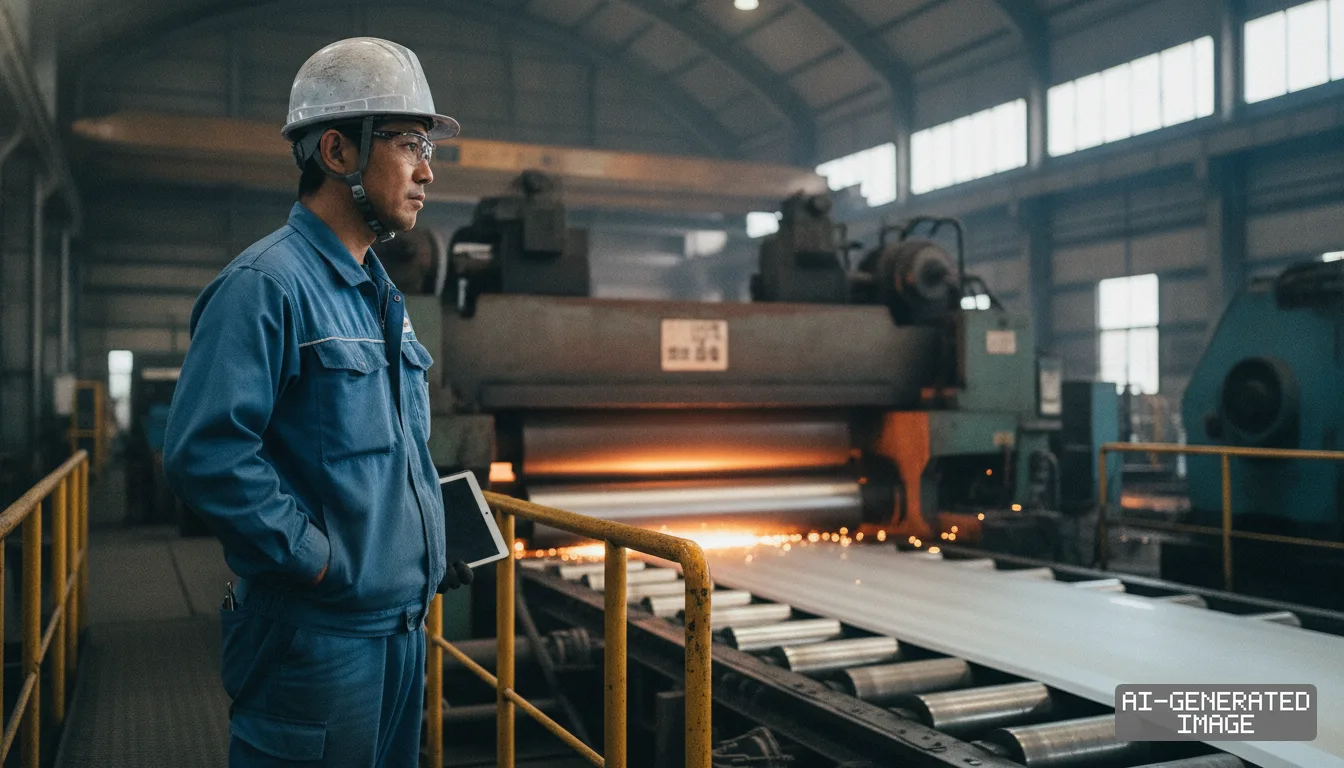
Japan’s Ministry of Economy, Trade and Industry confirmed on Oct. 29, 2026 that definitive anti-dumping tariffs of up to 42.1% will hit Chinese cold-rolled stainless steel.
The Cabinet approved the final tariff rates on Oct. 27, 2026. The decree establishes five years of import penalties on cold-rolled coils and sheets containing nickel.
Dumping margins reached 45.3% during the 2024 calendar year investigation. Five cooperating Chinese producers will pay a 27.7% tariff, while uncooperative mills face the full 42.1% border levy.
The duties target 22 tariff lines under Harmonized System codes 7219 and 7220. Qualifying metals contain at least 10.5% chromium and more than 0.6% nickel by weight.
Exporters from Taiwan face anti-dumping duties ranging between 3.6% and 20.1%. Six cooperating Taiwanese mills received the lowest 3.6% rate, the Ministry of Finance said.
Four domestic steelmakers filed the dumping petition on May 12, 2025. Nippon Steel and Nippon Yakin Kogyo brought the complaint alongside NAS Stainless Steel Strip and Nippon Kinzoku.
Nippon Steel and Nippon Yakin Kogyo supply more than 70% of Japan’s domestic stainless flat products. The two integrated producers operate electric arc furnaces and rolling mills in Yamaguchi and Kanagawa.
NAS Stainless Steel Strip and Nippon Kinzoku focus on narrow cold-rolled coils below 600 millimeters in width. Both re-rollers reported that low-priced Asian imports took sales from precision electronics accounts.
Shanxi Taigang Stainless Steel and Ningbo Baoxin Stainless Steel qualified for China’s 27.7% rate. Guangdong Yongjin Metal Technology, Jiangsu Yongjin Metal Technology and Shanghai STAL Precision Stainless Steel also pay 27.7%.
POSCO Zhangjiagang Stainless Steel failed to secure the reduced rate. The Jiangsu mill and all other Chinese suppliers must pay the maximum 42.1% duty at Japanese customs checkpoints.
Taiwan’s Yieh United Steel Corporation and Tang Eng Iron Works secured the 3.6% tier. Walsin Lihwa and unlisted Taiwanese mills must pay a 20.1% tariff on Japanese arrivals.
Chinese mills increased overseas shipments after domestic building construction slowed in 2024. Factory overcapacity forced mills to export excess inventory to maritime neighbors at discounts of 20% to 30%.
The influx of discounted steel eroded margins across Japanese distribution networks. Domestic stainless mills lowered contract prices to preserve market share, creating losses in primary stainless production divisions.
Automotive parts fabricators consume roughly 35% of Japan’s cold-rolled stainless sheet. Stamping plants use the alloy for heat-resistant exhaust manifolds, catalytic converter shells and exterior window moldings.
Commercial kitchen builders and railcar assemblers represent another major procurement channel. Fabricators select nickel stainless steel for corrosion resistance and ease of sanitation in passenger transit cars and food vessels.
Rising nickel costs on global exchanges during 2024 widened the production expense gap between integrated Japanese mills and Chinese rivals. Chinese producers used lower-cost nickel pig iron while Japanese makers bought refined nickel briquettes.
The Council on Customs, Tariff, Foreign Exchange and Other Transactions endorsed the penalties on Oct. 19, 2026. The council advised that cheap imports inflicted material financial injury on Japanese producers.
The Ministry of Finance promulgated Cabinet Order No. 333 in the official gazette on Oct. 30, 2026. The definitive tariff order supersedes provisional duties that applied since July 9.
The definitive duties take effect on Oct. 31, 2026. The import penalties run for five years, expiring on Oct. 30, 2031, according to the ministry notice.
The official decrees do not state whether downstream stamping plants can request tariff exemptions for specialized coil widths. The Ministry of Finance has not published volume-based quota exemptions.
The published orders contradict trade press reports circulating on Oct. 29 that described the measures as heavy plate duties. The tariff schedules apply to cold-rolled flat items rather than thick plate.
The tariff order excludes clad, plated and coated steel sheets. It also exempts specialized sheets containing continuous geometric perforations across their surface area, according to the Ministry of Finance filing.
Importers must submit ministerial certificates to customs to verify that imported coils were not re-rolled from Chinese hot-rolled master coils. The Ministry of Economy, Trade and Industry issues the clearance documents.
Hong Kong and Macao are exempt from the Chinese mainland duties. Customs officers will require certificates of origin verifying that imported coils were not finished inside mainland rolling mills.
Southeast Asian distributors expect Chinese exporters to redirect unsold cold-rolled coils toward regional hubs. Steel traders in Vietnam and Thailand reported lower offer prices from Chinese export agencies this week.
Provisional duty collections concluded Oct. 30, 2026. Japanese customs will retain cash deposits collected on affected shipments imported between July 9 and the final decree date.
Impact map
How this development propagates across the region and out to global buyers.
| Event | Korea | China | Japan | Global impact |
|---|---|---|---|---|
| stainless anti-dumping duty | POSCO Zhangjiagang mill takes 42.1% penalty, pressuring Chinese affiliate margins | Shanxi Taigang absorbs 27.7% duty while uncooperative mills lose Japan export channel | Nippon Steel and Nippon Yakin Kogyo defend domestic flat-rolled pricing power | Southeast Asian coil distributors brace for deflected low-cost Chinese volume |
In this story
- Companies
- Nippon SteelNippon Yakin KogyoShanxi Taigang Stainless SteelPOSCO Zhangjiagang Stainless Steel
- Tickers
- 5401.T5480.T000825.SZ
- Exposed
- Yieh United SteelTang Eng Iron WorksWalsin LihwaNippon Kinzoku
- Policy
- Tariffs
- Impact
- PricingSupply ChainCost Structure
Track every Tariffs development →
Related briefings
- Asian Shipyard Heavy Plate Costs Diverge as Mills and Builders Clash Over Contract Pricing Also on Nippon Steel, Tariffs, Pricing
- Japan shipyards agree long-term thick plate supply terms with Nippon Steel Also on Nippon Steel, Pricing, Cost Structure
- Imabari and JMU consolidate dry bulk engineering to standardize ammonia dual-fuel vessels Also on Nippon Steel, Cost Structure
- Japan awards $1.4bn shipbuilding subsidies to Imabari and seven domestic yards Also on Nippon Steel
Sources
Primary documents
Reporting
Confidence: high — how we grade this
The documents behind this briefing are linked above. East Asia Brief produces its English text with AI assistance under human editorial review, and does not translate or republish other outlets' articles. See our methodology and AI policy. Spotted an error? Tell us.
The Morning Brief
What changed in Korean, Chinese and Japanese industry overnight — and what it means for your supply chain. One email, weekday mornings, US time. Free.
The Morning Brief is in preparation. Leave your address and we will write to you once — when the first issue is ready. Nothing before that.