China Gallium Export Controls Deplete Western Chip Stockpiles
Prolonged licensing friction under Beijing's trade notices leaves compound chipmakers and defense radar programs facing tight raw material buffers ahead of a November deadline.
Western defense and semiconductor supply chains reached critical gallium stockpile thresholds on Sept. 28, following years of restrictive export vetting enforced by China's Ministry of Commerce.
China accounted for 99% of global primary low-purity gallium output, according to data from the U.S. Geological Survey. That left Western chip fabricators entirely dependent on Chinese alumina refineries for raw chemical feedstock.
The average unit value of imported gallium metal rose 30% to $580 per kilogram in 2025, USGS trade data showed. Spot availability narrowed as Chinese authorities tightened bureaucratic review cycles for individual shipments.
The trade squeeze traces to July 3, 2023, when China's Ministry of Commerce issued Announcement No. 23. That order placed eight gallium items, including gallium nitride and gallium oxide, under export licensing controls.
The measures took effect Aug. 1, 2023, requiring exporters to submit detailed end-user certificates. Chinese customs tallies recorded zero outbound gallium shipments in the initial month after the mandate took effect.
Beijing tightened restrictions on Dec. 3, 2024, through Ministry of Commerce Announcement No. 46. The directive barred dual-use shipments to American military end-users and established a presumption of denial for gallium exports to the United States.
The ministry adjusted that posture on Nov. 9, 2025, issuing Announcement No. 72. That notice suspended the presumption-of-denial clause for one year, but preserved case-by-case licensing requirements that continue to restrict physical volume.
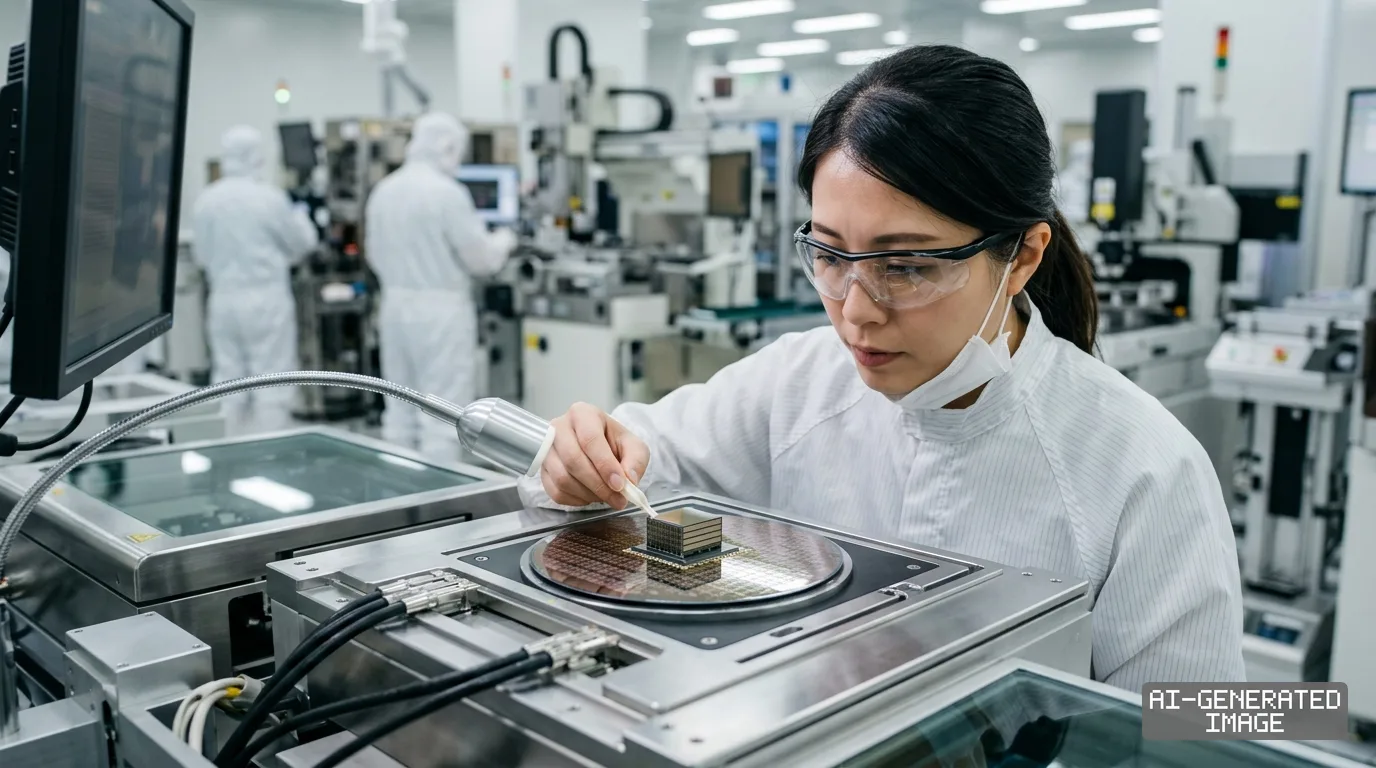
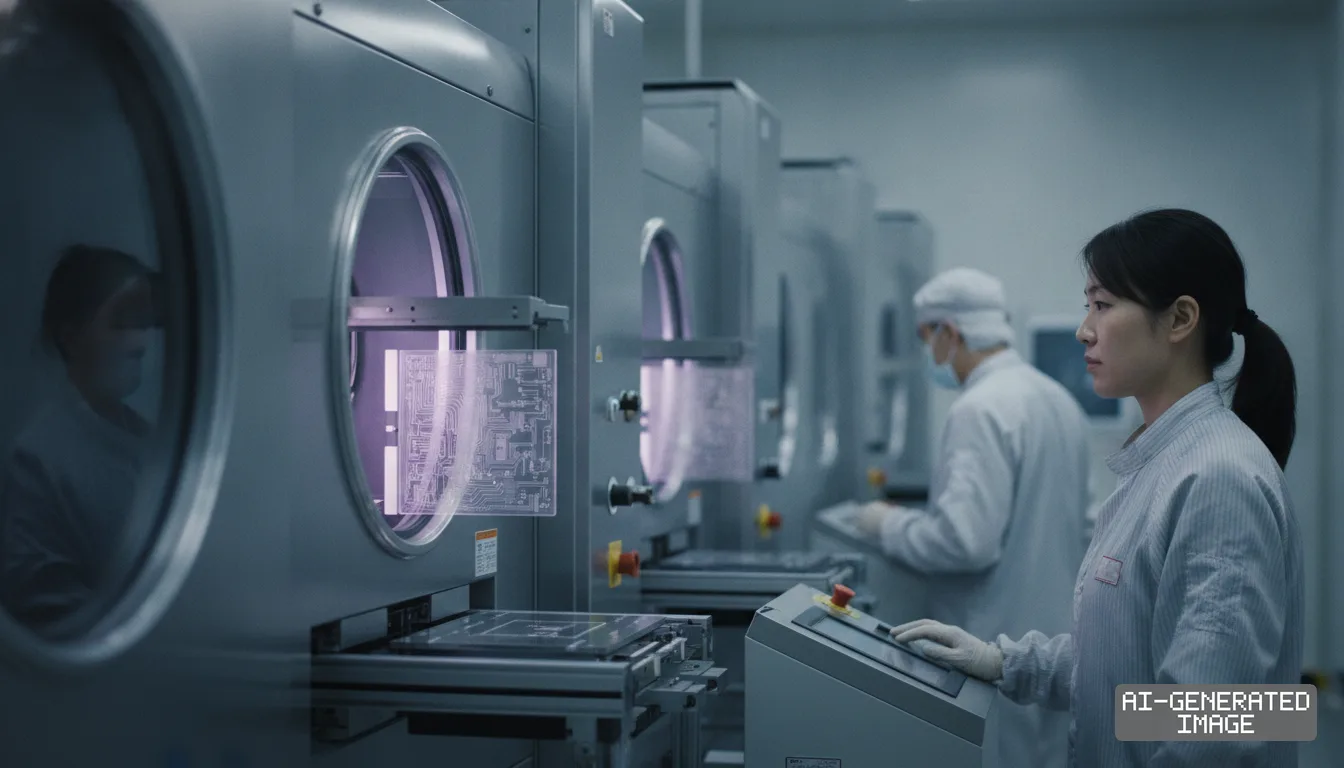
High-purity gallium is the core feedstock for gallium nitride and gallium arsenide compound wafers. These chemical compounds handle higher voltages and frequencies than traditional silicon, making them indispensable for next-generation military hardware.
Active electronically scanned array radars rely on gallium nitride transmit-receive modules to track distant aerial targets. Modern naval vessels and combat aircraft use these arrays for high-band electronic warfare and missile defense tracking.
American defense contractors face concentrated exposure in radar module production. RTX and Lockheed Martin procure finished compound semiconductor components from specialized wafer fabs that depend on high-purity refined gallium imported through Asian secondary processors.
Public procurement filings do not state the exact remaining gallium metal tonnage held by prime defense contractors including Lockheed Martin and RTX. Both corporations classify operational material inventories under defense confidentiality rules.
Asian manufacturing allies also operate on tight buffers. South Korea's Ministry of Trade, Industry and Energy confirmed on July 4, 2023, that state stockpiles held roughly 40 days of domestic gallium demand.
Korea Mine Rehabilitation and Mineral Resources Corporation oversees that reserve. South Korean device makers produce high-frequency power semiconductors for electric vehicles and telecommunications base stations, drawing from both public and commercial inventories.
Japan remains the primary high-purity gallium refiner outside China, processing imported crude metal into electronic-grade material. Japanese processors rely on Chinese crude gallium byproduct for the majority of their raw intake.
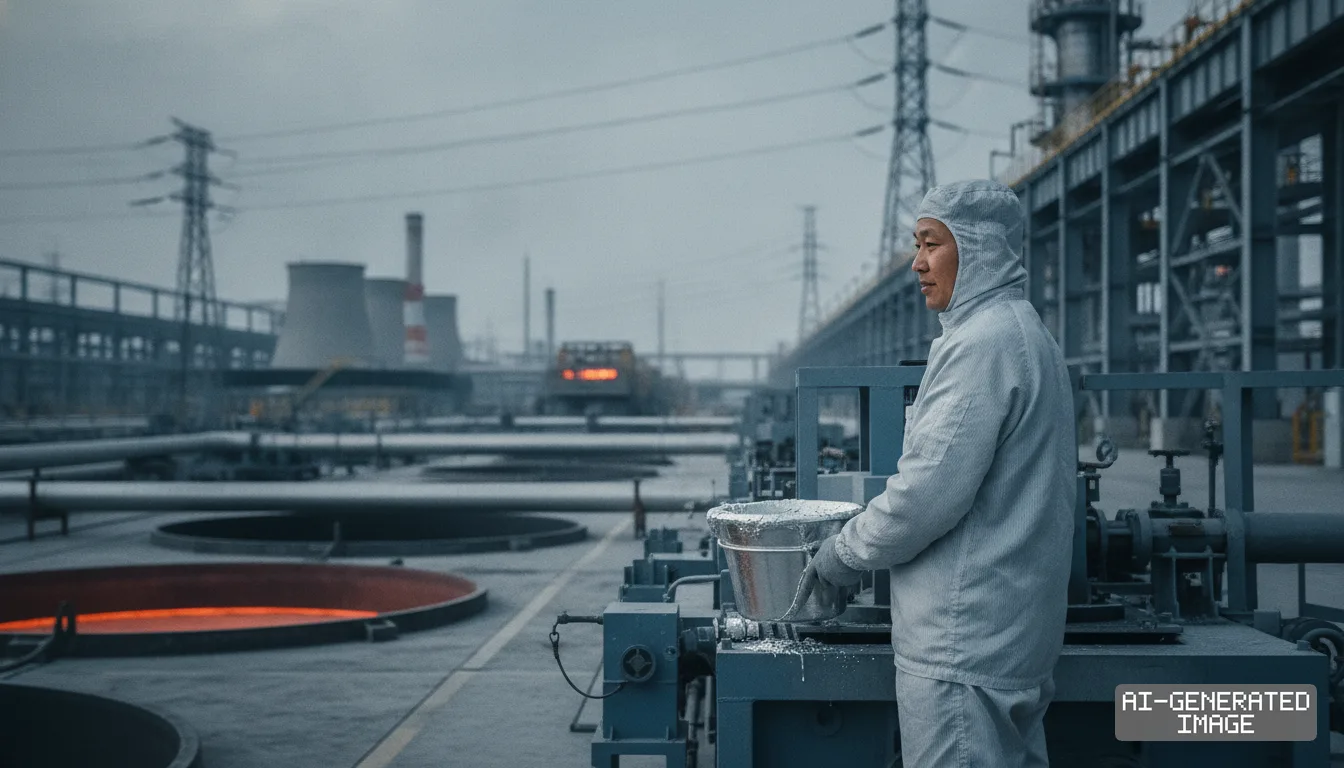
Gallium is not mined directly. Producers extract trace amounts of the element as a byproduct during the refining of bauxite ore into alumina, requiring massive chemical processing infrastructure to recover commercial quantities.
Smelters in Germany, Hungary and Kazakhstan ceased primary gallium recovery operations between 2013 and 2016 because low Chinese pricing made extraction uneconomic. Restarting these facilities requires two to three years of engineering.
Western governments launched targeted capital programs to rebuild extraction capacity. The U.S. Department of War granted $29.9 million under Defense Production Act Title III in November 2025 to develop a refining demonstration unit.
The project, located in Louisiana, recovers gallium and scandium from industrial residues. A separate U.S. Department of Energy program allocated $6 million in research funding to extract gallium from zinc and bauxite tailings.
Commercial semiconductor foundries in Taiwan and South Korea have struggled to secure predictable deliveries. Power management chips fabricated for electric vehicle fast chargers face lead times stretching beyond 40 weeks for specialized wafers.
Recycling yields little near-term relief for chipmakers. Reclaimed post-industrial scrap and end-of-life electronics account for less than 1% of total annual gallium consumption worldwide, according to industry supply figures.
Military radar architectures cannot switch back to legacy silicon without losing detection range and power efficiency. Redesigning and qualifying an alternative compound semiconductor module requires three years of laboratory testing and operational flight trials.
Supply chain planning now centers on a critical regulatory deadline. The temporary suspension under Ministry of Commerce Announcement No. 72 expires on Nov. 27, 2026, reinstating Beijing's default denial policy unless extended.
Commercial buyers across North America and Europe have accelerated alternative procurement requests before that cutoff date. Chinese authorities retain discretion over whether to renew the suspension or return to explicit export refusals.
Customs agencies in Beijing continue to process individual licensing requests on a case-by-case basis. No public notice has been released to indicate whether the November waiver will be prolonged.
Impact map
How this development propagates across the region and out to global buyers.
| Event | Korea | China | Japan | Global impact |
|---|---|---|---|---|
| Chinese gallium export licensing | KOMIR state reserve holds ~40 days of domestic supply | MOFCOM controls 99% of crude extraction and reviews export permits | Refiners face scrap feedstock constraints, unable to replace primary supply | Defense primes face GaN radar cost increases as raw metal reaches $580 per kilogram |
In this story
- Companies
- Lockheed MartinRTX
- Tickers
- LMTRTX
- Policy
- Export Controls
- Impact
- Supply ChainPricingCost Structure
Track every Export Controls development →
Related briefings
- Benchmark says ex-China heavy rare earth prices jumped 150% in Q3 Also on Lockheed Martin, Export Controls, Pricing
- Chinese rare earth suppliers halt shipments to US customers Also on Lockheed Martin, Export Controls, Pricing
- Trump signs sanctions act authorizing 100% tariffs on oil buyers Also on Export Controls, Pricing, Cost Structure
- US House advances 100% tariff bill on Russian crude buyers Also on Export Controls, Pricing, Cost Structure
Sources
Primary documents
Reporting
Confidence: high — how we grade this
The documents behind this briefing are linked above. East Asia Brief produces its English text with AI assistance under human editorial review, and does not translate or republish other outlets' articles. See our methodology and AI policy. Spotted an error? Tell us.
The Morning Brief
What changed in Korean, Chinese and Japanese industry overnight — and what it means for your supply chain. One email, weekday mornings, US time. Free.
The Morning Brief is in preparation. Leave your address and we will write to you once — when the first issue is ready. Nothing before that.