CATL warns solid-state battery costs block 2030 vehicle scale
The battery maker says cell costs reach 2.2 yuan per watt-hour, three to five times higher than lithium iron phosphate, as physical interface barriers stall mass lines.
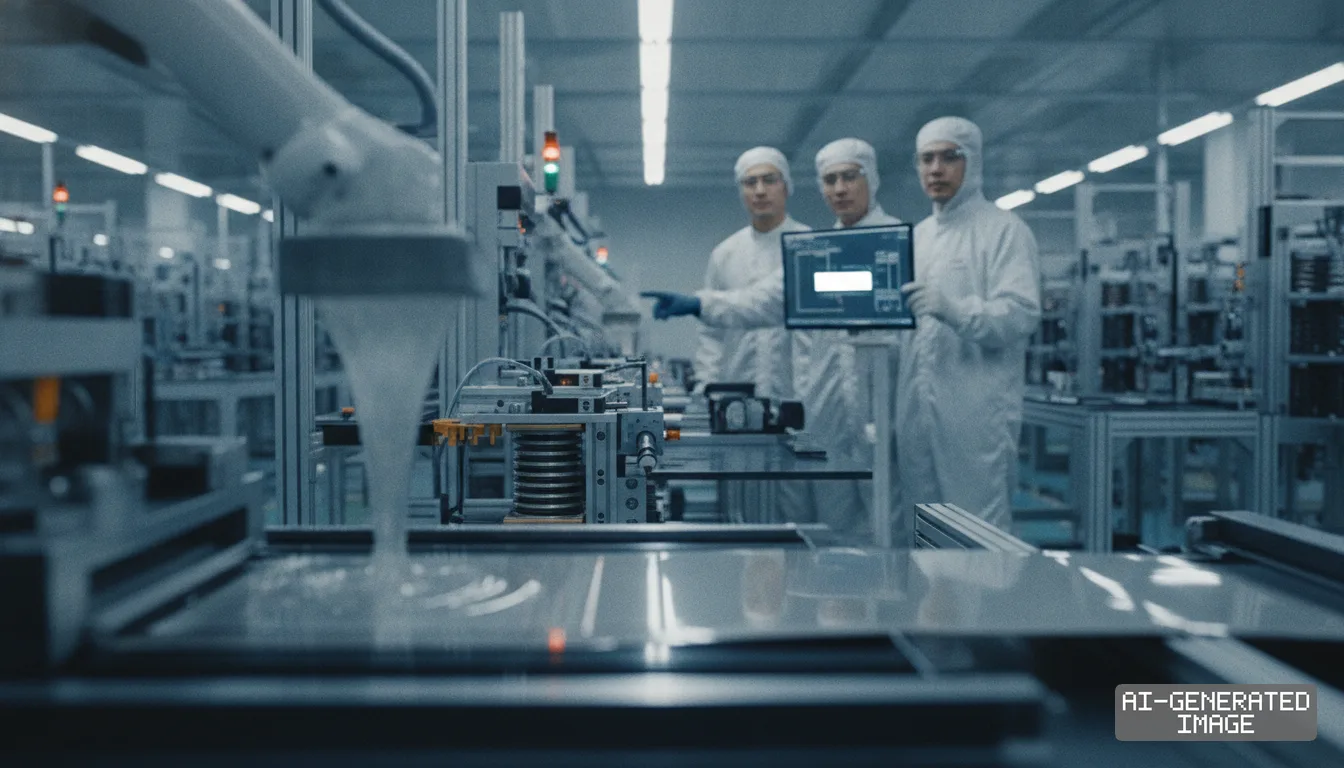
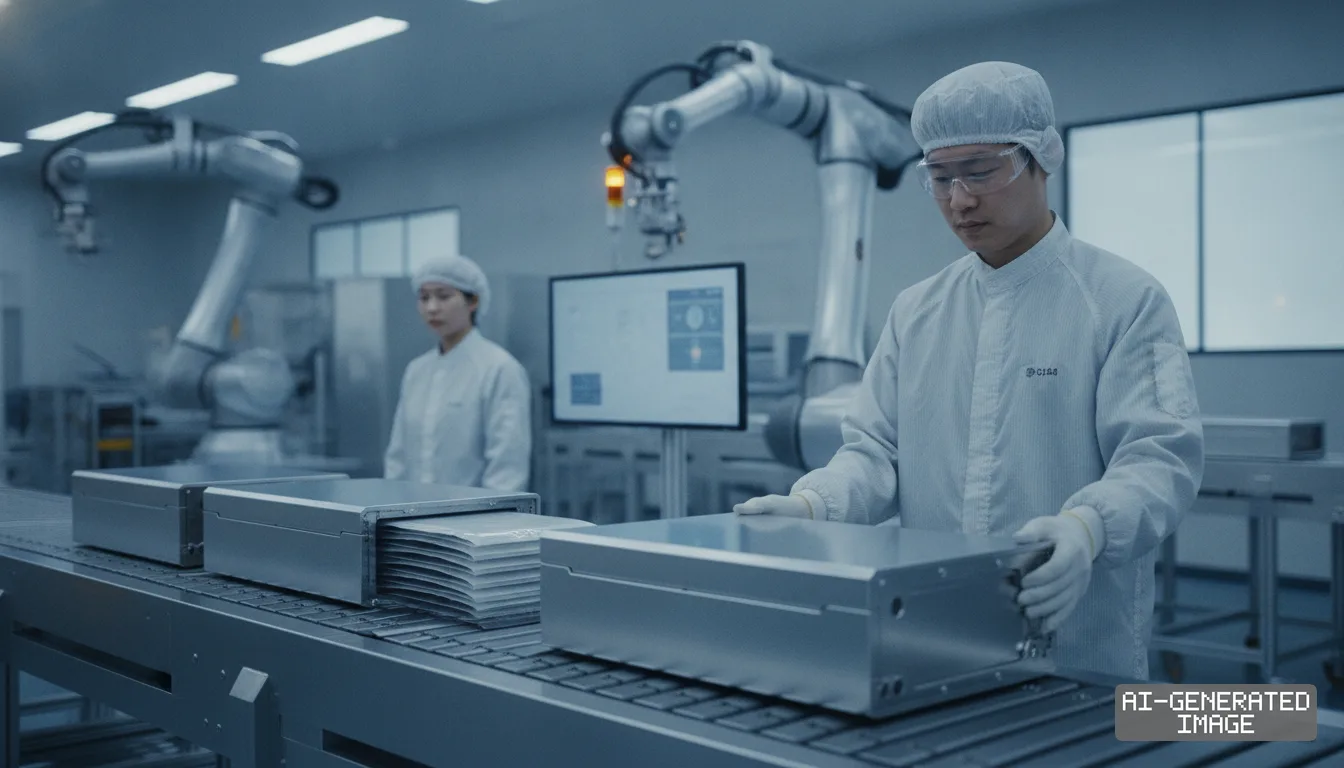
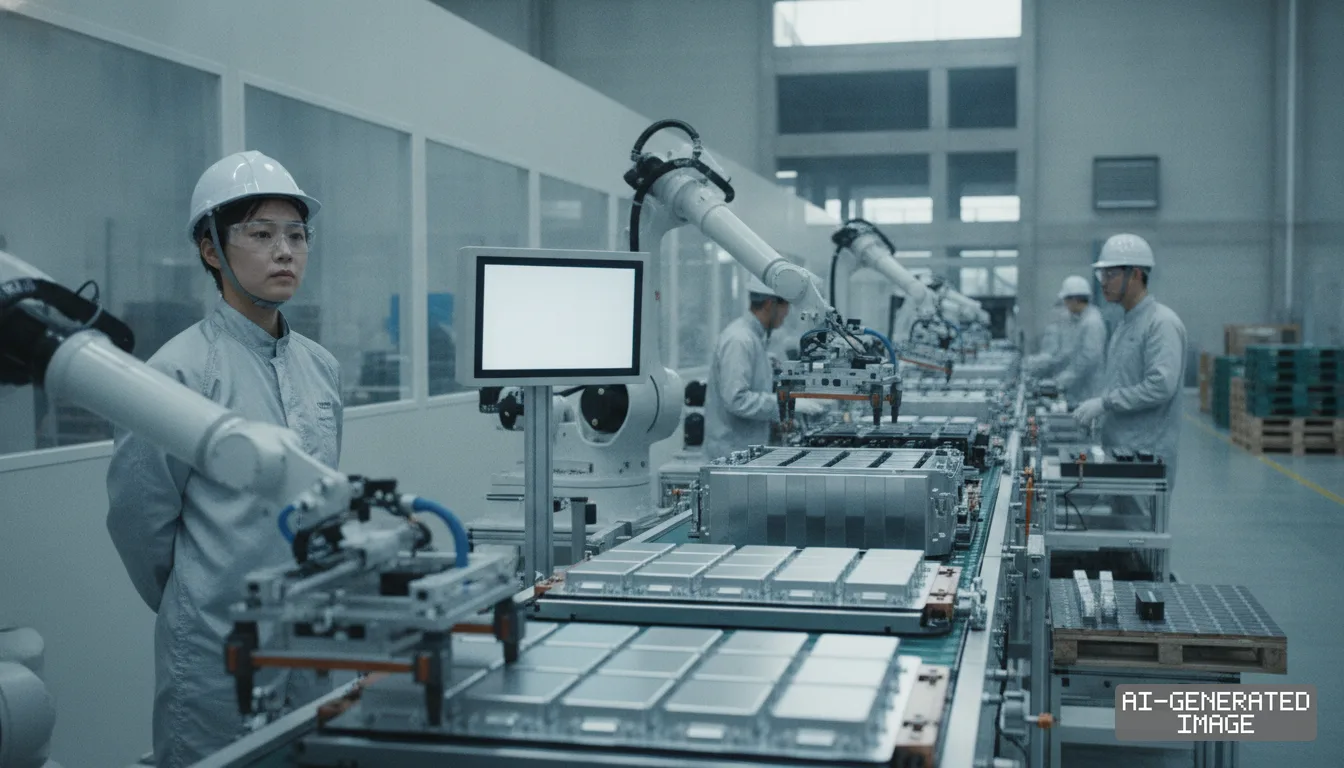
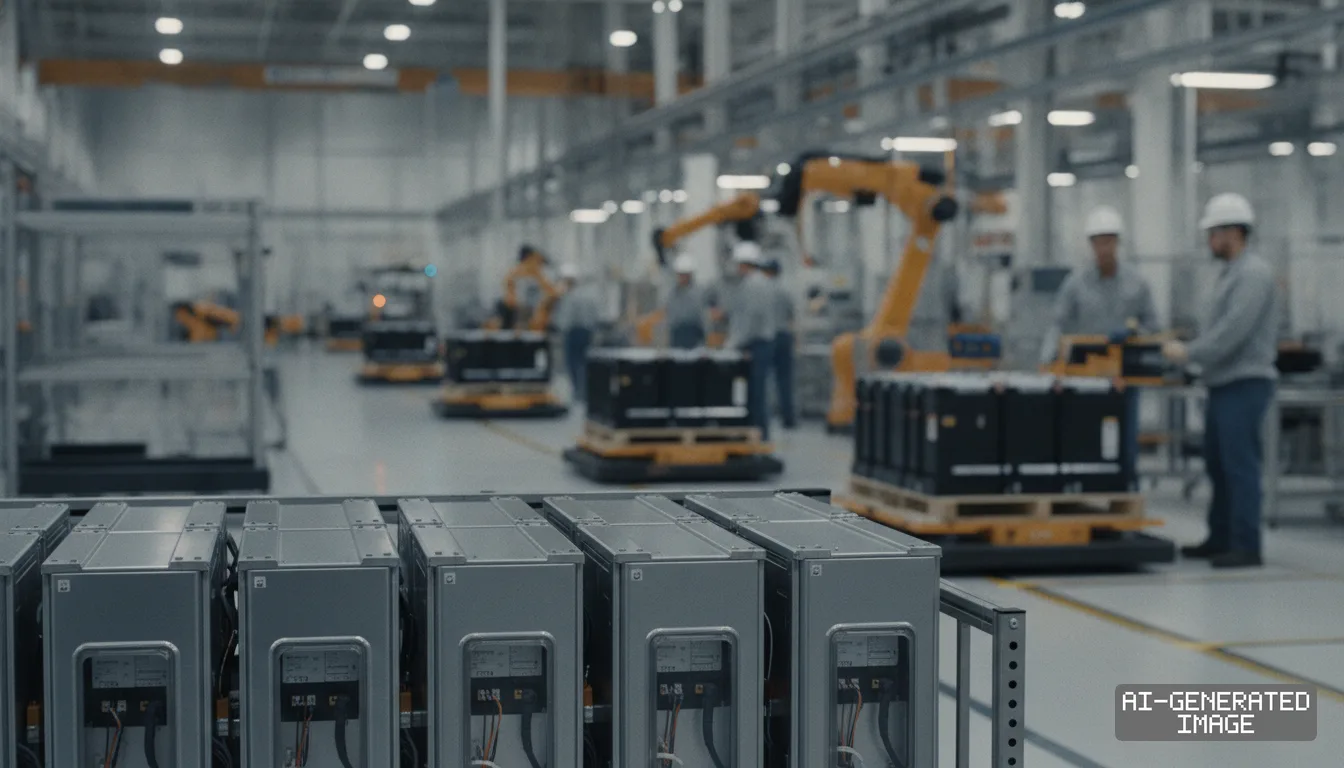
Contemporary Amperex Technology Co. Limited executives warned Oct. 31 that all-solid-state electric vehicle batteries face severe commercial barriers, countering government timelines that target initial large-scale application across China by 2030.
The world's largest battery manufacturer, which controls roughly 37% of global electric vehicle battery shipments, pointed to uncompetitive economics and persistent manufacturing defects.
Solid-state cells currently cost 1.6 yuan to 2.2 yuan ($0.23 to $0.31) per watt-hour to produce, representing three to five times the 0.39 yuan to 0.50 yuan per watt-hour expense of standard lithium iron phosphate packs.
That gap leaves early solid-state cells confined to niche platforms rather than mainstream passenger cars, according to company statements reviewed by investors.
China's Ministry of Industry and Information Technology published its 15th Five-Year Plan for the battery sector on Sept. 28 alongside six other state agencies.
The joint policy document sets a national goal to achieve initial commercial application of all-solid-state systems by 2030, while mandating that leading battery producers reduce defect rates to parts-per-billion levels.
The ministerial directive also demands a cycle life of 15,000 cycles for stationary lithium storage cells, seeking to safeguard Chinese manufacturing dominance as foreign rivals accelerate pilot programs.
CATL Chief Manufacturing Officer Ni Jun said industrial claims promoting near-term solid-state commercialization remain conceptual marketing rather than viable factory engineering.
Solid-state battery cells replace flammable liquid electrolytes with solid conducting compounds such as sulfides or oxides to improve chemical stability and pack energy density.
The architecture suffers from severe solid-to-solid interfacial contact breakdown during repeated cycles, Ni said.
Battery electrodes expand and contract during lithiation, the electrochemical charging phase where lithium ions enter the active cathode and anode materials.
That continuous volumetric expansion breaks physical contact between the rigid solid electrolyte and the electrode particles, causing internal resistance to climb rapidly, Ni said.
Loss of contact degrades cell energy retention and causes early battery failure on high-volume production lines, company engineers noted.
CATL Chairman Robin Zeng said at the Summer Davos forum that all-solid-state technology sits at level four on a nine-level Technology Readiness Level scale.
Level four denotes basic laboratory validation of experimental cells, while level nine represents fully qualified high-volume factory assembly.
The likelihood of deploying all-solid-state batteries in one million vehicles before 2030 remains minimal, Zeng said.
CATL reaffirmed its technical roadmap on Oct. 28 through an investor platform filing with the Shenzhen Stock Exchange.
The company is developing sulfide-based solid-state cells designed to achieve an energy density of 500 watt-hours per kilogram, nearly double the 250 watt-hours per kilogram delivered by mainstream nickel-cobalt cells.
CATL expanded its dedicated solid-state engineering team to more than 1,000 researchers after spending 22.15 billion yuan ($3.12 billion) on research and development last year.
The company operates a 10-ampere-hour validation platform and has produced 20-ampere-hour pouch-cell trial samples, according to regulatory filings.
CATL said it plans to begin small-scale pilot production of the 20-ampere-hour sulfide cells in 2027.
Domestic rival BYD, which accounts for approximately 16% of global electric vehicle battery installations, is also pursuing sulfide and halide solid-state designs.
BYD filed six material and manufacturing patents in July and aims to run demonstration trials on approximately 1,000 electric vehicles in 2027.
South Korea's Samsung SDI plans to begin commercial mass production of sulfide solid-state batteries in the second half of 2027.
Japan's Toyota Motor continues building pilot lines with refining group Idemitsu Kosan, targeting initial vehicle integration between 2027 and 2028.
CATL executives said capital allocation will prioritize incremental upgrades to mature liquid-electrolyte and semi-solid chemistries through the end of the decade.
The company relies on sodium-ion cells and high-nickel liquid packs to meet entry-level and premium automotive procurement requirements at predictable yields.
Achieving parts-per-billion defect tolerances on sulfide solid-state lines requires specialized dry-room environments and high-pressure isostatic pressing equipment that remain unproven at multi-gigawatt-hour scale.
The joint ministerial notice does not define the production capacity or vehicle installation count required to qualify as initial large-scale application by 2030.
The Ministry of Industry and Information Technology convenes its first implementation review meeting for the 15th Five-Year battery roadmap in Beijing in November 2027.
Impact map
How this development propagates across the region and out to global buyers.
| Event | Korea | China | Japan | Global impact |
|---|---|---|---|---|
| Solid-state commercialization timeline pushback | Samsung SDI maintains H2 2027 pilot target while monitoring CATL solid interface yields | CATL and BYD peg 2027 to pilot-scale batches, leaving LFP to command over 70% domestic share | Toyota Motor advances Idemitsu Kosan sulfide trials for 2027 demo vehicles without near-term scale | Automakers delay mass all-solid-state platforms past 2030 as pack BOM stays above |
| Solid-state commercialization timeline pushback | Samsung SDI maintains H2 2027 pilot target while monitoring CATL solid interface yields | CATL and BYD peg 2027 to pilot-scale batches, leaving LFP to command over 70% domestic share | Toyota Motor advances Idemitsu Kosan sulfide trials for 2027 demo vehicles without near-term scale | Automakers delay mass all-solid-state platforms past 2030 as pack BOM stays above $150 per kWh |
In this story
- Companies
- Contemporary Amperex Technology Co. LimitedBYD Company
- Tickers
- 300750.SZ002594.SZ
- Exposed
- Samsung SDIToyota Motor
- Policy
- Standards
- Impact
- CapexCost StructurePricing
Track every Standards development →
Related briefings
- CATL warns China's solid-state battery target faces cost gap Also on Contemporary Amperex Technology Co. Limited, Toyota Motor, Pricing
- BYD and Geely expand Southeast Asian assembly lines to build regional export hubs Also on BYD Company, Toyota Motor, Pricing
- BYD sets Denza N8 pre-orders to target luxury EV market in China Also on BYD Company, Standards, Pricing
- CATL launches dual-battery truck system as fleet demand rises Also on Contemporary Amperex Technology Co. Limited, Standards, Cost Structure
Sources
Reporting
Confidence: medium — how we grade this
The documents behind this briefing are linked above. East Asia Brief produces its English text with AI assistance under human editorial review, and does not translate or republish other outlets' articles. See our methodology and AI policy. Spotted an error? Tell us.
The Morning Brief
What changed in Korean, Chinese and Japanese industry overnight — and what it means for your supply chain. One email, weekday mornings, US time. Free.
The Morning Brief is in preparation. Leave your address and we will write to you once — when the first issue is ready. Nothing before that.