Canada and Japan align battery supply chains at Ottawa meeting
The bilateral clean technology talks build on 54.8 billion Canadian dollars in Japanese investment stock and 35.7 billion Canadian dollars in trade.
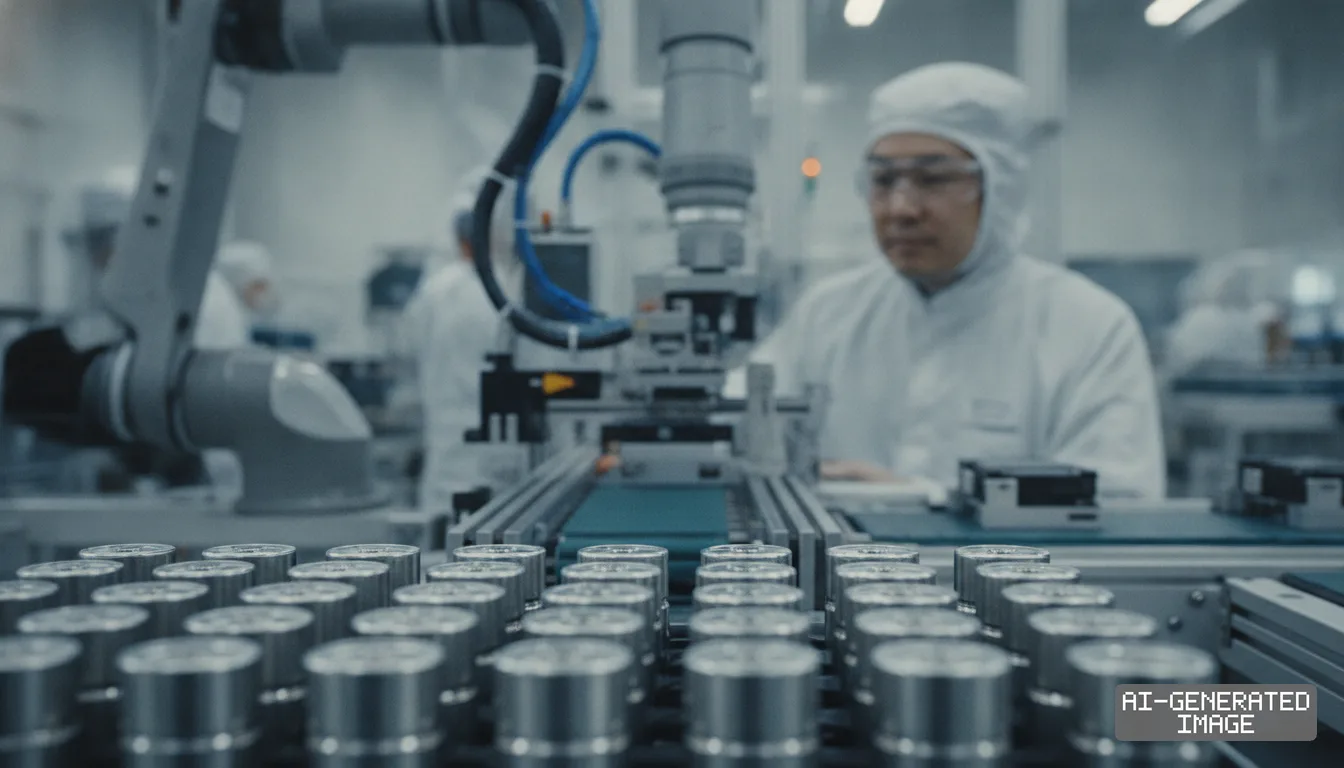
Global Affairs Canada said Nov. 17 that Canadian and Japanese officials met in Ottawa to align clean technology roadmaps and expand bilateral battery supply chains.
The intergovernmental session convened on Nov. 16 under the formal title of the third Canada-Japan Battery Supply Chain Dialogue and Industry Roundtable.
Japan held 54.8 billion Canadian dollars ($39.2 billion) in direct investment stock in Canada during 2025. That capital position ranks first among Indo-Pacific economies and third among all foreign investors in Canada.
Two-way merchandise trade reached 35.7 billion Canadian dollars ($25.5 billion) in 2025. Canada shipped 14.6 billion Canadian dollars in goods to Japan, while imports from Japan totaled 21.1 billion Canadian dollars.
The bilateral dialogue traces to a government memorandum of cooperation signed in Ottawa on Sept. 21, 2023. Following that founding pact, the two countries conducted their first formal supply chain dialogue in October 2024.
Sara Wilshaw, Senior Assistant Deputy Minister of International Trade and Chief Trade Commissioner at Global Affairs Canada, co-chaired the government-to-government talks for the host country.
Takayanagi Daisuke, Deputy Director-General at Japan's Ministry of Economy, Trade and Industry, led the visiting delegation from Tokyo.
Both delegations reviewed national policy instruments across every stage of the energy storage value chain. The discussions covered electrical infrastructure plans, automotive transition targets and critical mineral development programs.
Canadian officials presented progress updates on the federal critical minerals strategy, clean electricity regulations and automotive manufacturing supports.
Japanese representatives outlined revisions to Tokyo's battery industry strategy. That domestic policy framework targets domestic cell manufacturing capacity and secure mineral procurement for Japanese industrial firms.
The talks evaluated collaborative testing projects managed by public research institutions from both countries. Officials reviewed shared protocols for battery performance evaluation, safety certification and materials characterization.
A commercial roundtable followed the government session, bringing together corporate executives from both countries. The corporate meeting examined joint ventures, capital investments and long-term procurement contracts in battery materials.
Participants included mineral extraction companies, chemical processing firms and finished cell producers. The Battery Association for Supply Chain, an industry consortium representing Japanese battery manufacturers and materials processors, attended the corporate panel.
Japanese manufacturers have sought stable access to battery-grade lithium, nickel and cobalt to reduce supply concentration. Canadian mining assets in Ontario and Quebec offer access to rail networks, maritime shipping lanes and low-emission hydroelectric power.
Expanding primary extraction alone does not resolve supply bottlenecks for cell makers. Unrefined ores require chemical conversion into precursor cathode materials and purified battery chemicals before entering manufacturing lines.
Coordinated industrial roadmaps allow both governments to synchronize public subsidies with private plant construction. Matching refining timelines with downstream cell factory demand reduces financial risks for corporate operators.
The official release does not state whether negotiators discussed specific critical mineral export volumes or price mechanisms.
The Canadian government notice also omits any formal reference to United States clean vehicle tax credit requirements or joint North American market access rules.
The bilateral working group will continue technical research exchanges and investment reviews before convening the fourth formal dialogue session in 2027.
Impact map
How this development propagates across the region and out to global buyers.
| Event | Korea | China | Japan | Global impact |
|---|---|---|---|---|
| Canada-Japan Battery Supply Chain Dialogue | domestic cathode and cell producers face increased competition from Japanese-backed refining assets in Canada | alternative bilateral mineral corridor reduces global reliance on Chinese chemical refining facilities | cell makers secure direct access to Canadian battery-grade lithium and nickel through BASC channels | multi-hub refining networks diversify geographic concentration away from single-source processing hubs |
In this story
Track every Standards development → Track every Subsidies development →
Related briefings
- CATL flags sulfide battery bottlenecks under China 2030 mandate Also on Standards, Subsidies
- UK and Japan ink offshore wind compact for £9 billion pipeline Also on Standards, Subsidies
- CATL Debrecen battery plant faces protests over operating permits Also on Standards, Subsidies
- BYD Denza N8 debuts Nov. 12 with 1,003-kilometer battery range Also on Standards, Subsidies
Sources
Primary documents
Reporting
Confidence: high — how we grade this
The documents behind this briefing are linked above. East Asia Brief produces its English text with AI assistance under human editorial review, and does not translate or republish other outlets' articles. See our methodology and AI policy. Spotted an error? Tell us.
The Morning Brief
What changed in Korean, Chinese and Japanese industry overnight — and what it means for your supply chain. One email, weekday mornings, US time. Free.
The Morning Brief is in preparation. Leave your address and we will write to you once — when the first issue is ready. Nothing before that.