South Korea faces 70% foreign reliance on humanoid robot parts
Actuator supply chains expose humanoid builders to Japan for strain-wave gears and China for rare-earth motor magnets.
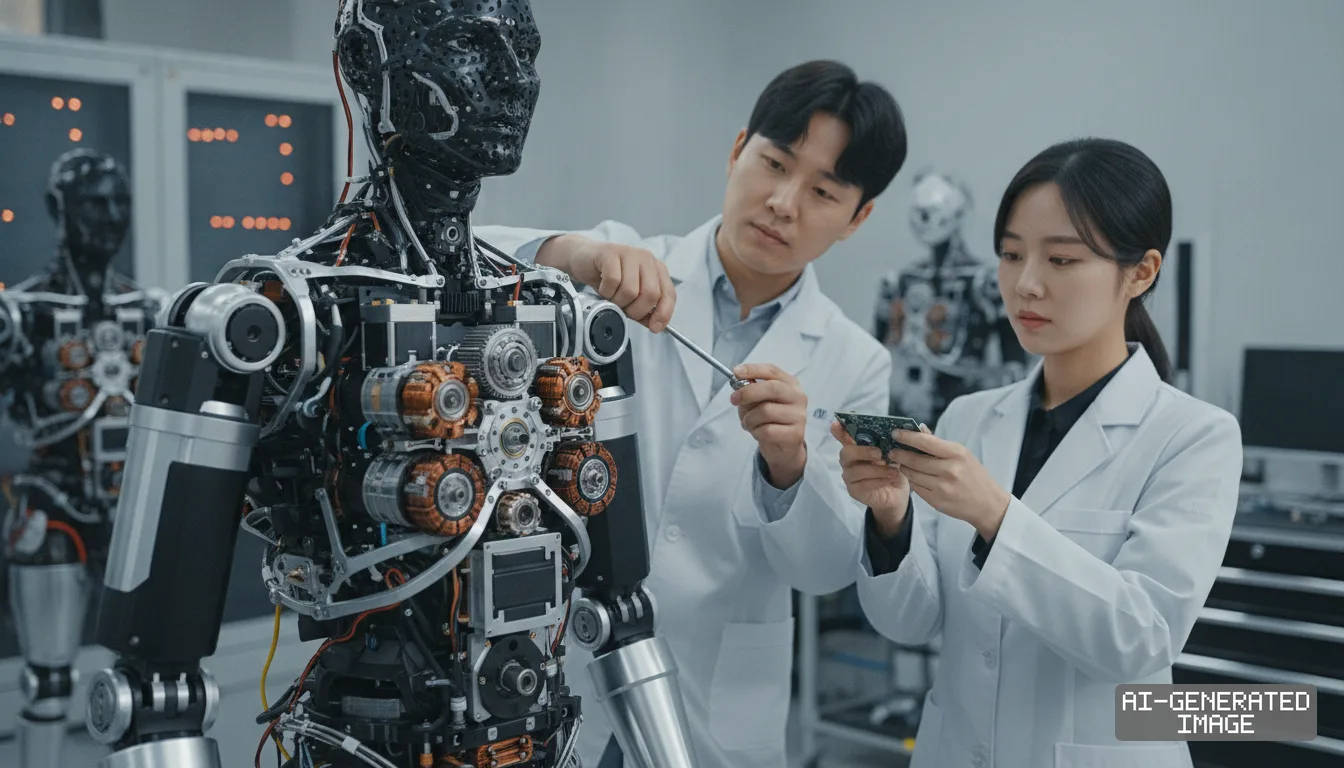
South Korea saw its robotics supply chain vulnerability return to the spotlight on Sept. 15, 2026, as domestic humanoid development programs disclosed heavy exposure to imported drivetrain components.
South Korean humanoid developers rely on foreign suppliers for more than 70% of core mechanical drivetrains, according to national trade and industrial research data. Precision reducers and servo motors drive the bulk of that import bill.
Japan supplies the majority of high-precision strain-wave reduction gears, while China controls permanent magnet raw materials. The structural dependence leaves domestic robot builders exposed to foreign export bottlenecks.
The Korea Institute for Industrial Economics and Trade (KIET), a state-funded economic think tank, reported that South Korea ranks fourth globally in industrial robot sales with a 5.6% global market share. Its robot density stands at 1,220 units per 10,000 manufacturing workers, the highest in the world.
Yet KIET scored South Korea's overall value-chain competitiveness in manufacturing robotics at 72.9 points out of 100, ranking sixth among six leading nations. Japan ranked first at 95.5 points, while China took fifth place at 79.4 points.
The procurement category—covering core mechanical hardware and software—scored lowest at 64 points, according to the institute's assessment. Domestic localization for core components including reducers, servo motors, sensors and controllers remains at 44%.
The Korea International Trade Association (KITA) noted in an analysis that Japan's Harmonic Drive Systems holds a 73.3% share of the global precision reducer market. Nabtesco accounts for 60% of the heavier cycloidal gear market.
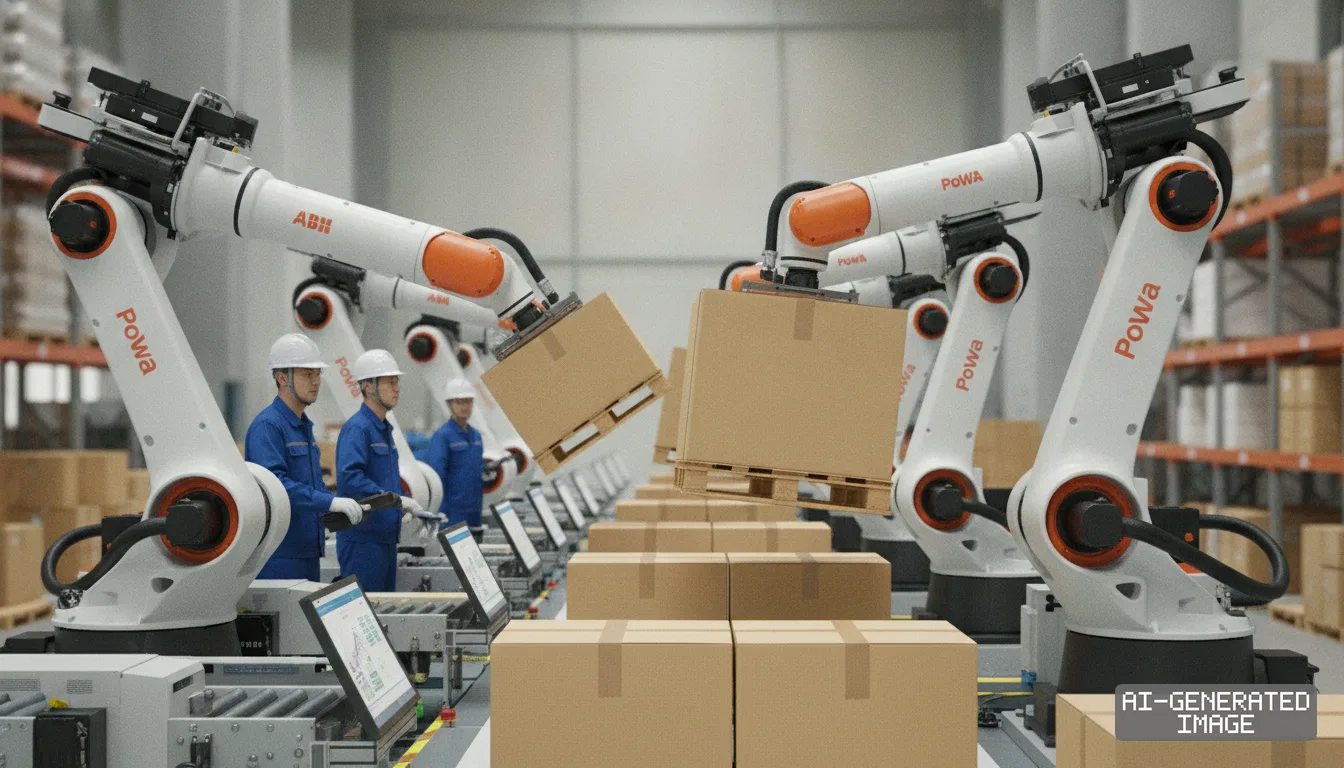
Domestic manufacturers assemble articulated robots and humanoid prototypes, but purchase internal motion control hardware from overseas. Actuators represent between 50% and 60% of the total manufacturing bill of materials for a bipedal humanoid.
South Korea's vulnerability extends upstream to raw materials. KITA documented that South Korea relies on China for 88.8% of its permanent neodymium magnets, an essential input for high-torque brushless servo motors.
Corporate scale limits domestic component investment. KIET reported that 97.9% of South Korea's 2,509 robotics companies are small and medium-sized enterprises. Only 3.2% generate annual revenue exceeding 10 billion won ($7.3 million).
Auto parts supplier Hyundai Mobis announced specialized actuator engineering recruitment on Sept. 15, accelerating its timeline to deliver custom humanoid actuator prototypes. The company aims for commercial production capacity of 350,000 units by 2028.
Neither the Ministry of Trade, Industry and Energy nor domestic industry associations published project-by-project humanoid component audit data on Sept. 15. The ministry has not scheduled its next supply chain review meeting for robotics parts subsidies.
Impact map
How this development propagates across the region and out to global buyers.
| Event | Korea | China | Japan | Global impact |
|---|---|---|---|---|
| Humanoid actuator supply squeeze | Hyundai Mobis targets 350,000 units by 2028 to replace 70% foreign reliance | Magnet refiners retain 88.8% market share over Korean motor inputs | Harmonic Drive Systems and Nabtesco maintain over 60% market dominance | Humanoid BOM costs face 10-15% margin pressure on dual Japan-China component bottlenecks |
In this story
- Companies
- Hyundai MobisHarmonic Drive SystemsNabtesco
- Tickers
- 012330.KS6324.T6268.T
- Exposed
- Boston DynamicsRainbow RoboticsRobotis
- Policy
- SubsidiesEconomic Security
- Impact
- Supply ChainCost StructureCapex
Track every Subsidies development → Track every Economic Security development →
Related briefings
- Korea tightens export licensing rules on robotics actuator technology Also on Robotis, Rainbow Robotics
- Korean electronics component suppliers deploy AI dual-arm robots as factory labor pool shrinks Also on Nabtesco, Rainbow Robotics, Harmonic Drive Systems
- Samsung develops humanoid robot prototype before 2027 debut Also on Boston Dynamics, Rainbow Robotics
- Harmonic Drive expands Japanese reducer capacity for humanoid robotics demand Also on Nabtesco, Harmonic Drive Systems
Sources
Primary documents
Reporting
Confidence: high — how we grade this
The documents behind this briefing are linked above. East Asia Brief produces its English text with AI assistance under human editorial review, and does not translate or republish other outlets' articles. See our methodology and AI policy. Spotted an error? Tell us.
The Morning Brief
What changed in Korean, Chinese and Japanese industry overnight — and what it means for your supply chain. One email, weekday mornings, US time. Free.
The first issue goes out shortly. Sign up now and you will not miss it.