FANUC debuts Physical AI robotics for flexible factory lines
The Japanese automation giant demonstrated autonomous mobile cobots and generative vision models in Chicago to eliminate rigid tooling in variable production.
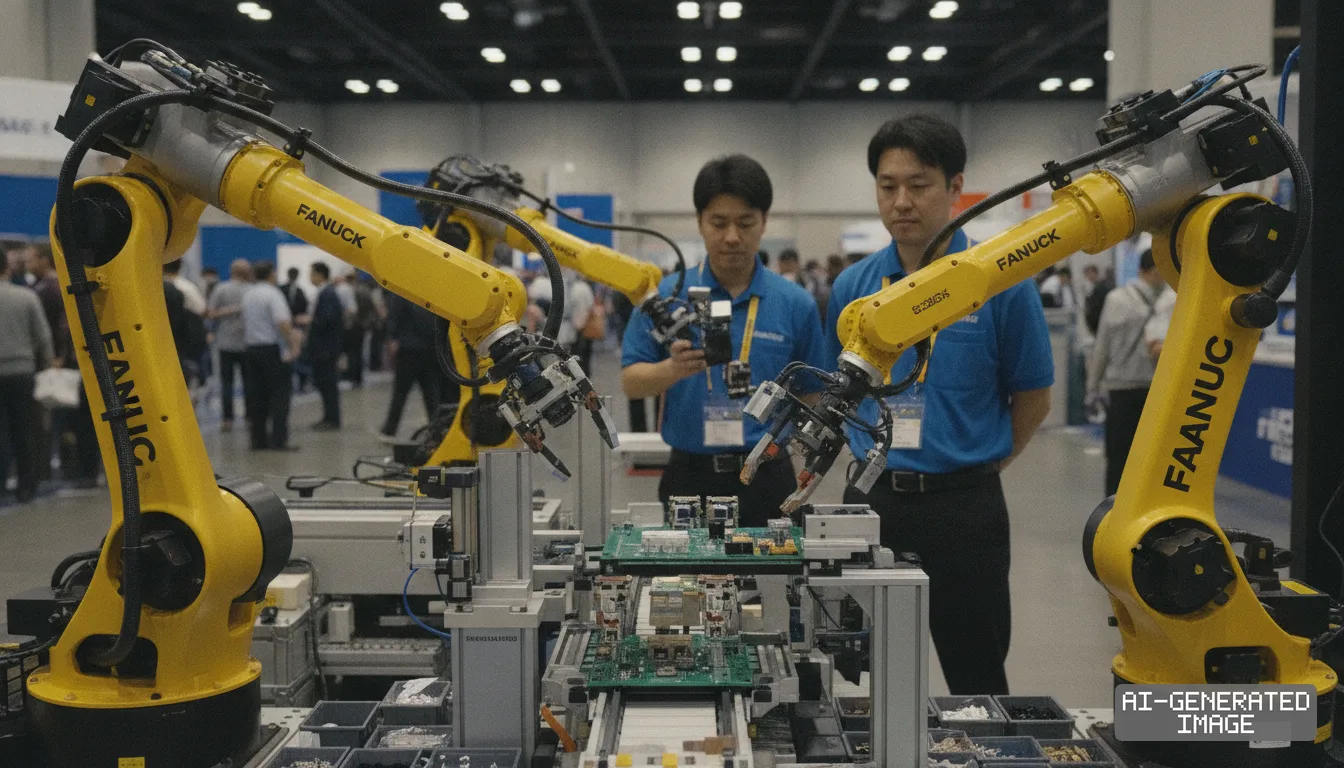
FANUC demonstrated physical artificial intelligence robotics at the International Manufacturing Technology Show in Chicago on Sept. 14, 2026, targeting flexible assembly lines for high-mix factory operations.
The Japanese automation specialist designed the systems to eliminate manual teaching in low-volume manufacturing runs. The demonstrations ran inside McCormick Place as industrial producers face acute shortages of experienced programmers and machine operators.
The demonstration featured a portable 11-kilogram collaborative robot with a 3-kilogram payload operating from an autonomous mobile transporter. The mobile setup drew power directly from 24-volt to 48-volt vehicle batteries without an external inverter.
Direct-current operation cuts electrical conversion hardware from factory vehicles. The configuration links the new R-50iA Compact DC Controller to collaborative arms mounted on automated mobile units, the company said.
The mobile arm tended a newly introduced ROBODRILL D74CS machining center. That machine tool uses a 12,000-revolution-per-minute high-acceleration spindle designed to reduce cycle times during precision metal cutting.
Automakers and contract machining suppliers maintain thousands of fixed conveyors that cannot alter paths when parts change. Mobile manipulators let facilities reroute material between CNC machines without reconstructing floor layouts.
A parallel demonstration developed with Google Cloud showed an AI agent interpreting handwritten instructions on clipboards. The software directed a robot arm to identify, locate and kit mixed parts for assembly tasks.
The system replaces hardcoded logic with multimodal reasoning models. Factory technicians can write order quantities on paper rather than adjusting ladder logic or teaching points line by line.
FANUC also demonstrated natural-language program creation through its CRX Vibe Coding system. The interface converts spoken verbal commands into Python scripts and executable robotic trajectories.
Traditional industrial robot installations require days of manual waypoint entry by specialized engineers. Generating motion syntax from plain language shortens commissioning times for job shops that handle variable component designs.
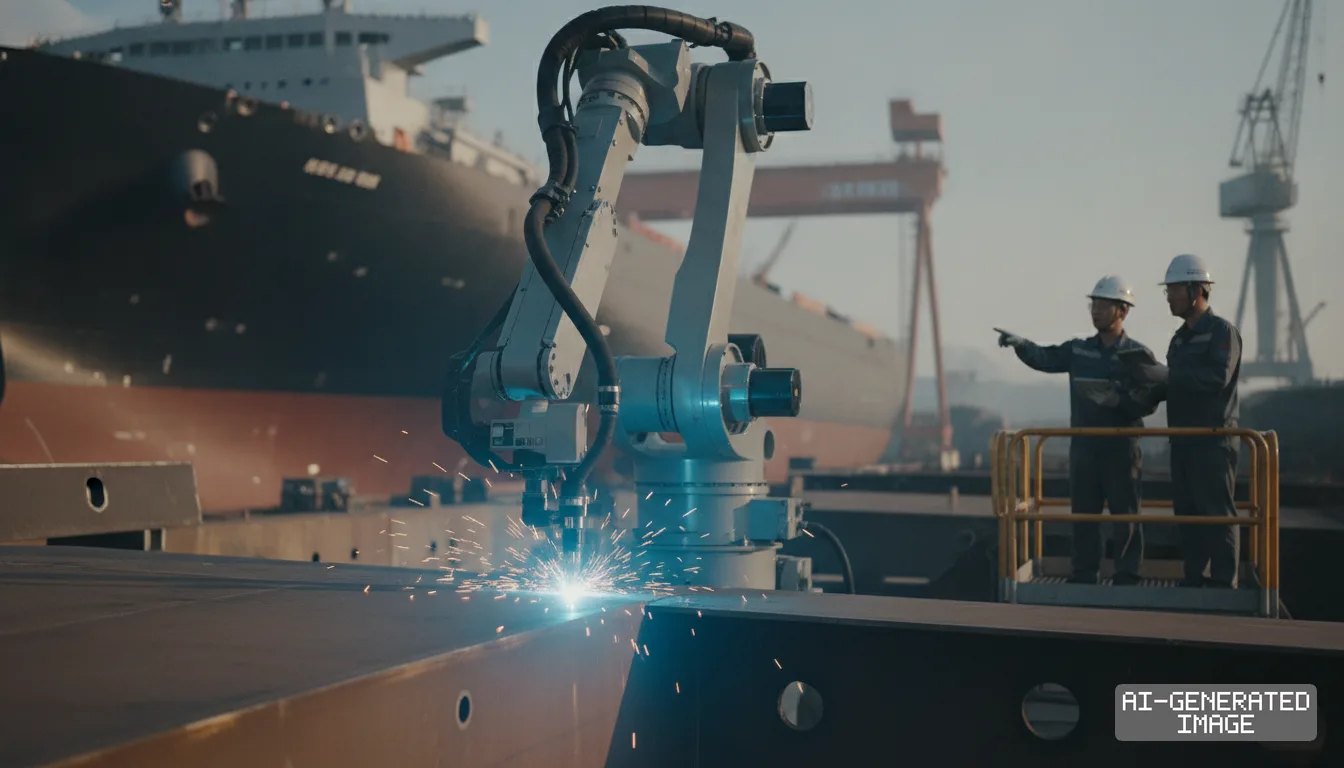
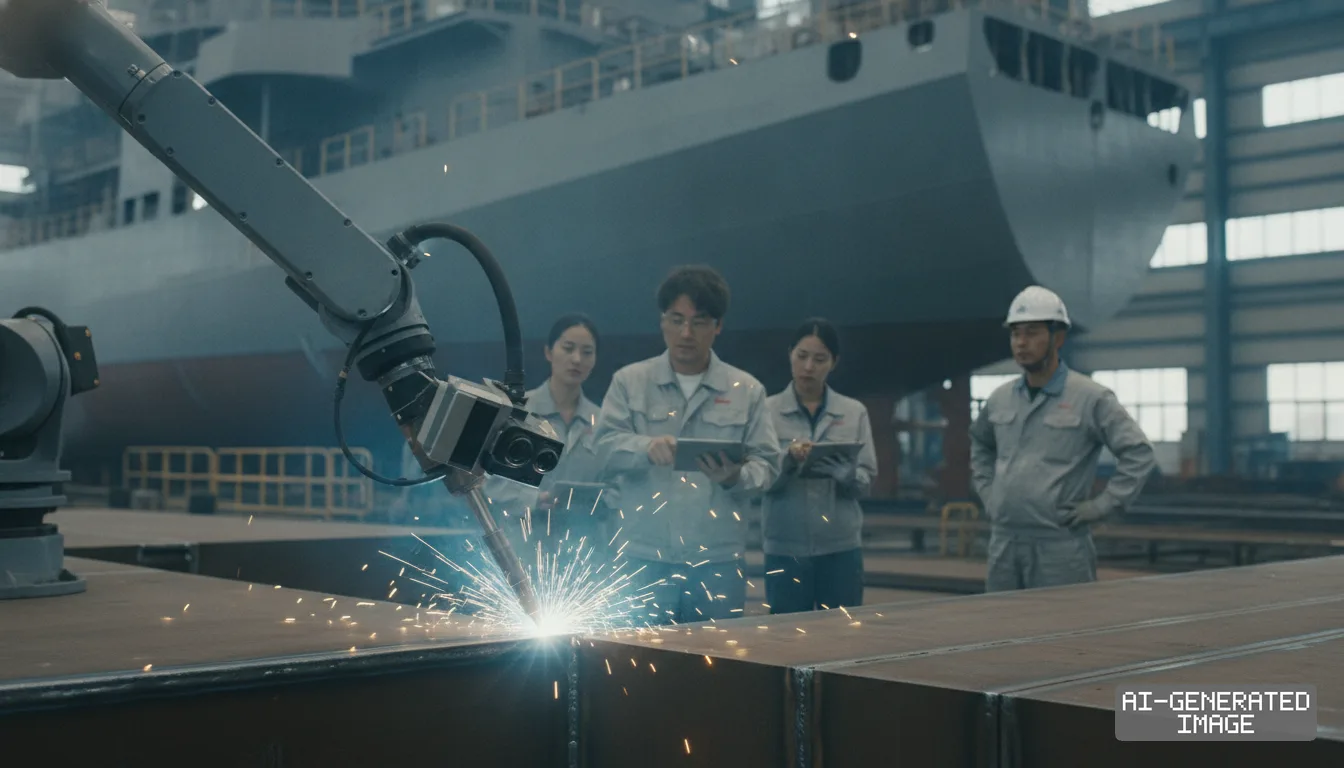
The physical AI initiative extends into metal fabrication through a dedicated arc welding agent. FANUC developed the tool using Google Cloud's Gemini Enterprise platform to automate complex weld paths.
The system captures images of two-dimensional engineering prints and determines joint locations automatically. It calculates voltage, wire feed rates and travel speeds without requiring an operator to guide the welding torch.
Small and mid-sized metal fabricators hold back from robotic welding because programming takes longer than manual joining on short production runs. Eliminating manual teaching allows robotic cells to handle one-off batches profitably.
FANUC linked its hardware architecture to NVIDIA Isaac Sim and proprietary ROBOGUIDE environments. The software connection creates a synchronized digital twin that validates toolpaths and checks collisions before metal is cut.
Simulating kinematics in physics-accurate software allows tier-1 automotive suppliers to test tooling variations virtually. The method protects expensive machine spindles from programming errors during production changeovers.
Automotive part suppliers and industrial machinery builders face margin compression from rising labor rates and frequent model redesigns. Tooling transitions that once required factory shutdowns can now occur through software updates.
FANUC manufactures industrial robots and CNC controllers at its automated complexes in Yamanashi Prefecture, Japan. The company holds more than 750,000 robot installations worldwide across aerospace, automotive and electronics factories.
The North American automation market accounts for roughly a third of global industrial robot sales. High labor rates in the region have accelerated orders for mobile tending systems and zero-programming automation cells.
FANUC will present live arc-welding runs of the AI Welding Agent at the International Welding Show in Tokyo on Sept. 16, 2026. Commercial shipments of the welding agent software are scheduled to begin by Dec. 31, 2026, the company said.
FANUC has not published subscription pricing or licensing fees for the Gemini-based welding software. The company also did not state hardware controller upgrade costs for retrofitting existing robot arms with the AI agent.
The demonstrations run through Sept. 19, 2026, at McCormick Place in Chicago.
Impact map
How this development propagates across the region and out to global buyers.
| Event | Korea | China | Japan | Global impact |
|---|---|---|---|---|
| Physical AI robotics deployment | HD Hyundai Robotics faces elevated software integration competition in shipyard welding | Inovance and Estun see price pressure on standard six-axis arms as intelligence shifts value to software | FANUC expands recurring software revenue while defending 750,000-unit installed base | Contract machining shops reduce setup downtime by shifting low-volume cells to autonomous mobile cobots |
In this story
- Companies
- FANUC
- Tickers
- 6954.T
- Exposed
- AlphabetNVIDIA
- Policy
- Economic Security
- Impact
- Supply ChainCapexCost Structure
Track every Economic Security development →
Related briefings
- Fanuc and Google launch AI welding robot to read blueprints Also on Alphabet, Fanuc
- FANUC America links factory robots to Palladyne AI platform Also on Alphabet, Nvidia
- Japan accelerates grants for rare-earth-reduced robot motor magnets under economic security act Also on Fanuc
- FANUC widens CRX cobot palletizing to 40 kg as food plants automate heavy cases Also on FANUC
Sources
Reporting
Confidence: medium — how we grade this
The documents behind this briefing are linked above. East Asia Brief produces its English text with AI assistance under human editorial review, and does not translate or republish other outlets' articles. See our methodology and AI policy. Spotted an error? Tell us.
The Morning Brief
What changed in Korean, Chinese and Japanese industry overnight — and what it means for your supply chain. One email, weekday mornings, US time. Free.
The first issue goes out shortly. Sign up now and you will not miss it.