Samsung develops humanoid robot prototype before 2027 debut
The South Korean technology company coordinates robot hardware and software under a unified division while preparing factory lines for automated production.
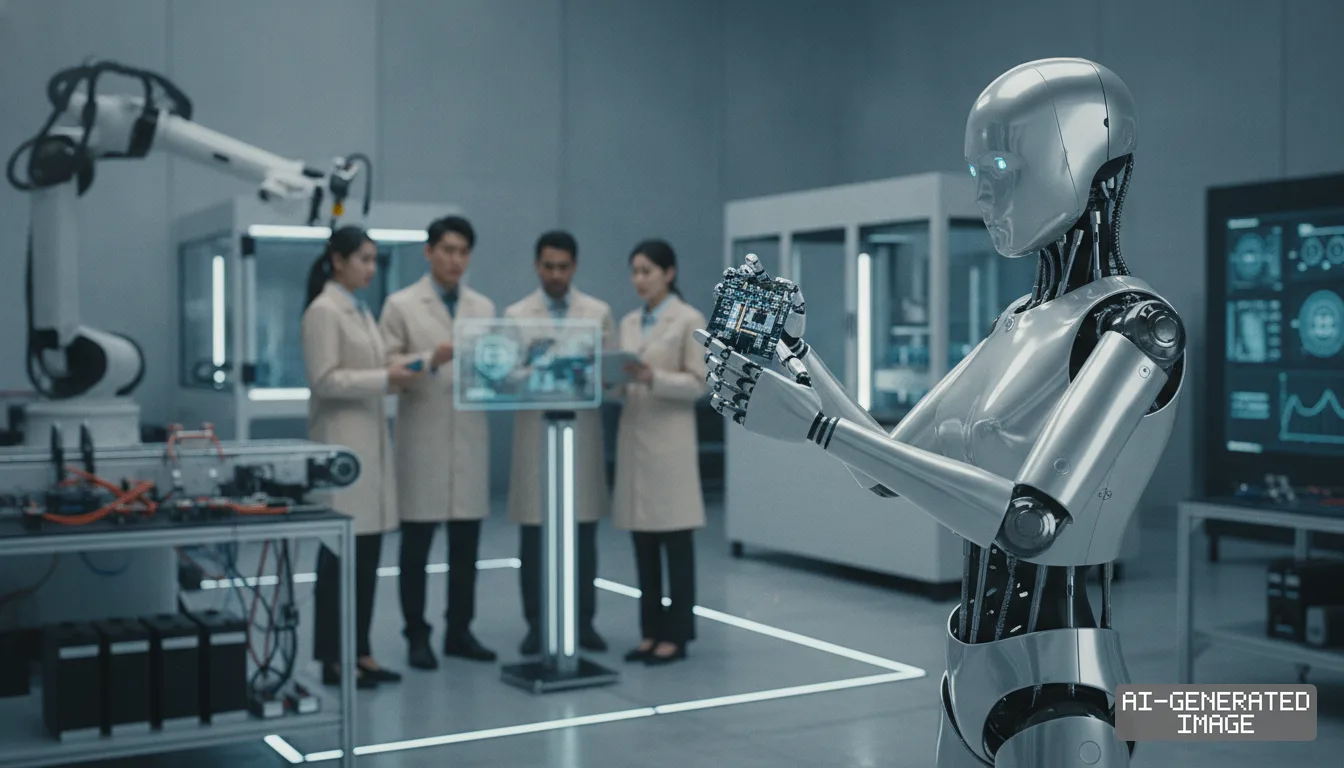
Samsung Electronics accelerated prototype work on an in-house humanoid robot on Sept. 7, 2026, targeting an early industry presentation while keeping official exhibition schedules unconfirmed.
The company declined to confirm whether it would formally display the finished machine at CES 2027 in Las Vegas. Company representatives said product release roadmaps remain subject to internal testing benchmarks.
Internal planning placed mechanical hardware and software teams under unified management inside the Device eXperience division. Chief Technology Officer Yoon Jang-hyun leads hardware and artificial intelligence development for the robotics unit, company officials said.
Samsung established the dedicated Robotics eXperience business planning office in July under Device eXperience division head Roh Tae-moon. The group coordinates engineering resources previously scattered across home appliance and mobile research divisions.
Big tech companies treat physical AI — artificial intelligence models that interact directly with physical surroundings through sensors and joints — as the next manufacturing frontier. Hardware integration requires specialized actuators and high-speed processors.
Actuators — compact electric motors paired with precision gear reducers to rotate mechanical joints — represent over half of total humanoid component costs. Samsung plans to manufacture proprietary drive units to lower assembly expenses.
Samsung pursues a dual-track engineering strategy alongside affiliate Rainbow Robotics, where Samsung holds a controlling ownership stake. Rainbow Robotics builds industrial dual-arm robots, while Samsung concentrates on general-purpose humanoid systems, regulatory filings show.
Rainbow Robotics manufactures the RB-Y2 dual-arm mobile manipulator to automate repetitive industrial handling. The platform provides physical training data for Samsung engineers training robotic neural networks on complex assembly tasks.
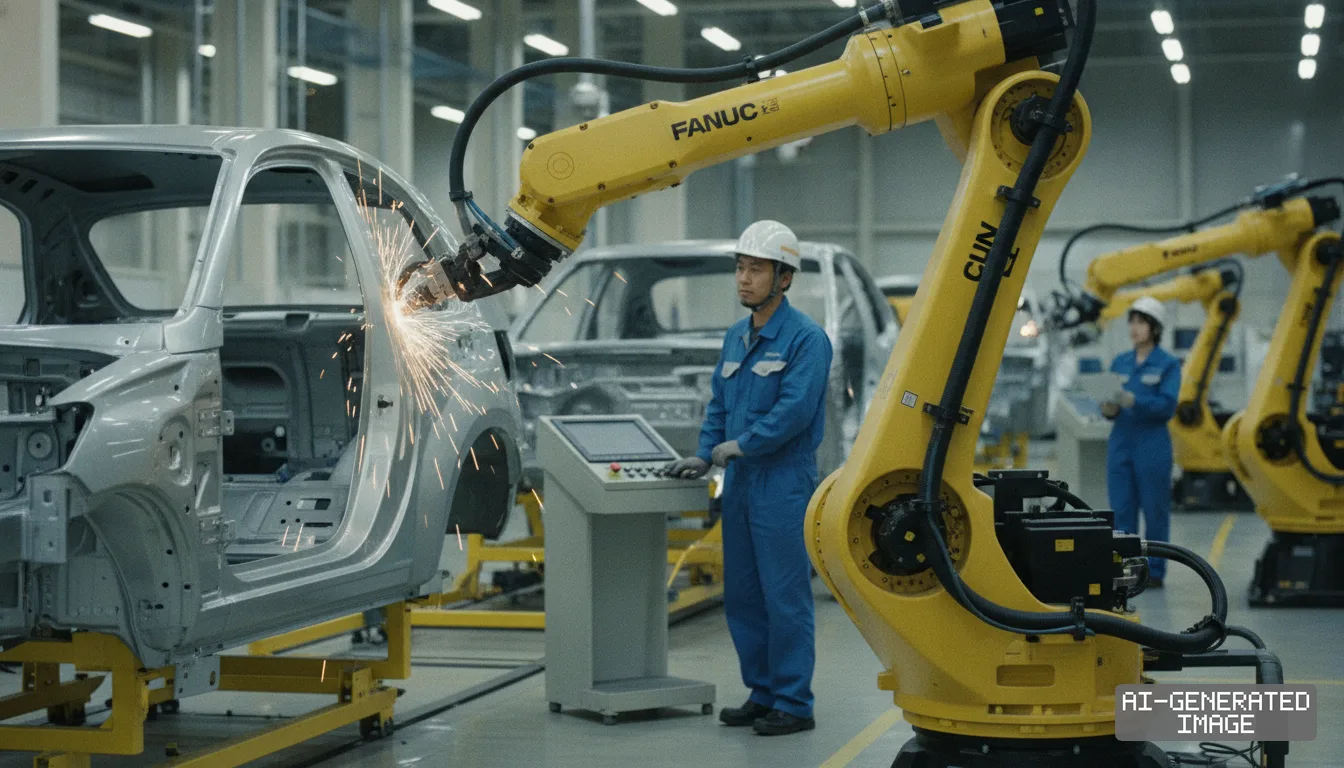
Samsung outlined plans on March 1, 2026 to transition global manufacturing facilities into fully automated plants by 2030. The initiative introduces specialized humanoid units to manage production lines, transport raw materials and execute precision assembly.
Operating robots will monitor cleanrooms and run equipment diagnostic checks without human workers present. Logistics units will transfer semiconductor wafers and display glass between automated processing bays, the March announcement said.
Samsung announced a 60 trillion won ($45 billion) investment program on July 3, 2026 across the Yeongnam industrial region in southern South Korea. The expenditure funds a dedicated humanoid production base and robot data center in Gumi.
The Gumi complex will collect operational telemetry from factory robots to train physical AI foundation models. Samsung plans to establish automated assembly lines at the location to manufacture commercial bipedal and wheeled industrial units.
Power density remains a major mechanical challenge for bipedal robots carrying heavy electric motors. Affiliate Samsung SDI plans to build production capacity in Ulsan to supply all-solid-state battery cells for the group's humanoid platforms.
All-solid-state cells replace combustible liquid electrolytes with solid ceramic separators to increase energy storage capacity safely. The chemistry extends continuous operating time beyond the two-hour limit common in existing lithium-ion battery packs.
Component arm Samsung Electro-Mechanics will produce high-density multilayer ceramic capacitors and specialized substrate packages for onboard motion controllers. Cloud affiliate Samsung SDS provides central server infrastructure to orchestrate automated factory fleets across multiple sites.
Global industrial competition focuses on reducing humanoid fabrication costs below $30,000 per unit to compete with traditional factory wages. Manufacturers in the United States and China have placed trial fleets into automotive assembly facilities.
Chinese producers benefit from regional supplier clusters in Shenzhen that deliver inexpensive motors, while American developers rely on Asian component makers for mechanical chassis. Both regional rivals target commercial logistics operators and warehouse chains.
Samsung controls semiconductor fabrication, display manufacturing and battery production lines within its corporate boundaries. That vertical structure protects internal robotics development from external component shortages and erratic supplier price hikes, industry analysts said.
The company intends to supply proprietary neural processing units and power management integrated circuits directly from domestic fabrication plants. On-device chips allow humanoid robots to process vision streams locally without transmitting plant footage to public networks.
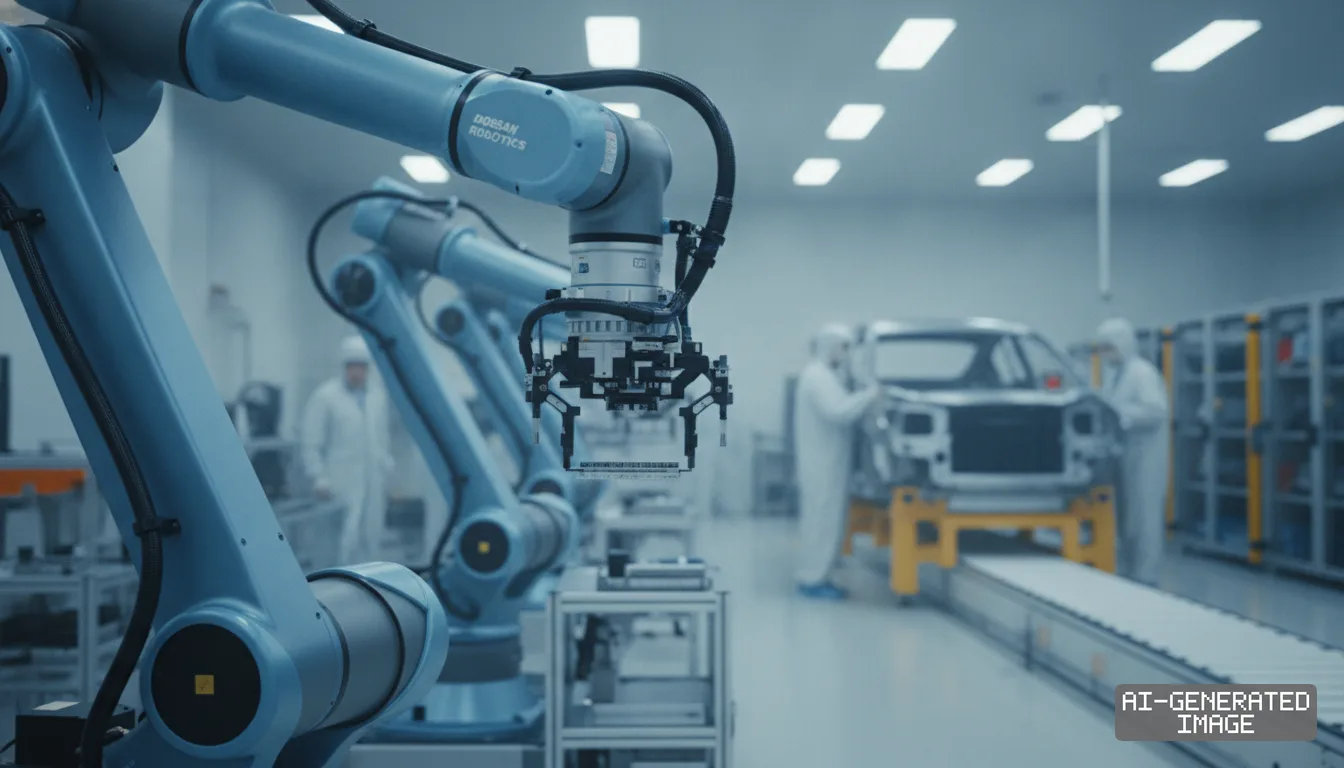
Field trials for initial prototypes will take place inside domestic semiconductor packaging cleanrooms to evaluate wafer handling before broader external deployment. Engineers must confirm whether mechanical grippers can transfer fragile silicon wafers without micro-fracturing edges.
Commercial deployment requires robotic joints to operate for 5,000 continuous hours without mechanical failure or gear slippage. Bipedal prototypes across the international market frequently require maintenance after several hundred operating hours, according to industry benchmarks.
The company will complete internal reliability evaluations at domestic manufacturing plants before finalizing public demonstration schedules for commercial buyers. Samsung has not published a commercial release date or customer pricing structure for outside industrial purchasers.
Impact map
How this development propagates across the region and out to global buyers.
| Event | Korea | China | Japan | Global impact |
|---|---|---|---|---|
| humanoid robot roadmap | domestic automation lines | rival robotics makers | precision actuator suppliers | manufacturing labor cost |
In this story
- Companies
- Samsung ElectronicsRainbow Robotics
- Tickers
- 005930.KS277810.KS
- Policy
- Economic Security
- Impact
- CapexSupply ChainOrder Book
Track every Economic Security development →
Related briefings
- SFA and Rainbow Robotics form pact on autonomous fab systems Also on Rainbow Robotics, Samsung Electronics, Order Book
- Samsung SDS develops robot orchestration platform for 2027 Also on Rainbow Robotics, Samsung Electronics, Order Book
- Rainbow Robotics taps E Tech Group to expand US cobot fleet Also on Rainbow Robotics, Samsung Electronics, Order Book
- Bigwave Robotics partners with automation suppliers to scale US physical AI Also on Rainbow Robotics, Samsung Electronics, Order Book
Sources
Reporting
Confidence: medium — how we grade this
The documents behind this briefing are linked above. East Asia Brief produces its English text with AI assistance under human editorial review, and does not translate or republish other outlets' articles. See our methodology and AI policy. Spotted an error? Tell us.
The Morning Brief
What changed in Korean, Chinese and Japanese industry overnight — and what it means for your supply chain. One email, weekday mornings, US time. Free.
The Morning Brief is in preparation. Leave your address and we will write to you once — when the first issue is ready. Nothing before that.