Harmonic Drive expands Japanese reducer capacity for humanoid robotics demand
Capital expenditure at the Hotaka plant targets high-torque strain wave gears to clear joint actuator bottlenecks across industrial and humanoid robotics platforms.
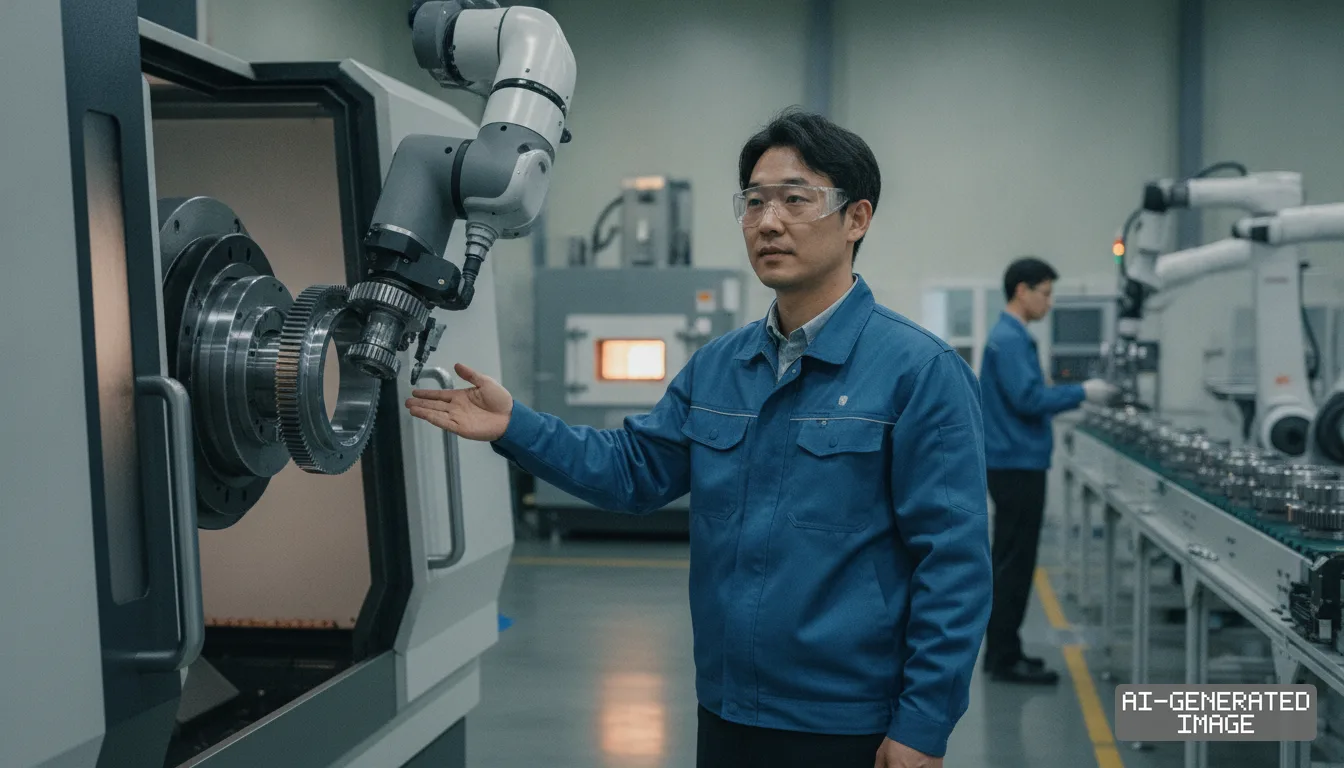
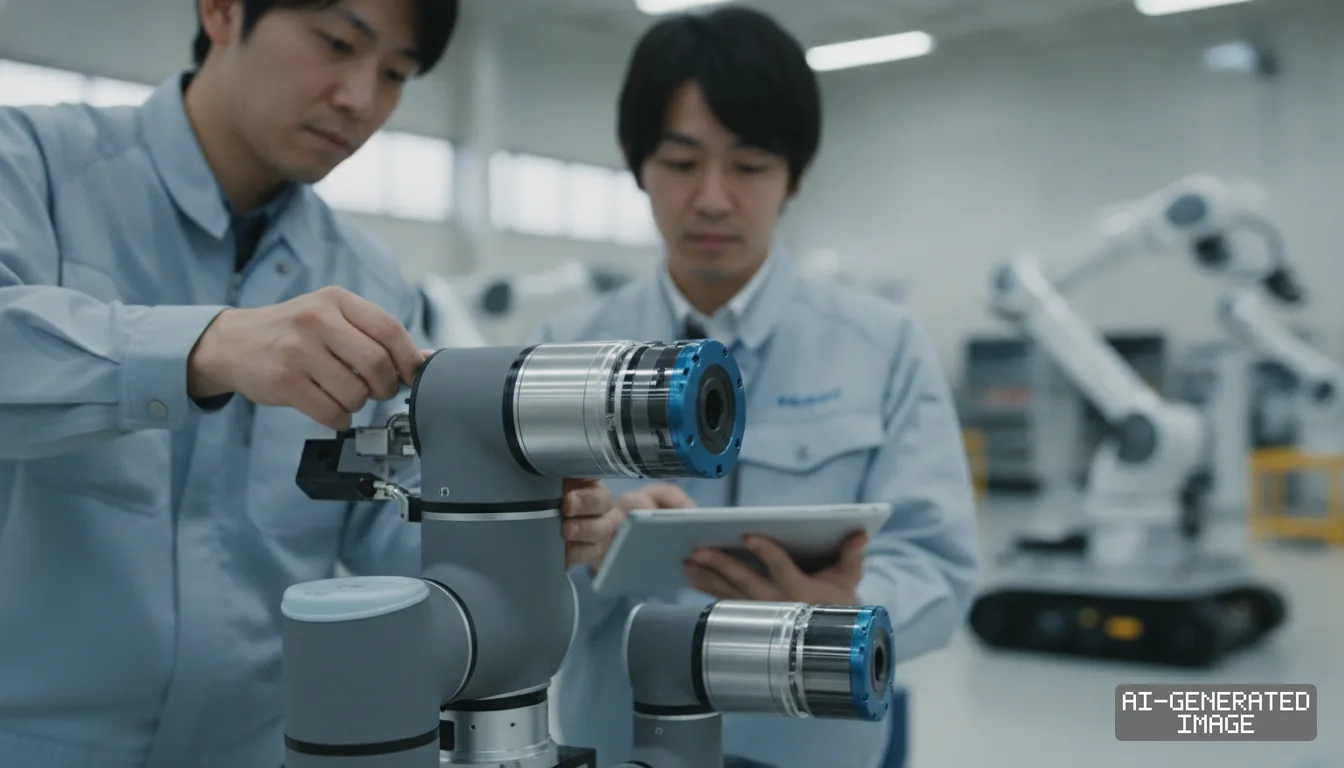
Harmonic Drive Systems has begun installation of high-precision machine tools at its Hotaka facility in Nagano Prefecture to expand domestic production capacity for next-generation strain wave gears. The capital expenditure program allocates funding toward dedicated multi-axis grinding centers, specialized heat treatment furnaces, and automated optical metrology lines designed to manufacture lightweight, high-reduction speed reducers used in robotic rotary actuators.
The investment addresses a widening supply constraint in high-ratio, zero-backlash precision reducers required for both industrial collaborative arms and emerging humanoid robotic platforms. Harmonic Drive Systems manufactures speed reducers based on the strain wave gearing principle, where an elliptical wave generator rotates inside a flexible, externally toothed cup to mesh with an internal ring gear. This architecture delivers gear ratios ranging from 30:1 to 160:1 in a single stage while maintaining near-zero mechanical backlash and positional repeatability under 0.1 arc-minutes.
Industrial robot builders and humanoid developers have encountered extended procurement lead times for specialized compact hollow-shaft reducers, where internal wiring and cooling lines pass directly through the joint axis. The expansion program in Azumino increases the plant floor allocation for the company's ultra-flat and hollow-shaft gear series, which integrate thin-walled flexsplines made from proprietary chrome-molybdenum alloy steels.
Manufacturing strain wave gears requires sub-micron machining tolerances and controlled metallurgical processing to prevent early fatigue failure in the flexspline under repeated torsional cycles. The company is deploying customized tooth-profile grinding machines developed jointly with Japanese machine tool builders to automate the finishing of internal circular splines and external flexspline teeth. This tooling cuts cycle times on complex gear profiles by roughly 18 percent compared to older dedicated hobbing lines.
The component shortage has become a critical operational factor for robotics original equipment manufacturers designing multi-jointed articulated systems. Humanoid designs typically require between 20 and 40 rotary actuators across shoulders, elbows, wrists, hips, knees, and ankles. Because payload capacity in mobile bipedal platforms is constrained by actuator mass, engineering teams select strain wave reducers over heavier planetary or cycloidal gearboxes for upper-body and lightweight lower-body articulations.
Suppliers of collaborative robots, including Universal Robots, Fanuc Corporation, and Yaskawa Electric Corporation, also rely on high-torque strain wave units to lower arm inertia and improve force-feedback sensitivity in collision-detection systems. As annual production volumes for lightweight industrial arms climb in electronics and automotive assembly lines, component supply chains have absorbed rising baseline order volumes alongside developmental humanoid orders.
Competitive pressure in precision gearing is dividing along payload and regional manufacturing lines. Nabtesco Corporation supplies larger cycloidal reducers for heavy industrial robots carrying payloads above 20 kilograms, a segment where tooth contact area and shock-load resistance take priority over total gear volume. In the low-to-medium payload range below 10 kilograms, Chinese manufacturers, led by Suzhou Leader Harmonious Drive Systems, have built high-volume capacity for standard strain wave reducers to supply domestic robot makers.
Harmonic Drive Systems is responding to Chinese price competition by shifting its domestic Japanese output toward higher-torque-density models with integrated cross-roller bearings and built-in torque sensors. These integrated component sets eliminate separate bearing housings and alignment steps during actuator assembly, reducing assembly hours for downstream robot builders.
The Hotaka plant expansion also adds automated cleanroom testing cells to verify positional deviation, hysteresis loss, and thermal dissipation on every completed unit before shipment. Semiconductor fabrication equipment makers, which use strain wave reducers in wafer-transfer robots and vacuum-handling mechanisms, require certified low-outgassing lubricants and ultra-low particle generation. The upgraded inspection line integrates automated optical scanning to screen for micro-burrs and surface irregularities on gear teeth down to 0.5 micrometers.
The procurement schedule for the new machining centers runs through the third quarter of 2026, with full commercial operation across the expanded line scheduled for the final quarter of the calendar year. Factory output will ramp incrementally as precision tool calibration and material batch certifications are finalized with domestic specialty steel suppliers.
Impact map
How this development propagates across the region and out to global buyers.
| Event | Korea | China | Japan | Global impact |
|---|---|---|---|---|
| Strain wave reducer expansion | robot actuator sourcing | component price competition | domestic gear capacity ramp | humanoid lead time easing |
In this story
- Companies
- Harmonic Drive Systems
- Tickers
- 6324.T
- Exposed
- NabtescoFanucYaskawa ElectricSuzhou Leader Harmonious Drive Systems
- Policy
- Economic SecuritySubsidies
- Impact
- CapexSupply ChainOrder Book
Track every Economic Security development → Track every Subsidies development →
Related briefings
- China Rare Earth pairs with Benmo on humanoid robot magnets Also on Nabtesco, Harmonic Drive Systems
- South Korea faces 70% foreign reliance on humanoid robot parts Also on Nabtesco, Harmonic Drive Systems
- Korean electronics component suppliers deploy AI dual-arm robots as factory labor pool shrinks Also on Nabtesco, Harmonic Drive Systems
- Kawasaki Heavy advances 2030 target for AI humanoid robots Also on Harmonic Drive Systems, Fanuc, Yaskawa Electric
Sources
This briefing carries no sources block. It was written from our desks’ working knowledge of the sector rather than from documents retrieved for this piece. Read it as orientation and check any figure you intend to act on — how we source briefings.
This briefing carries no linked sources: it was written from our desks' working knowledge of the sector rather than from documents retrieved for this piece. East Asia Brief publishes no citation it cannot link. Our English text is produced with AI assistance under human editorial review. See our methodology and AI policy. Spotted an error? Tell us.
The Morning Brief
What changed in Korean, Chinese and Japanese industry overnight — and what it means for your supply chain. One email, weekday mornings, US time. Free.
The Morning Brief is in preparation. Leave your address and we will write to you once — when the first issue is ready. Nothing before that.