Panasonic Energy opens Osaka battery hub for advanced cells
The 24,500-square-meter Kadoma facility consolidates 500 engineers to cut development lead times by 15% as the supplier prepares larger cylindrical batteries for global automakers.
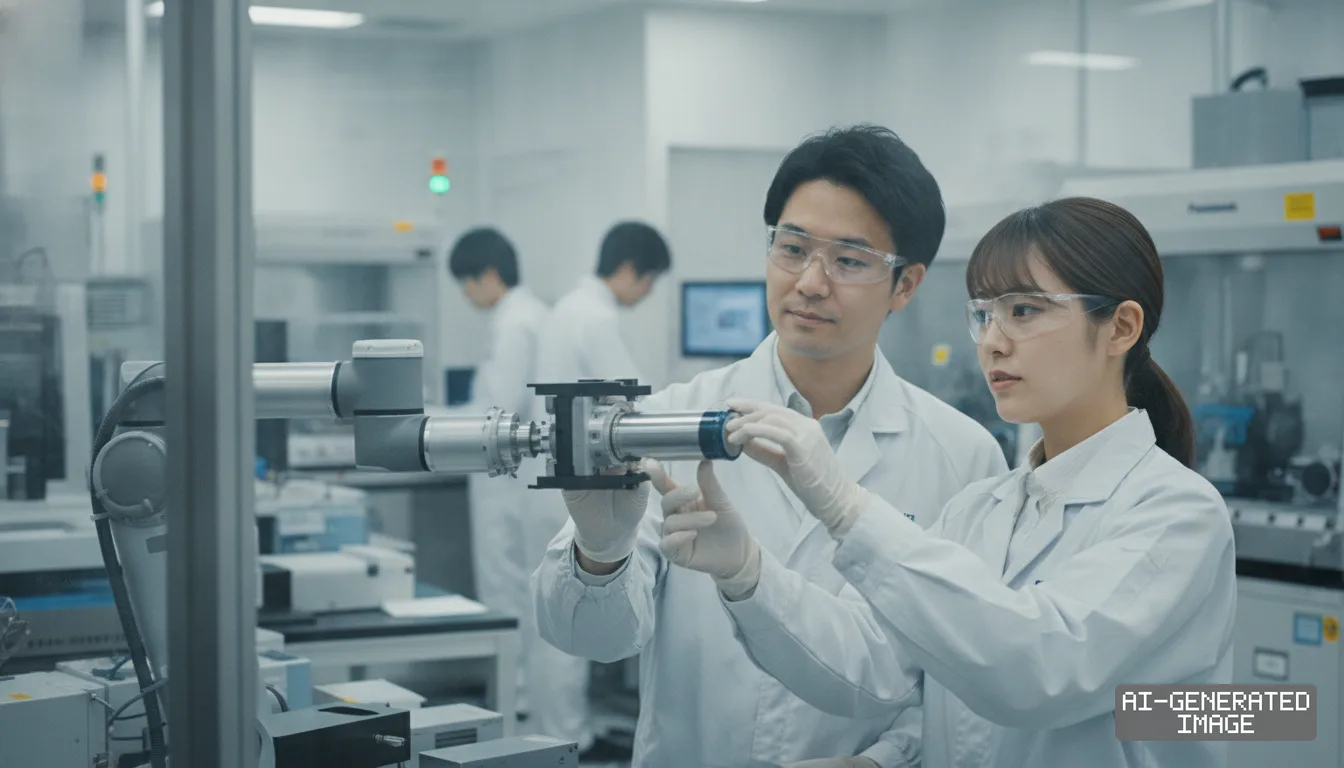
Panasonic Energy opened its Energy Innovation Square research center in Kadoma, Osaka, on Sept. 17, consolidating development functions to accelerate cylindrical electric vehicle battery commercialization.
The six-story hub spans 24,500 square meters and houses 500 researchers covering materials development, cell design and prototyping. That makes it the operational core of the Japanese battery maker's domestic technology network.
The Kadoma facility links directly with the Suminoe production process facility in Osaka City, which opened in April 2024. Together, the two sites deploy roughly 800 engineers, forming Japan's largest dedicated battery development operation.
Panasonic Energy aims to double battery development efficiency by fiscal 2030 compared with fiscal 2023 levels. The consolidation is planned to reduce product development lead times by more than 15%, the company said.
The center relies on a digital platform that combines physical prototype data with digital simulations. Continuous monitoring and statistical analysis will raise design maturity before factory deployment, according to the company statement.
The Osaka hub develops high-capacity cylindrical cells for electric vehicles, including the 4680 format. It also designs high-output power units for artificial intelligence data centers, commercial drones, robotaxis and humanoid robots.
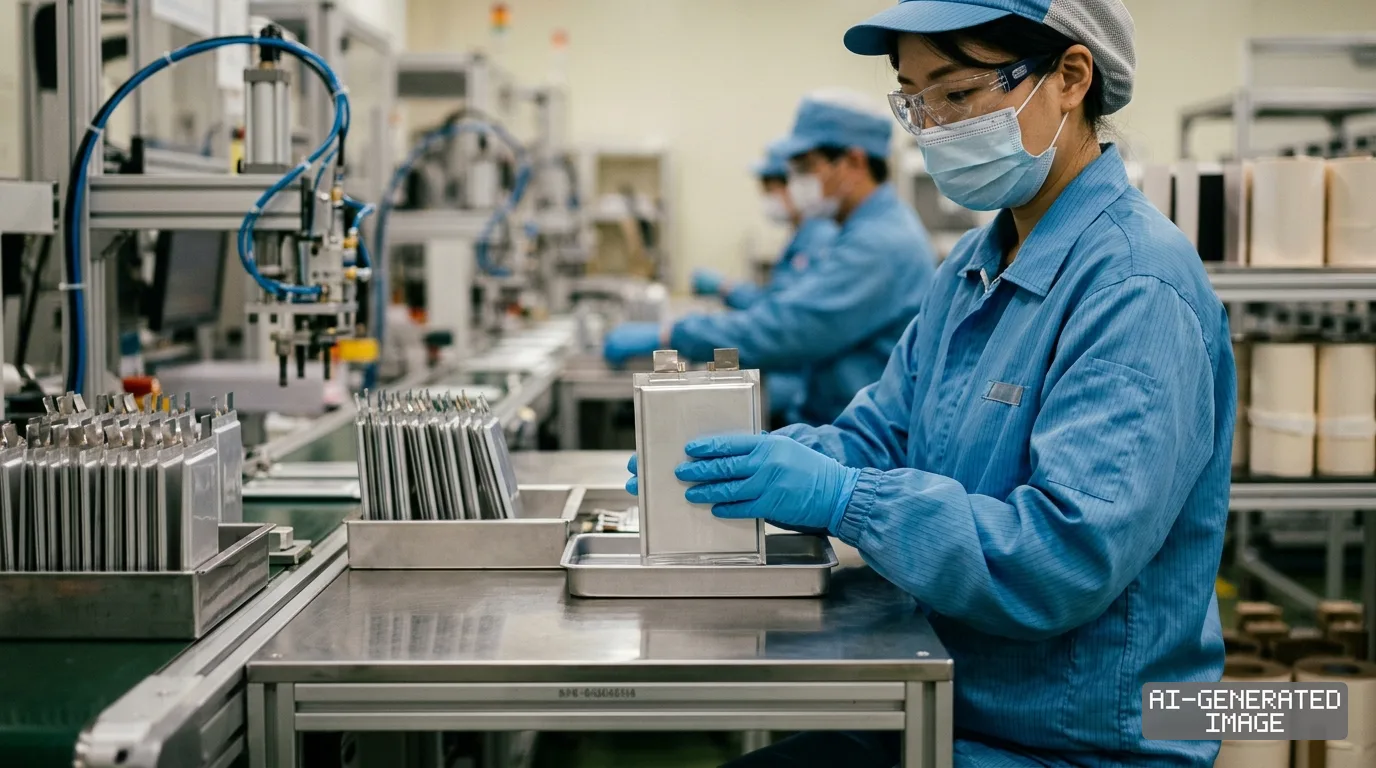
Panasonic Energy supplies cylindrical lithium-ion cells to Tesla, which remains its primary automotive customer. The company has worked to improve yields on the 4680 format, measuring 46 millimeters in diameter and 80 millimeters in height.
Larger cylindrical cells offer five times the energy capacity of smaller 2170 cells. That scale lowers production costs per kilowatt-hour, but thick electrodes create thermal dissipation hurdles during rapid charging.
The company completed mass-production preparations for 4680 cells at its Wakayama plant in western Japan on Sept. 9, 2024. The Wakayama site operates as the mother manufacturing plant for large cylindrical cells.
Commercial shipments from Wakayama depend on final customer validation and automaker production schedules. Tesla has expanded in-house 4680 cell manufacturing in Texas, while procuring additional cylindrical volume from Japanese and Korean suppliers.
South Korea's LG Energy Solution and Samsung SDI have also built pilot lines for 4680 cylindrical cells. That regional race puts pressure on Panasonic Energy to protect its position in the premium electric vehicle supply chain.
LG Energy Solution completed its 4680 manufacturing line at the Ochang plant in South Korea earlier this year. The Korean supplier plans to deliver cylindrical cells to global automakers, expanding customer options beyond Panasonic Energy.
Panasonic Energy generates most of its automotive cell revenue from North American vehicle assembly plants. The company operates a joint-venture battery facility in Nevada with Tesla and is building a second plant in De Soto, Kansas.
The Kansas facility represents an estimated $4 billion investment, scheduled to start commercial cell deliveries in 2025. Adding the Kadoma research hub allows the company to test cell chemistries before shipping production recipes to overseas lines.
Shifting engineering work to digital simulations addresses yield volatility that has delayed commercial 4680 rollouts. Battery producers must align dry-electrode coating, tabless welding and high-speed winding without creating internal micro-defects.
The Kadoma site centralizes materials synthesis to test next-generation silicon-dominant anodes and high-nickel cathodes. Raising silicon content above 10% increases volumetric energy density, but silicon particles swell during charging cycles.
Engineers at the hub are testing composite binders and electrolyte additives to control anode expansion. Early prototype evaluation at Kadoma will precede process trials at the Suminoe plant, the company said.
The company did not disclose the total capital expenditure for the Kadoma center or specify new delivery volumes contracted for 4680 cells. Official filings also omit shipment timelines for non-automotive robotics and data-center power applications.
Automotive battery demand growth slowed in North America through 2024 and 2025, prompting automakers to adjust procurement timetables. Panasonic Energy revised its global battery capacity targets to 150 gigawatt-hours by 2031, down from an earlier 200 gigawatt-hour goal.
Diversifying into data center backup systems provides Panasonic Energy an alternate revenue channel. Artificial intelligence server racks require high-discharge lithium-ion modules to prevent voltage drops during unexpected grid interruptions.
The Kadoma facility began full operational trials for specialized data-center storage designs this month. Prototype units are undergoing cycle-life stress testing under elevated ambient temperatures, according to facility briefing materials.
Panasonic Energy schedules full validation reviews for its next-generation cell designs at Kadoma in early 2027. Production teams at the Wakayama and Suminoe facilities will integrate the verified parameters into commercial manufacturing lines.
The Japanese battery maker filed technical patents covering its tabless cylindrical design and current-collector welding structure with the Japan Patent Office on Sept. 16. Those filings secure domestic intellectual property protections for the Kadoma prototype configurations.
Impact map
How this development propagates across the region and out to global buyers.
| Event | Korea | China | Japan | Global impact |
|---|---|---|---|---|
| Kadoma R&D hub launch | LG Energy Solution faces direct cycle-time competition in 4680 cell rollout | CATL retains prismatics lead while Japanese suppliers consolidate cylindrical IP | Panasonic Energy consolidates 800 researchers to double cell development efficiency | Tesla diversifies cylindrical 4680 supply chain as yield ramp accelerates |
In this story
- Companies
- Panasonic HoldingsPanasonic Energy
- Tickers
- 6752.T
- Exposed
- TeslaLG Energy SolutionSamsung SDI
- Policy
- Economic SecuritySubsidies
- Impact
- CapexSupply ChainPricing
Track every Economic Security development → Track every Subsidies development →
Related briefings
- Panasonic Energy unveils 150 C solid-state prismatic battery Also on Panasonic Energy, Panasonic Holdings, Tesla
- Panasonic Optimizes 4680 Battery Cell Yields at Wakayama Plant in Japan Also on Panasonic Energy, Panasonic Holdings, Tesla
- China Tightens Dual-Use Graphite Export Licensing for Anode Supply Chains Also on Panasonic Energy, Samsung SDI, LG Energy Solution
- Sumitomo Chemical shifts aramid separator lines to Korea as battery thermal rules tighten Also on Panasonic Holdings, Samsung SDI, LG Energy Solution
Sources
Reporting
Confidence: medium — how we grade this
The documents behind this briefing are linked above. East Asia Brief produces its English text with AI assistance under human editorial review, and does not translate or republish other outlets' articles. See our methodology and AI policy. Spotted an error? Tell us.
The Morning Brief
What changed in Korean, Chinese and Japanese industry overnight — and what it means for your supply chain. One email, weekday mornings, US time. Free.
The first issue goes out shortly. Sign up now and you will not miss it.