China magnet export delays squeeze servo motor supply in South Korea
Licensing backlogs extending up to eight months hit component maker Robotis as the domestic sector relies on Beijing for 90% of magnets.
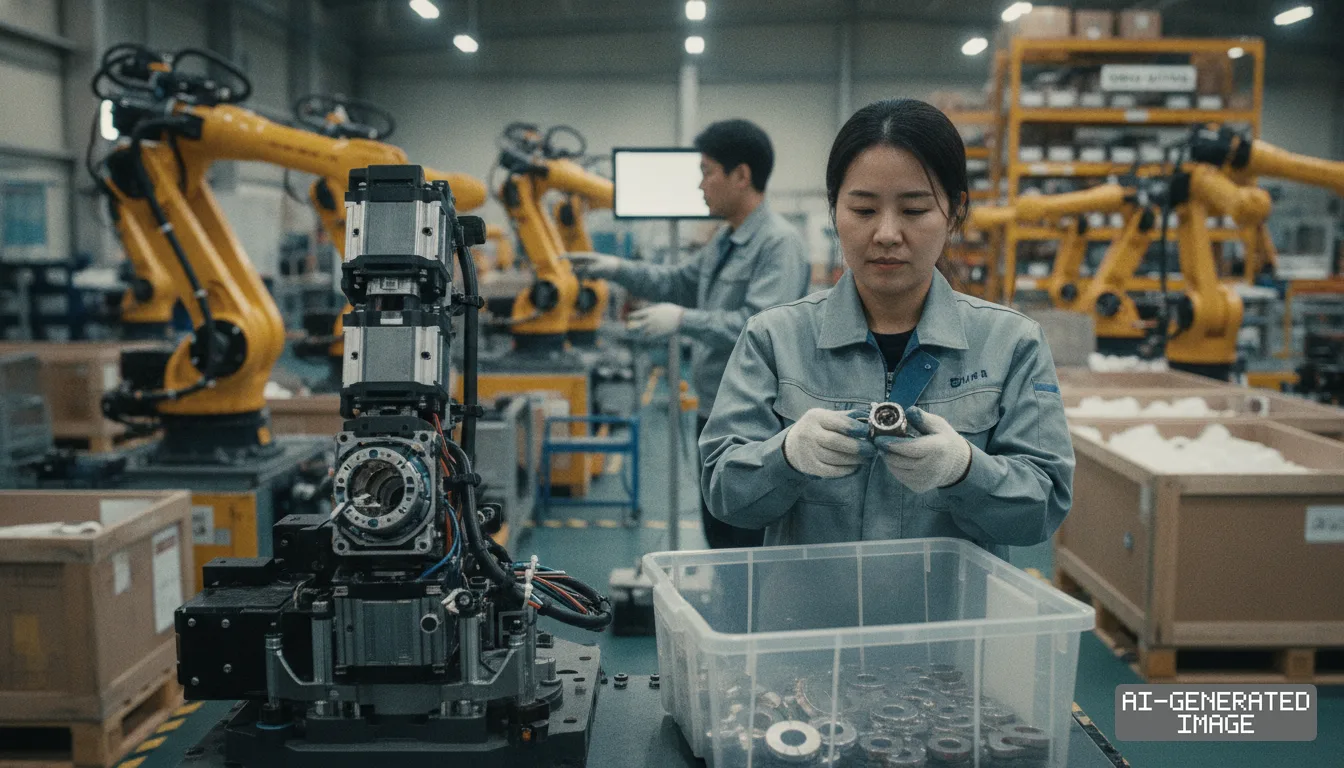
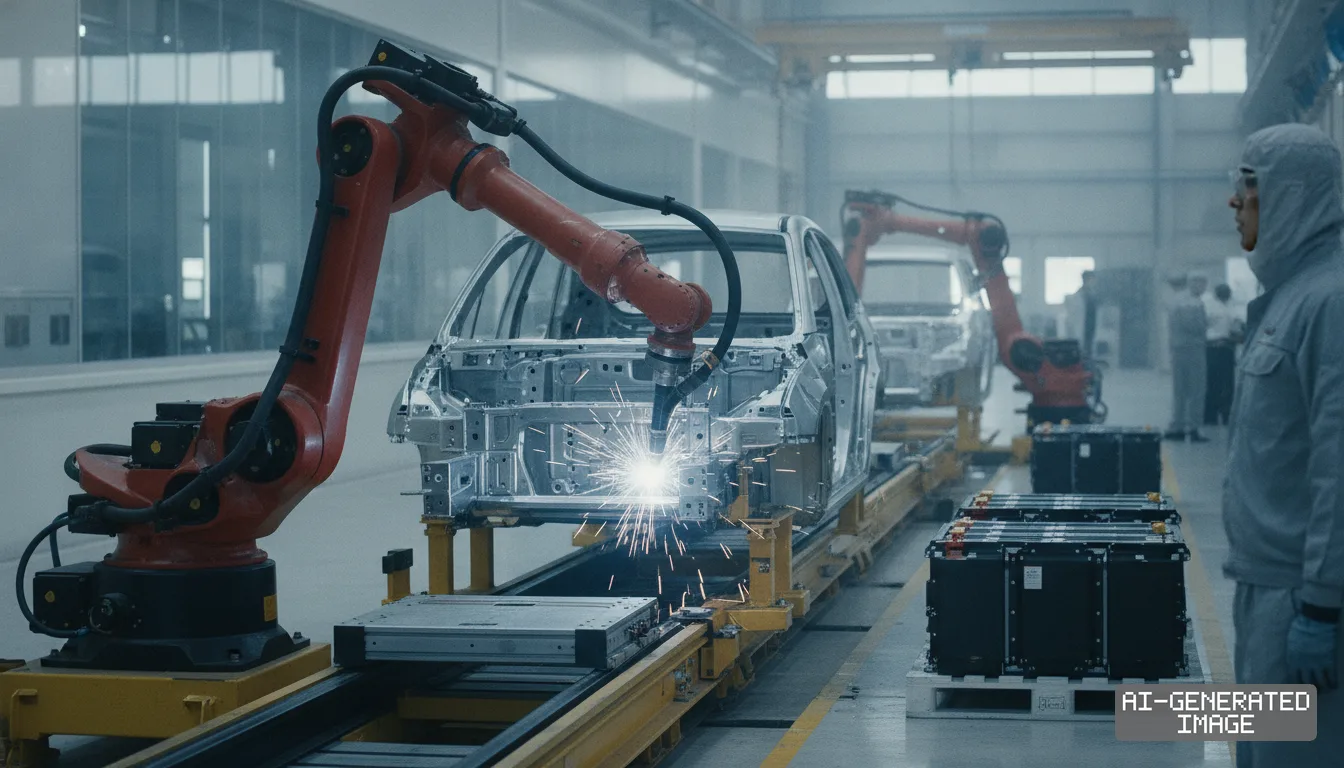
South Korean robot manufacturers faced severe servo motor delivery bottlenecks on Nov. 21, 2026, as administrative delays under China's rare earth permanent magnet export licensing regime stretched material shipments to eight months.
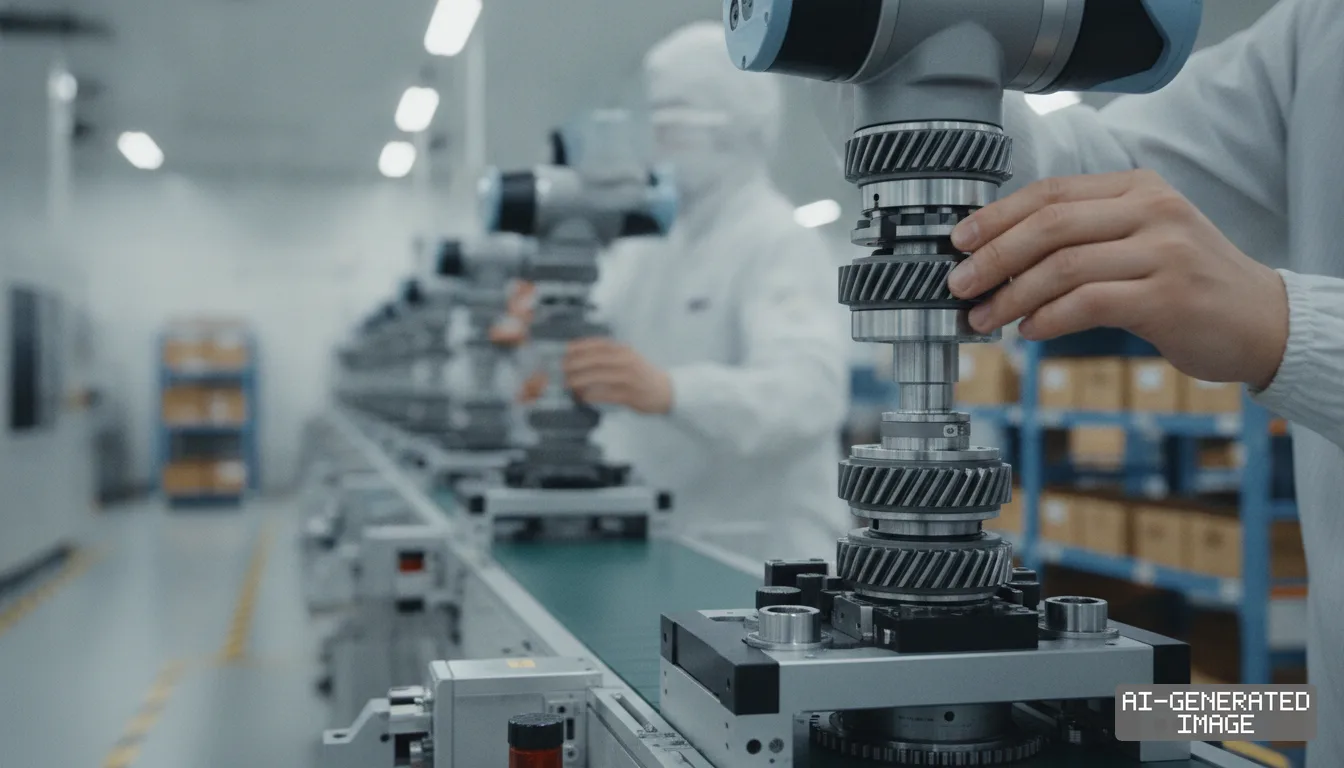
South Korea relies on China for roughly 90% of its permanent magnet imports. Those magnets provide the magnetic torque needed for precision servo motors — compact motors integrated directly into robot joints — that drive industrial and collaborative robotic arms.
The procurement delays hit operating earnings at component maker Robotis during the third quarter of 2026. The company posted 13.5 billion won ($9.8 million) in quarterly revenue, up 45% year-on-year, but booked a 2.6 billion won ($1.9 million) operating loss.
Robotis experienced delivery stalls for high-grade magnets used in its DYNAMIXEL-Y actuator lines, the company said in regulatory filings. The shortfall prevented the company from fulfilling surging overseas automation orders on schedule.
Collaborative robot manufacturer Neuromeka faced similar procurement stalls. The company, which is developing proprietary servo motors to reduce reliance on Japanese imports, saw permanent magnet shipments take up to eight months to arrive.
That shipment duration exceeds China's statutory export license review window of 45 working days. The extended waits disrupted mass production schedules for Neuromeka's collaborative robotic arms, factory managers said.
The regulatory pressure stems from measures announced by China's Ministry of Commerce (MOFCOM) on April 4, 2025. That notice placed seven medium and heavy rare earth elements under mandatory dual-use export licensing.
The restricted elements include dysprosium and terbium. Both heavy rare earth metals serve as heat-resisting additives in neodymium-iron-boron (NdFeB) permanent magnets, allowing compact servo motors to operate under heavy factory loads without demagnetizing.
South Korea's Ministry of Trade, Industry and Energy (MOTIE) convened an emergency supply-chain review on April 7, 2025. The ministry reported domestic stockpiles held six months of reserves and launched a close-monitoring task force.
Those government reserves insulated larger automotive assemblers but failed to protect smaller robotics ventures. Component manufacturers buy customized magnet blocks in small batches, leaving them exposed to individual export license approvals in Beijing.
China's Ministry of Commerce tightened trade rules again on Oct. 9, 2025, adding extraterritorial restrictions on goods containing at least 0.1% Chinese rare earths. Beijing later suspended that specific measure on Nov. 7, 2025.
Beijing recently extended that suspension until Jan. 10, 2027. However, the original licensing requirement enacted in April 2025 for dysprosium, terbium and samarium remains fully operational, keeping South Korean buyers inside the bureaucratic review queue.
Chinese exporters must submit detailed end-user certificates to provincial commerce departments before shipments clear customs. Review panels inspect each application to verify that foreign recipients will not divert high-torque magnets to defense applications.
South Korean motor builders must provide detailed joint design schematics and factory deployment records to clear Chinese customs. The extensive documentation has created processing backlogs at Chinese ports, trade officials in Seoul said.
Alternative supplies outside China remain limited and expensive. Japanese magnet producers maintain advanced processing lines, but they depend on Chinese heavy rare earth oxides for high-temperature formulations, offering little immediate relief for Korean robot makers.
Domestic initiatives to manufacture permanent magnets inside South Korea face feedstock constraints. Domestic processors must still import separated dysprosium and terbium powders, leaving local magnet sintering facilities vulnerable to Chinese regulatory bottlenecks.
The resulting actuator shortages threaten South Korea's broader robotics adoption targets. Higher motor procurement costs and production delays erode the price competitiveness of South Korean robots against Chinese rivals operating with secure domestic supply chains.
Chinese robotics manufacturers like Estun Automation source domestic permanent magnets directly from local refiners without licensing hurdles. That domestic integration gives Chinese robot builders a cost advantage of roughly 20% on actuator assemblies.
South Korean robotics companies have begun testing alternative motor architectures. Some engineering teams are exploring dysprosium-free magnet formulations and synchronous reluctance motors, which operate without rare earth magnets but require larger physical housings.
Redesigning robot joint housings to accommodate bulkier rare-earth-free motors requires extensive recertification. Industrial customers require months of durability validation before accepting modified robotic arms onto automotive and electronics assembly lines.
Commercial contracts face immediate pressure as delivery dates slip into 2027. Several domestic robot makers have warned institutional clients that new system deliveries scheduled for the first quarter of 2027 may face multi-month postponements.
China's trade truce on the 0.1% extraterritorial rule runs through Jan. 10, 2027, when Beijing will decide whether to enforce broader third-country supply restrictions.
The Ministry of Commerce in Beijing has not issued a dedicated restriction targeting robotics components, leaving manufacturers to navigate discretionary administrative delays rather than formal license denials.
South Korea's trade ministry plans to meet with industrial robotics executives on Dec. 15, 2026, to review public magnet reserves and assess joint procurement channels in Vietnam and Australia.
Impact map
How this development propagates across the region and out to global buyers.
| Event | Korea | China | Japan | Global impact |
|---|---|---|---|---|
| China magnet export licensing | Robotis and Neuromeka face eight-month lead times on servo motor magnets | Estun Automation leverages domestic magnet supply with ~20% lower motor BOM | Precision motor builders maintain domestic oxide reserves but face long-term processing limits | Industrial robot delivery times slip into 2027 as precision actuator lines stall |
In this story
- Companies
- RobotisNeuromeka
- Tickers
- 108490.KQ348340.KQ
- Exposed
- Estun Automation
- Policy
- Export Controls
- Impact
- Supply ChainCost Structure
Track every Export Controls development →
Related briefings
- Korea tightens export licensing rules on robotics actuator technology Also on Neuromeka, Robotis, Export Controls
- Hyundai warns Chinese robots will outpace electric vehicles Also on Neuromeka, Cost Structure
- IndexBox reports 12% annual growth for dual-arm chip cobots Also on Neuromeka, Cost Structure
- Korean electronics component suppliers deploy AI dual-arm robots as factory labor pool shrinks Also on Neuromeka, Cost Structure
Sources
Primary documents
Reporting
Confidence: high — how we grade this
The documents behind this briefing are linked above. East Asia Brief produces its English text with AI assistance under human editorial review, and does not translate or republish other outlets' articles. See our methodology and AI policy. Spotted an error? Tell us.
The Morning Brief
What changed in Korean, Chinese and Japanese industry overnight — and what it means for your supply chain. One email, weekday mornings, US time. Free.
The Morning Brief is in preparation. Leave your address and we will write to you once — when the first issue is ready. Nothing before that.