MESH Automation upgrades palletizing line for 300kg mixed loads
The updated MACPac and MACPal systems sort and stack across 10 or more stock-keeping units with robot payload ratings between 180 and 300 kilograms.
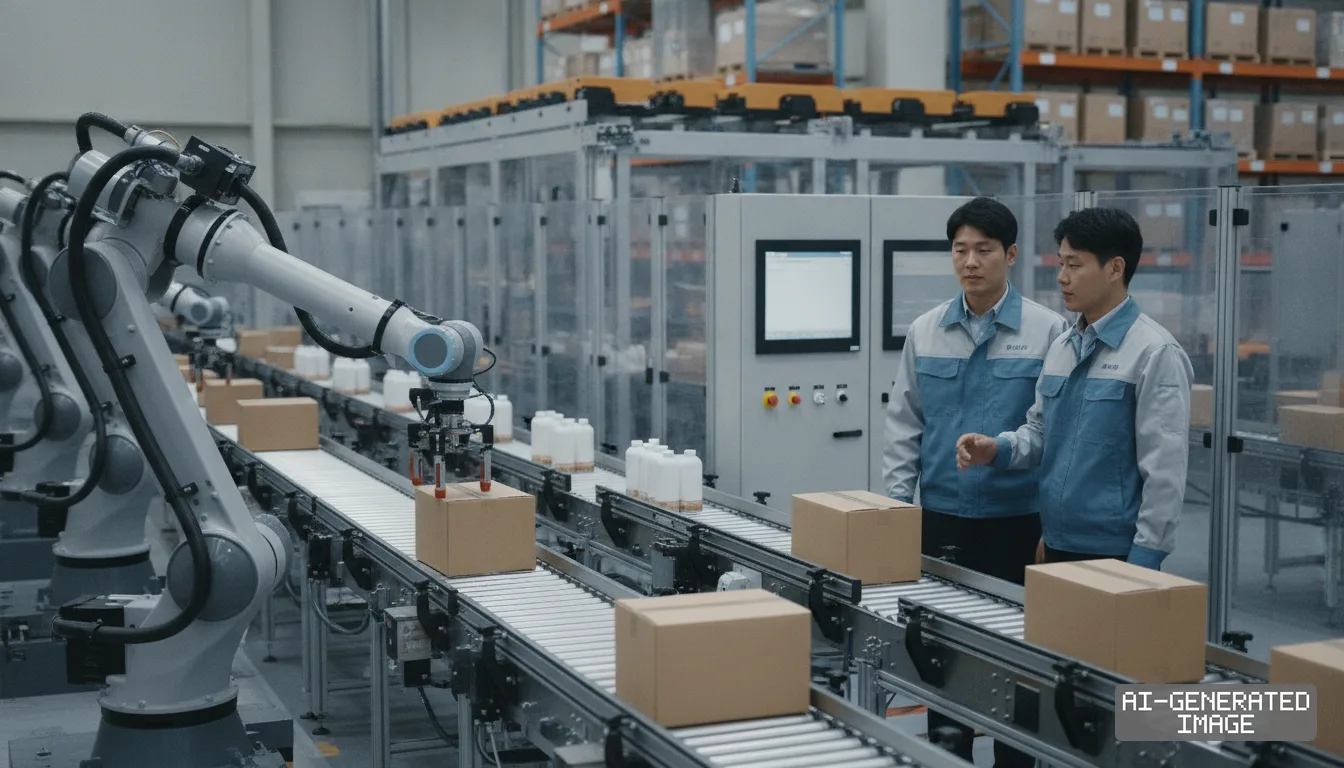
MESH Automation expanded its pre-engineered palletizing and packing cell lines on Nov. 24, 2026, targeting mixed-SKU fulfillment and secondary packaging across food and consumer goods distribution lines.
The expansion builds on the third generation of the company's MACPac case packing and MACPal robotic palletizing platforms. The platforms previously focused on short-run factory operations.
The updated palletizing systems carry robot payload capacities between 180 kilograms and 300 kilograms. The systems sort and stack goods across 10 or more product stock-keeping units simultaneously.
MESH Automation designs and integrates factory machinery from Dawsonville, Georgia. The company supplies automated packaging cells to manufacturing plants and logistics hubs throughout North America.
The order-fulfillment configuration, designated the MACPal OF, mounts an industrial robot arm onto an extended linear floor rail. The rail runs parallel to a work-in-process storage rack.
That setup allows the articulated arm to travel down the rack lane. It retrieves cartons from separate product batches to construct a custom pallet for a single order.
Standard palletizers build single-product stacks from continuous conveyor feeds. In contrast, mixed-case palletizing requires constant recipe shifts to manage unstable carton shapes and varying product weights.
Commercial distribution centers face rising demand for mixed shipments from retail and e-commerce buyers. Manual restacking of mixed pallets remains one of the most labor-intensive steps in warehousing.
Customers want faster buying cycles and shorter commissioning windows on site, MESH Automation President Jim Webb said. The pre-engineered layout standardizes mechanical frameworks to accelerate factory installation.
MESH Automation shortened standard equipment turnaround to between 16 weeks and 18 weeks. Fully customized robotic packaging lines often require lead times exceeding nine months.
The MACPal cells integrate multi-axis articulated robots from three primary suppliers: FANUC, Yaskawa Electric and ABB. Each robot maker provides heavy-payload arms rated between 180 kilograms and 300 kilograms.
For Japanese robot manufacturers FANUC and Yaskawa Electric, the expansion broadens secondary packaging integration outside traditional automotive assembly. Packaging automation represents a steady volume driver for high-payload arms.
The cells run functional safety logic on industrial controllers from Rockwell Automation or Siemens. Rockwell supplies its MicroLogix L30 safety controllers, while Siemens provides its S7-1200F safety systems.
Both programmable logic controllers execute push-button recipe changeovers through touch-screen terminal interfaces. Operators shift packing programs without retooling mechanical fixtures manually.
MESH Automation configured the machinery to handle delicate consumer packaging. The arms process soft-sided pouch bags, corrugated paper boxes and banded multipacks without crushing exterior seals.
The company engineered specialized end-of-arm tooling options for the arms. Integrators can mount vacuum suction matrices, pneumatic claw assemblies or heavy magnetic grippers depending on the payload.
A dedicated sub-zero packaging package targets cold-storage distribution warehouses and meat processing facilities. The cold-chain version operates inside temperature-controlled freezer rooms to stack chilled cartons.
The packaging sector increasingly combines high-speed sorting with articulated loading arms. Upstream delta robots package loose food items into cartons before heavy multi-axis arms stack those cartons onto pallets.
Optional bolt-on modules link the palletizer with downstream transport gear. The cell integrates slip sheet dispensers, automated stretch film wrappers and pallet labeling verification stations.
The platform also supports pallet handoffs to Omron HD-1500 autonomous mobile robots. The mobile vehicles move finished 48-by-40-inch pallet loads directly from the robot cage to warehouse staging docks.
Turnaround schedules for newly ordered pre-engineered units span 16 to 18 weeks, putting the initial operational handoffs for current orders into the second quarter of 2027.
MESH Automation has not published base pricing across individual cell configurations. The company has also not released annual unit sales projections for the MACPal OF platform.
Impact map
How this development propagates across the region and out to global buyers.
| Event | Korea | China | Japan | Global impact |
|---|---|---|---|---|
| mixed-case palletizing expansion | food processors and logistics operators gain pre-engineered alternatives to custom automation lines | packaging machinery exporters face standardized competition in North American cold-chain segments | FANUC and Yaskawa capture pull-through orders for 180-to-300-kg articulated robot arms | distribution centers shorten palletizer integration lead times from nine months to 18 weeks |
In this story
- Companies
- MESH Automation
- Tickers
- 6954.T6506.TABBN.SWROK
- Exposed
- FANUCYaskawa ElectricABBRockwell AutomationSiemensOmron
- Impact
- Order BookSupply ChainCost Structure
Related briefings
- Bigwave Robotics partners with automation suppliers to scale US physical AI Also on Omron, Rockwell Automation, FANUC
- China Antimonopoly Review Imposes Harsher Operational Remedies on Automation Mergers Also on Rockwell Automation, Siemens, ABB
- Japan Motion Control Makers Accelerate Real-Time Ethernet on Next-Gen Servos Also on Omron, Yaskawa Electric, Cost Structure
- Omron agrees to acquire US industrial computer maker OnLogic for $675M Also on Omron
Sources
Reporting
Confidence: medium — how we grade this
The documents behind this briefing are linked above. East Asia Brief produces its English text with AI assistance under human editorial review, and does not translate or republish other outlets' articles. See our methodology and AI policy. Spotted an error? Tell us.
The Morning Brief
What changed in Korean, Chinese and Japanese industry overnight — and what it means for your supply chain. One email, weekday mornings, US time. Free.
The Morning Brief is in preparation. Leave your address and we will write to you once — when the first issue is ready. Nothing before that.