China Antimonopoly Review Imposes Harsher Operational Remedies on Automation Mergers
State regulators use conditional merger approvals to secure domestic supply guarantees and intellectual property access across precision control and robotics sectors.

China's State Administration for Market Regulation has expanded the use of behavioral remedies in cross-border industrial automation mergers, requiring foreign component and software makers to sign long-term supply pledges and intellectual property commitments as conditions for clearance.
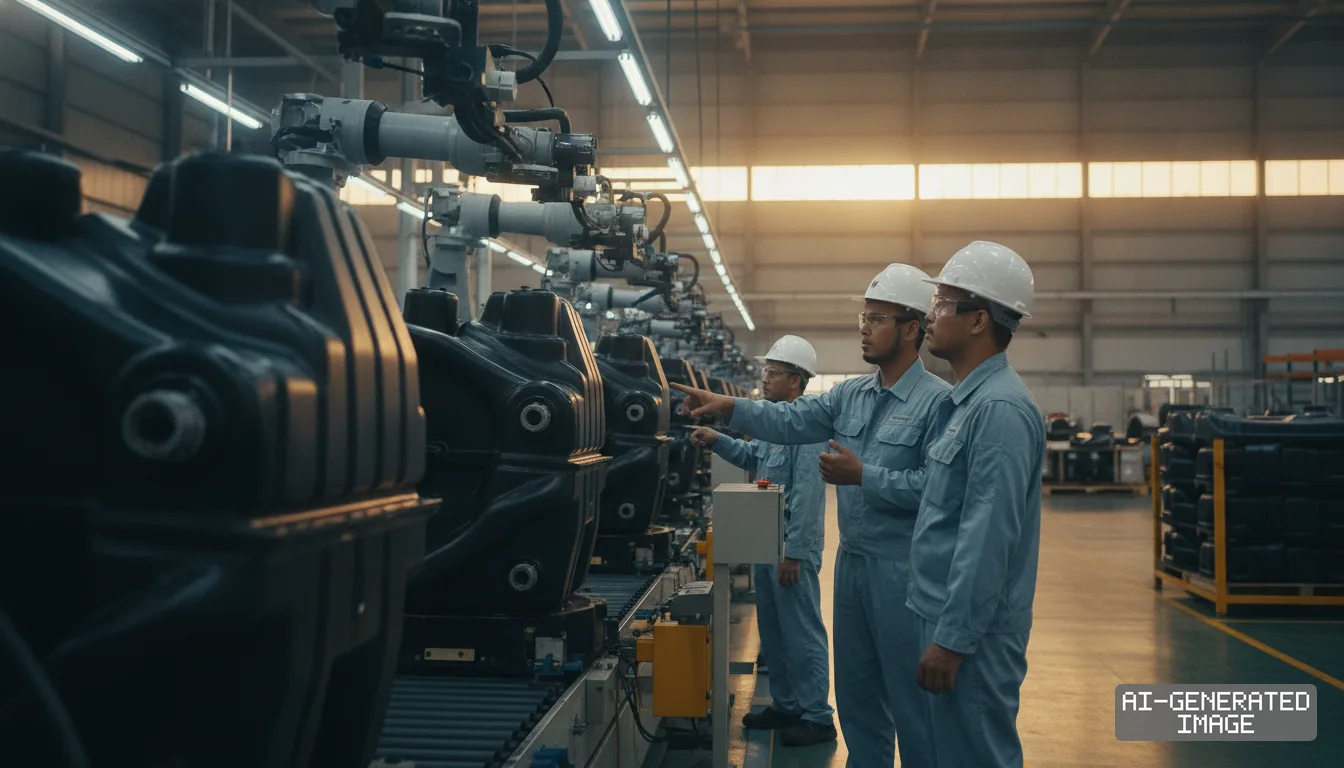
The antimonopoly regulator, known as SAMR, is focusing its review process on acquisitions involving programmable logic controllers, precision servo drives, industrial robotics components, and factory supervisory software. Rather than blocking transactions outright or demanding structural asset carve-outs, the agency is imposing multi-year conduct conditions that obligate merging parties to maintain non-discriminatory pricing, ensure software interoperability for Chinese machinery builders, and license legacy patents on fair, reasonable, and non-discriminatory terms.
For international industrial groups, private equity sponsors, and antitrust legal counsel, these conditions alter the timeline and operational calculus of global transactions. The Anti-Monopoly Law grants SAMR jurisdiction over global transactions if the merging parties exceed statutory revenue thresholds inside the Chinese market, regardless of where the entities are legally domiciled or where manufacturing facilities operate. As automated production lines become central to domestic manufacturing upgrades, the agency treats industrial control hardware and motion software as critical manufacturing infrastructure subject to heightened scrutiny.
Under the current enforcement framework, SAMR has extended standard review timelines into Phase II and Phase III reviews for mid-market and large-scale industrial transactions. Foreign acquirers in the automation space report regulatory evaluations extending past nine to 12 months, driven by detailed economic assessments of domestic market concentration. The agency routinely solicits feedback from domestic industry associations, original equipment manufacturers, and competing domestic component vendors during the third-party consultation phase.
The resulting conditional approvals increasingly carry specific operational restrictions. First, merging entities must guarantee the continued supply of precision automation hardware such as numerical controls, machine vision sensors, and high-precision gearboxes to existing Chinese industrial clients on terms no less favorable than those offered prior to the transaction. These supply obligations typically span periods between five and eight years, preventing acquirers from redirecting critical components exclusively to internal downstream divisions or restricting distribution in the domestic market.
Second, the antitrust authority has mandated architectural and software interoperability. When a multinational enterprise acquiring a niche robotics or automation vendor controls an existing industrial networking protocol or fieldbus standard, SAMR requires the merged entity to supply open application programming interfaces to domestic third-party peripheral manufacturers. This condition prevents foreign platform providers from bundling proprietary software suites with specialized machinery, ensuring that domestic sensor and actuator makers retain physical and digital access to imported control platforms.
Third, regulatory settlement packages frequently include intellectual property licensing safeguards. In several conditional decisions involving automation patents, the regulator has barred the post-merger integration of research teams from removing engineering support or software update services from products sold to domestic machinery builders. Acquiring companies must commit to renewing existing patent cross-licenses without imposing restrictive packaging, tying arrangements, or unilateral price increases.
The operational consequences extend directly to the valuation and post-merger execution of automation assets. Corporate acquirers must establish independent compliance monitoring frameworks within their Chinese business units, submitting annual audit reports to SAMR through court-appointed or regulator-approved monitoring trustees. Failure to fulfill behavioral pledges can result in administrative fines calculated as a proportion of local operating turnover, alongside revocation of transaction approval.
These regulatory requirements impact major multinational providers of industrial automation systems, including Schneider Electric SE, Siemens AG, ABB Ltd., Rockwell Automation, and Japanese motion control suppliers such as Fanuc Corporation and Yaskawa Electric Corporation. They also alter the commercial environment for domestic system integrators and automation hardware manufacturers like Inovance Technology and Estun Automation, which rely on imported microcontrollers and motion-control subassemblies while building proprietary robotics portfolios.
The transaction terms enforced by SAMR illustrate a divergence in international merger control philosophies. While European and North American antitrust authorities prioritize structural remedies such as the complete divestiture of overlapping product lines to prevent market concentration, Chinese authorities prioritize maintaining domestic supply continuity, stability in intermediate input costs, and access to proprietary control architectures.
Legal and regulatory affairs teams managing pending industrial automation cross-border filings are structuring deal timelines around mandatory behavioral commitments, factoring compliance verification costs into acquisition models. Merger filings submitted to the anti-monopoly bureau require pre-notification discussions regarding domestic supply chain exposure before formal case docketing begins.
Impact map
How this development propagates across the region and out to global buyers.
| Event | Korea | China | Japan | Global impact |
|---|---|---|---|---|
| SAMR automation merger remedy | component buyers secured | domestic OEMs protected | motion control makers bound | M&A timelines elongated |
In this story
- Companies
- Schneider ElectricSiemensABBRockwell AutomationFanucYaskawa ElectricInovance TechnologyEstun Automation
- Tickers
- SU.PASIE.DEABBN.SWROK6954.T6506.T300124.SZ002747.SZ
- Policy
- AntitrustEconomic Security
- Impact
- ComplianceSupply ChainOrder BookCost Structure
Track every Antitrust development → Track every Economic Security development →
Related briefings
- China servo motor makers squeeze foreign rivals on cost and delivery Also on Schneider Electric, Siemens, Estun Automation
- Chinese chipmakers ramp real-time Ethernet SoCs for industrial robot controllers Also on Inovance Technology, Estun Automation, Cost Structure
- Bigwave Robotics partners with automation suppliers to scale US physical AI Also on Rockwell Automation, FANUC, Compliance
- Rainbow Robotics taps E Tech Group to expand US cobot fleet Also on Rockwell Automation, Cost Structure, Order Book
Sources
This briefing carries no sources block. It was written from our desks’ working knowledge of the sector rather than from documents retrieved for this piece. Read it as orientation and check any figure you intend to act on — how we source briefings.
This briefing carries no linked sources: it was written from our desks' working knowledge of the sector rather than from documents retrieved for this piece. East Asia Brief publishes no citation it cannot link. Our English text is produced with AI assistance under human editorial review. See our methodology and AI policy. Spotted an error? Tell us.
The Morning Brief
What changed in Korean, Chinese and Japanese industry overnight — and what it means for your supply chain. One email, weekday mornings, US time. Free.
The Morning Brief is in preparation. Leave your address and we will write to you once — when the first issue is ready. Nothing before that.