China humanoid robotics stocks draw 10.2B yuan on new state roadmap
Four ministries issued commercial service deployment targets through 2030 alongside mandatory MIIT technical standards for eldercare hardware.

Four Chinese ministries published national guidelines on Nov. 23, 2026, directing commercial service robots, smart exoskeletons and digital care agents into eldercare facilities nationwide through a 2030 rollout plan.
The service directive coincided with mandatory technical standards published by China's Ministry of Industry and Information Technology (MIIT). Together, the government releases prompted intense secondary market buying across the domestic hardware supply chain.
Mainland equity investors directed more than 10.2 billion yuan ($1.41 billion) in net daily inflows into A-share humanoid robotics equities on Nov. 23. That single-session volume lifted the benchmark domestic robotics index by 5.8%.
Unitree Robotics surged by the 20% daily trading limit on the Shanghai STAR Market to finish at 708 yuan ($97.90) per share. The advance lifted the market capitalization of the Hangzhou-based robot manufacturer to 286.36 billion yuan ($39.6 billion).
The National Development and Reform Commission (NDRC) co-signed the service deployment framework with the Ministry of Civil Affairs, the National Health Commission and the Ministry of Education.
The directive, published as Document No. 1623, instructs community elderly care centers to procure automated mobility aids and robotic care assistants. The program aims to offset acute labor shortages across municipal nursing homes.
Concurrently, MIIT put five national industry standards into official execution under Announcement No. 30 on Nov. 23. The standards introduce a formal intelligence hierarchy grading mechanical systems from level L0 manual operation up to level L5 autonomous physical task execution.
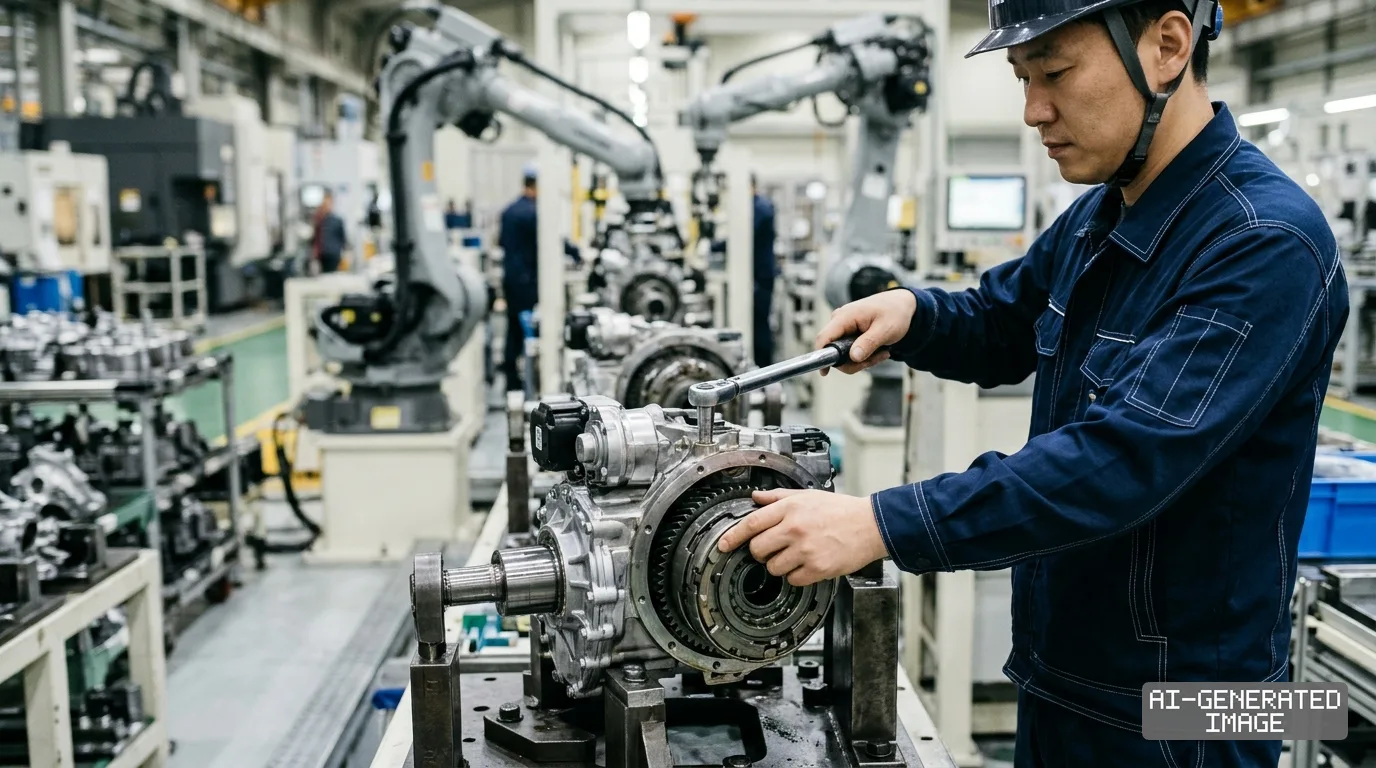
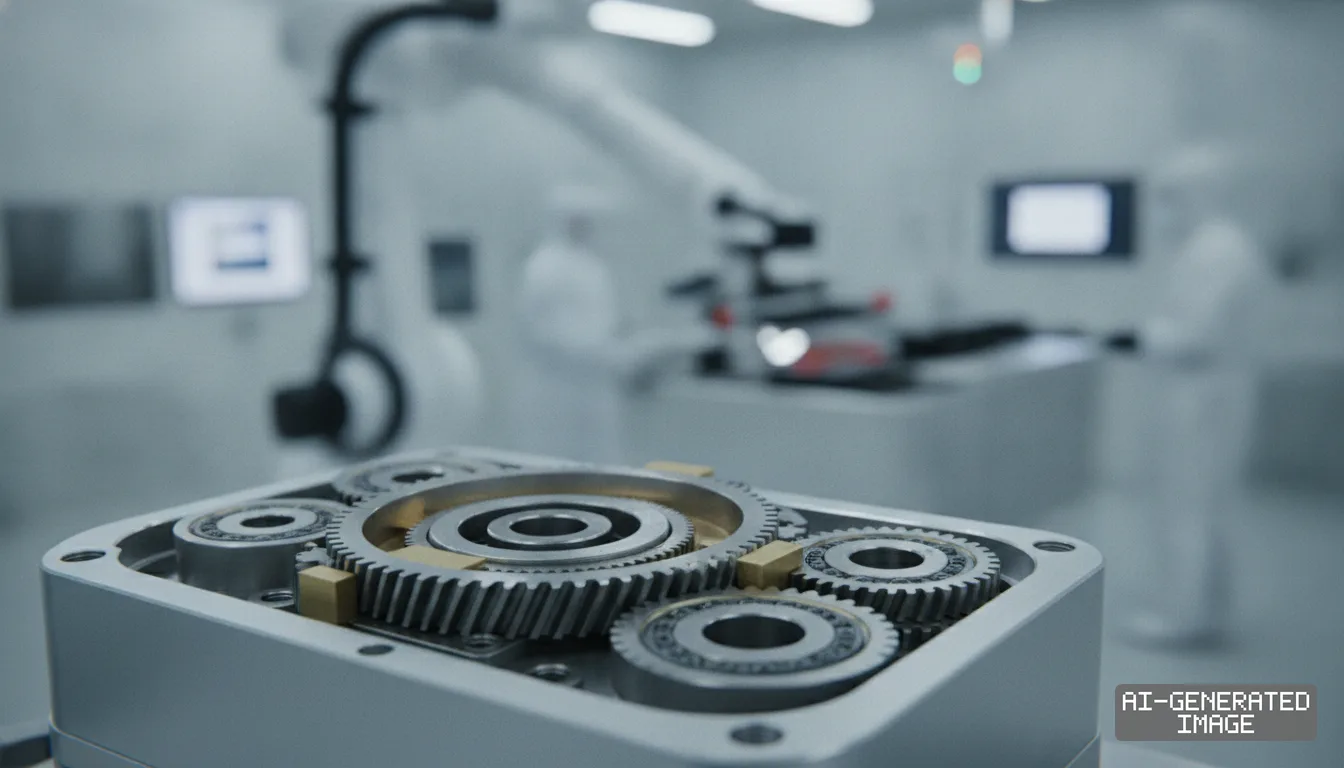
The standard cataloged as SJ/T 12353 establishes uniform technical envelopes for electric-drive integrated joints — unified modules packaging brushless motors, strain wave gear reducers and motor controllers into a single housing.
The hardware standardization aims to lower production costs across Chinese robot manufacturers. Establishing standard mechanical bolt patterns and digital bus interfaces allows robot developers to purchase modular actuators from merchant suppliers rather than machining custom joint assemblies.
Foreign precision mechanical suppliers face direct competitive exposure to China's accelerated component standardization. Japanese reducer specialist Harmonic Drive Systems generates roughly 14% of its industrial reduction gear shipments from Chinese robotics clients.
Japanese motion control leader Nabtesco maintains an estimated 25% market share in China's heavy precision cycloidal reduction drive segment. The company faces expanding domestic competition as Chinese suppliers build standardized cycloidal components under the new MIIT tolerances.
South Korean precision gear manufacturer SPG books about 11% of its precision gear revenue through Chinese automation channels. The Incheon-based maker supplies planetary gearboxes and harmonic units used in robotic limbs and industrial machinery.
Standardized mechanical specifications enable Chinese assemblers to compress hardware procurement cycles. Domestic robotics startups previously reported custom joint lead times of up to 16 weeks when relying on specialized component imports.
The MIIT regulatory package also enacts technical standards for dexterous robotic hands and physical training environments. Standard SJ/T 12354 standardizes tactile sensor integration and multi-axis finger actuators to raise component yields during volume assembly.
Chinese actuator suppliers currently market standardized harmonic drive modules at prices roughly 30% below comparable Japanese import models. Lower component pricing assists regional eldercare networks in meeting government equipment targets without exceeding capital procurement allocations.
The joint ministerial program focuses exclusively on eldercare facilities, child development institutions and community health centers. The ministerial notice does not state any mandate requiring the deployment of bipedal humanoid robots on automotive or industrial assembly lines.
The government notices do not announce direct state capital subsidies, and officials have not published guidelines mandating humanoid robotics on industrial manufacturing lines.
The NDRC guidelines set Dec. 31, 2030, as the formal completion deadline for nationwide eldercare equipment deployment across accredited municipal institutions.
MIIT technical compliance reviews begin July 1, 2027, requiring domestic component builders to submit actuator endurance certifications to state inspection centers.
Impact map
How this development propagates across the region and out to global buyers.
| Event | Korea | China | Japan | Global impact |
|---|---|---|---|---|
| China robot standards and eldercare directive | SPG faces margin pressure in Chinese planetary reducer lines | Unitree Robotics gains scale as standardized joint specs cut BOM costs | Harmonic Drive and Nabtesco defend 14-25% Chinese market exposure | Component standardization accelerates humanoid hardware cost parity |
In this story
- Companies
- Unitree Robotics
- Tickers
- 688836.SH
- Exposed
- Harmonic Drive SystemsNabtescoSPG
- Policy
- Standards
- Impact
- Supply ChainOrder BookCost Structure
Track every Standards development →
Related briefings
- UBS maps 87 humanoid robot suppliers across hardware tiers Also on Unitree Robotics, Nabtesco, Harmonic Drive Systems
- Boston Dynamics faces US supply curb on Chinese robot parts Also on Unitree Robotics, Standards, Cost Structure
- Unitree Robotics posts 70% revenue surge on robot deliveries Also on Unitree Robotics, Standards, Cost Structure
- Korean gearbox makers target Japanese monopoly in robot joints Also on SPG, Nabtesco, Harmonic Drive Systems
Sources
Primary documents
Reporting
Confidence: high — how we grade this
The documents behind this briefing are linked above. East Asia Brief produces its English text with AI assistance under human editorial review, and does not translate or republish other outlets' articles. See our methodology and AI policy. Spotted an error? Tell us.
The Morning Brief
What changed in Korean, Chinese and Japanese industry overnight — and what it means for your supply chain. One email, weekday mornings, US time. Free.
The Morning Brief is in preparation. Leave your address and we will write to you once — when the first issue is ready. Nothing before that.