Lynas buys Meteoric for $672M to control Brazil rare earths
The Australian miner's all-stock takeover of the Caldeira deposit targets dysprosium and terbium supplies to break Western dependence on Chinese heavy rare earth refining.
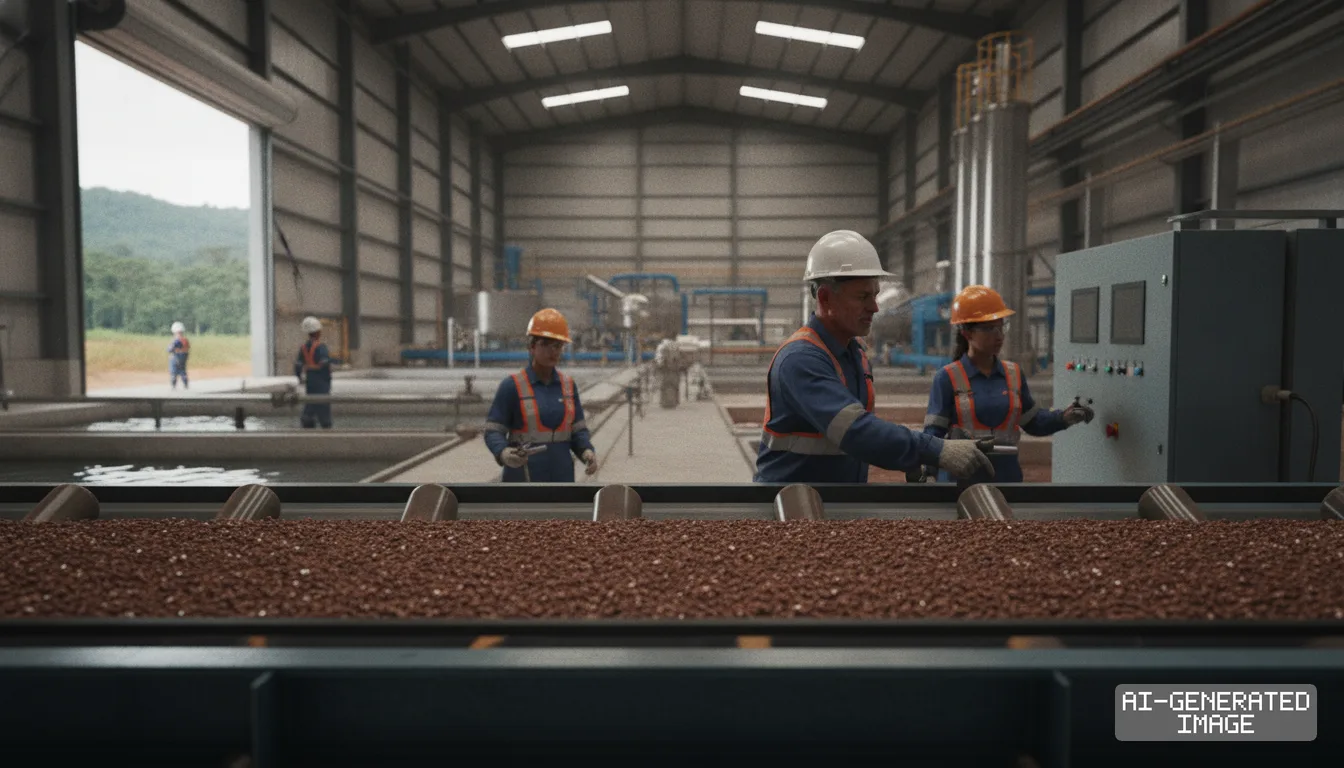
Lynas Rare Earths agreed Oct. 1, 2026 to acquire Meteoric Resources in an all-stock transaction valued at 968 million Australian dollars ($672 million), securing Brazil's Caldeira ionic-clay deposit.
The purchase price gives Meteoric shareholders 0.0207 new Lynas shares for each ordinary share held. Upon completion, Meteoric investors will hold approximately 5.9% of Lynas on a fully diluted basis.
The acquisition delivers the Caldeira project in the Brazilian state of Minas Gerais. The concession holds 151 million metric tons of ore reserves containing 41,000 metric tons of dysprosium-terbium oxides and 802,000 metric tons of neodymium-praseodymium oxides.
The transaction represents the largest commercial consolidation of ionic-clay rare earth assets outside China. Ionic clay deposits allow low-cost open-pit extraction of heavy rare earths, which hard-rock mines yield only in negligible concentrations.
Dysprosium and terbium serve as thermal stabilizers in neodymium-iron-boron permanent magnets. The metals prevent electric vehicle traction motors, wind turbine generators and guided missile servos from demagnetizing under operating heat above 150 degrees Celsius.
China refines roughly 91% of the world's magnet-grade rare earth oxides, according to the International Energy Agency. Chinese state refiners control almost the entire global output of separated dysprosium and terbium metals.
Western manufacturers face tightening trade controls from Beijing over critical minerals. China restricted exports of rare earth separation technologies and specific magnet alloys in late 2023, leaving foreign buyers exposed to procurement quotas.
Lynas operates the only commercial-scale rare earths separation business outside China. The producer extracts light rare earths from its Mt Weld hard-rock mine in Western Australia, shipping cracked material to its separation facility in Gebeng, Malaysia.
Mt Weld yields abundant neodymium and praseodymium but carries minimal heavy rare earth concentrations. Acquiring Caldeira provides Lynas with a captive feedstock source to produce dysprosium and terbium under Western ownership.
The all-share transaction structure preserves Lynas's cash balances, company filings show. That capital structure leaves Lynas liquid to fund Caldeira's estimated development budget of $498 million.
To maintain project momentum before the takeover closes, Lynas agreed to provide Meteoric with an interim debt facility of up to A$110 million. Lynas will advance an initial tranche of A$35 million to finance detailed engineering studies.
Supply exposure extends directly to industrial consumers outside China. South Korea's Posco International signed a supply and development partnership with Meteoric in July 2026 to secure non-Chinese magnet feedstocks for its component lines.
The Caldeira definitive feasibility study completed in July 2026 models an initial 23-year mine life. The study projects annual output of 12,500 metric tons of total rare earth oxides, including 127 metric tons of dysprosium and terbium.
Meteoric's board of directors voted unanimously to recommend the transaction to shareholders in the absence of a superior proposal. The offer implies a 68% premium over Meteoric's closing price prior to the announcement.
The transaction documents do not settle whether Lynas will ship raw mixed carbonates to its cracking and separation plant in Gebeng, Malaysia, or build a dedicated heavy rare earth refinery inside Brazil. Lynas stated only that it is evaluating both downstream pathways.
The regulatory path involves Brazilian authorities. Brazilian President Luiz Inacio Lula da Silva signed a critical minerals framework in late September 2026, creating a review council with authority over strategic resource transactions.
Meteoric will dispatch the formal scheme booklet detailing the offer terms to shareholders in December 2026. Meteoric investors will vote on the proposed acquisition at an extraordinary general meeting scheduled for January 2027, requiring 75% approval.
The companies plan to close the acquisition in March 2027, subject to approval from an Australian court and clearance from Brazil's National Council for Strategic and Critical Minerals.
Impact map
How this development propagates across the region and out to global buyers.
| Event | Korea | China | Japan | Global impact |
|---|---|---|---|---|
| Caldeira acquisition | Posco International gains non-Chinese feedstock source for its NdFeB magnet joint venture | State refiners lose sole supplier position over commercial dysprosium and terbium oxides | Magnet makers secure secondary non-Chinese heavy rare earth source for automotive motors | Western EV and defense supply chains reduce reliance on Chinese export-controlled heavy rare earths |
In this story
- Companies
- Lynas Rare EarthsMeteoric Resources
- Tickers
- ASX:LYCASX:MEI
- Exposed
- Posco International
- Policy
- Export ControlsEconomic Security
- Impact
- Supply ChainCapexOrder Book
Track every Export Controls development → Track every Economic Security development →
Related briefings
- HD Hyundai and Hanwha Ocean split naval platforms for export Also on Posco International, Export Controls, Order Book
- Korea doubles US rare earth imports to counter China quotas Also on POSCO International, Export Controls
- KOGAS shifts LNG storage protocols to smooth winter inventory builds Also on POSCO International
- LS Eco Energy builds Vietnam samarium line as US rules loom Also on Lynas Rare Earths, Export Controls
Sources
Reporting
Confidence: medium — how we grade this
The documents behind this briefing are linked above. East Asia Brief produces its English text with AI assistance under human editorial review, and does not translate or republish other outlets' articles. See our methodology and AI policy. Spotted an error? Tell us.
The Morning Brief
What changed in Korean, Chinese and Japanese industry overnight — and what it means for your supply chain. One email, weekday mornings, US time. Free.
The Morning Brief is in preparation. Leave your address and we will write to you once — when the first issue is ready. Nothing before that.