Japan robot makers target logging and biology labs as domestic workforce shrinks
Nippon Signal and Yaskawa Electric are deploying specialized dual-arm automatons to tackle severe labor shortages across railway corridors and life-science research facilities.
Japanese robot makers expanded machinery rollouts beyond assembly floors on Sept. 3, 2026, directing heavy-manipulation humanoids into forestry clearance and multi-axis automatons into high-risk pharmaceutical laboratories.
The commercial push addresses Japan's shrinking working-age population. Acute labor shortages now threaten outdoor utility maintenance and advanced pharmaceutical laboratory research across the country.
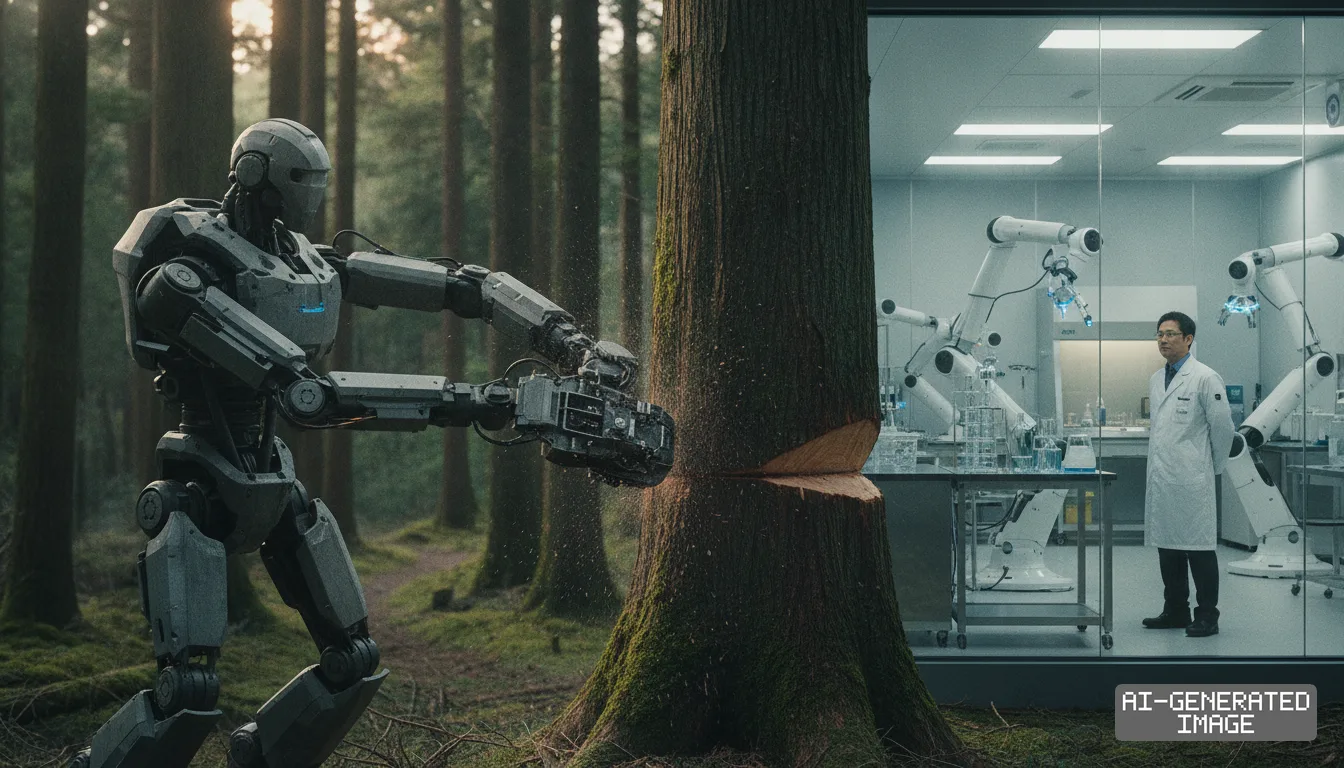
Railway equipment manufacturer Nippon Signal is commercializing the ZX-3 dual-arm humanoid robot. The machine carries an electric chainsaw on its right arm and a multi-finger gripper on its left arm.
The mechanical platform clears hazardous trackside trees and maintains electrical cabling. Nippon Signal delivered initial operational units to East Japan Railway Company under a commercial agreement announced on April 17.
To support mass deployment, Nippon Signal announced on May 12 a 13 billion yen ($88 million) redevelopment of its Utsunomiya manufacturing facility. Construction will conclude in 2029.
The company set an initial manufacturing target of 20 units annually starting in 2029, Nippon Signal said. The dedicated business unit aims for 4 billion yen ($27 million) in annual equipment sales.
Robotics startup Jinkai Ittai developed the bilateral teleoperation technology powering the machine. Human operators wear force-feedback cockpits that convey physical resistance when the robotic arm slices thick timber.
Force reflection prevents the chainsaw blade from binding inside tree trunks during felling operations. The control interface lets operators manipulate heavy mechanical tools safely from the floor of utility trucks.
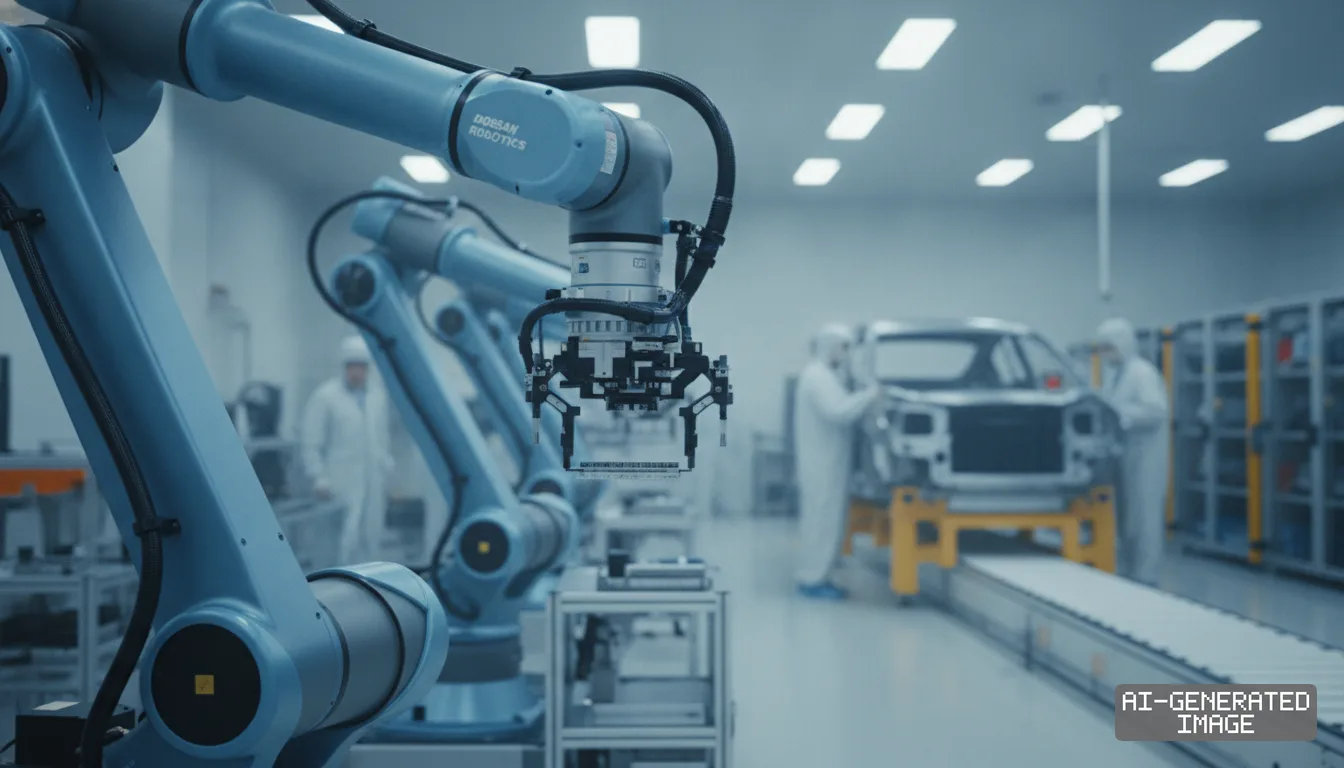
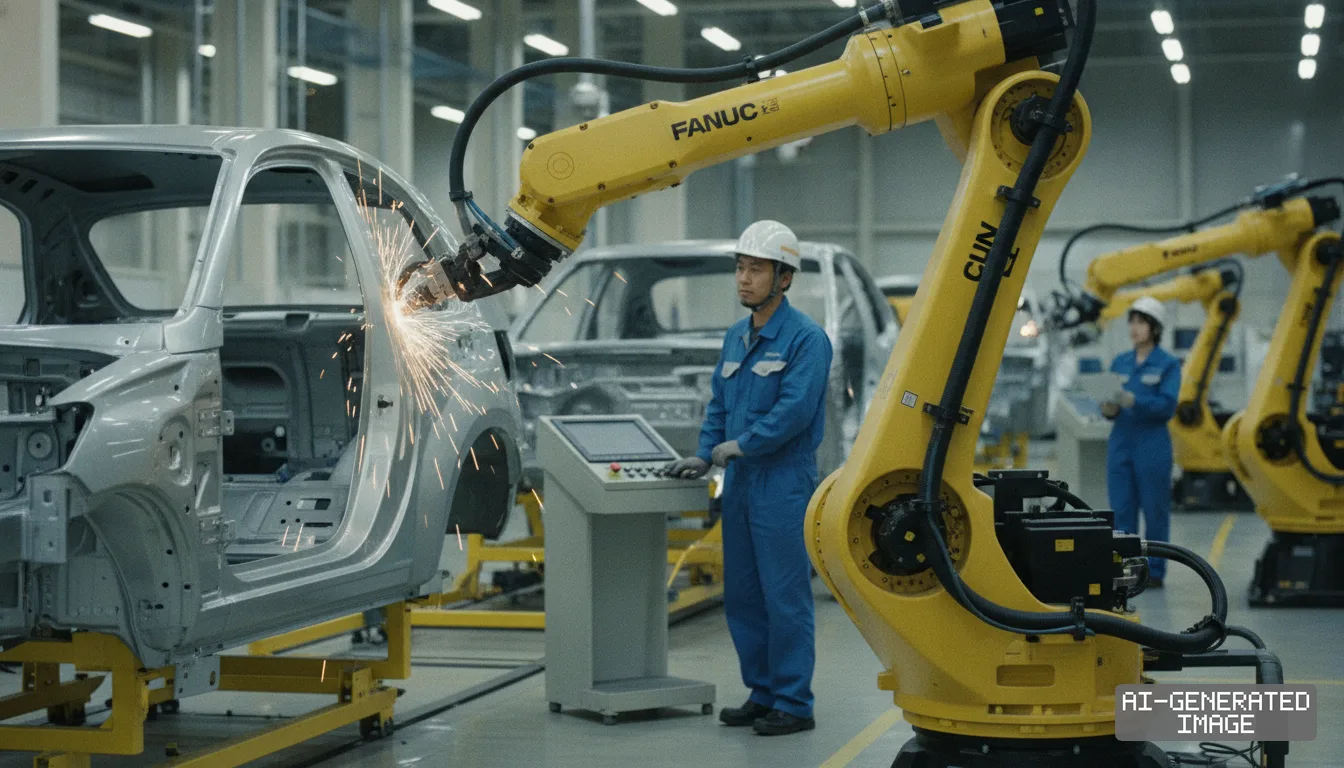
Traditional Japanese robotics champions built global dominance on enclosed automotive welding lines. Those fixed installations operate inside structured cages, away from human staff and volatile environmental shifts.
Outdoor railway maintenance exposes equipment to sudden wind gusts, rain and rugged terrain. Robotic manipulators working near high-voltage catenary lines must absorb violent mechanical recoil without inducing electrical failures.
Japan's forestry and rail maintenance sectors face rapid workforce aging. More than 25% of commercial forestry workers in Japan are aged 65 or older, according to national labor data.
Trackside tree falls cause costly railway delays and power grid disruptions during typhoon seasons. Rail operators struggle to hire qualified maintenance crews willing to handle chainsaws on steep embankments.
A parallel shift is transforming Japan's biotechnology sector. Pharmaceutical makers and university research institutes are replacing manual pipetting and cell cultivation with specialized dual-arm robotic systems.
Institute of Science Tokyo established its Robot Initiative for Creation on April 15. The specialized facility opened at the university's Yushima campus in Tokyo to automate biomedical experimentation.
The university center deployed 10 humanoid robots to execute biological assay workflows around the clock. The research initiative seeks to eliminate human pipetting errors and accelerate pharmaceutical discovery.
The university facility centers on the Mahoro robotic biology platform. Industrial automation giant Yaskawa Electric and the National Institute of Advanced Industrial Science and Technology jointly developed the dual-arm unit.
Robotic Biology Institute, a venture backed by Yaskawa Electric, distributes the Mahoro system. The machine operates standard laboratory instruments designed for human hands, including pipettes, centrifuges and incubators.
Pharmaceutical manufacturer Astellas Pharma and Yaskawa Electric signed a definitive agreement on March 6 to build automated cell therapy manufacturing lines using the Mahoro platform.
Cell therapy manufacturing requires meticulous sterile handling to prevent contamination. Dual-arm robots replicate complex laboratory motions with sub-millimeter precision, achieving reproducibility rates that human lab technicians cannot sustain.
Japanese life-science faculties face shrinking graduate student cohorts and intense international competition. Automating sample handling lets senior scientists dedicate research hours to data analysis and experimental design.
Researchers at Institute of Science Tokyo introduced the General Experimental Management System in March. The software coordinates autonomous laboratory robots, reallocating experimental steps when sample properties change during testing.
Expanding into forestry and laboratories unlocks high-margin niches for Japanese equipment suppliers. Factory automation demand in conventional automotive segments has slowed as global electric vehicle investment moderates.
Japanese manufacturers control roughly 45% of the global market for industrial robot arms. Deploying articulated machines into infrastructure maintenance and wet laboratories establishes defensible revenue streams beyond factory walls.
High hardware costs continue to constrain broad deployment among regional forestry contractors. Nippon Signal and its engineering partners must demonstrate measurable life-cycle cost savings before offering commercial leasing packages.
Japanese safety regulations governing heavy robotic machinery in public corridors remain restrictive. Industrial safety regulators currently require certified operators to maintain direct visual line-of-sight oversight during teleoperated operations.
East Japan Railway Company plans to initiate commercial line clearance trials with the ZX-3 system along regional tracks this autumn, according to company deployment schedules.
Impact map
How this development propagates across the region and out to global buyers.
| Event | Korea | China | Japan | Global impact |
|---|---|---|---|---|
| non-factory robot deployment | service robot rivalry | heavy machinery push | specialized labor substitution | non-manufacturing automation adoption |
In this story
- Companies
- Nippon SignalYaskawa Electric
- Tickers
- 6741.T6506.T
- Exposed
- East Japan Railway CompanyAstellas Pharma
- Policy
- Economic Security
- Impact
- Order BookSupply ChainCost Structure
Track every Economic Security development →
Related briefings
- FANUC America taps Palladyne AI for factory robot autonomy Also on Yaskawa Electric, Cost Structure, Order Book
- Fanuc and Google launch AI welding robot to read blueprints Also on Yaskawa Electric, Cost Structure, Order Book
- Japan Motion Control Makers Accelerate Real-Time Ethernet on Next-Gen Servos Also on Yaskawa Electric, Cost Structure, Order Book
- China Antimonopoly Review Imposes Harsher Operational Remedies on Automation Mergers Also on Yaskawa Electric, Cost Structure, Order Book
Sources
Reporting
Confidence: medium — how we grade this
The documents behind this briefing are linked above. East Asia Brief produces its English text with AI assistance under human editorial review, and does not translate or republish other outlets' articles. See our methodology and AI policy. Spotted an error? Tell us.
The Morning Brief
What changed in Korean, Chinese and Japanese industry overnight — and what it means for your supply chain. One email, weekday mornings, US time. Free.
The Morning Brief is in preparation. Leave your address and we will write to you once — when the first issue is ready. Nothing before that.