Honda injects $3 billion into automated Ohio vehicle plant
The investment adds 240,000 units of annual assembly capacity from 2029, expanding the automaker's total United States production base to 1.3 million vehicles.
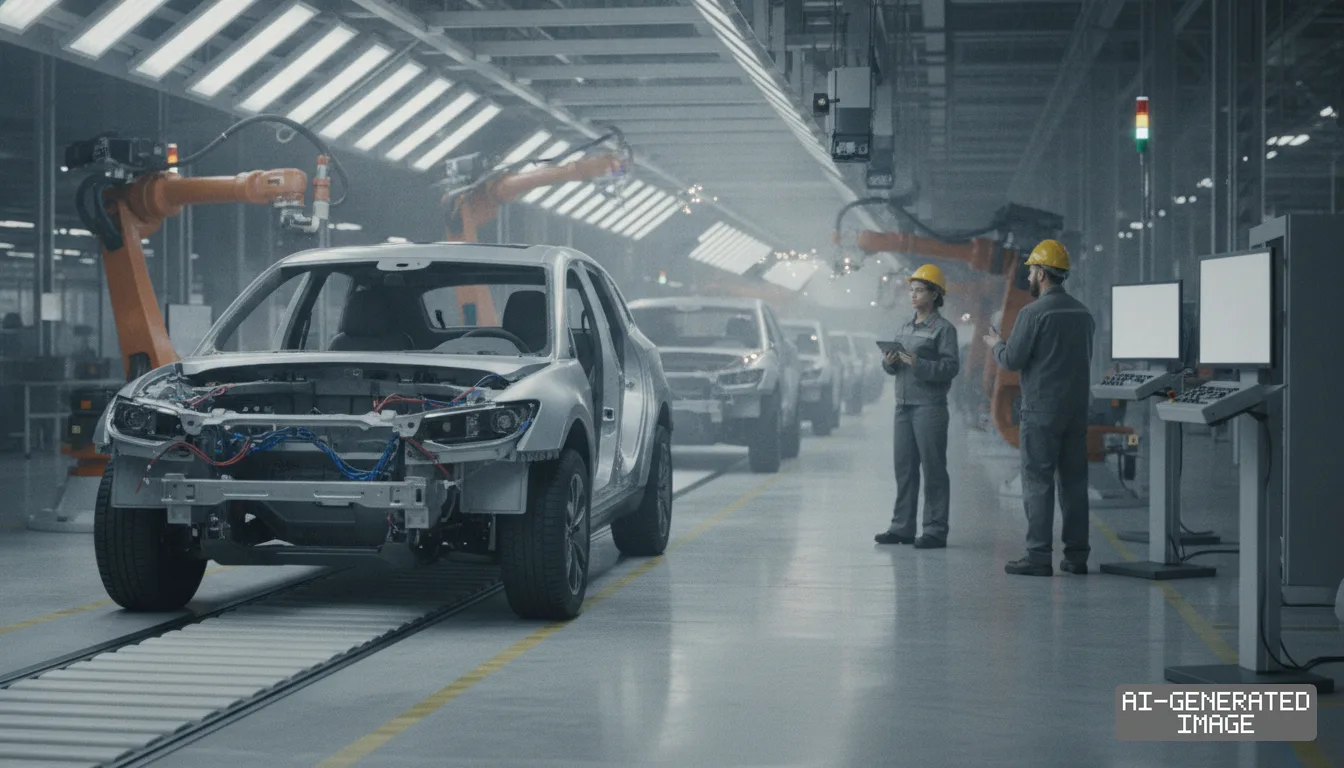
Honda Motor committed $3 billion on Nov. 9 to build an automated assembly plant in central Ohio, anchoring a North American manufacturing expansion designed for flexible vehicle lines.
The investment adds 240,000 vehicles of annual assembly capacity, expanding Honda's total U.S. vehicle production capability by roughly 23% to approximately 1.3 million units a year. Operations are scheduled to begin in 2029.
Honda Canada committed 166 million Canadian dollars ($119 million) on Nov. 9 to retool its Alliston, Ontario assembly lines, advancing an 867 million Canadian dollar manufacturing modernization program.
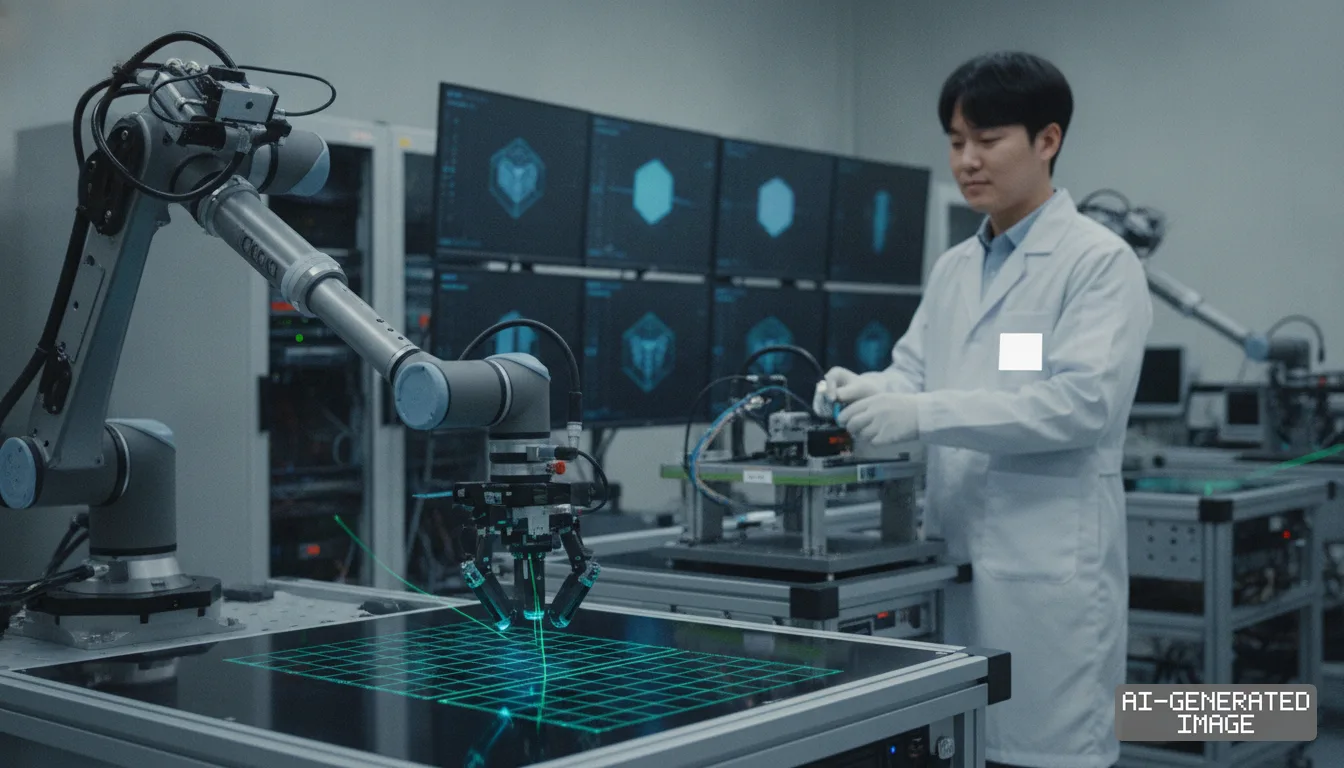
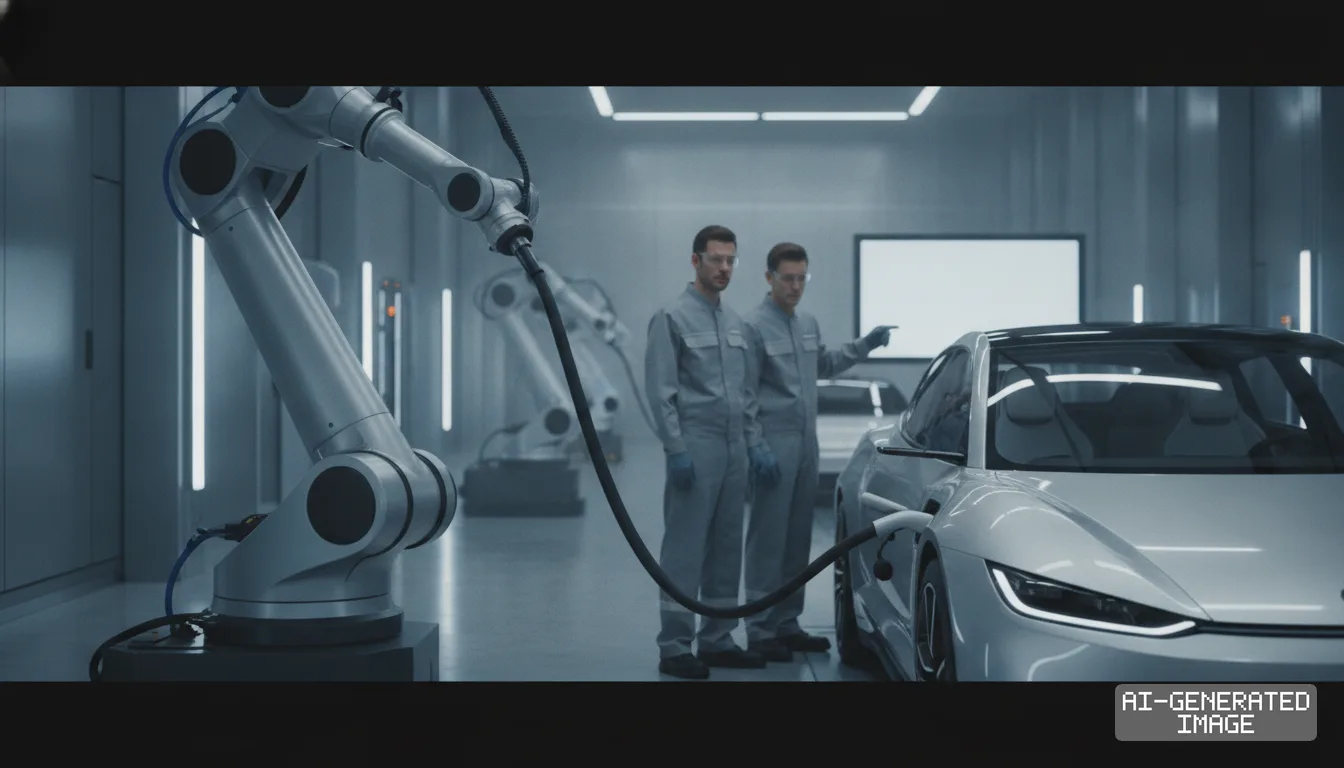
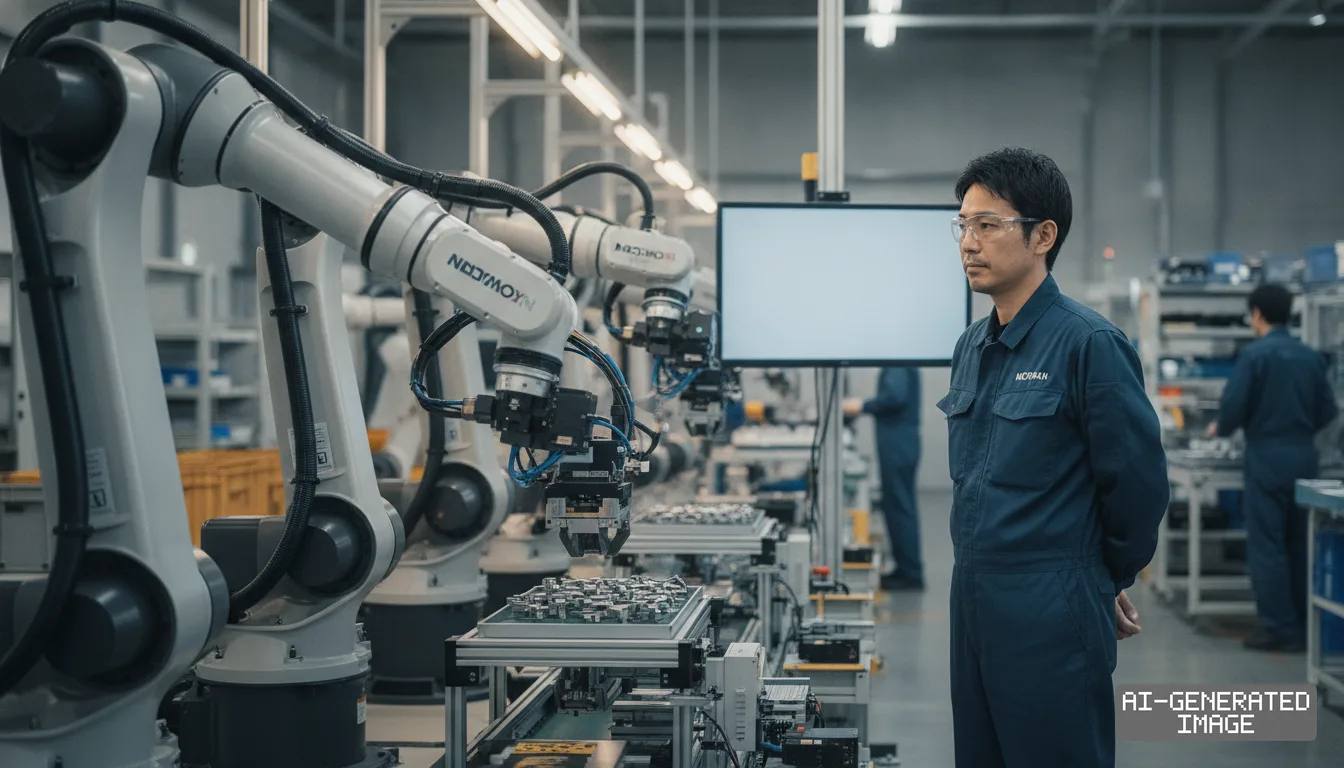
The Ohio facility will feature data-driven manufacturing systems and high-density automation lines. The layout requires close interaction between human assembly operators and automated machinery to install complex hybrid drivetrains.
Automotive final assembly presents unique hurdles for human-robot collaboration, where people and mechanical arms share workstation space. Installing heavy batteries, wiring harnesses and interior modules demands both high payload capacity and delicate manipulation.
Conventional collaborative robots — articulated arms engineered with lightweight alloys and force sensors — carry strict payload limits, typically below 20 kilograms. Heavier industrial arms can lift substantial payloads but require protective safety enclosures.
International industrial safety standards, including ISO 10218 and ISO/TS 15066, dictate strict power and force limits for collaborative workstations. Robots operating alongside unshielded workers must slow down or halt whenever human limbs enter their trajectory.
Those safety halts undermine assembly line productivity, where takt time — the cycle time required to complete one vehicle station — runs between 50 and 60 seconds. False stops quickly compound into costly line delays.
Industry inquiries circulated suggestions that Honda issued an open technology challenge on Nov. 9 seeking external safety control algorithms. However, Honda has not published a formal solicitation or open challenge docket for collaborative robotics.
A Form 6-K filing submitted by Honda to the U.S. Securities and Exchange Commission on Nov. 9 outlines plant capital spending without naming robotics procurement programs. Specific sourcing channels for assembly-line control software remain unannounced.
Instead of open software competitions, Honda has directed cobot control research through specialized internal institutes. Honda Research Institute USA presented its State-aware Task Estimator and Planner framework, known as STEP, at the RO-MAN 2026 conference in August.
The STEP architecture uses multimodal foundation models to evaluate human posture and eye gaze in real time. By estimating operator intentions, the system predicts assembly actions before physical gestures finish, the research paper said.
Predictive intent tracking allows robotic controllers to replan motion vectors dynamically. Instead of triggering emergency stops when operators approach, the robot adjusts its operating envelope to maintain safe clearance while continuing assembly tasks, researchers said.
Honda also deepened collaborative research through broader corporate alliances across Japan. On July 16, Honda joined Sony Group, SoftBank Corp. and NEC Corp. to launch Noetra, an organization developing physical artificial intelligence foundation models.
Noetra targets generalizable robotic control systems capable of parsing complex physical environments. The consortium combines automotive manufacturing expertise with advanced sensor processing and telecommunications infrastructure across its founding members.
Software algorithms alone cannot resolve assembly dynamics without responsive actuation hardware. Variable stiffness actuators — mechanical joints that modulate joint compliance through internal spring mechanisms — allow robot arms to absorb shock loads mechanically during unexpected contact.
Sensorless collision detection methods present another control pathway for automotive lines. These systems exploit drive-motor current fluctuations to detect resistance, eliminating external tactile skins that add bulk and reduce precision in cramped vehicle bodies.
Established robotics suppliers face pressure to integrate advanced safety layers into existing high-payload platforms. Automation engineers must reconcile rigid steel arms capable of lifting 50-kilogram chassis modules with software certified for safe human coexistence.
Retooling production lines with adaptive safety algorithms increases software integration expenses for Tier 1 assembly integrators. Certifying dynamic collision avoidance systems under workplace safety laws adds regulatory complexity and extended validation timelines.
Construction at Honda's new Ohio plant will advance following state and local regulatory clearances, with volume vehicle production slated to begin in 2029. Retooling across Honda's Canadian lines will proceed in phases through 2028.
Honda's powertrain facility in Anna, Ohio will expand hybrid powertrain output by 250% alongside the assembly buildout, providing dedicated propulsion hardware for the new manufacturing complex.
Impact map
How this development propagates across the region and out to global buyers.
| Event | Korea | China | Japan | Global impact |
|---|---|---|---|---|
| Honda $3B Ohio plant automation | no direct plant exposure, equipment makers track automotive cobot safety specifications | domestic auto assembly lines expand cobot trials, competing for high-payload integration | Honda centralizes internal AI robotics research and joins Noetra to advance physical models | Auto assembly lines face trade-offs between 20-kilogram cobot caps and 50-second takt times |
In this story
- Companies
- Honda Motor Co.
- Tickers
- 7267.T
- Exposed
- Sony GroupSoftBank Corp.NEC Corp.
- Policy
- Standards
- Impact
- CapexSupply ChainOrder Book
Track every Standards development →
Related briefings
- Rapidus weighs one-year delay to 2nm chip production in Chitose Also on SoftBank Corp., Sony Group, Order Book
- Rapidus forms 17-firm design alliance to back 2nm chip ramp Also on Sony Group, Order Book
- TSMC secures record $5.1B in overseas fab subsidies during 2026 Also on Sony Group
- Japan seeks $2.6B for Rapidus after pledging $21B to US fabs Also on Sony Group
Sources
Primary documents
Reporting
Confidence: high — how we grade this
The documents behind this briefing are linked above. East Asia Brief produces its English text with AI assistance under human editorial review, and does not translate or republish other outlets' articles. See our methodology and AI policy. Spotted an error? Tell us.
The Morning Brief
What changed in Korean, Chinese and Japanese industry overnight — and what it means for your supply chain. One email, weekday mornings, US time. Free.
The Morning Brief is in preparation. Leave your address and we will write to you once — when the first issue is ready. Nothing before that.