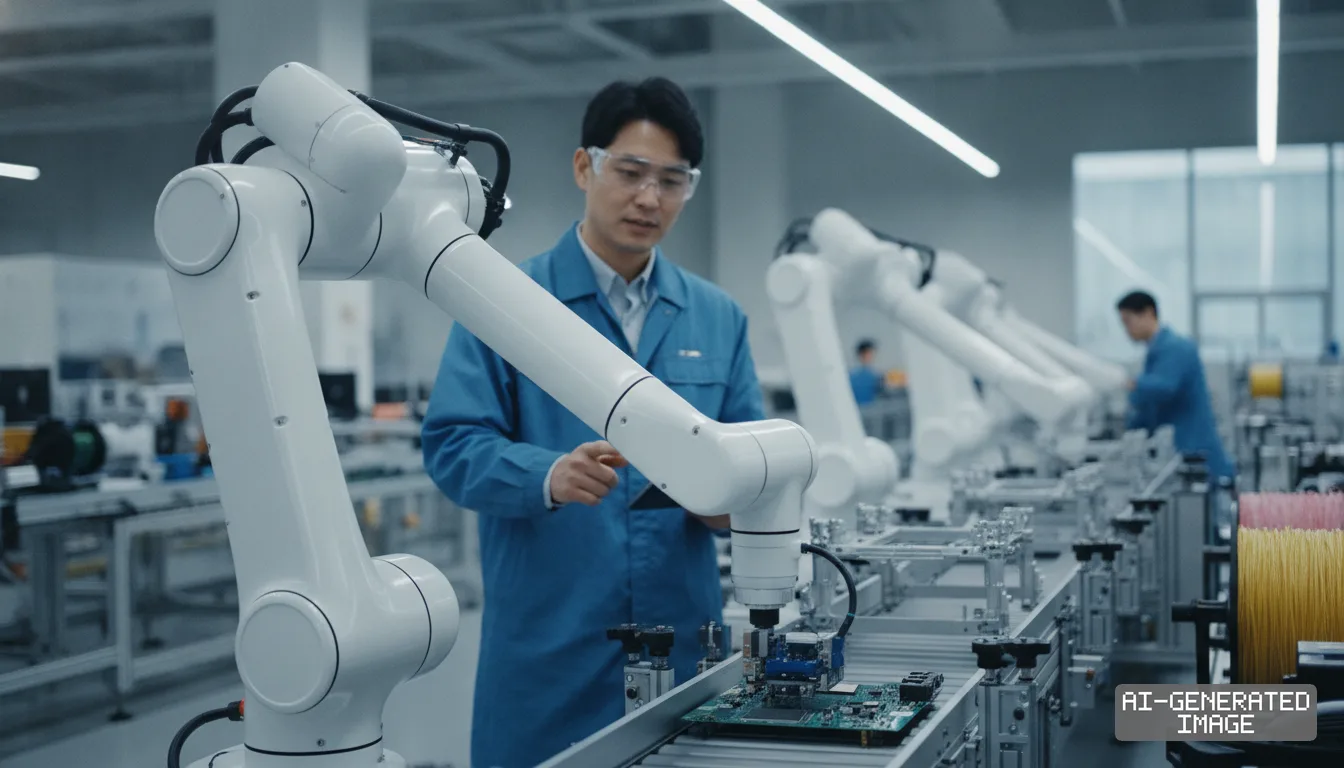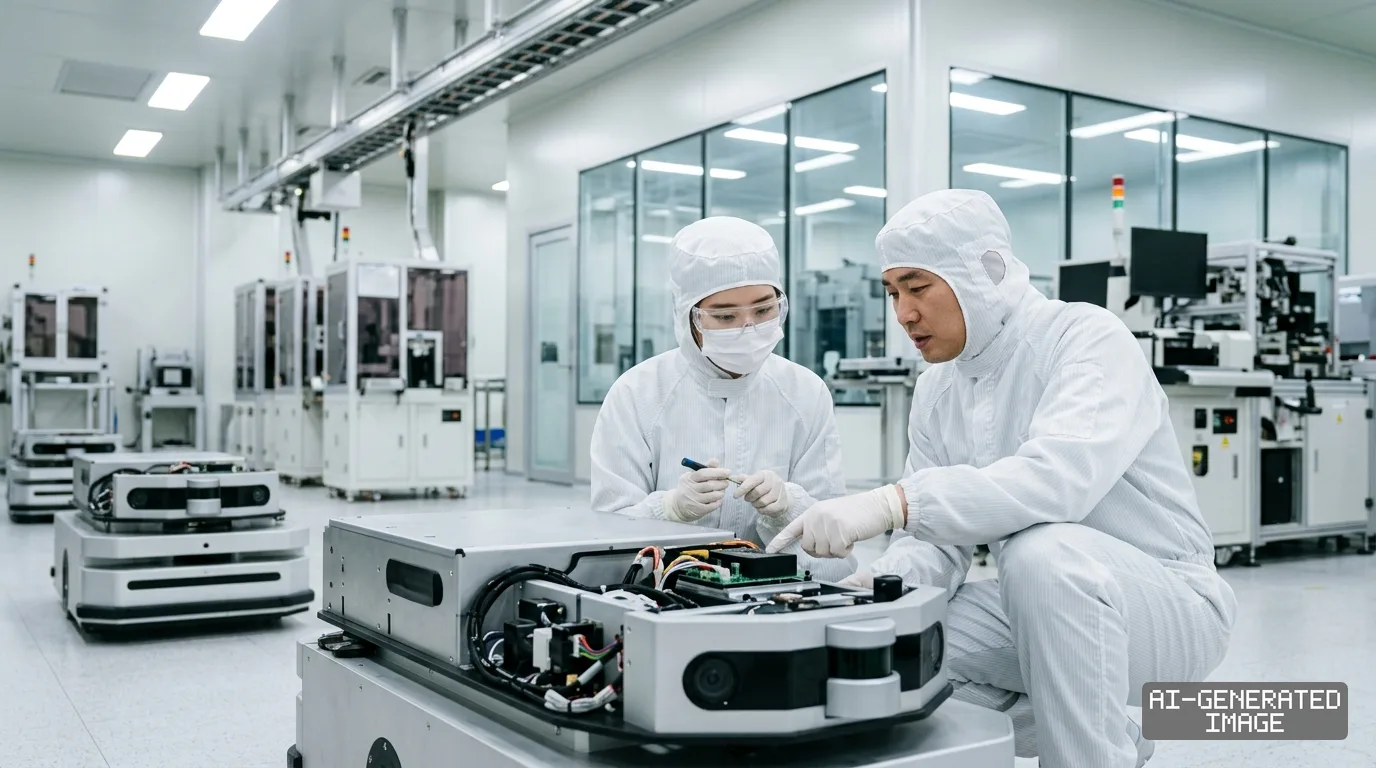
China Rare Earth pairs with Benmo on humanoid robot magnets
The state-backed research unit and Hong Kong-listed actuator maker will develop customized NdFeB alloys and magnetic rings to tighten domestic control over critical motion components.
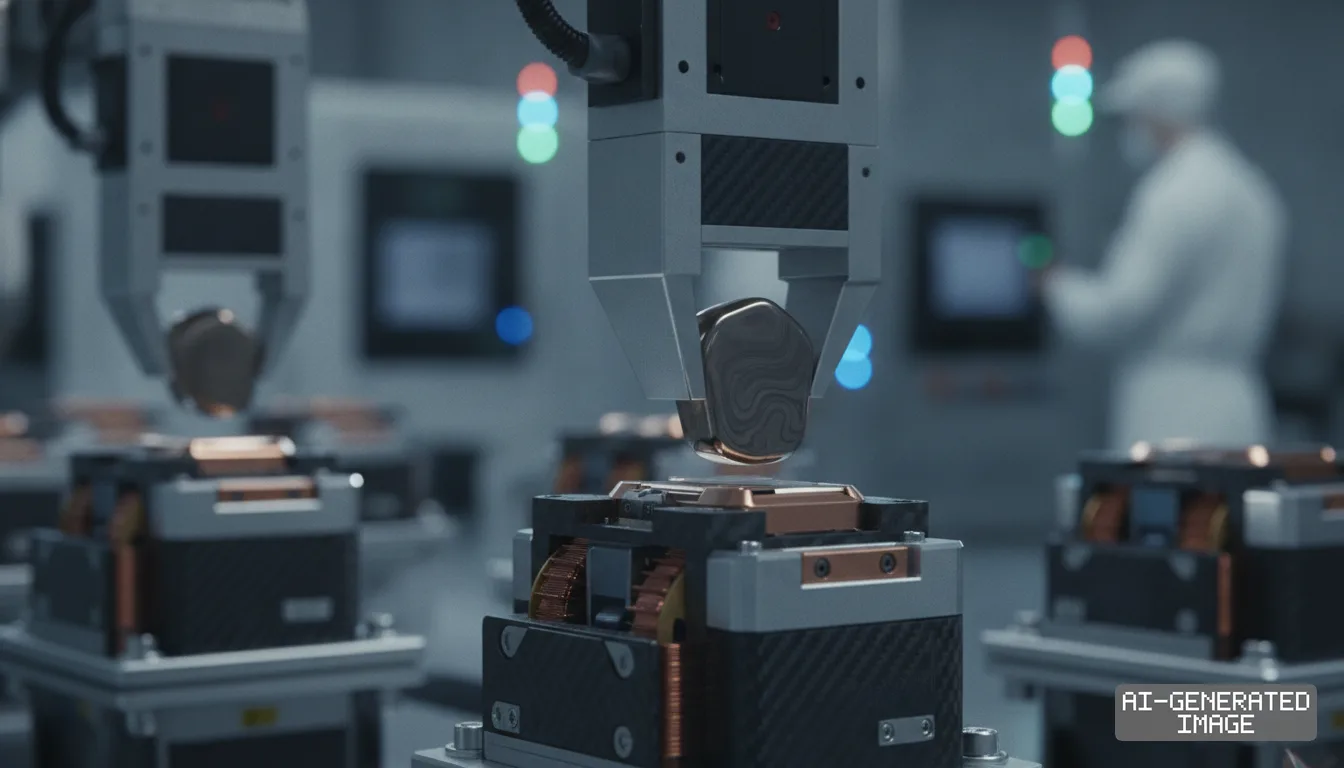
China Rare Earth Group Innovation Technology and Benmo Technology established a joint research partnership on Sept. 30, 2026, to develop high-performance permanent magnet supply chains for humanoid robot joint actuators.
The pact pairs China's national rare-earth research network with the country's largest producer of consumer direct-drive motors. Benmo controls 61.1% of China's direct-drive module market, according to data from Frost & Sullivan.
The agreement followed Benmo's trading debut on the Hong Kong Stock Exchange on Sept. 29 under Rule 18C. The listing raised HK$1.08 billion ($138 million) at an offer price of HK$21.60 per share.
China Rare Earth Group Innovation Technology operates as the dedicated advanced materials development arm of China Rare Earth Group. The state-owned parent firm manages roughly 70% of China's heavy rare-earth mining quota.
The joint program focuses on sintered neodymium-iron-boron alloys, flux-concentrating magnetic rings and radially oriented magnetic rings. Engineers will customize magnetic microstructures specifically for direct-drive motor architectures used in embodied artificial intelligence platforms.
Direct-drive actuators eliminate mechanical gear reducers by coupling the motor directly to the driven robotic limb. This design removes mechanical backlash and reduces weight, but requires significantly higher magnetic flux density to maintain torque.
Radially oriented magnetic rings create a continuous, uniform magnetic field around the motor rotor. That configuration allows actuator modules to generate higher continuous torque without exceeding a compact 120-millimeter outer casing diameter, the company said.
Chinese humanoid robot manufacturers are cutting retail prices below 100,000 yuan ($14,200) for light-industrial models. This pricing pressure forces component suppliers to reduce assembly costs while raising thermal resistance in magnetic cores during prolonged continuous duty.
Upstream integration addresses vulnerability in motor bill-of-materials costs. High-performance permanent magnets account for roughly 30% to 40% of the raw material expense in precision frameless torque motors used inside robotic hips, knees and shoulders.
Beijing has identified embodied robotics as an industrial priority, encouraging state resource miners to coordinate directly with commercial machinery makers. The policy aims to domesticate precision motion hardware from mined oxides to finished joint actuators.
Specialized motion suppliers are racing to scale commercial deliveries beyond early proof-of-concept units. Automotive component supplier Ningbo Tuopu Group recorded 13.59 million yuan ($1.93 million) in robot actuator revenue in 2025, accounting for 0.046% of its sales.
Benmo shipped 8.5 million direct-drive power modules for consumer robots in 2025, according to its prospectus. Shipments reached 5.7 million units in the first six months of 2026 across cleaning and industrial logistics categories.
The company currently manufactures embodied robotic joint modules spanning frame diameters from 20 millimeters to 120 millimeters. The largest modules deliver peak torque ratings of 120 newton-meters for bipedal walking platforms.
Direct Drive Tech supplies actuator units to four of the world's 10 largest consumer robotics producers. The company is using listing proceeds to expand assembly capacity for multi-axis humanoid arms and wheeled-legged mobile chassis.
The strategic cooperation agreement also outlines a framework for joint equity investments and sector funds. The entities plan to co-finance pilot production lines for tailored magnet rings and sponsor technical talent programs at domestic engineering institutes.
China has tightened export licensing and quota governance on rare-earth processing equipment and permanent magnet manufacturing technologies since 2024. Establishing closed-loop domestic supply lines protects Chinese actuator manufacturers against international resource constraints.
Alternative robotic actuator designs rely on precision planetary or harmonic strain-wave reducers. Japanese suppliers Harmonic Drive Systems and Nabtesco maintain strong positions in high-ratio mechanical reducers, charging premium prices that raise complete robot assembly costs.
Direct-drive modules using high-strength magnetic rings circumvent mechanical reducer patents while cutting part counts. However, they require higher concentrations of heavy rare-earth additives like dysprosium and terbium to resist demagnetization at temperatures above 150 degrees Celsius.
Cooperating directly with the state research institute gives Benmo access to grain boundary diffusion techniques. The metallurgy process introduces dysprosium vapor only along magnet grain boundaries, cutting heavy rare-earth usage by up to 50% while preserving high-temperature coercivity.
The regulatory filing does not state guaranteed procurement volumes, pricing formulas or binding minimum delivery quotas for the magnetic rings. Specific supply commitments and financial terms will depend on future subsidiary-level contracts, the companies said.
Technical steering committees from both organizations will hold quarterly joint review sessions beginning in the fourth quarter of 2026. The teams plan to finalize initial pilot-run specifications before year-end ahead of scheduled 2027 commercial actuator integration.
Impact map
How this development propagates across the region and out to global buyers.
| Event | Korea | China | Japan | Global impact |
|---|---|---|---|---|
| Robot permanent magnet supply alliance | domestic robot makers face higher NdFeB magnet input costs from Chinese export restrictions | Benmo secures custom state-backed NdFeB rings for 120Nm direct-drive actuators | Harmonic Drive Systems faces substitution pressure as direct-drive bypasses reducers | humanoid actuator bill-of-materials cost drops toward the sub-$14,000 robot price target |
| Robot permanent magnet supply alliance | domestic robot makers face higher NdFeB magnet input costs from Chinese export restrictions | Benmo secures custom state-backed NdFeB rings for 120Nm direct-drive actuators | Harmonic Drive Systems faces substitution pressure as direct-drive bypasses reducers | humanoid actuator bill-of-materials cost drops toward the sub- |
| Robot permanent magnet supply alliance | domestic robot makers face higher NdFeB magnet input costs from Chinese export restrictions | Benmo secures custom state-backed NdFeB rings for 120Nm direct-drive actuators | Harmonic Drive Systems faces substitution pressure as direct-drive bypasses reducers | humanoid actuator bill-of-materials cost drops toward the sub-$14,000 robot price target |
In this story
- Companies
- Benmo TechnologyChina Rare Earth Group
- Tickers
- 06731.HK
- Exposed
- Ningbo Tuopu GroupHarmonic Drive SystemsNabtesco
- Policy
- SubsidiesEconomic Security
- Impact
- Supply ChainCost StructureCapex
Track every Subsidies development → Track every Economic Security development →
Related briefings
- Tesla buys China actuator parts for US Optimus robot factory Also on Ningbo Tuopu Group, Cost Structure
- South Korea faces 70% foreign reliance on humanoid robot parts Also on Nabtesco, Harmonic Drive Systems, Cost Structure
- Korean electronics component suppliers deploy AI dual-arm robots as factory labor pool shrinks Also on Nabtesco, Harmonic Drive Systems, Cost Structure
- Harmonic Drive expands Japanese reducer capacity for humanoid robotics demand Also on Nabtesco, Harmonic Drive Systems
Sources
Reporting
Confidence: medium — how we grade this
The documents behind this briefing are linked above. East Asia Brief produces its English text with AI assistance under human editorial review, and does not translate or republish other outlets' articles. See our methodology and AI policy. Spotted an error? Tell us.
The Morning Brief
What changed in Korean, Chinese and Japanese industry overnight — and what it means for your supply chain. One email, weekday mornings, US time. Free.
The Morning Brief is in preparation. Leave your address and we will write to you once — when the first issue is ready. Nothing before that.