Harmonic Drive drops 27% despite record ¥50B in half-year orders
A 70.7% surge in semiconductor tool reducer orders failed to offset market worries over sluggish Chinese factory automation demand.
Harmonic Drive Systems faced renewed valuation scrutiny on Nov. 25, 2026, as investors weighed the gear maker's 27% share decline against near-term industrial robot orders and distant humanoid mass-production timelines.
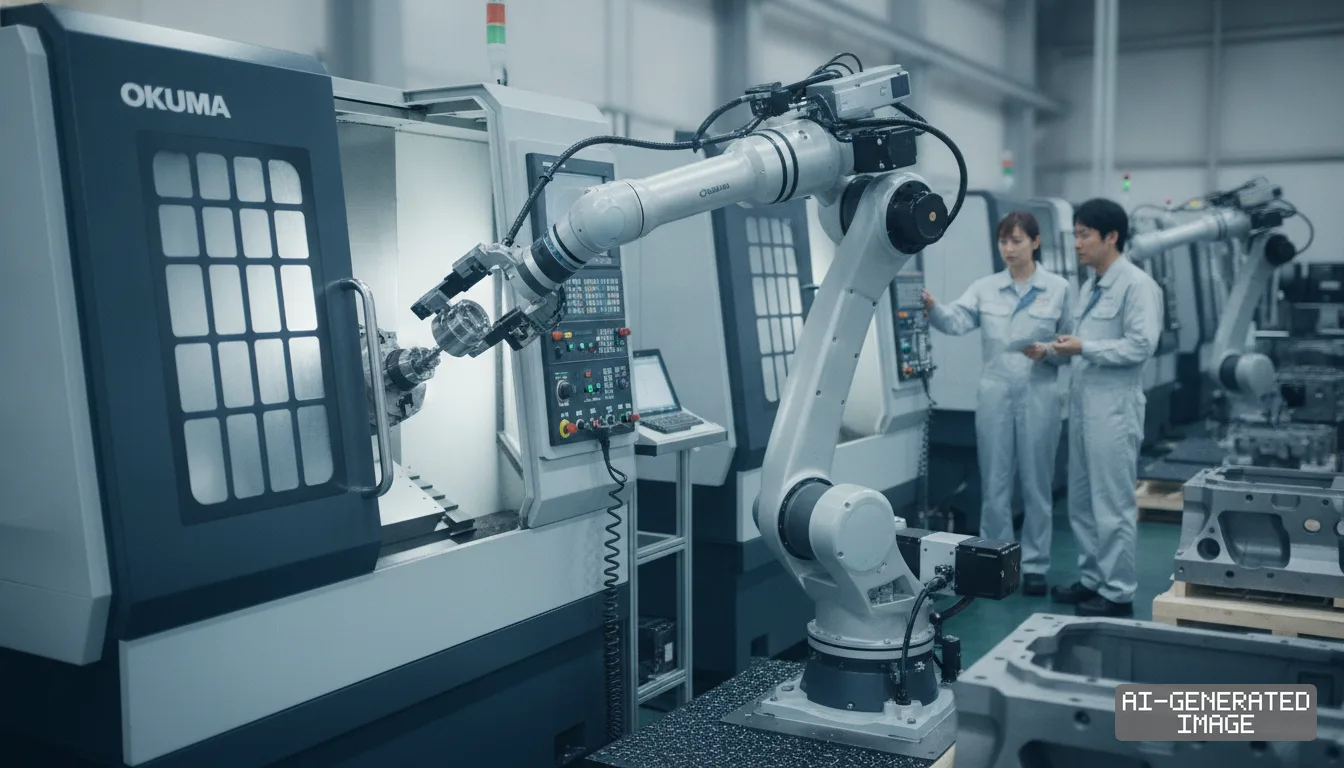
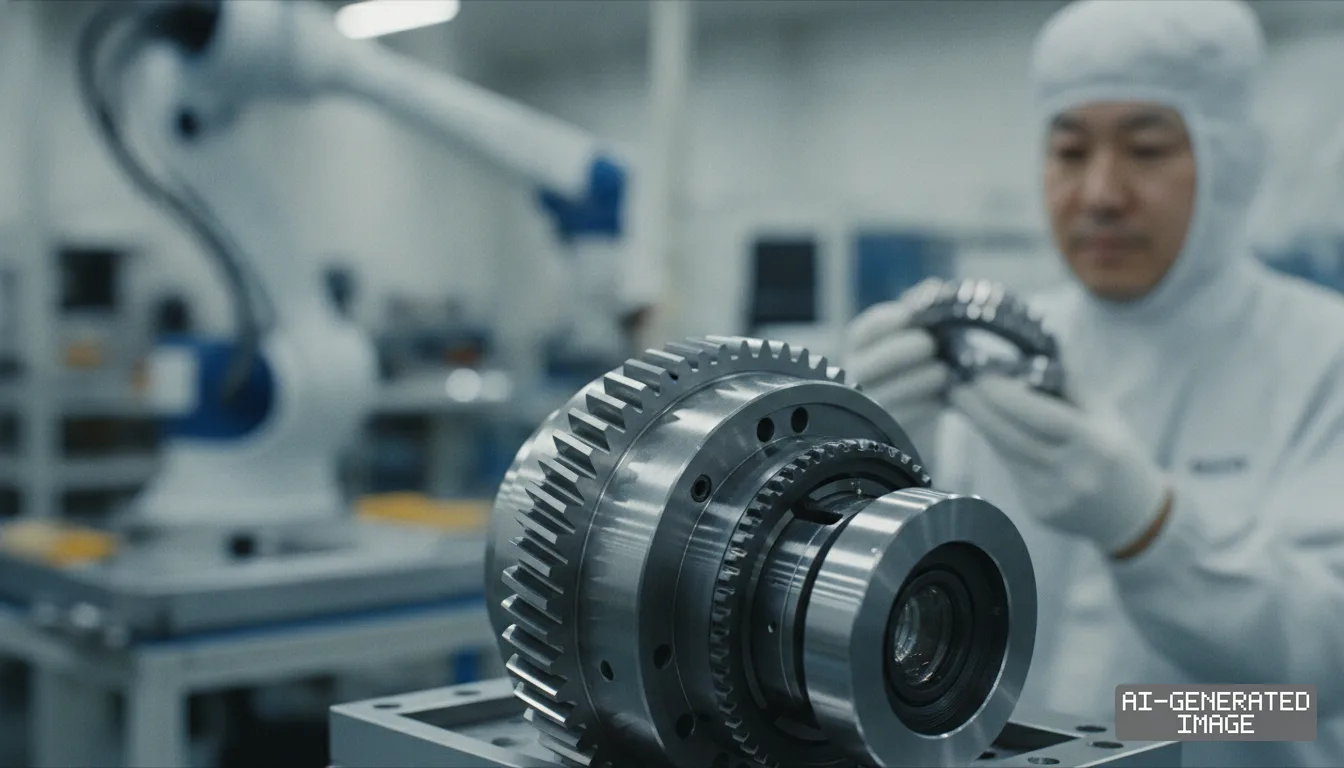
The Tokyo-based manufacturer controls a dominant share of the global precision strain-wave gearing market. Its compact speed reducers provide minimal backlash and high torque ratios for industrial multi-axis robot arms, semiconductor handling stages and surgical equipment.
First-half consolidated orders rose 70.7% year-on-year to a record ¥50.39 billion ($325 million), according to the company's financial results for the six months ended Sept. 30. The incoming order surge prompted management to raise its full-year sales guidance by 4.7% to ¥78.0 billion.
The upward revision lifted full-year operating profit projections to ¥10.2 billion, exceeding earlier internal targets of ¥8.5 billion. Factory utilization rates improved markedly across domestic assembly lines, absorbing fixed depreciation expenses from previous plant expansions.
Equity markets nevertheless punished the stock after a rapid autumn advance. Shares pulled back 26.7% from a post-earnings peak of ¥4,993 on Nov. 11 to an intraday trough of ¥3,660 on Nov. 20.
Market commentary circulating on Nov. 25 described the slide as a sudden 28% single-session crash. That description confused the multi-session price correction with the company's newly declared annual dividend of ¥28 per share.
Daily price limits enforced by the Tokyo Stock Exchange prevent single-session declines of that scale for equities trading in the ¥4,000 tier. The exchange caps one-day moves on those shares at ¥700.
Shares traded at ¥4,216 by the close of trade on Nov. 24, following a technical rebound. Even after that recovery, trading desks continue to debate whether earnings justify an enterprise multiple running above 80 times normalized earnings.
Underneath the headline order growth, incoming bookings show sharp sector divergence. Expanding artificial intelligence data center construction and advanced semiconductor packaging drove tool builders to accelerate component purchases.
Second-quarter orders for semiconductor manufacturing equipment surged 178% year-on-year to ¥6.5 billion. Toolmakers in Japan and North America booked gearheads to handle automated silicon wafer transport and advanced packaging machinery.
Industrial robot applications generated ¥7.2 billion in second-quarter bookings, rising 51% over the prior year. Growth in traditional factory automation remained confined to specific geographic corridors rather than broad industrial expansion.
North American orders expanded fastest, leaping 135.7% during the first half on strong surgical robot and wafer-handling shipments. Medical robotics accounted for ¥2.0 billion in repeat bulk orders during the quarter, the company said.
European bookings rose 52.7% during the first half, aided by aerospace systems and specialized robotic arms. In contrast, orders from customers in China rose just 0.5%, reflecting deep structural headwinds across local manufacturing hubs.
Chinese factory operators reduced purchases of articulated robot reducers during the period, offsetting domestic Chinese demand for semiconductor tool components. General industrial automation across Chinese consumer electronics assembly lines remained sluggish.
Domestic Chinese component rivals, including Leaderdrive Technology, have expanded production of middle-tier strain-wave gearboxes. That capacity expansion intensified price competition across Chinese collaborative robot segments, eroding profit margins on standard gearhead imports.
To defend market share against Chinese rivals without transferring proprietary gear-cutting technologies, Harmonic Drive Systems plans local assembly in China. The company plans to source peripheral casings locally while importing flexible splines from Japanese plants.
Market expectations for humanoid robotics have also injected volatility into the company's valuation. While conventional six-axis industrial arms require five to six strain-wave gear units, dual-arm humanoid robots with articulate hands can require up to 30 miniature speed reducers.
That mechanical complexity represents an order multiplier for component suppliers if mass deployment occurs. For now, commercial procurement remains tiny compared to traditional factory machinery.
Bookings for artificial intelligence and humanoid robotics totaled ¥200 million ($1.3 million) during the second quarter. That volume represented less than 1% of the company's quarterly order intake of ¥26.3 billion.
Harmonic Drive Systems told investors at its Nov. 19 briefing that commercial mass production of humanoid robots will not begin before 2028. The company is developing specialized actuators and gearheads scheduled for market introduction in March and December 2027.
The company has not published unit shipment figures for prototype humanoid gearheads, and disclosures do not break out profit margins for artificial intelligence actuators. The timing of customer field validations across prospective robotics customers remains undisclosed.
Harmonic Drive Systems will report third-quarter financial results and update consolidated order backlogs on Feb. 5, 2027.
Impact map
How this development propagates across the region and out to global buyers.
| Event | Korea | China | Japan | Global impact |
|---|---|---|---|---|
| Precision gear cycle divergence | collaborative robot parts suppliers face margin pressure in export markets | Leaderdrive gains domestic middle-tier share as Japanese gearhead imports slow | Harmonic Drive Systems lifts annual sales goal to ¥78 billion on semiconductor tool demand | humanoid robot volume purchasing delayed until commercial assembly lines begin in 2028 |
In this story
- Companies
- Harmonic Drive Systems
- Tickers
- 6324.T
- Exposed
- Leaderdrive
- Impact
- Order BookPricingCapex
Related briefings
- Harmonic Drive Systems holds premium on robot joint demand Also on Leaderdrive, Harmonic Drive Systems, Pricing
- Harmonic Drive shifts to integrated actuators to fight China rivals Also on Leaderdrive, Harmonic Drive Systems, Pricing
- Korean gearbox makers target Japanese monopoly in robot joints Also on Leaderdrive, Harmonic Drive Systems, Pricing
- Harmonic Drive pitches integrated actuators for robot joints in 2026 Also on Leaderdrive, Harmonic Drive Systems
Sources
Primary documents
Reporting
Confidence: high — how we grade this
The documents behind this briefing are linked above. East Asia Brief produces its English text with AI assistance under human editorial review, and does not translate or republish other outlets' articles. See our methodology and AI policy. Spotted an error? Tell us.
The Morning Brief
What changed in Korean, Chinese and Japanese industry overnight — and what it means for your supply chain. One email, weekday mornings, US time. Free.
The Morning Brief is in preparation. Leave your address and we will write to you once — when the first issue is ready. Nothing before that.