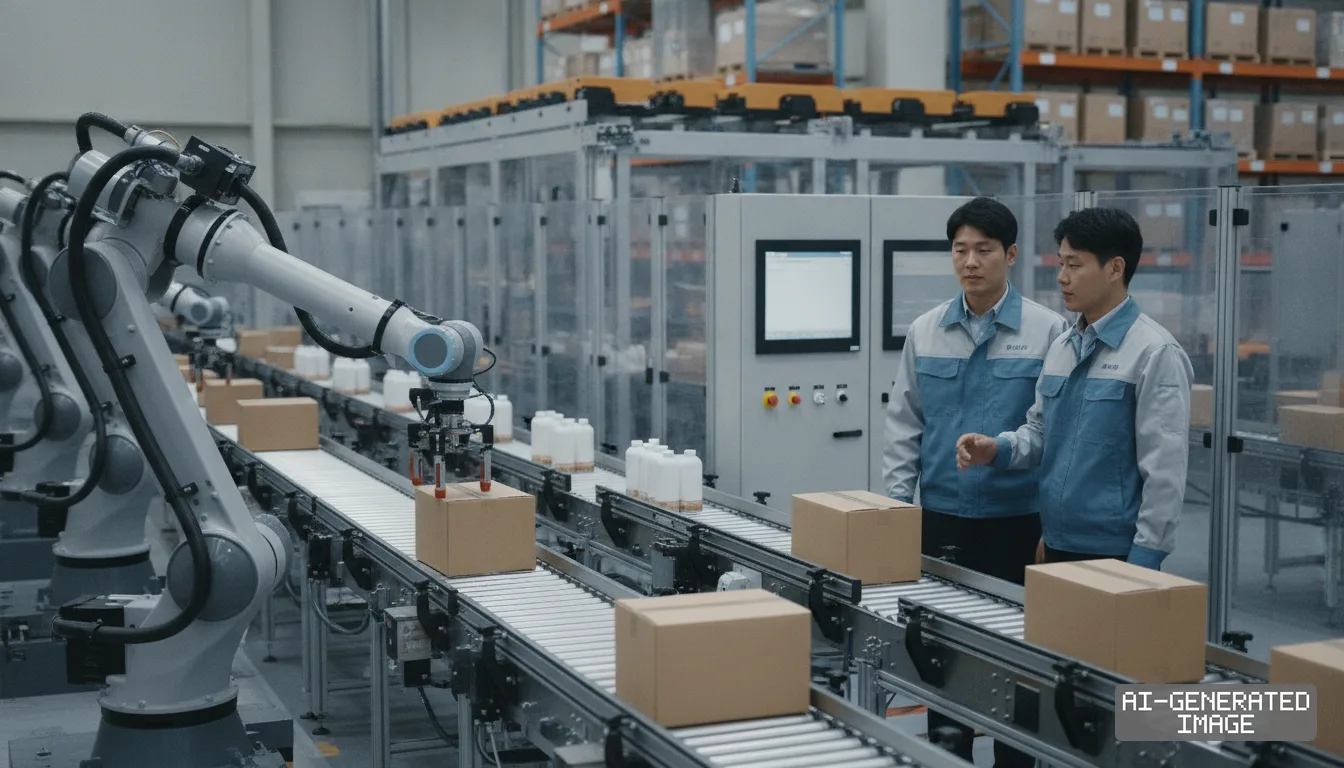
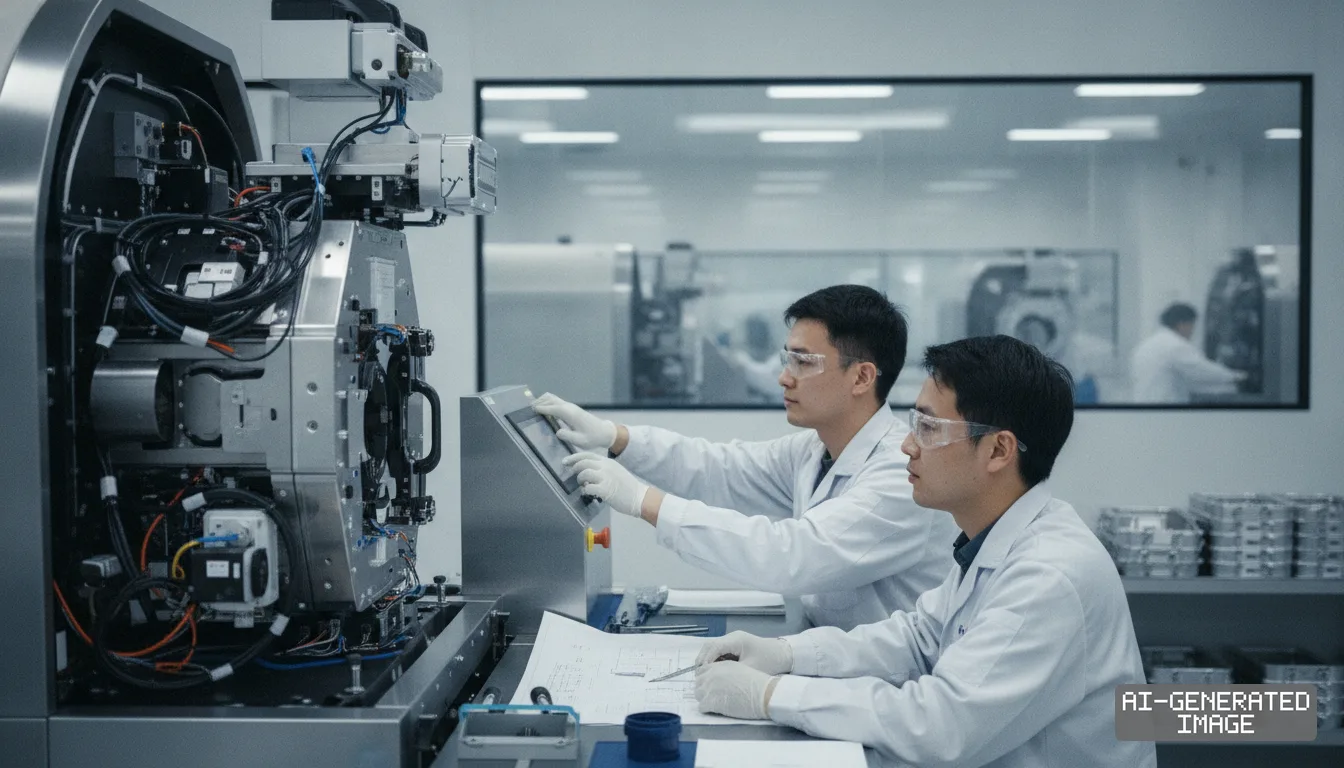
Okuma pairs 5-axis machining tools with robots in 5.7m² cell
The Nagoya machine builder cuts installation space by a third to automate continuous precision parts manufacturing amid severe labor shortages.
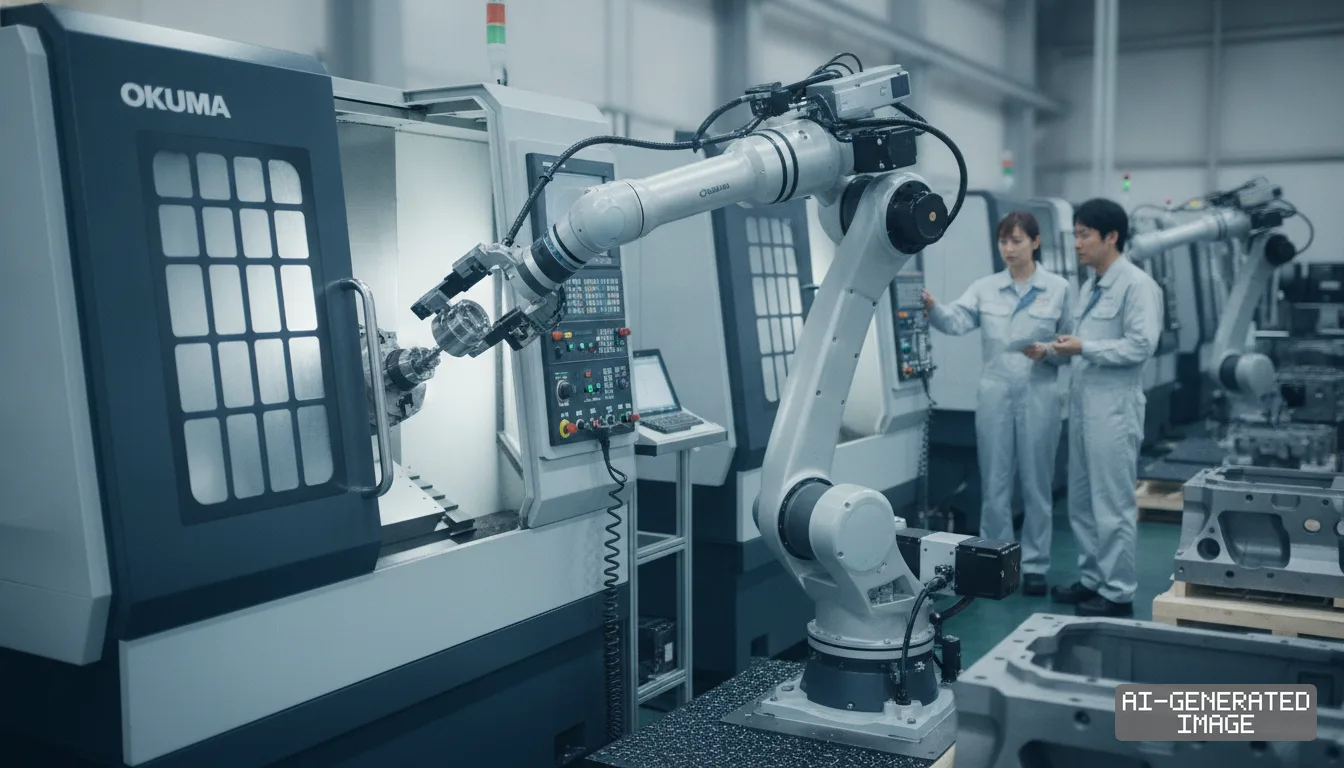
Okuma Corporation rolled out an integrated automated machining package pairing compact five-axis machining centers with articulated robot cells on Nov. 25, 2026, targeting labor shortages across Japanese precision parts manufacturing.
The Nagoya-based machine tool builder manufactures computerized numerical control machinery that cuts metal components for aerospace, semiconductor equipment and medical devices. The company produces machine castings, servo motors and control software entirely in-house.
The compact horizontal setup occupies an installation footprint of 5.7 square meters, taking up roughly a third less floor space than separate robotic machining cells. The system processes complex metal parts measuring up to 250 millimeters square.
Okuma booked ¥240.8 billion ($1.56 billion) in consolidated machine tool orders in the fiscal year ended March 31, 2026. Automated cells and five-axis machines formed the primary revenue engine across domestic and export markets, the company said in financial reports.
The companion vertical machining cell incorporates an automatic workpiece changer that stores up to 33 workpiece holders. An automatic tool changer holds 120 cutting tools, enabling machine shops to maintain 24-hour continuous unattended milling.
Unattended metal cutting generates swarf — sharp metal chips shaved away during milling — that can accumulate and trigger machine stoppages. Okuma engineered horizontal chip-fall channels and directional coolant jets to flush metal shavings away from cutting surfaces automatically.
External system integrators typically design and connect industrial robot arms to machine tools, adding 30% to 50% to total equipment acquisition costs. Small subcontracting workshops often forgo robotic automation because of those auxiliary engineering fees.
Okuma removes outside integrators by installing its ROID Navi software interface directly into the machine control screen. Operators steer the articulated robot using standard machine dials, eliminating the need for specialized robotics programming languages.
Japan faces an acute contraction in manufacturing personnel, with veteran machinists retiring faster than young technicians join precision production lines. Small workshops running 10 to 30 machines lack night-shift labor to keep capital equipment cutting after regular working hours.
The automation package targets high-mix, low-volume contract machining where component geometries change several times each week. The integrated controller automatically recalibrates robot grasping points and pallet positioning within minutes, reducing changeover downtime between different production batches.
Component orders from semiconductor manufacturing equipment suppliers and defense contractors have expanded across Japan, the company noted in regulatory filings. Those industrial sectors demand tight dimensional tolerances that manual part loading and clamping struggle to repeat across long production shifts.
Okuma fitted thermal compensation sensors across the machine frame to counteract metal expansion caused by fluctuating shop temperatures during unheated night hours. The control software halts idling auxiliary hydraulic pumps during cutting pauses to lower electrical power draw.
Overseas shipments generated over 60% of Okuma's net sales during the previous fiscal year. Japanese machinery builders face intensifying competition in North America and Europe, where aerospace subcontractors similarly seek compact automated cells to counter machinist shortages.
Domestic peers DMG Mori and Makino Milling Machine have also expanded robotic cell lines to capture automation spending. Okuma differentiates its equipment by engineering the structural frames, electronic sensors, digital drives and numerical software under a unified domestic development model.
Urban machine shops across Aichi, Shizuoka and Kanagawa prefectures operate inside cramped factory bays where floor space commands a high premium. The 5.7-square-meter footprint permits workshop owners to replace legacy three-axis mills without altering structural pillars or building partitions.
The company designed the articulated robot cell to be repositioned using standard factory forklift trucks. Machining facilities can disconnect the loader unit during daytime prototype cutting and reconnect the automated cell for overnight unmanned production runs.
Okuma did not publish a standalone commercial announcement or disclose unit pricing on Nov. 25, leaving technical releases issued on Oct. 15 and Oct. 22 as the verified equipment baseline.
The Japan Machine Tool Builders' Association publishes preliminary monthly machinery orders on Dec. 22, 2026. Okuma closes its third fiscal quarter on Dec. 31, 2026, and presents nine-month financial results in early February 2027.
Impact map
How this development propagates across the region and out to global buyers.
| Event | Korea | China | Japan | Global impact |
|---|---|---|---|---|
| Okuma robotic machining package | machine tool builders face direct competition in compact 5-axis export tiers | precision contract shops adopt integrated cells to reduce operator headcount | Okuma targets 24-hour unmanned cutting across Aichi and Kanagawa SME supplier bases | aerospace and semiconductor tool BOM costs stabilize as automated milling cuts shop scrap rates |
In this story
- Companies
- Okuma Corporation
- Tickers
- 6103.T
- Exposed
- DMG MoriMakino Milling Machine
- Impact
- Supply ChainCapexCost Structure
Related briefings
- Okuma opens $22M Charlotte hub to recondition CNC machine tools Also on Makino Milling Machine, Okuma Corporation, DMG Mori
- Okuma raises annual order outlook to 310 billion yen on US surge Also on Okuma Corporation, DMG MORI
- Fanuc raises annual sales forecast past ¥1 trillion on factory recovery Also on Okuma Corporation, Cost Structure
- Okuma Books Record Machine Orders as Automation Demand Surges Also on Okuma Corporation, Cost Structure
Sources
Reporting
Confidence: high — how we grade this
The documents behind this briefing are linked above. East Asia Brief produces its English text with AI assistance under human editorial review, and does not translate or republish other outlets' articles. See our methodology and AI policy. Spotted an error? Tell us.
The Morning Brief
What changed in Korean, Chinese and Japanese industry overnight — and what it means for your supply chain. One email, weekday mornings, US time. Free.
The Morning Brief is in preparation. Leave your address and we will write to you once — when the first issue is ready. Nothing before that.