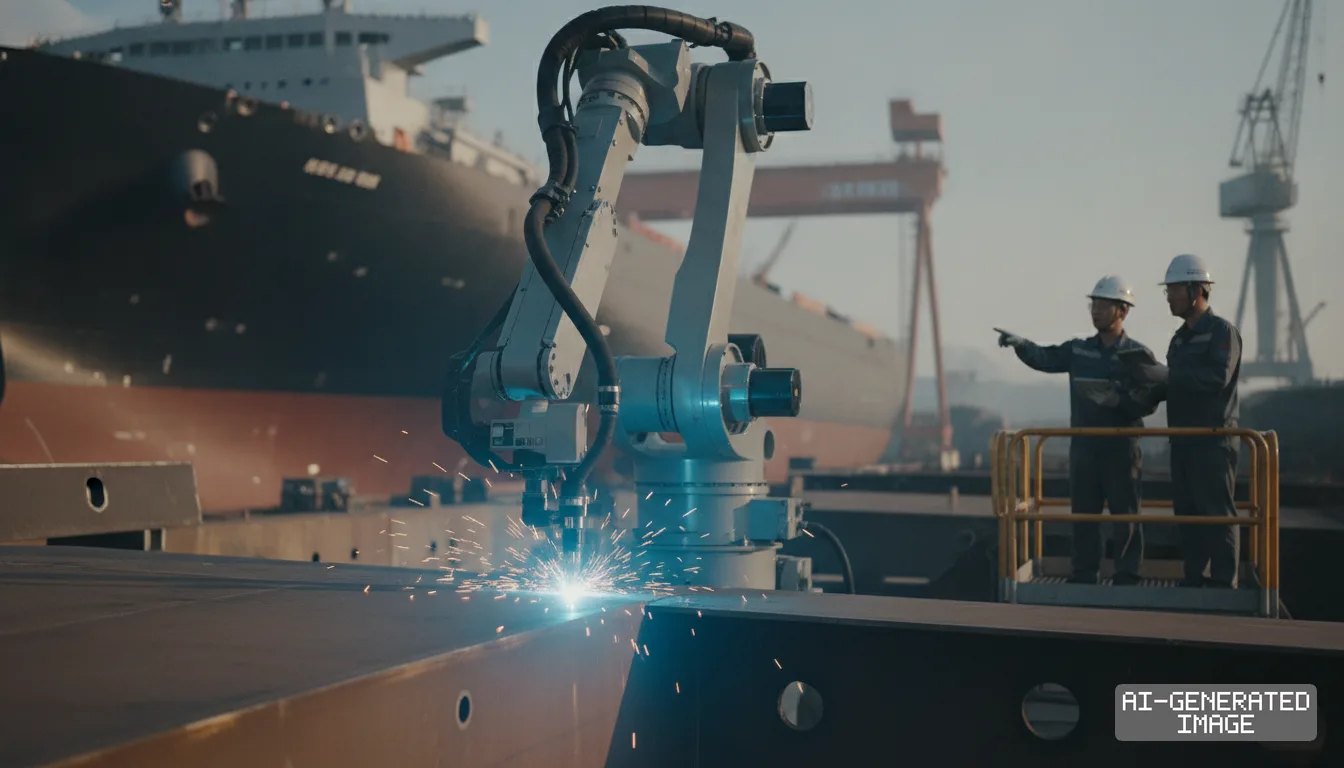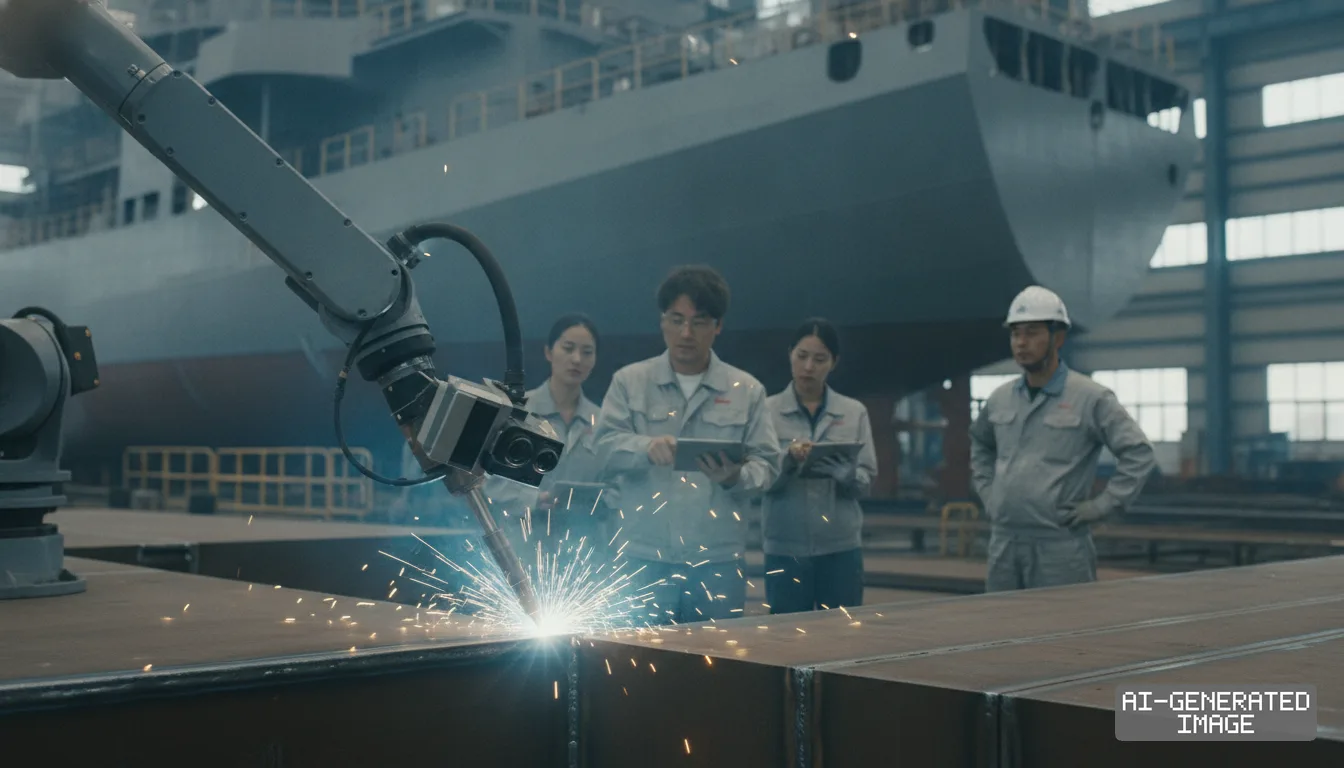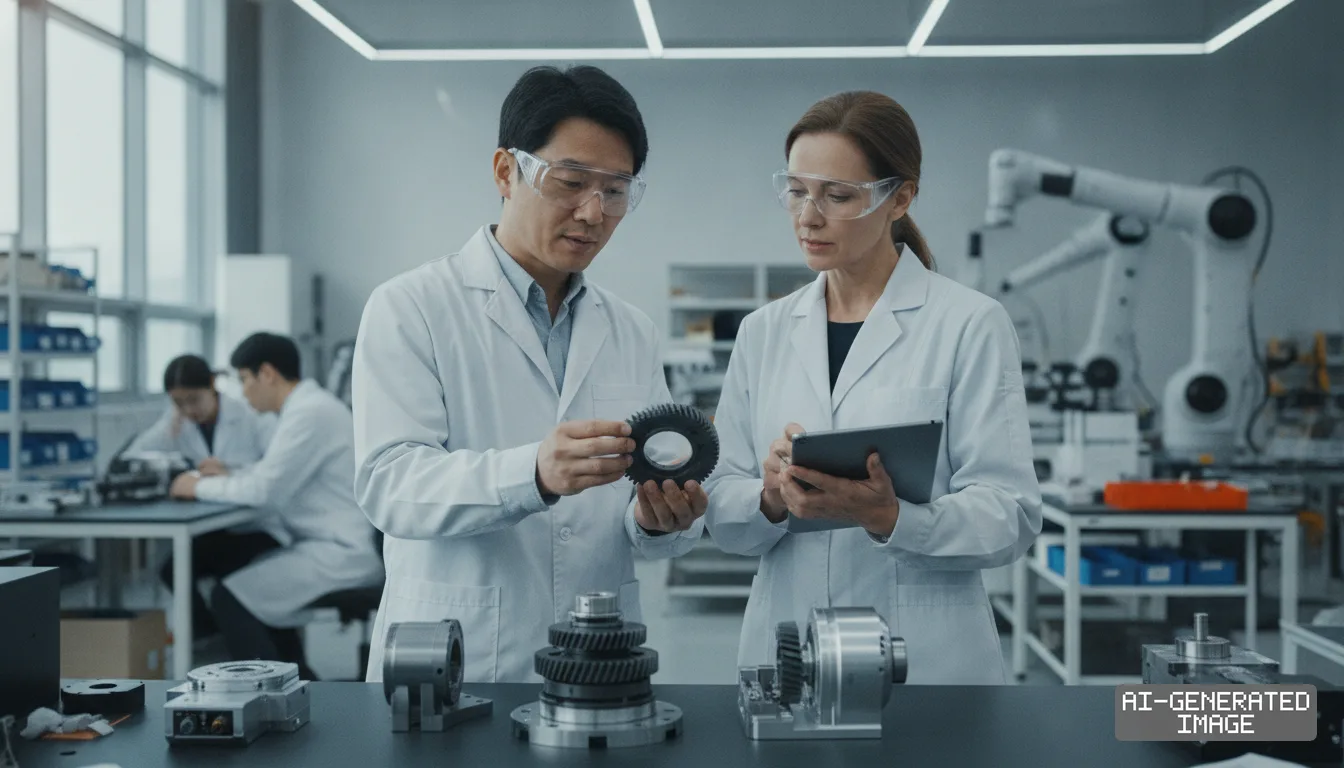
Estun buys humanoid robot maker Codroid for 487 million yuan
The transaction folds the loss-making developer into full balance sheet consolidation alongside a 620 million yuan revenue earn-out through 2029.
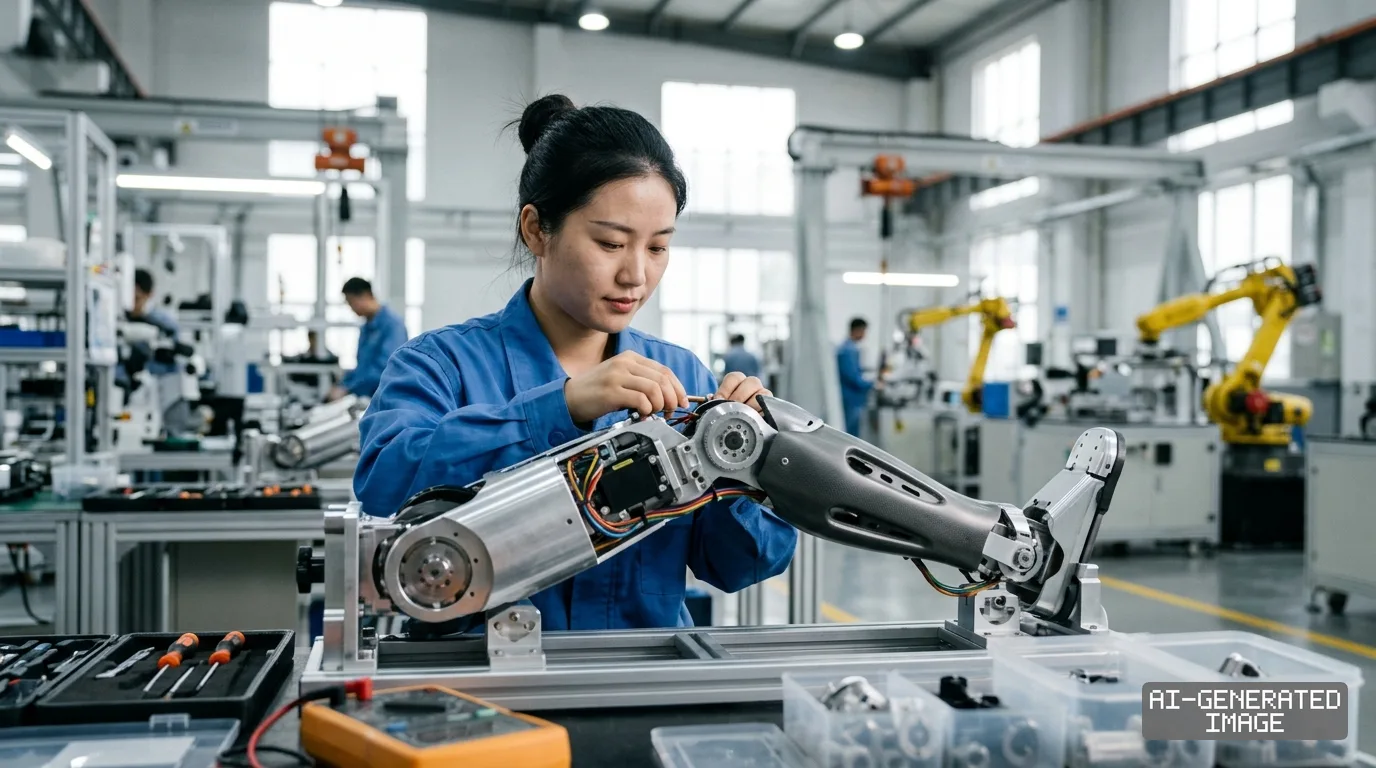
Estun Automation completed the financial consolidation of its humanoid robotics affiliate on Sept. 11, bringing the business onto its balance sheet to counter severe price erosion in traditional industrial arms.
The transaction values Nanjing Estun Codroid Technology at 487 million yuan ($68 million). That cash purchase price represents an asset appraisal premium of 901.20% over net book value, according to regulatory filings.
Two wholly owned operating subsidiaries, Estun Robot Engineering and Dingtong Electromechanical, acquired 100% of Codroid. Estun's controlling shareholder held 39.07% of the equity, making the takeover a related-party deal, company disclosures showed.
Estun, headquartered in Nanjing, operates as China's largest domestic maker of articulated industrial robots by shipment volume. The company generated 4.888 billion yuan ($682 million) in revenue during 2025.
Price wars in standard six-axis robots — mechanical arms used for factory welding and palletizing — compressed operating margins across Chinese automation suppliers throughout 2024. Estun swung to an annual profit of 44.97 million yuan in 2025 after restructuring costs.
Estun formed Codroid in July 2022 to develop collaborative robots — lightweight arms designed to work alongside human operators — and embodied artificial intelligence. The incubation structure kept early research spending off the parent company balance sheet.
Codroid built a product portfolio of 17 collaborative models carrying payloads between 3 and 35 kilograms. The subsidiary also engineered four composite mobile robots alongside automated workstations for electronics, automotive and consumer goods production.
The subsidiary's hardware portfolio features Codroid 02, a bipedal humanoid robot standing 170 centimeters tall and weighing 70 kilograms without batteries. The bipedal machine operates with a single-arm payload capacity of 5 kilograms.
Codroid 02 incorporates self-developed joint modules combining rigid and quasi-direct drive actuators to balance physical power and precision. The unit features 31 degrees of freedom across the body and six degrees of freedom in each hand.
The robot runs on a dual-tier control architecture that links language processing with physical movement. A vision-language neural network processes scene data, while a model predictive controller executes low-latency joint trajectories, company technical releases showed.
Financial records reveal that Codroid generated mounting net losses throughout its product development phase. The startup recorded net losses of 36.10 million yuan in 2024 and 52.99 million yuan in 2025.
Unprofitability persisted into the current operating year. Codroid posted a net loss of 12.65 million yuan on revenue of 14.86 million yuan during the first four months of 2026, exchange documents confirmed.
To mitigate risk from the 901.20% valuation premium, 22 selling shareholders agreed to performance clawbacks spanning 44 months. The earn-out contract binds former owners from May 2026 through Dec. 31, 2029.
The clawback terms mandate cumulative revenue of at least 620 million yuan across the commitment period. Codroid must generate 70 million yuan in late 2026, 120 million yuan in 2027, 180 million yuan in 2028 and 250 million yuan in 2029.
The covenant also establishes profit floors for collaborative arms. Selling shareholders pledged cumulative audited non-GAAP net profit of 66 million yuan, scaling from 5 million yuan in late 2026 to 26 million yuan in 2029.
Industrial deployments remain focused on commercial manufacturing plants rather than consumer tasks. Codroid 02 has entered pilot trials for visual inspection, screw fastening and material transport in automotive and consumer electronics lines, the company said.
Absorbing Codroid reflects broader efforts by Chinese automation leaders to escape deflationary hardware pricing. Standard industrial arms saw average selling prices decline across China over the past two years as domestic fabrication capacity expanded.
The product shift brings Estun into closer operational overlap with foreign robotics vendors. Japan's Fanuc, Yaskawa Electric and Swiss automation group ABB face rising Chinese competition in high-payload collaborative robotics and specialized factory automation cells.
Selling shareholders face their initial financial review after the operating period closes on Dec. 31, 2026. Independent auditors will then verify whether Codroid met its 70 million yuan revenue milestone and 5 million yuan profit floor.
The regulatory filing does not state separate revenue or profitability thresholds for the humanoid robot unit, disclosing performance targets only for collaborative arms. Estun has not published unit delivery figures for the Codroid 02 line.
Impact map
How this development propagates across the region and out to global buyers.
| Event | Korea | China | Japan | Global impact |
|---|---|---|---|---|
| Estun Codroid consolidation | no direct domestic exposure, cobot makers monitor Chinese price competition | Estun absorbs 101.75 million yuan in startup losses to accelerate industrial humanoid deployments | Fanuc and Yaskawa face mounting margin pressure in high-payload collaborative robotics | humanoid robot commercialization pivots directly into automotive and electronics factory lines |
In this story
- Companies
- Estun Automation
- Tickers
- 002747.SZ
- Exposed
- FanucYaskawa ElectricABB
- Policy
- Industrial Subsidies
- Impact
- CapexPricingCost Structure
Related briefings
- China servo motor makers squeeze foreign rivals on cost and delivery Also on Industrial Subsidies, Estun Automation, Yaskawa Electric
- China Antimonopoly Review Imposes Harsher Operational Remedies on Automation Mergers Also on Estun Automation, Fanuc, ABB
- Estun Automation completes buyout of robotics unit Codroid Also on Estun Automation, Fanuc, ABB
- Asian Shipyard Heavy Plate Costs Diverge as Mills and Builders Clash Over Contract Pricing Also on Industrial Subsidies, Pricing
Sources
Reporting
Confidence: medium — how we grade this
The documents behind this briefing are linked above. East Asia Brief produces its English text with AI assistance under human editorial review, and does not translate or republish other outlets' articles. See our methodology and AI policy. Spotted an error? Tell us.
The Morning Brief
What changed in Korean, Chinese and Japanese industry overnight — and what it means for your supply chain. One email, weekday mornings, US time. Free.
The first issue goes out shortly. Sign up now and you will not miss it.