Excluding Chinese magnets lifts US humanoid robot cost to $131,000
Building actuators without China, which refines 92% of sintered NdFeB magnets, increases baseline assembly expenses from $46,000 as domestic processing lags.
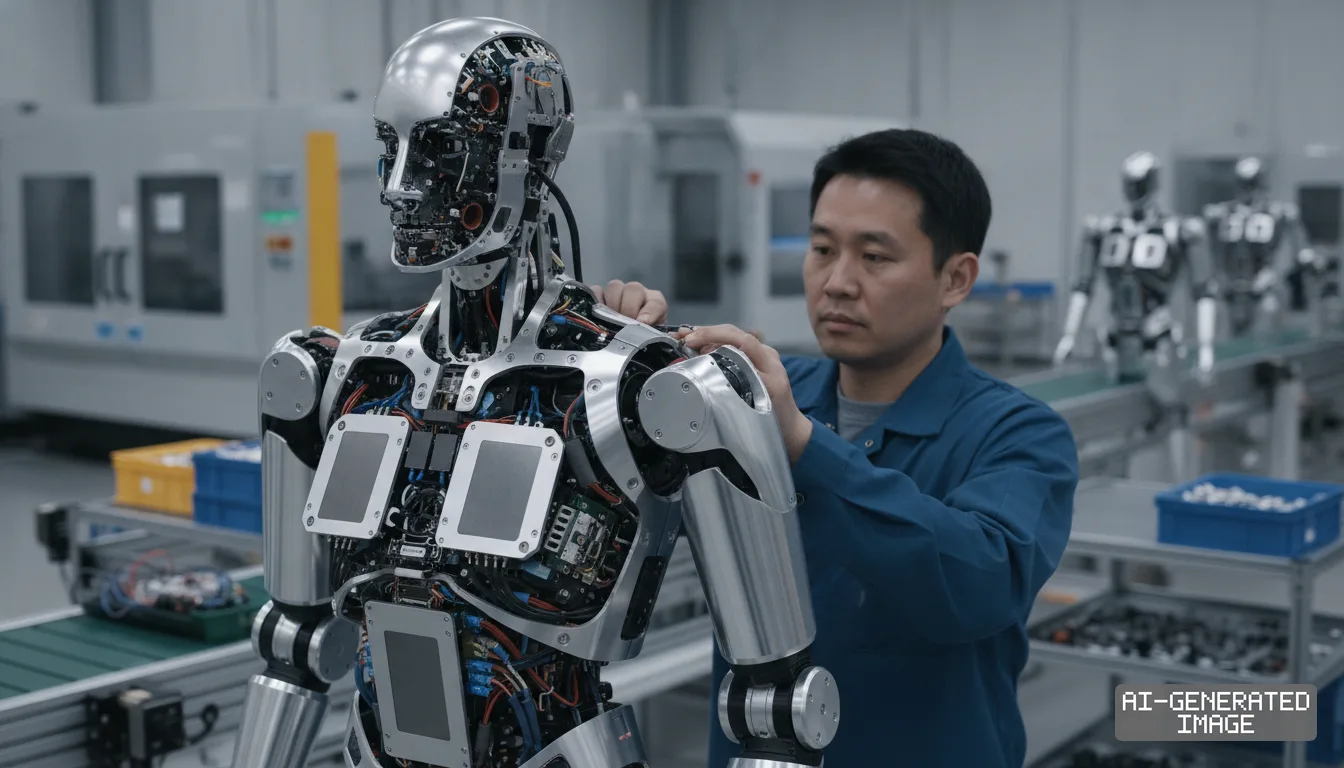
Rare Earth Exchanges said Nov. 7 that excluding Chinese neodymium-iron-boron magnets would raise the manufacturing cost of an American humanoid robot by 185% to $131,000 per unit.
A standard humanoid robot built with Chinese components costs approximately $46,000 to assemble. China refines about 92% of the world's sintered neodymium-iron-boron permanent magnets used in precision electric actuators.
Morgan Stanley and industry estimates project the global humanoid robot fleet will exceed one billion units by 2050. China is expected to deploy 302 million units, or roughly 30% of the total, while the United States operates 78 million.
Actuators function as mechanical joints, converting electrical energy into precise physical movement. High-torque motors depend on sintered neodymium-iron-boron magnets, which provide the magnetic flux density required for compact limb motions.
American robotics manufacturers face an acute domestic procurement bottleneck. The research group calculated only a 35% probability that US robot builders will secure more than half their permanent magnet feedstock from domestic producers by 2030.
MP Materials is constructing a $1.25 billion magnet manufacturing campus known as 10X in Northlake, Texas. The company expects the 120-acre facility to reach an annual capacity of 10,000 metric tons of finished magnets by 2028.
The producer began commercial magnet deliveries to General Motors in the fourth quarter of 2026. However, MP Materials has not signed binding long-term supply agreements with commercial humanoid robotics developers.
USA Rare Earth operates a 310,000-square-foot facility in Stillwater, Oklahoma, where it commissioned a commercial sintered magnet production line. The company plans to scale output to 600 metric tons per year to supply industrial customers.
Combined American commercial capacity remains below 1,000 metric tons annually across all end uses. China produces more than 200,000 metric tons of sintered rare-earth magnets each year, giving Asian manufacturers decisive pricing power.
Federal industrial rules are tightening domestic sourcing mandates for autonomous machines. The Federal Communications Commission issued an administrative decision July 28 requiring foreign humanoid robots to incorporate at least 65% domestic components for commercial operational permits.
The domestic hardware threshold increases to 75% by 2029 under the federal schedule. Furthermore, the National Defense Authorization Act prohibits the Department of Defense from procuring equipment containing Chinese permanent magnets starting Jan. 1, 2027.
Trade policy calendars are compressing procurement windows for Western robotics engineering teams. A temporary suspension on Chinese rare-earth magnet export restrictions, negotiated in November 2025, expires on Nov. 10, 2026.
Replacing Asian magnet supply chains adds substantial capital overhead to balance sheets. An immediate enforcement of export quotas would raise actuator motor bill-of-materials costs across American development laboratories within days.
Domestic rare-earth refiners have focused early output on automotive traction motors and defense hardware. Automakers like General Motors hold multi-year supply priority, leaving robotics startups with secondary access to non-Chinese alloy blocks.
Sintered magnet fabrication involves jet-milling alloy powders to microscopic grains before pressing and coating. The chemical metallurgy requires dedicated high-temperature vacuum sintering furnaces that few American contractors operate at commercial scale.
Humanoid joints generate sustained thermal friction during dynamic bipedal walking cycles. Actuator motors require heavy rare earths like dysprosium and terbium to prevent demagnetization at elevated operating temperatures.
Refiners in southern China control almost all heavy rare-earth separation capacity globally. While American facilities process light rare earths like neodymium and praseodymium, heavy element separation lines remain under construction.
United States robotics pioneers, including developers of Tesla's Optimus, Figure AI and Apptronik, are testing commercial factory pilots. These platforms rely on tight motor weight ratios to extend battery runtime beyond two continuous working hours.
The research notice does not disclose the proprietary bill of materials or exact magnet sourcing registries for Tesla, Figure AI or Apptronik, as the robotics developers classify unit-level actuator component origins as confidential trade secrets.
Commerce officials in Washington and Beijing resume bilateral critical mineral consultations before the temporary export control truce expires Nov. 10, 2026.
Impact map
How this development propagates across the region and out to global buyers.
| Event | Korea | China | Japan | Global impact |
|---|---|---|---|---|
| permanent magnet supply gap | domestic robot makers face higher actuator procurement costs on tightening raw material rules | domestic suppliers retain 92% magnet refining dominance and direct pricing leverage | magnet specialists maintain automotive offtake but face restricted Chinese heavy rare earth feedstock | humanoid robot manufacturing costs rise up to 185% outside Chinese integrated supply chains |
| permanent magnet supply gap | domestic robot makers face higher actuator procurement costs on tightening raw material rules | domestic suppliers retain 92% magnet refining dominance and direct pricing leverage | magnet specialists maintain automotive offtake but face restricted Chinese heavy rare earth feedstock | humanoid robot manufacturing costs rise up to 185% outside Chinese integrated supply chains |
In this story
- Companies
- MP MaterialsUSA Rare Earth
- Tickers
- MPUSAR
- Exposed
- General MotorsTesla
- Policy
- Export ControlsLocal Content Rules
- Impact
- Supply ChainCost StructureCompliance
Track every Export Controls development → Track every Local Content Rules development →
Related briefings
- China detains US rare earth shipments, hitting magnet plants Also on USA Rare Earth, MP Materials, General Motors
- China blocks rare earth sales to US firms under export rules Also on USA Rare Earth, MP Materials, Export Controls
- China rare earth suppliers hold shipments to US contractors Also on USA Rare Earth, MP Materials, Export Controls
- US Senator Daines urges China talks to protect rare earths Also on USA Rare Earth, MP Materials, Export Controls
Sources
Reporting
Confidence: medium — how we grade this
The documents behind this briefing are linked above. East Asia Brief produces its English text with AI assistance under human editorial review, and does not translate or republish other outlets' articles. See our methodology and AI policy. Spotted an error? Tell us.
The Morning Brief
What changed in Korean, Chinese and Japanese industry overnight — and what it means for your supply chain. One email, weekday mornings, US time. Free.
The Morning Brief is in preparation. Leave your address and we will write to you once — when the first issue is ready. Nothing before that.