SRI says robot harmonic drive reducer sales will hit $3.5B
Collaborative robot joints are expanding at an 8.3% annual pace, tightening competition between Japan's Harmonic Drive Systems and emerging Chinese component makers.
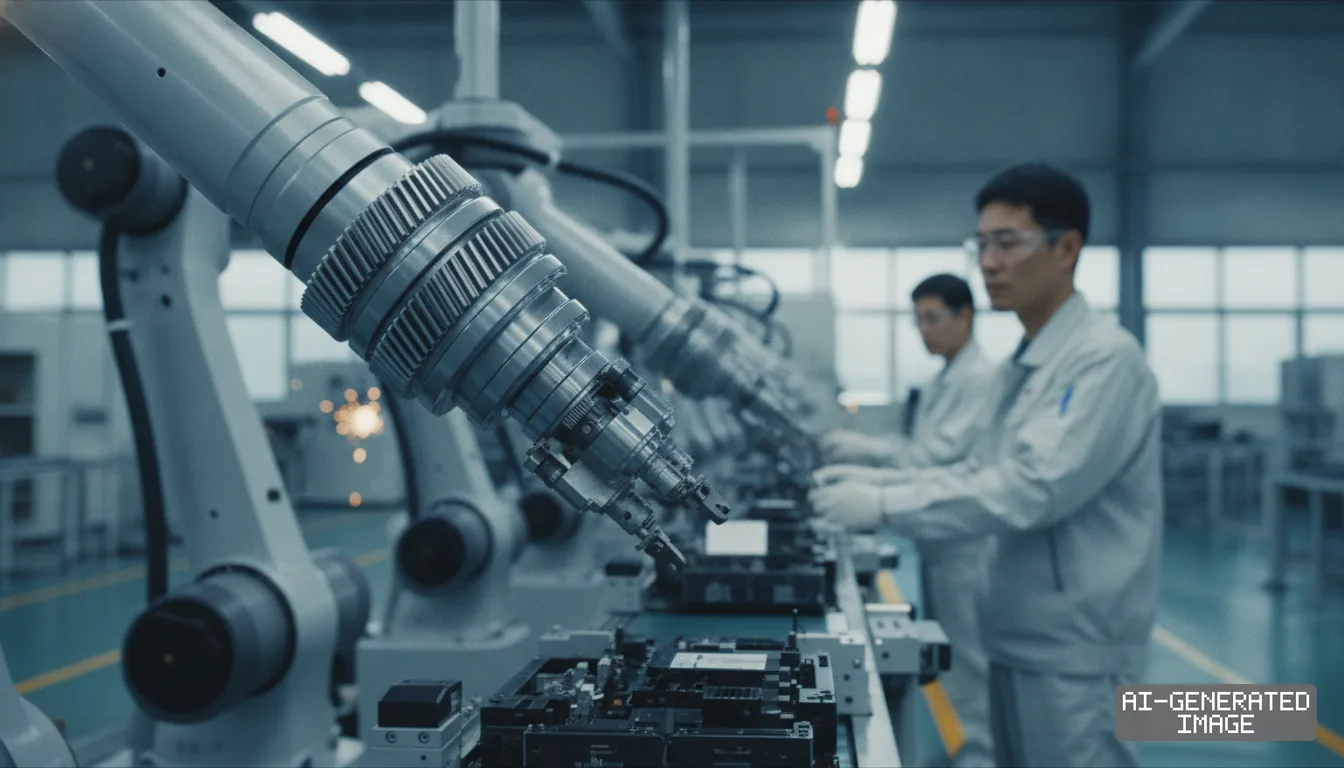
Strategic Revenue Insights said Sept. 28 that the global market for robot joint precision harmonic drive reducers will reach $3.5 billion by 2033, expanding at a 7.8% annual compound rate.
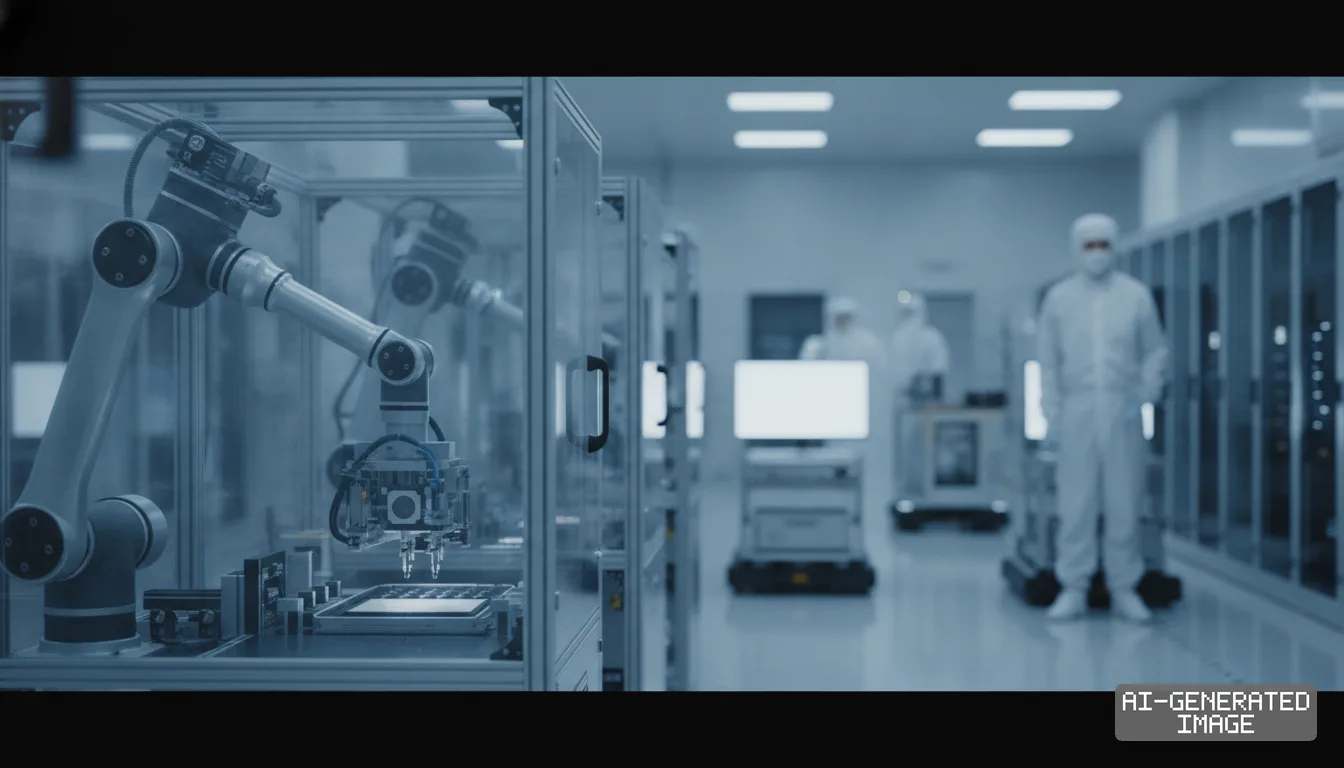
The projection reflects surging demand for precision strain-wave reducers — compact gear mechanisms that eliminate mechanical backlash through flexible steel cups — across automated production floors and next-generation robotic platforms.
Industrial robots constitute the largest single end-use segment in the valuation, accounting for $1.5 billion in reducer purchases while growing at an annual rate of 7.6%, according to the report.
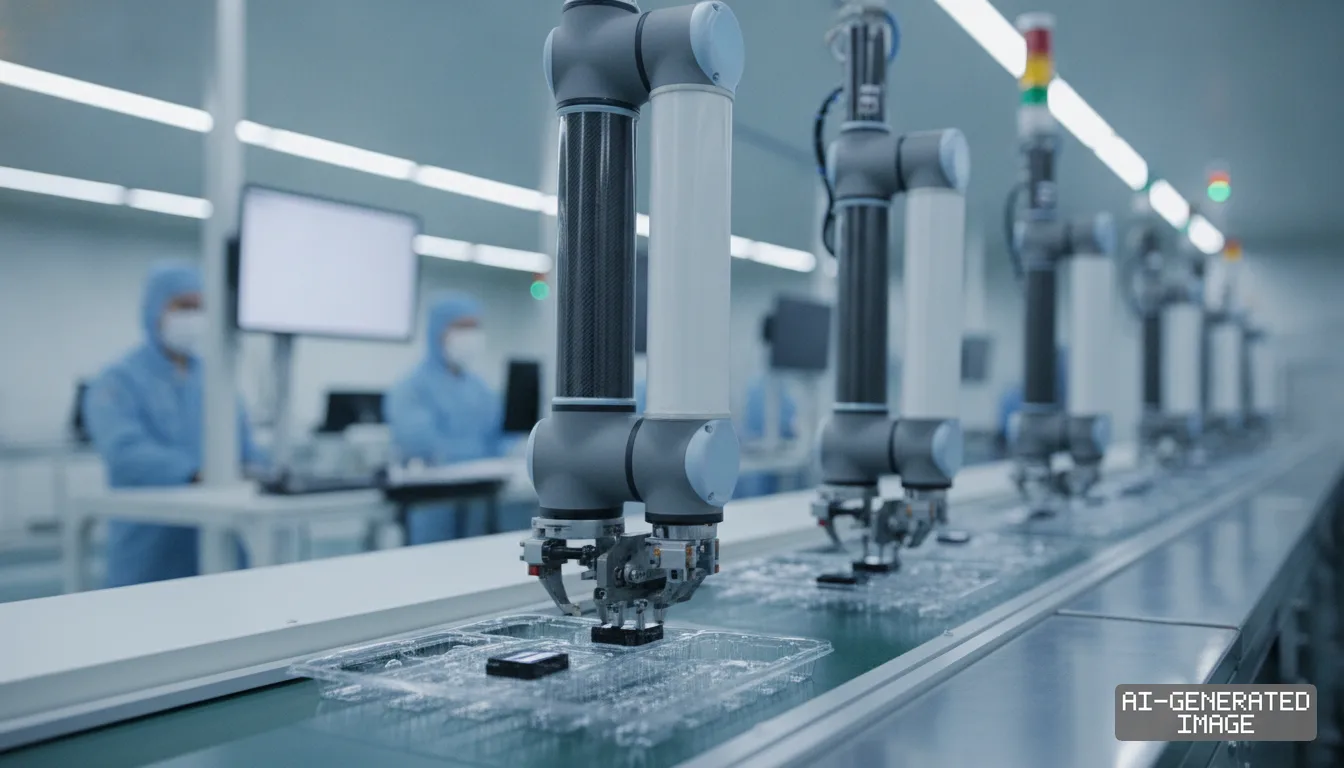
Collaborative robots, designed to operate alongside factory workers without safety cages, represent the fastest-growing equipment class in the dataset, with joint gear purchases expanding at an 8.3% annual pace through 2033.
Cup-style reducers generate $1.0 billion in sales as the largest individual product category, SRI said. Standard articulated arms rely on the cylindrical cup design for high torsional rigidity.
Pancake-style reducers, which feature a flatter cross-section to fit into tight internal spaces, are expanding quickest at an 8.1% annual rate as equipment designers slim down robotic elbow and wrist joints.
The Asia-Pacific region represents the primary regional market, generating $1.2 billion in turnover. Automated electronics assembly lines and vehicle plants across East Asia drive the majority of global gear consumption.
Speed reducers account for 15% to 35% of the total bill of materials in multi-axis robotic arms. That makes mechanical reduction gears the single largest hardware cost component outside specialized software controllers.
Electric servo motors spin at several thousand revolutions per minute but generate low starting torque. Reducers convert that rotation into high-torque motion while holding angular repeatability to fractions of an arcminute.
Japan's Harmonic Drive Systems has long controlled the premium strain-wave gear sector, generating 59.56 billion yen ($412 million) in consolidated revenue during fiscal year 2026.
The Tokyo-based company manufactures its core flexspline gear components at its Azumino production complex in Nagano prefecture. Its systems serve primary automation suppliers across Europe, Japan and North America.
Japanese manufacturers have historically held operating margins near 20% in precision gearing. However, lengthy delivery schedules stretching beyond six months during demand surges have prompted robot builders to seek alternative component suppliers.
Leader Harmonious Drive Systems, known as Leaderdrive, has leveraged those delivery bottlenecks to capture between 30% and 40% of China's domestic harmonic reducer market, according to investment bank estimates.
The Suzhou-based challenger generated 570.7 million yuan ($81 million) in revenue in 2025, lifting net income to 124.4 million yuan as annual production capacity expanded past 500,000 gear units.
Chinese suppliers offer standard harmonic reducers at prices roughly one-third lower than established Japanese hardware, according to robotics supply chain filings. That discount helps domestic cobot assemblers undercut global system prices.
South Korean precision gear makers are positioning their factories to capture orders from Western robotics companies seeking non-Chinese hardware, according to Seoul component trade data.
Incheon-based SPG is developing integrated actuator units that package harmonic reducers directly with servo motors and position encoders. The integrated approach seeks to defend margins against commodity gear discounting.
Korean manufacturers are targeting North American automation integrators that must comply with supply-chain security rules restricting Chinese mechanical components in sensitive infrastructure installations.
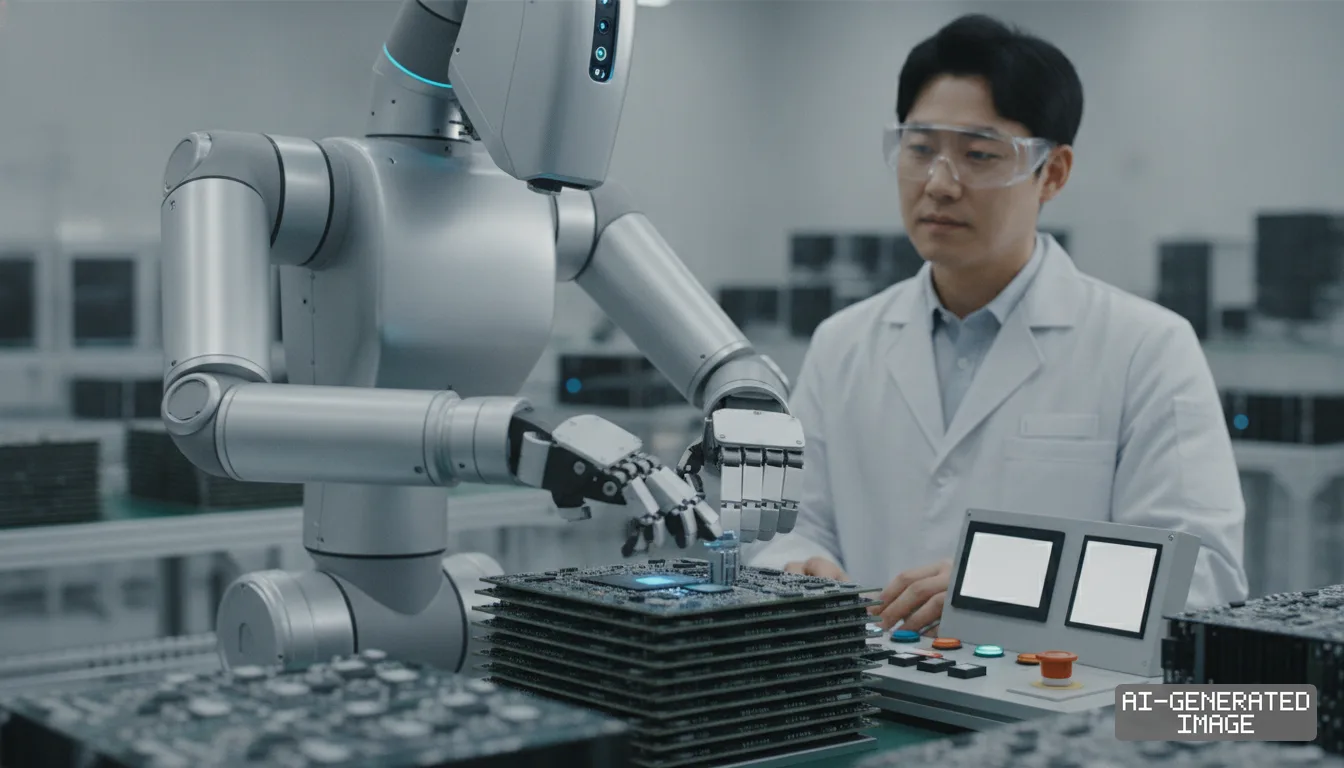
The commercial rollout of bipedal humanoid robots is multiplying mechanical demand across component supply lines. A standard six-axis collaborative arm requires six reducers, but humanoid frames require between 14 and 40 precision joints.
Humanoid developers targeting retail prices below $30,000 cannot support legacy reducer pricing of $1,000 per joint assembly, industry engineering analyses show. That cost threshold is accelerating supplier qualification rounds across East Asia.
Robotics assemblers are responding by establishing tiered component sourcing strategies. Manufacturers deploy premium Japanese reducers in high-load shoulder and waist axes while installing lower-cost Asian units in secondary wrist and finger joints.
Strain-wave gear production requires specialized precision grinding and heat-treatment techniques to prevent premature metal fatigue in the flexing steel ring. That technical barrier limits the number of qualified mass producers.
The SRI market report notice does not state the 2025 baseline valuation for the total market, and the research firm has not published the underlying survey sampling size or economic modeling formulas.
Harmonic Drive Systems closes its fiscal first half on Sept. 30, while Leaderdrive is scheduled to publish third-quarter operating earnings on Oct. 29.
Impact map
How this development propagates across the region and out to global buyers.
| Event | Korea | China | Japan | Global impact |
|---|---|---|---|---|
| Cobot joint reducer expansion | SPG qualifies integrated actuator modules to capture non-China supply contracts | Leaderdrive leverages 30% to 40% domestic share with one-third price discount | Harmonic Drive Systems defends premium tier with 59.56 billion yen annual base | Cobot bill of materials faces 15% to 35% mechanical reducer cost exposure |
In this story
- Companies
- Harmonic Drive SystemsLeader Harmonious Drive Systems
- Tickers
- 6324.T688017.SH
- Exposed
- SPG
- Policy
- Economic Security
- Impact
- Supply ChainPricingCost Structure
Track every Economic Security development →
Related briefings
- Chinese precision reducer makers push into Southeast Asia to supply electronics assembly lines Also on Leader Harmonious Drive Systems, Harmonic Drive Systems, Pricing
- Korean electronics component suppliers deploy AI dual-arm robots as factory labor pool shrinks Also on SPG, Harmonic Drive Systems, Cost Structure
- Fanuc and Yaskawa Expand China Motion Control Plants to Meet Local Content Rules Also on Harmonic Drive Systems, Pricing, Cost Structure
- KFTC opens supply contract probe into tier-one robotics and battery parts Also on Harmonic Drive Systems, Pricing, Cost Structure
Sources
Reporting
Confidence: medium — how we grade this
The documents behind this briefing are linked above. East Asia Brief produces its English text with AI assistance under human editorial review, and does not translate or republish other outlets' articles. See our methodology and AI policy. Spotted an error? Tell us.
The Morning Brief
What changed in Korean, Chinese and Japanese industry overnight — and what it means for your supply chain. One email, weekday mornings, US time. Free.
The Morning Brief is in preparation. Leave your address and we will write to you once — when the first issue is ready. Nothing before that.