Chinese LiDAR makers sweep South Korea robotaxi trial fleets in 2026
Deployment records disclosed Sept. 21 show all five major Korean autonomous fleet operators rely on Hesai and RoboSense sensors, raising supply chain and data security concerns.
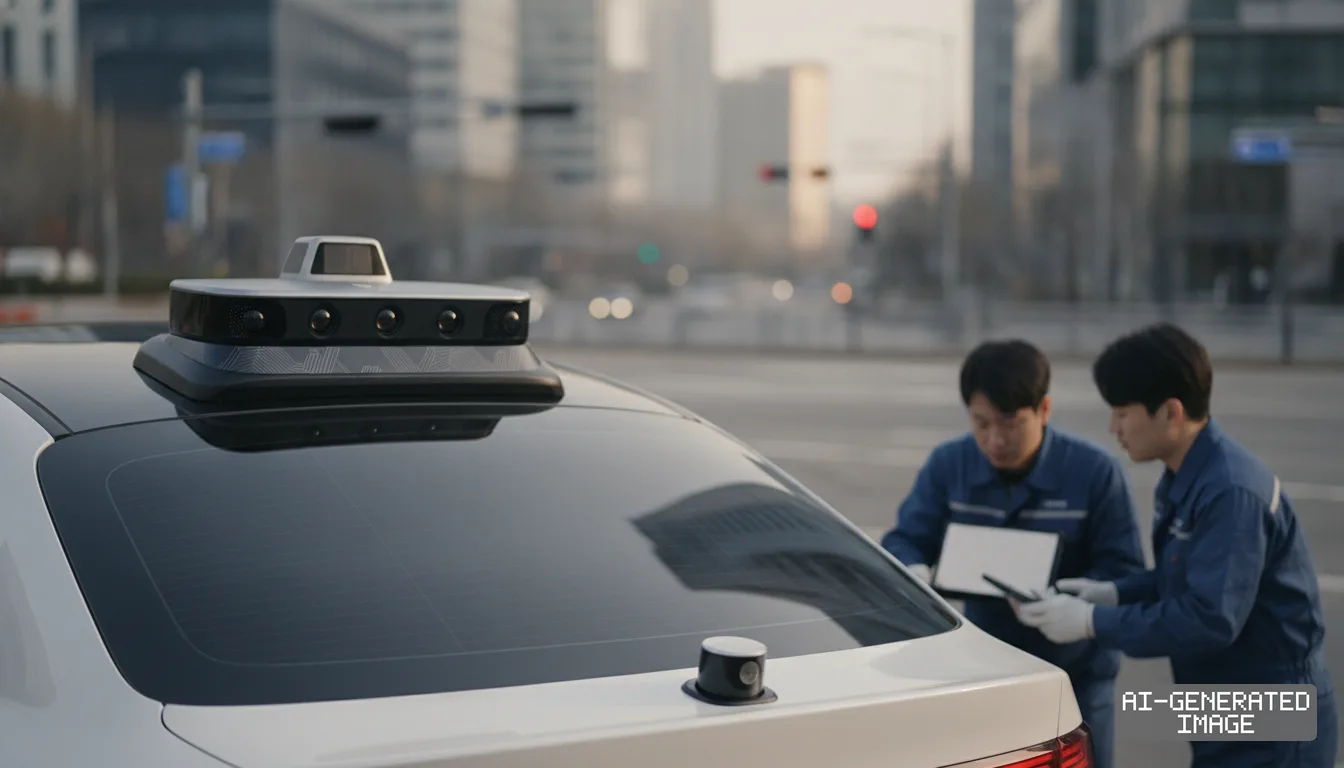
South Korea's five leading autonomous vehicle fleet operators fitted every trial robotaxi in their commercial pilot fleets with Chinese light detection and ranging sensors, according to industry deployment disclosures published Sept. 21, 2026.
The reliance on Hesai Group and RoboSense Technology hands Chinese manufacturers near-total hardware control over South Korea's urban self-driving test corridors.
Chinese manufacturers currently hold an 80% share of the global automotive LiDAR market, driven by heavy domestic deployment and aggressive price reductions.
The scale of exposure centers on the Gwangju Autonomous Driving Demonstration City, a 500.97-square-kilometer zone created to test 200 autonomous passenger vehicles.
Hyundai Motor selected Hesai LiDAR units for all 60 of the software-defined electric vehicles it committed to the Gwangju municipal fleet.
Hyundai Motor builds the base vehicles and supplies them to operating partners to gather real-world driving data for end-to-end autonomous driving systems.
Autonomous A2Z, South Korea's largest autonomous driving software developer by test mileage, installed two Hesai sensors on each of its 80 Gwangju-bound vehicles.
Autonomous A2Z paired the two Chinese sensors with four units from South Korean manufacturer SOS LAB and two sensors from American developer Seyond.
The blended configuration gives domestic suppliers testing opportunities while relying on Chinese optical hardware for primary environmental perception and collision avoidance.
In Seoul, autonomous driving developer SWM operates robotaxis in the Gangnam pilot zone equipped with eight Chinese LiDAR sensors per vehicle.
SWM split the sensor suite evenly, mounting four Hesai units and four RoboSense units on each modified sport utility vehicle.
RideFlux and Kakao Mobility also deployed Chinese scanning units across their trial fleets in Jeju and Seoul, leaving native component manufacturers sidelined.
LiDAR — light detection and ranging sensors that emit laser pulses to construct three-dimensional spatial maps — remains the primary perception sensor for Level 4 driverless operation.
Chinese LiDAR suppliers leveraged domestic EV production volume to reduce sensor manufacturing costs by roughly 70% compared to Western counterparts, industrial purchasing executives said.
Hesai and RoboSense secured long-term contracts with major Chinese automakers, giving them production scale and automotive durability testing data that foreign rivals cannot match.
South Korean sensor startups like SOS LAB face structural margin pressure, unable to match the multi-million-unit procurement volume that underpins Chinese component pricing.
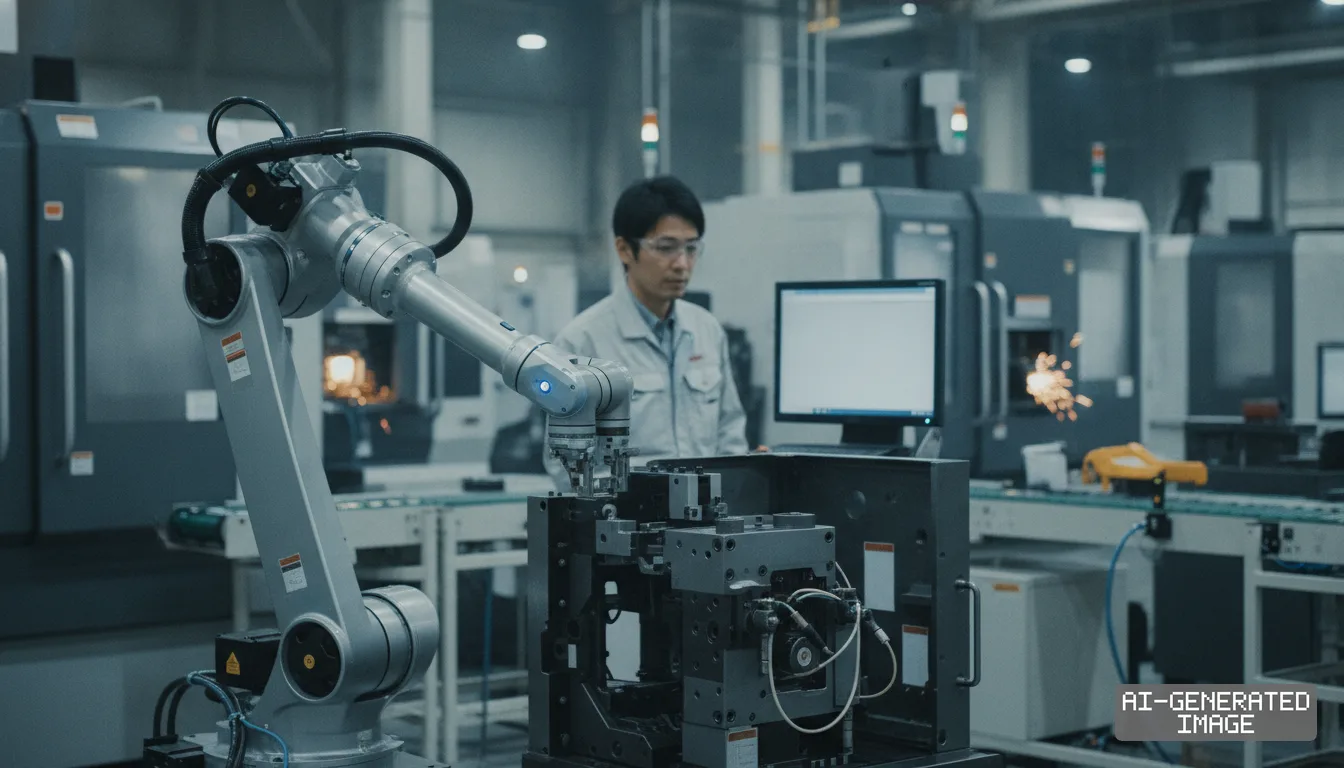
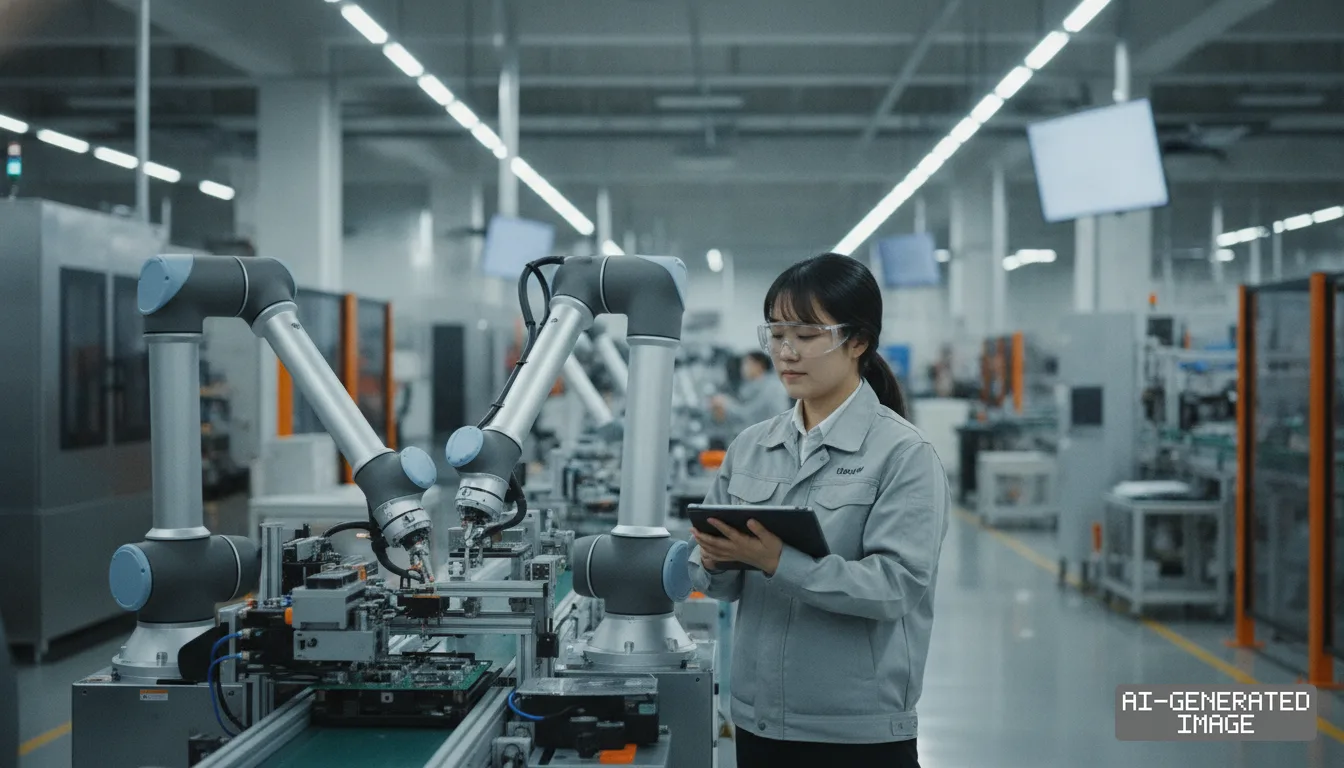
The hardware imbalance extends beyond autonomous passenger cars into factory automation, mobile robotics and municipal infrastructure systems.
China ranks as South Korea's top import source for optical LiDAR hardware, industrial robot motion controllers and precision torque sensors.
The domestic localization rate for core robotics components stands at 45%, leaving Korean technology integrators vulnerable to upstream supply disruptions.
Upstream exposure is more severe in raw materials, where South Korean component assemblers depend on Chinese processors for 88.8% of permanent magnet supplies.
Chinese autonomous mobility companies are expanding beyond sensor sales to import fully integrated vehicles into South Korean metropolitan centers.
Pony.ai signed a strategic partnership Aug. 28, 2026 with South Korean operator FutureLink to deploy 200 seventh-generation robotaxis in Seoul.
The Pony.ai robotaxis, built on electric vehicle architectures manufactured by BAIC Motor, feature factory-installed redundancy across steering, braking and sensor computing systems.
FutureLink plans to import an initial batch of 10 Pony.ai vehicles in autumn 2026 for Ministry of Land, Infrastructure and Transport safety certification.
The companies aim to scale the fleet to 200 fully driverless robotaxis by 2028 after completing local transport safety approvals.
The growing concentration of Chinese sensors on public roads has raised concerns among Korean cybersecurity researchers over urban spatial mapping data.
High-resolution LiDAR arrays continuously capture street layouts, pedestrian movements, building perimeters and traffic patterns across sensitive commercial and government districts.
The United States proposed rules prohibiting Chinese connected vehicle software and optical hardware from operating on American roads, citing remote espionage vulnerabilities.
South Korea's transport ministry has enacted no restrictions on component origins, focusing instead on road safety verification and vehicle rollout targets.
The transport ministry will review municipal deployment milestones in Gwangju this November as participating automakers deliver the remaining vehicles through December 2026.
The Ministry of Land, Infrastructure and Transport has not published an official registry audit of component origins across all operational autonomous fleets.
Impact map
How this development propagates across the region and out to global buyers.
| Event | Korea | China | Japan | Global impact |
|---|---|---|---|---|
| Chinese LiDAR dominance in Korea | Hyundai Motor and four operators run 100% Chinese LiDAR in key pilots, domestic sensor makers hold minor secondary slots | Hesai and RoboSense secure Korean fleet volume with 70% lower component costs | Japanese sensor makers remain locked out of Korean robotaxi test platforms | Concentrated optical sensor supply creates single-source bottleneck and vehicle data security scrutiny |
In this story
- Companies
- Hyundai MotorHesai GroupRoboSenseAutonomous A2ZPony.ai
- Tickers
- 005380.KSHSAI2498.HK064800.KQ
- Exposed
- SOS LABSeyondFutureLinkRideFluxSWMKakao Mobility
- Policy
- Economic SecuritySubsidies
- Impact
- Supply ChainComplianceCost Structure
Track every Economic Security development → Track every Subsidies development →
Related briefings
- China Tightens Connected Vehicle Data Rules With Mandatory Local Sensor Scrubbing Also on RoboSense, Compliance, Cost Structure
- Hyundai, LG Energy launch used battery storage pilot for EVs Also on Hyundai Motor, Compliance, Cost Structure
- Korea Links Commercial Electric Van Grants to Battery Recyclability Also on Hyundai Motor, Compliance, Cost Structure
- Chinese EVs capture 35% Korea market share under 8% tariff Also on Hyundai Motor, Cost Structure
Sources
Primary documents
Reporting
Confidence: high — how we grade this
The documents behind this briefing are linked above. East Asia Brief produces its English text with AI assistance under human editorial review, and does not translate or republish other outlets' articles. See our methodology and AI policy. Spotted an error? Tell us.
The Morning Brief
What changed in Korean, Chinese and Japanese industry overnight — and what it means for your supply chain. One email, weekday mornings, US time. Free.
The Morning Brief is in preparation. Leave your address and we will write to you once — when the first issue is ready. Nothing before that.