US mounts Kenya rare earth challenge against China at Mrima Hill
Washington backs Western mining consortia for Kwale County niobium and rare earth rights as Kenya enforces local refining rules to bypass Beijing's processing monopoly.
The United States and Kenya advanced bilateral negotiations on Sept. 27 over commercial rights to the Mrima Hill mineral deposit, intensifying a race against Chinese competitors for uncommitted rare earth feedstock.
The high-level talks followed bilateral meetings on critical mineral value chains between US Secretary of State Marco Rubio and Kenyan President William Ruto during the United Nations General Assembly in New York.
China accounts for roughly 85% of global refined rare earth output, according to data from the International Energy Agency. Breaking that processing stranglehold has become a core objective for Washington's industrial supply-chain policy.
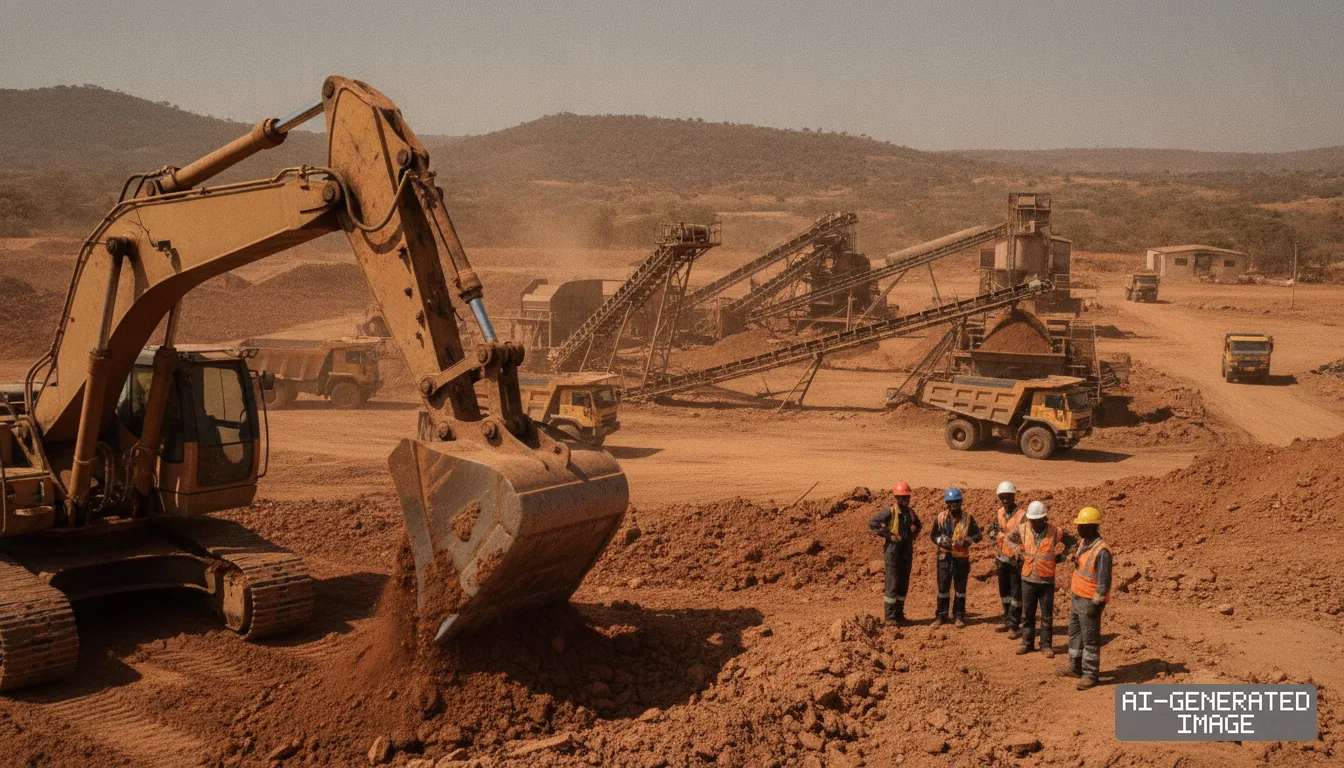
Mrima Hill sits in southern Kenya's Kwale County, roughly 65 kilometers southwest of the Port of Mombasa. The site holds carbonatite-hosted ore containing up to 1.41% niobium pentoxide and 7.12% total rare earth oxides.
Niobium is an essential alloy agent for aerospace turbine blades and superconducting magnets. Heavy rare earths provide thermal durability for neodymium permanent magnets used in defense guidance hardware and electric vehicle drivetrains.
The Kenyan Ministry of Mining, Blue Economy and Maritime Affairs opened the formal tender process on April 1, 2026. The government issued strict terms requiring all bidders to build domestic processing capacity rather than shipping raw ore abroad.
Historical exploration conducted more than a decade ago mapped approximately 105.3 million metric tons of mineralized material at the Kwale site. Previous operators placed an estimated unverified valuation of 8 trillion Kenyan shillings ($62 billion) on the ground.
Two Western-aligned groups have advanced to the final evaluation round to contest Chinese bidders. Both groups have structured downstream separation partnerships to meet Kenya's domestic beneficiation requirements.
New York-listed Critical Metals Corp (Nasdaq: CRML) leads the Mrima Earth Limited Consortium, which advanced to the final shortlist in July 2026. Critical Metals operates in tandem with European Lithium, which holds an approximate 31% equity stake in the developer.
The Critical Metals coalition carries more than $400 million in combined cash reserves and a market valuation of $1.5 billion. The group has proposed building on-site oxide separation facilities alongside an initial beneficiation plant, the company said in its tender disclosure.
A rival consortium formed by Australian explorer RareX Limited (ASX: REE) and mineral sands producer Iluka Resources (ASX: ILU) received formal progression notice to the request for proposal stage on July 21, 2026.
Under that proposal, primary concentrates will undergo mineral separation in Kenya before intermediate chemical materials move to Iluka's Eneabba rare earth refinery in Western Australia.
Iluka is currently constructing the Eneabba refinery under an A$1.65 billion ($1.1 billion) non-recourse loan facility provided by the Australian government's Export Finance Australia. The refinery will possess 5,500 metric tons of annual neodymium-praseodymium separation capacity when commissioned in 2027.
RareX also executed an offtake term sheet with Iluka covering 100% of Mrima Hill concentrate. That binding structure links the African mining asset directly to downstream magnet supply agreements with Western defense and automotive manufacturers, the company said.
Chinese mining entities have also submitted binding bids through state-backed investment channels. Beijing currently purchases the majority of untransformed African rare earth concentrates for domestic processing in Jiangxi and Inner Mongolia.
Kenyan civil society groups and regional leaders raised questions on Sept. 27 regarding environmental protections and forest access at the sacred coastal hilltop. Kwale community representatives demanded clear royalty guarantees before licenses are granted.
US State Department officials have repeatedly visited Nairobi to lobby against Chinese ownership. Assistant Secretary of State for African Affairs Frank Garcia told delegates at an American Chamber of Commerce summit that Washington would facilitate commercial financing for American-led refining infrastructure.
The geopolitical confrontation highlights Africa's shift away from raw resource extraction. African mineral producers are increasingly leveraging unmined reserves to force foreign developers to finance high-voltage power connections, chemical reagents and domestic chemical plants.
The Kenya Ministry of Mining has scheduled the announcement of the winning development concession for October 2026 following technical reviews. Shortlisted consortia must submit final environmental mitigation strategies before the evaluation committee convenes.
The ministry has not published its official Economic Viability Report for the deposit, and Kenyan authorities have not disclosed the corporate identities of the competing Chinese state-backed bidders.
Impact map
How this development propagates across the region and out to global buyers.
| Event | Korea | China | Japan | Global impact |
|---|---|---|---|---|
| Mrima Hill tender | no direct concession bid, downstream magnet makers eye non-Chinese heavy rare earth oxides | Chinese refiners risk losing uncommitted African feedstock to Western mine-to-refinery pacts | trading houses monitor Eneabba-bound intermediate flows for automotive NdFeB supply security | aerostructures and permanent magnet supply chains diversify away from Chinese refining nodes |
| Mrima Hill tender | no direct concession bid, downstream magnet makers eye non-Chinese heavy rare earth oxides | Chinese refiners risk losing uncommitted African feedstock to Western mine-to-refinery pacts | trading houses monitor Eneabba-bound intermediate flows for automotive NdFeB supply security | aerostructures and permanent magnet supply chains diversify away from Chinese refining nodes |
In this story
- Companies
- Critical Metals CorpIluka ResourcesRareX Limited
- Tickers
- Nasdaq: CRMLASX: ILUASX: REE
- Exposed
- European Lithium
- Policy
- SubsidiesEconomic SecurityExport Controls
- Impact
- Supply ChainCapexCompliance
Track every Subsidies development → Track every Economic Security development → Track every Export Controls development →
Related briefings
- SK hynix denies US memory fab deal with Intel at Ohio site Also on Export Controls, Compliance
- US warns Ford over Chinese battery ties with CATL and Geely Also on Export Controls, Compliance
- Korea Zinc taps e-waste to build non-China rare earth supply Also on Export Controls, Compliance
- Naura and SMEE Accelerate Domestic Tool Shipments to Chinese Fabs Also on Export Controls, Compliance
Sources
Reporting
Confidence: medium — how we grade this
The documents behind this briefing are linked above. East Asia Brief produces its English text with AI assistance under human editorial review, and does not translate or republish other outlets' articles. See our methodology and AI policy. Spotted an error? Tell us.
The Morning Brief
What changed in Korean, Chinese and Japanese industry overnight — and what it means for your supply chain. One email, weekday mornings, US time. Free.
The Morning Brief is in preparation. Leave your address and we will write to you once — when the first issue is ready. Nothing before that.