Arkema secures Ulsan acrylic acid storage to supply Korea
The French specialty chemical group booked 3,000 cubic meters of glacial acrylic acid capacity at the Ulsan HDOT terminal, linking Chinese production to Northeast Asian industrial customers.
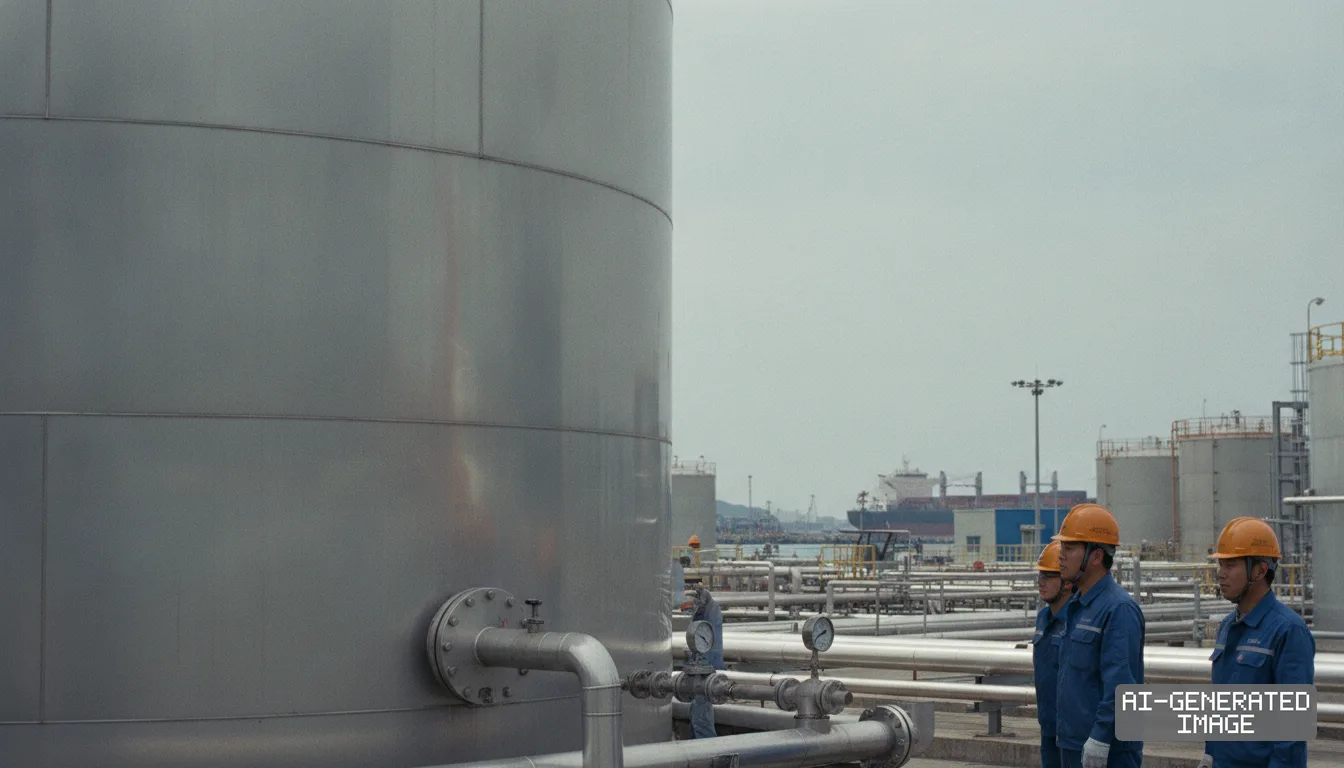
Arkema established a strategic chemical distribution hub in South Korea on Sept. 22, securing 3,000 cubic meters of dedicated glacial acrylic acid storage capacity at the Ulsan HDOT terminal.
The French specialty chemicals producer booked the commercial tank capacity to buffer raw material deliveries for domestic manufacturers. Glacial acrylic acid is an essential monomer used in photoresists, optical films, high-performance coatings and industrial adhesives.
Arkema operates across 55 countries with 20,700 workers worldwide, generating €9.1 billion ($10.45 billion) in sales during 2025. Its three specialty materials divisions accounted for roughly 85% of total group revenue that year.
The commercial agreement anchors Arkema's distribution network directly inside South Korea's primary petrochemical cluster. The Port of Ulsan handles liquid bulk chemical cargoes feeding manufacturing corridors across the Korean peninsula.
The terminal site provides deep-water berthing infrastructure and automated pumping links. Liquid chemical carriers can discharge bulk shipments directly into dedicated storage tanks without transshipment delays.
Under the operating structure, the Ulsan facility functions as an inventory staging base for glacial acrylic acid produced at Arkema's plant in Taixing, China. Coastal chemical tankers transport the monomer across regional maritime shipping lanes.
Direct access to domestic tank storage shields Korean end users from maritime shipping bottlenecks and port congestion, the company said. Local warehousing enables buyers to schedule deliveries without maintaining costly surplus inventories at manufacturing plants.
Asia represents a core operating region for global acrylic monomer consumption, Arkema Acrylic Monomers Group President Hervé Castres Saint Martin said. The project strengthens logistical integration across Northeast Asian processing facilities, Castres Saint Martin said.
Castres Saint Martin added that physical storage positions technical teams closer to domestic clients. The local footprint supports collaborative development for specialized applications in semiconductor packaging resins, display optical adhesives and automotive coatings.
Glacial acrylic acid is a purified form of acrylic acid containing over 99% active monomer content. The compound polymerizes rapidly to create specialized polyacrylic acids, cross-linked acrylate polymers and superabsorbent formulations.
Precision chemical processors in South Korea consume high-purity monomer streams to synthesize ultraviolet-curable resins, pressure-sensitive tapes and surface treatment agents. Consistent product specifications remain critical to avoid defect spikes during electronic coating processes.
Arkema holds International Sustainability and Carbon Certification (ISCC) Plus mass balance accreditation across all its acrylic monomer manufacturing sites worldwide. Certified production bases include Taixing in China, Carling in France, and Bayport and Clear Lake in Texas.
The certification verifies that bio-attributed feedstocks replace fossil hydrocarbons within the processing chain, the company said. The Ulsan terminal allows Arkema to supply certified lower-carbon monomers directly to regional resin formulators tracking Scope 3 emissions.
Securing commercial storage at an established third-party terminal limits capital exposure while expanding market reach. Arkema contracted existing liquid tank infrastructure rather than funding greenfield civil construction at the harbor.
The 3,000-cubic-meter volume adds domestic inventory flexibility without altering overall global production capacity. Industry analysts note that localized storage buffers mitigate short-term spot price spikes caused by regional factory outages or shipping disruptions.
South Korean chemical buyers have prioritized inventory security following recurring freight volatility and regional supply pinches. Staging imported material in Ulsan cuts customer delivery lead times from several weeks to less than 24 hours.
Beyond domestic accounts, the Ulsan hub gives Arkema a staging platform to supply secondary Northeast Asian markets. Bonded terminal storage permits re-export and transshipment into Japanese manufacturing clusters and Southeast Asian industrial ports.
Arkema did not disclose the financial value of the terminal agreement, and the company has not published an operational commissioning date for the tank.
Arkema announced the capacity arrangement following commercial releases issued Sept. 21. Fourth-quarter supply contracts governing regional chemical deliveries take effect Oct. 1.
Impact map
How this development propagates across the region and out to global buyers.
| Event | Korea | China | Japan | Global impact |
|---|---|---|---|---|
| Ulsan acrylic monomer hub | Domestic chemical buyers cut import lead times to under 24 hours from 3,000 m³ buffer | Arkema Taixing monomer plant secures direct maritime delivery channel to Korean hub | Secondary monomer shipments route via Ulsan bonded terminal to regional buyers | Specialty materials division buffers downstream supply across 55 operating countries |
In this story
- Companies
- Arkema
- Tickers
- AKE.PA
- Policy
- Economic Security
- Impact
- Supply ChainCost Structure
Track every Economic Security development →
Related briefings
- HD Hyundai and KR launch 3D ship design approval system in Ulsan Also on Cost Structure
- Aerospace suppliers test rare-earth-free turbine coatings Also on Cost Structure
- China bars dual-use exports to Japan citing military end-use Also on Cost Structure
- Chinese LiDAR makers sweep South Korea robotaxi trial fleets in 2026 Also on Cost Structure
Sources
Reporting
Confidence: medium — how we grade this
The documents behind this briefing are linked above. East Asia Brief produces its English text with AI assistance under human editorial review, and does not translate or republish other outlets' articles. See our methodology and AI policy. Spotted an error? Tell us.
The Morning Brief
What changed in Korean, Chinese and Japanese industry overnight — and what it means for your supply chain. One email, weekday mornings, US time. Free.
The Morning Brief is in preparation. Leave your address and we will write to you once — when the first issue is ready. Nothing before that.