Japanese firms build tungsten scrap loops to counter Beijing
Backed by a 3 billion yen METI grant to Kyocera, domestic processors are securing scrap metal to protect toolmakers from export controls in China, where 80% of ore is mined.
Kyocera, JX Advanced Metals and Sumitomo Electric Industries accelerated individual tungsten recycling investments on Nov. 11, 2026, building scrap recovery networks to counter tightening Chinese critical mineral export controls.
China controls over 80% of global primary tungsten extraction, leaving advanced machining and semiconductor fabrication lines vulnerable to Beijing's mineral licensing reviews. Tungsten provides exceptional hardness and heat resistance for cutting tools and chip interconnects.
Japan's Ministry of Economy, Trade and Industry approved a ¥3.0 billion ($20 million) grant to Kyocera under its critical minerals supply stabilization plan. The subsidy backs a domestic recycling facility designed to recover high-purity tungsten carbide from worn tooling.
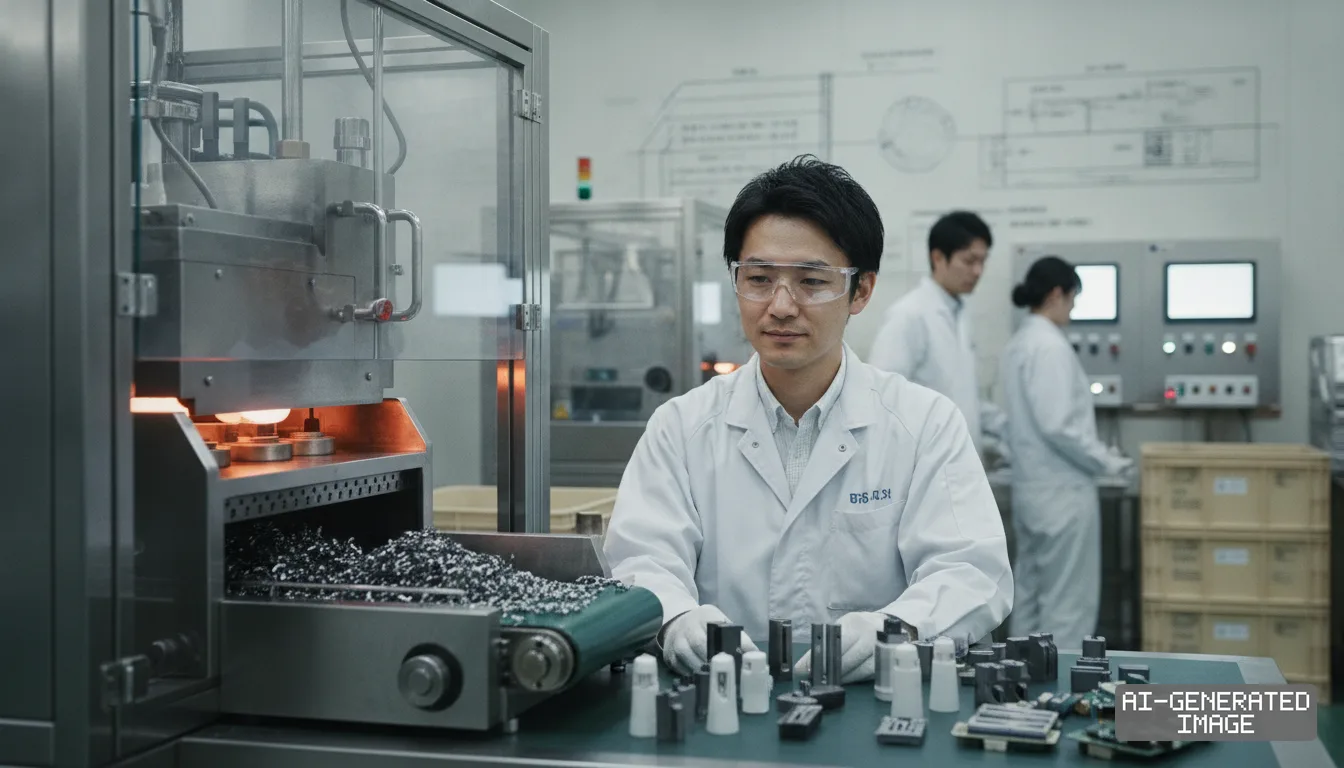
Kyocera is installing the smelting equipment at its Kagoshima Sendai plant in southwestern Japan. The facility will extract tungsten carbide from spent industrial cutting inserts, with commercial operations scheduled to begin in fiscal 2030, the company said.
The Sendai facility relies on an amino-acid extraction technique developed by Kyocera. The chemical process strips tungsten directly from worn tooling, shortening the conventional multi-step refinement cycle while cutting processing energy and chemical waste.
Cemented carbide — an alloy made by sintering hard tungsten carbide particles with a cobalt metal binder — serves as the core material for industrial drills. Japan imports virtually all of its virgin tungsten feedstock from foreign mining operations.
Kyocera's initiative follows government certification under the Economic Security Promotion Act, designated as 2026 Critical Minerals Project No. 5-1. The project establishes an internal supply buffer for Kyocera's cutting tool business, which equips automotive and aerospace machining plants.
In the electronics supply chain, JX Advanced Metals is introducing specialized target recycling equipment across two domestic production hubs. The company assigned the processing machinery to its Tatebayashi plant in Gunma Prefecture and Nasu plant in Tochigi Prefecture.
The facilities, run by subsidiary JX Advanced Metals Coil Center, cut and chemically clean spent sputtering targets retrieved from semiconductor manufacturers. The process prepares degraded metal plates for re-melting without introducing microscopic contaminants, the company said.
JX Advanced Metals supplies roughly 60% of the world's semiconductor sputtering targets. The metallic plates feed physical vapor deposition chambers that bombard source metals with plasma to spray ultra-thin barrier films onto silicon wafers during chip production.
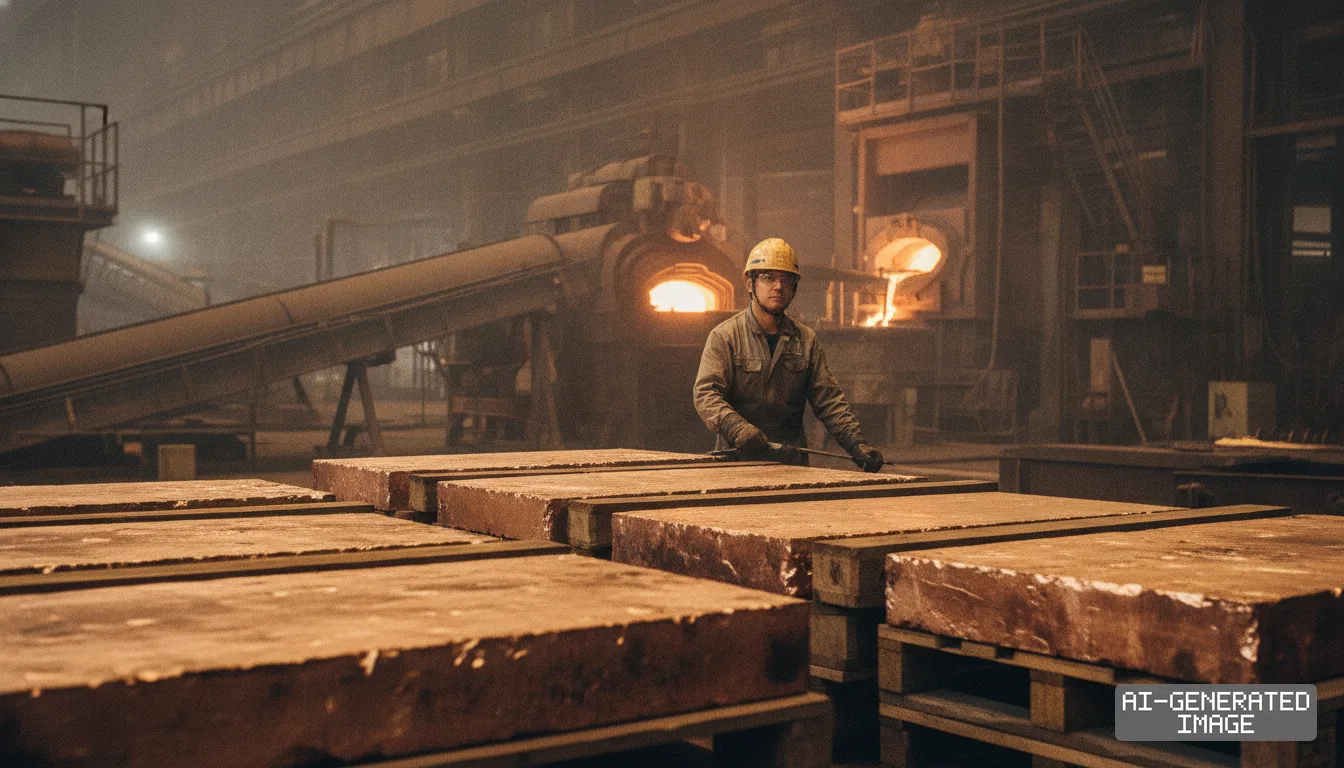
Planar sputtering targets erode along an uneven groove called a racetrack during chip processing, forcing fabrication plants to discard plates when only a fraction of the metal is consumed. Recovering that residual volume captures expensive, high-purity refractory materials.
The new processing units at Tatebayashi and Nasu recover high-purity tungsten, tantalum and copper from eroded targets. That scrap returns to casting furnaces to maintain raw material flows for advanced logic and memory chips, the company said.
Sumitomo Electric Industries operates a separate closed loop, recycling scrap equivalent to nearly 100% of the volume of cemented carbide tools it sells domestically in Japan. The company processes collected tools into pure tungsten trioxide intermediate powder.
Sumitomo Electric channels collected tooling scrap through its domestic unit A.L.M.T. Corp. and Niagara Refining LLC, an American refining joint venture. The overseas facility processes both mined concentrate and recycled scrap to feed Japanese tool fabricating lines.
Automotive machining centers consume the bulk of Japanese cemented carbide tools. Sumitomo Electric coordinates tool recovery with Toyota Motor Corporation, collecting worn cutting heads directly from factory lines to prevent scarce tungsten alloys from leaving domestic production loops.
The tooling manufacturer developed an oxidation and wet chemical leaching process that replaces older zinc recycling systems. The chemical technique removes embedded impurities and produces recycled tungsten powders that match the grain specifications of virgin mineral concentrates.
Corporate filings confirm no joint venture or alliance agreement exists among Kyocera, JX Advanced Metals and Sumitomo Electric Industries; each company operates its recovery infrastructure independently. The parallel investments reflect individual responses to Chinese export licensing delays.
China's Ministry of Commerce added 25 tungsten, molybdenum and indium products to its dual-use export control schedule earlier this year. The restrictions require Japanese importers to submit detailed end-use documentation that often delays delivery schedules by several months.
Recycling addresses supply fragility because secondary scrap refining consumes significantly less power than extracting tungsten from scheelite or wolframite ores. It also shields Japanese manufacturers from volatile spot prices for ammonium paratungstate, the global benchmark intermediate.
Commercial validation milestones will govern the rollout across Japan over the next four years. Kyocera faces an annual compliance audit under the METI critical minerals program, while JX Advanced Metals monitors equipment commissioning at its Tochigi site.
Japan's Ministry of Economy, Trade and Industry conducts its next annual review of certified mineral stabilization plans on March 31, 2027. Toolmakers and foundries will submit inventory assessments to verify scrap substitution volumes before that date.
Impact map
How this development propagates across the region and out to global buyers.
| Event | Korea | China | Japan | Global impact |
|---|---|---|---|---|
| Japan tungsten recycling push | Korean toolmakers and foundries face comparable Chinese mineral supply constraints | Chinese refiners lose leverage over Japanese cemented carbide and target scrap streams | Kyocera, JX Metals and Sumitomo Electric secure closed loops, trimming China reliance | Advanced chip fabrication and tooling lines reduce exposure to Chinese mineral export licensing |
In this story
- Companies
- Kyocera CorporationJX Advanced Metals CorporationSumitomo Electric Industries
- Tickers
- 6971.T5016.T5802.T
- Exposed
- Toyota Motor Corporation
- Policy
- SubsidiesExport Controls
- Impact
- Supply ChainCost Structure
Track every Subsidies development → Track every Export Controls development →
Related briefings
- Seven Japanese firms order ammonia car carriers for 2030 fleet Also on Toyota Motor Corporation
- UK and Japan ink offshore wind compact for £9 billion pipeline Also on Sumitomo Electric Industries, Subsidies
- Japan optical suppliers scale laser diodes and engines for AI co-packaged optics Also on Sumitomo Electric Industries, Subsidies
- Moore Threads turns first profit on 1,774% GPU revenue surge Also on Export Controls, Subsidies, Cost Structure
Sources
Primary documents
Reporting
Confidence: high — how we grade this
The documents behind this briefing are linked above. East Asia Brief produces its English text with AI assistance under human editorial review, and does not translate or republish other outlets' articles. See our methodology and AI policy. Spotted an error? Tell us.
The Morning Brief
What changed in Korean, Chinese and Japanese industry overnight — and what it means for your supply chain. One email, weekday mornings, US time. Free.
The Morning Brief is in preparation. Leave your address and we will write to you once — when the first issue is ready. Nothing before that.