Sumitomo Metal Mining cuts refined copper target by 46,000 tons
Equipment trouble at the Toyo smelter in Ehime Prefecture lowers full-year production to roughly 400,000 metric tons through March 2027.
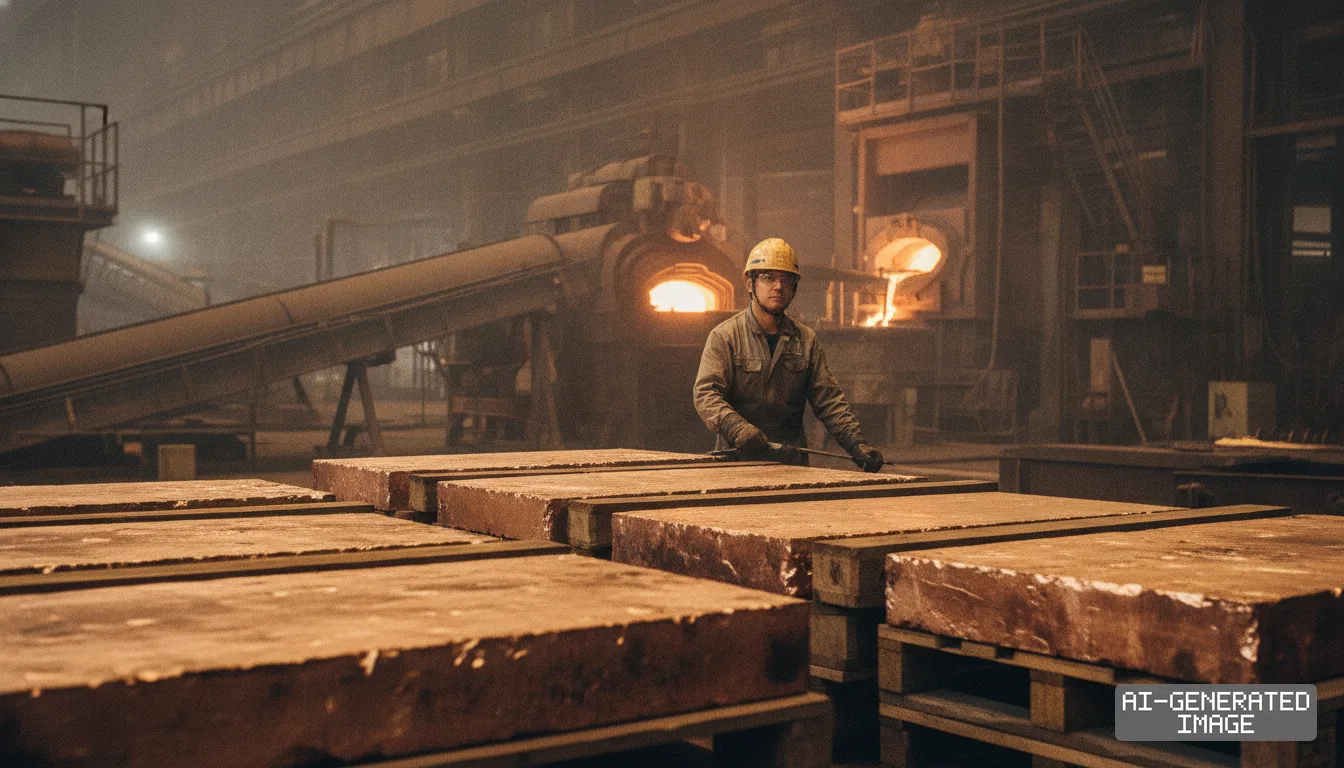
Sumitomo Metal Mining Co., Ltd. filed financial disclosures on Nov. 12, 2026, cutting its full-year refined copper production target by 46,000 metric tons following operating cutbacks at its Toyo smelter.
The revision lowers projected output for the fiscal year ending March 31, 2027, from 446,000 metric tons to approximately 400,000 metric tons. That change represents a 10.3% reduction in planned output.
Toyo Smelter & Refinery in Ehime Prefecture runs a single flash furnace with an annual capacity of 450,000 metric tons. The facility accounts for nearly 30% of Japan's 1.5 million metric tons of yearly refined copper production.
The company attributed the operational curb to technical equipment trouble encountered inside the smelting circuit. Plant engineers curtailed throughput while maintenance teams worked to isolate and repair the damaged mechanical assembly, the company said.
Executive Officer Yasuhiro Miyake said during an earnings presentation that the technical glitch would be resolved during the current quarter ending Dec. 31, 2026. Normal operating rates should resume afterward, Miyake said.
The production shortfall hits as global copper concentrate supply faces acute constraints. Treatment and refining charges, known as TC/RCs, have plummeted to historic lows across Asian smelting hubs throughout 2026.
Miners pay TC/RC fees to refiners to process mined ore into pure metal. When raw concentrate is scarce, smelters accept depressed fees to keep continuous furnaces running, eroding operational margins.
Miyake declined to provide a formal fee forecast for 2027 during the company's financial briefing. Difficult commercial market conditions for copper refiners are likely to persist, Miyake said.
The International Copper Study Group projected global mine output growth of just 1.3% for 2026, downgrading earlier estimates. In contrast, global smelting capacity expanded by roughly 3.4 million metric tons between 2024 and 2025.
That structural mismatch has forced refiners across Northeast Asia to reconsider throughput volumes. In South Korea, LS MnM reviewed raw material purchasing and production schedules at its 680,000-ton Onsan smelter to defend margins.
In Japan, Mitsubishi Materials plans to end concentrate smelting at its Onahama plant after March 2027. Smelters with older lines face negative margins when concentrate spot treatment fees hover near zero.
Sumitomo Metal Mining has shifted toward direct bilateral negotiations with miners rather than relying on annual industry benchmark contracts. That commercial adjustment gives the refiner flexibility but cannot shield plants from physical maintenance interruptions.
The Toyo facility processes copper concentrates into Grade A electrolytic cathodes. The high-purity plates feed domestic brass mills, wire and cable drawing plants and specialized copper foil manufacturers across the region.
Electrolytic copper supplies foundational inputs for regional power transmission infrastructure. Grid operators require thousands of tons of high-conductivity rod to build high-voltage substations, offshore wind interconnections and grid interties.
Demand for refined copper has tightened further on rapid power grid expansions supporting artificial intelligence data centers. High-density server clusters require heavy-gauge busbars, transformer windings and specialized high-speed transmission lines.
The curtailment also intersects with expanding demand for electrodeposited copper foil. Advanced printed circuit boards and multi-layer chip packages used in AI server processors require ultra-thin copper foils with minimal surface roughness.
Electronics materials manufacturers rely on certified high-purity cathode feedstocks from Japanese smelters to maintain plating quality. A 46,000-ton reduction removes prompt metal from regional merchant markets, tightening spot cathode premiums.
Alongside the copper curtailment, Sumitomo Metal Mining downgraded its full-year consolidated net profit projection on Nov. 10. The company cut its net income forecast by 25.5% from 216 billion yen to 161 billion yen ($1.02 billion).
The earnings reduction stemmed from a 42.6 billion yen ($270 million) impairment loss on Philippine nickel assets. The company booked the charge against subsidiary Coral Bay Nickel Corp, which operates a high-pressure acid leach plant.
Coral Bay Nickel is scheduled to cease production between fiscal 2028 and 2030. The company revised expected asset disposal expenses and environmental site restoration liabilities, prompting the first-half write-down.
First-half consolidated net profit still rose 67% from a year earlier to 90 billion yen ($570 million). Elevated market prices for copper and byproduct gold supported operating revenues across the April to September period.
However, company leadership expects the Japanese yen to appreciate during the second fiscal half ending March 31, 2027. A stronger yen diminishes the local-currency value of overseas dollar-denominated mineral sales and smelting credits.
The company's disclosures do not state the exact volume of delivery shortfalls passed directly to downstream power equipment contractors or foil mills. Management has not published customer-specific cathode allocation quotas.
Sumitomo Metal Mining plans to provide updated operational metrics when it completes repairs at the Toyo smelter before Dec. 31, 2026. Commercial cathode delivery schedules will depend on throughput rates achieved after restart.
Impact map
How this development propagates across the region and out to global buyers.
| Event | Korea | China | Japan | Global impact |
|---|---|---|---|---|
| Toyo copper curtailment | LS MnM absorbs tightening regional cathode premiums while defending Onsan margin | smelters maintain high throughput despite near-zero spot treatment charges | Sumitomo Metal Mining trims copper output to 400,000 tons on Toyo equipment repairs | prompt cathode supplies tighten as data centers accelerate grid procurement |
In this story
- Companies
- Sumitomo Metal Mining
- Tickers
- 5713.T
- Exposed
- LS MnMMitsubishi Materials
- Impact
- Supply ChainCapexCost Structure
Related briefings
- Mitsubishi Materials taps Vietnam tungsten to counter China curbs Also on Mitsubishi Materials, Cost Structure
- Sojitz acquires 5% stake in Vietnam tungsten giant Masan Also on Mitsubishi Materials
- Sumitomo Metal Mining books $270M hit on Philippine nickel refinery Also on Sumitomo Metal Mining, Cost Structure
- Sumitomo Metal ships Nano One LFP cathode batches to carmakers Also on Sumitomo Metal Mining, Cost Structure
Sources
Reporting
Confidence: medium — how we grade this
The documents behind this briefing are linked above. East Asia Brief produces its English text with AI assistance under human editorial review, and does not translate or republish other outlets' articles. See our methodology and AI policy. Spotted an error? Tell us.
The Morning Brief
What changed in Korean, Chinese and Japanese industry overnight — and what it means for your supply chain. One email, weekday mornings, US time. Free.
The Morning Brief is in preparation. Leave your address and we will write to you once — when the first issue is ready. Nothing before that.