China locks 90% of global gallium supply in alumina refineries
Primary output of 900 metric tons relies on by-product extraction from bauxite processing, blunting Western efforts to bypass Chinese export restrictions.
Supply chain monitors and geological agencies said Nov. 5, 2026, that China controls over 90% of global primary gallium output through its domestic alumina refineries.
The concentration leaves Western efforts to bypass Chinese export curbs stalled at the chemical refining stage. Gallium does not exist as an independent mineable deposit in commercial volumes.
Global smelters produced an estimated 900 metric tons of primary gallium metal last year. More than 90% of that volume was recovered directly from the Bayer process during alumina refining.
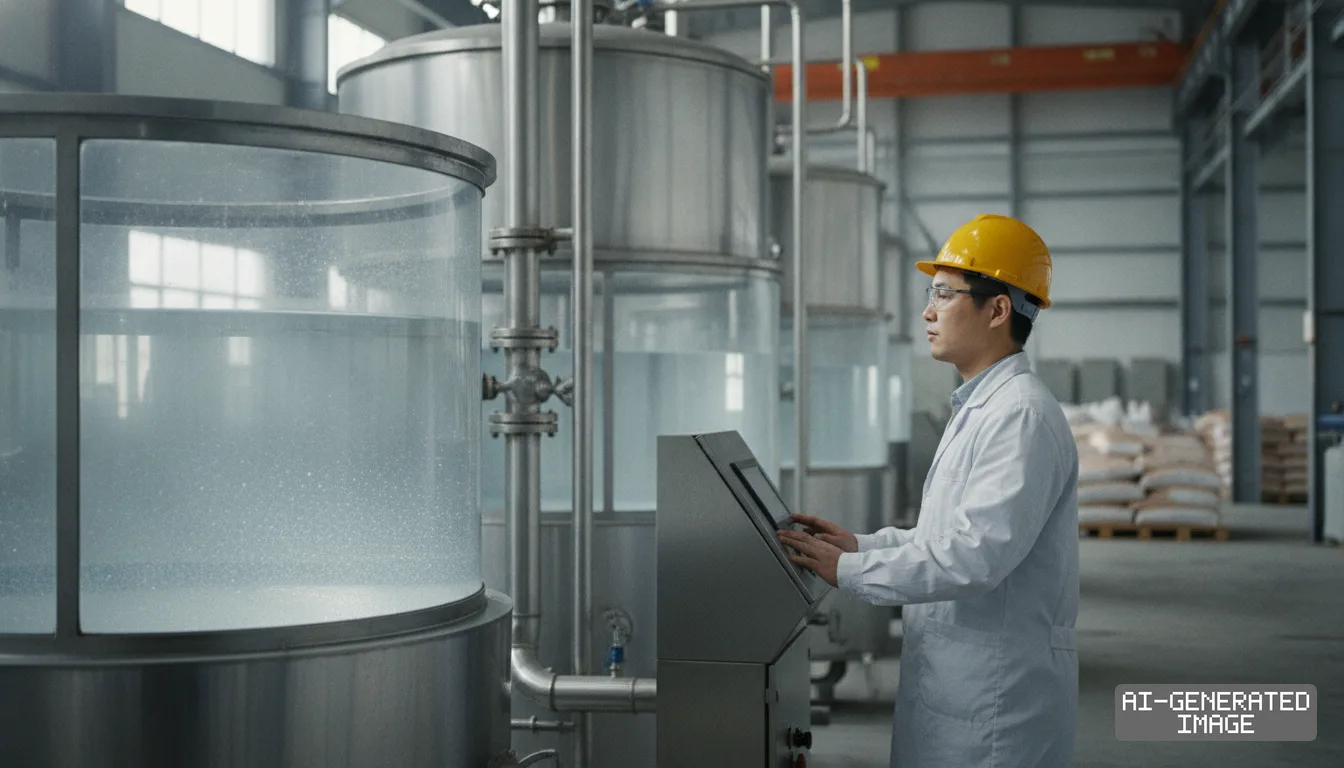
The Bayer process digests crushed bauxite ore in hot sodium hydroxide to produce metallurgical alumina for aluminum smelting. Gallium dissolves alongside aluminum, accumulating inside the circulating alkaline sodium aluminate liquor.
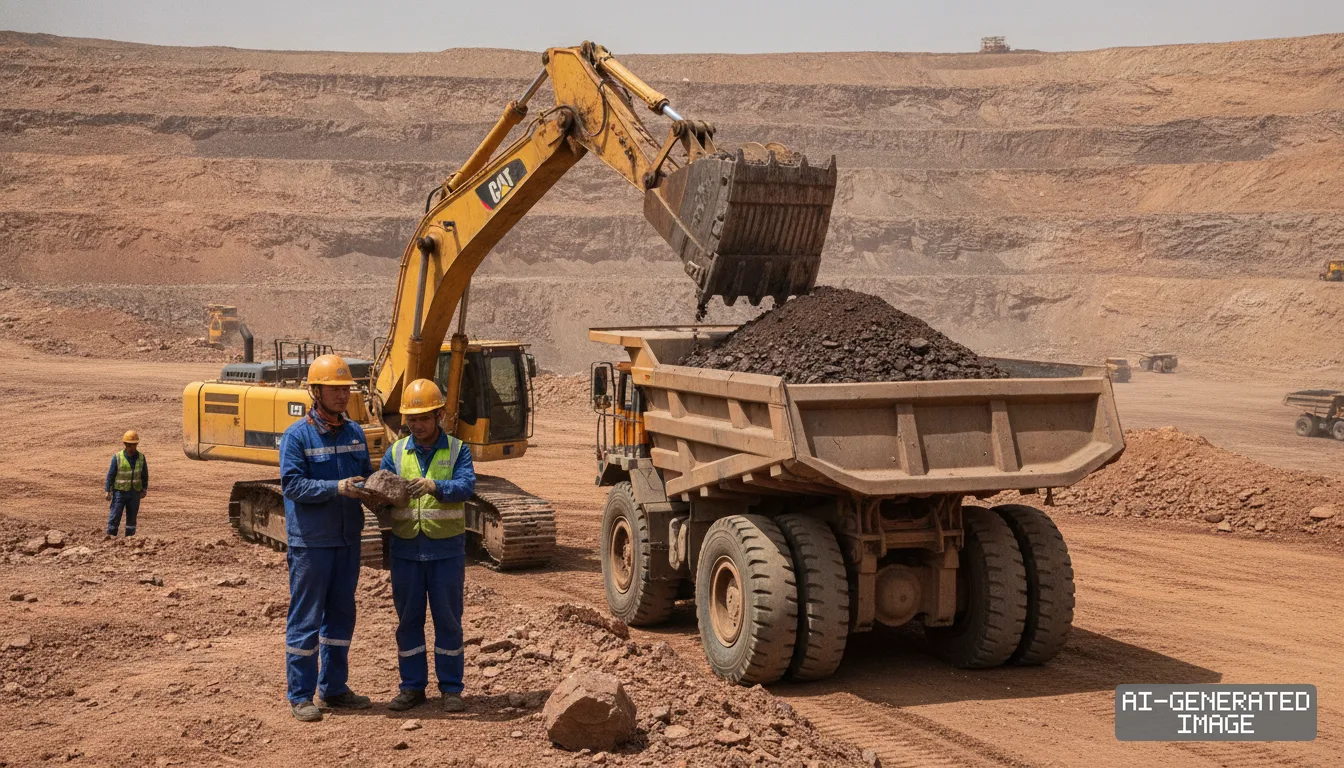
Bauxite ore contains between 50 and 100 parts per million of gallium, geological surveys show. Fewer than 15% of the world's alumina refineries maintain the chemical circuits required to extract it.
The physical bottleneck is not raw bauxite supply, industry analysts said. Guinea and Australia produce over 50% of the world's mined bauxite, but ship raw ore directly to Chinese coastal ports.
Building an alumina refinery outside China requires capital expenditure exceeding $1.5 billion. A standard facility processing 1 million metric tons of bauxite yields only 30 to 50 metric tons of gallium.
Mining firms cannot justify building an alumina refinery solely to harvest gallium by-products. Refinery revenue depends almost entirely on selling bulk metallurgical alumina to aluminum smelters at thin margins.
Environmental regulations present an even steeper operational barrier across North America and Europe. The Bayer process generates 1.5 metric tons of toxic bauxite residue for every metric ton of alumina refined.
This bauxite residue, known as red mud, carries a caustic pH level between 10 and 13. Western regulators classify the slurry as an industrial liability that requires lined containment ponds and remediation funds.
Containment maintenance and environmental liability insurance add millions of dollars in annual operating overhead. Chinese refineries operate under state-backed land allocations and lower domestic compliance costs.
Electricity prices in Western markets further erode refinery operating margins. Heating caustic digestion tanks and running electrowinning cells to strip gallium consume substantial baseload power.
China built its dominance over two decades by instructing state-owned aluminum producers to install recovery circuits. Beijing subsidized extraction equipment during prolonged periods of low global metal prices.
State-owned Aluminum Corporation of China, known as Chalco, operates roughly 200 metric tons of annual gallium capacity. That single company accounts for more than 20% of global primary supply.
Chalco consolidates its recovery operations across integrated alumina plants in Henan, Guangxi and Guizhou provinces. Access to captive thermal power generation keeps Chalco's processing costs below Western feasibility thresholds.
Alternative refining projects outside China remain small and face protracted development schedules. Greece-based industrial group Metlen Energy & Metals secured European Investment Bank financing for a 50-metric-ton gallium circuit targeted for 2028.
Alcoa evaluated a 100-metric-ton extraction system at its Western Australian alumina operations. The company postponed a final investment decision pending long-term procurement commitments from allied defense agencies.
Secondary recycling offers little immediate relief to Western industrial buyers. Recycled manufacturing scrap accounts for less than 5% of global consumption, while post-consumer electronics recycling remains technically unviable.
Recovery from zinc smelting circuits provides the only other commercial path for primary gallium. Historically, zinc residues provided less than 5% of global supply because zinc concentrates carry lower metal concentrations than bauxite.
Korea Zinc acquired a smelter in Clarksville, Tennessee, with plans to recover gallium and germanium from 620,000 metric tons of smelting residue by 2029. That project remains under engineering evaluation.
Purity requirements create a second midstream chokepoint before raw metal reaches semiconductor fabrication lines. Bayer recovery lines yield crude gallium at 99.99% purity, designated as 4N grade.
Semiconductor fabrication requires 99.9999% purity, or 6N grade, to produce radio-frequency chips and military radars. Processors achieve 6N purity through multi-pass zone refining, a chemical process requiring specialized vacuum chambers.
Japan's Dowa Holdings operates 6N purification lines that supply power semiconductor makers across Asia and North America. Dowa imports crude 4N gallium feedstock, leaving its processing volume exposed to Chinese export licenses.
Export controls produced a sharp price divergence between domestic Chinese markets and Western seaborne trade. Western spot prices reached $1,850 per kilogram in early 2026, while domestic Chinese prices remained near $500 per kilogram.
Gallium nitride wafers remain essential for high-frequency telecommunications base stations and shipboard active electronically scanned array radars. Silicon substitutes run at lower thermal efficiency and cannot match gallium nitride's power density.
The European Union Critical Raw Materials Act established a 2030 target of refining 40% of strategic metals internally. Europe possesses no operational primary gallium recovery lines today, leaving the bloc entirely import-dependent.
Western procurement teams now face an imminent regulatory deadline in Beijing. China's Ministry of Commerce suspended its explicit gallium export ban to the United States under Announcement No. 72 until Nov. 27, 2026.
The expiration of that suspension on Nov. 27, 2026, threatens to reinstate a total export freeze on direct shipments to American buyers. Shipments to European and Japanese ports still require individual dual-use reviews.
The ministry has not published whether it will extend the suspension past Nov. 27 or convert the measure into a permanent quota allocation.
Impact map
How this development propagates across the region and out to global buyers.
| Event | Korea | China | Japan | Global impact |
|---|---|---|---|---|
| Gallium refinery chokepoint | Korea Zinc advances Clarksville zinc by-product recovery, domestic GaAs wafer makers face high spot premiums | Chalco locks in 200 t/yr low-cost capacity, consolidating domestic downstream wafer advantages | Dowa Holdings faces feed shortages for 6N purification plants serving power semiconductor fabs | Defense and telecommunications supply chains face supply cliff as Nov. 27 US export ban waiver lapses |
In this story
- Companies
- Aluminum Corporation of China
- Tickers
- 601600.SS
- Exposed
- Dowa HoldingsMetlen Energy & MetalsAlcoaKorea Zinc
- Policy
- Export Controls
- Impact
- Supply ChainCost Structure
Track every Export Controls development →
Related briefings
- China Consolidates State Antimony and Gallium Refining to Lock Down Metal Value Chain Also on Aluminum Corporation of China, Dowa Holdings, Export Controls
- Metlen warns Europe may lose gallium supply to US buyers Also on METLEN Energy & Metals, Export Controls
- Australia backs mineral refining with A$7B to counter China Also on Alcoa, Cost Structure
- Japan and Australia advance critical minerals security pact Also on Alcoa
Sources
Primary documents
Reporting
Confidence: high — how we grade this
The documents behind this briefing are linked above. East Asia Brief produces its English text with AI assistance under human editorial review, and does not translate or republish other outlets' articles. See our methodology and AI policy. Spotted an error? Tell us.
The Morning Brief
What changed in Korean, Chinese and Japanese industry overnight — and what it means for your supply chain. One email, weekday mornings, US time. Free.
The Morning Brief is in preparation. Leave your address and we will write to you once — when the first issue is ready. Nothing before that.