Chinese miners spend $8.8bn on foreign pits to lock up ore
Upstream equity deals across developing nations for lithium, cobalt and copper hit the highest annual mark since 2018, according to Rhodium Group tallies.
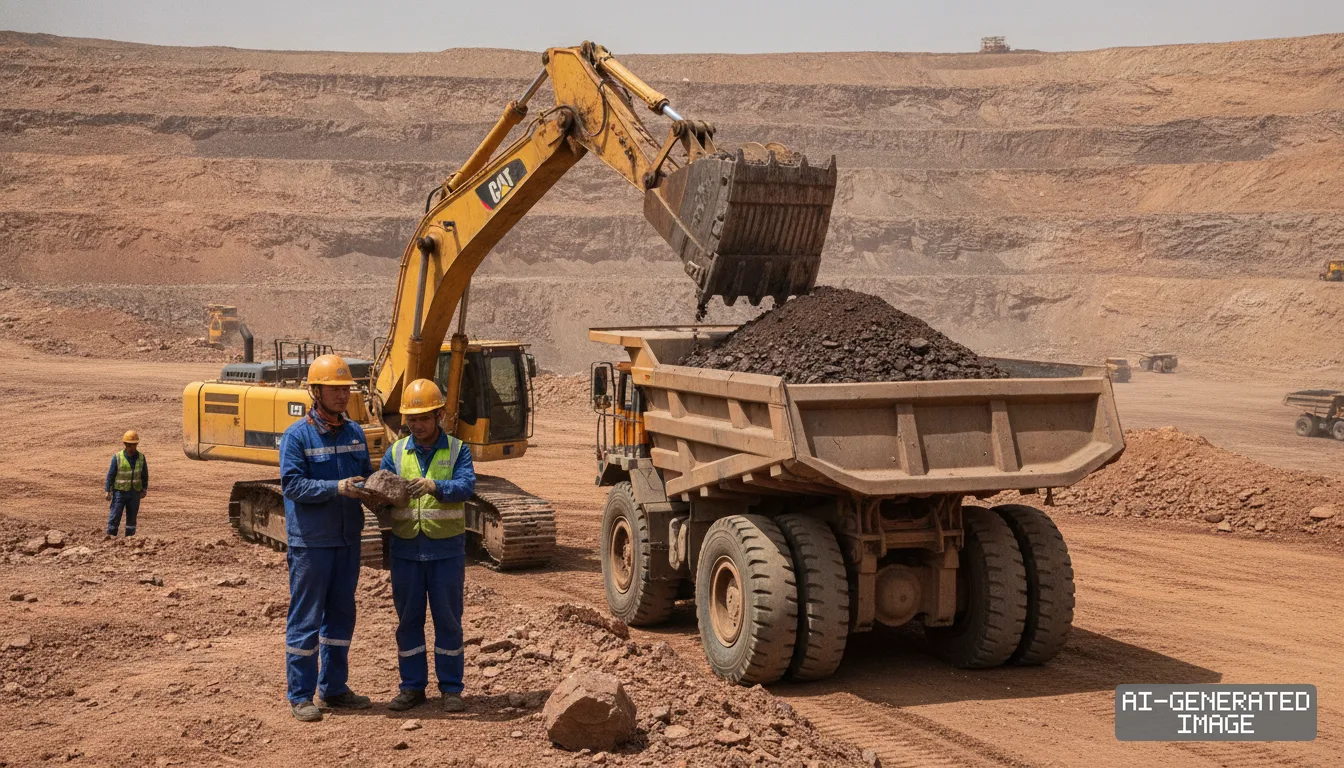
Chinese mining companies reached $8.8 billion in overseas mineral acquisitions on Nov. 4, 2026, marking the highest annual total since 2018 as state planners accelerate upstream equity purchases.
The tally for the first nine months of the year, compiled by Rhodium Group, exceeds every annual figure since 2018. The spending marks a strategic shift from domestic refining toward direct foreign pit ownership.
Acquisitions targeted raw deposits of lithium, nickel, cobalt and copper across developing economies. Western industrial buyers face a shrinking pool of uncommitted ore as Chinese groups secure equity at the mine face.
Outbound spending on upstream critical minerals could double over the next five years compared with the 2021 to 2025 period, according to projections from Eurasia Group. State coordination has gathered pace to support large resource transactions.
China already processes roughly 92% of the world's refined rare earths and dominates battery chemical conversion. Yet domestic resource depletion has turned raw ore procurement into an acute vulnerability.
State planners treat import dependence above 70% as an implicit security threshold, analysts said. That metric leaves domestic manufacturers exposed to offshore supply disruptions across lithium, copper and cobalt.
Beijing mobilized state organs earlier this year to supervise outbound mining capital. In April, the State Council established an overseas bureau to oversee foreign direct investments by central state-owned enterprises.
The National Development and Reform Commission followed in July by backing Guangyan International Investment Co., also known as Vast Rock International Investment. The state platform coordinates foreign resource deals.
Guangyan International holds registered capital of 60 billion yuan ($8.4 billion), enterprise registry filings show. State minerals giant China Minmetals Corp. controls the majority stake alongside China Jinchuan Investment Holding and CNNC Uranium.
The platform provides direct equity co-investment alongside operational mining champions. It also conducts commercial reviews, regulatory compliance assessments and financial risk management for projects abroad.
State planners are directing mining firms to avoid full acquisitions of foreign assets. Beijing encourages companies to take minority equity stakes and consortium partnerships to defuse political friction in host countries, analysts said.
Commercial operators including Zijin Mining Group Co. and China Baowu Steel Group Corp. joined ministerial strategy sessions this summer. Zijin produced 1.01 million metric tons of mined copper last year.
China Baowu, the world's largest steelmaker with annual crude steel output exceeding 130 million tons, is similarly expanding upstream iron ore projects in West Africa to secure unrefined raw feedstocks.
The centralized framework mirrors China Mineral Resources Group, which was founded in 2022 to consolidate sovereign iron ore buying. Central oversight aims to suppress bidding competition among competing domestic firms.
Western battery manufacturers and automakers face a tightening supply perimeter. While the United States and the European Union subsidize domestic refineries, Chinese state-backed groups are locking up feedstocks at extraction.
Chinese operators already control roughly 70% of cobalt extraction capacity in the Democratic Republic of Congo. Expanding equity holdings in African lithium assets and Latin American brine reserves channel output directly to Chinese plants.
Resource-rich developing nations are simultaneously tightening export restrictions on unrefined ore. Indonesia enforced a total ban on raw nickel exports, compelling multinational mining operators to build processing infrastructure domestically.
Chinese firms responded by investing in high-pressure acid leach plants and nickel smelters across Indonesia. That operational integration gave Chinese battery manufacturers an upstream feedstock advantage that Western rivals struggle to match.
Sovereign funds from Saudi Arabia and state-supported investors from India are also bidding for unmined deposits in Africa. Chinese state enterprises are moving quickly to secure long-term offtake contracts and board seats.
The upstream acquisition push exposes Western industrial supply chains to recurring cost premiums. When Chinese state champions control underlying mining rights, non-Chinese refiners must purchase raw concentrates on sovereign Chinese commercial terms.
Refining facilities built outside East Asia remain economically vulnerable without direct access to uncommitted rock and brine, analysts said. Downstream manufacturing subsidies in Western markets do not resolve raw material shortages at the mine pit.
The National Development and Reform Commission will review annual outbound capital quotas during centralized economic planning sessions scheduled before Dec. 31, 2026. Mining enterprises must submit updated project expenditure plans ahead of the calendar year deadline.
The commission and state ministries have not published formal regulatory decrees or transaction approvals for Guangyan International, leaving specific project equity allocations unconfirmed in public records.
Central authorities continue to coordinate resource transactions through closed ministerial working groups. Capital deployment across overseas extraction sites proceeds through state corporate balance sheets rather than transparent public tenders.
Impact map
How this development propagates across the region and out to global buyers.
| Event | Korea | China | Japan | Global impact |
|---|---|---|---|---|
| Chinese overseas upstream mine acquisitions | Battery cathode makers face tighter raw lithium and nickel procurement outside Chinese state equity channels | China Minmetals and Zijin Mining lock in direct upstream ore supplies under state coordination | Trading houses face intensifying equity competition for African and South American unmined deposits | Western EV and defense supply chains incur higher raw mineral premiums as mine-face equity consolidates |
In this story
- Companies
- China MinmetalsGuangyan International InvestmentZijin Mining GroupChina Baowu Steel Group
- Tickers
- 601899.SS
- Impact
- Supply ChainCapexPricing
Related briefings
- China Minmetals ties CZBANK credit to mineral supply chain Also on China Minmetals, Pricing
- China Agrees to Import 10 Million Tons of US Coal Annually Also on China Baowu Steel Group, Pricing
- CATL splits six-minute charging cells from 1,000-km platform Also on Pricing
- SMIC hits record $9.33B revenue as legacy nodes mask 7nm lag Also on Pricing
Sources
Primary documents
Reporting
Confidence: high — how we grade this
The documents behind this briefing are linked above. East Asia Brief produces its English text with AI assistance under human editorial review, and does not translate or republish other outlets' articles. See our methodology and AI policy. Spotted an error? Tell us.
The Morning Brief
What changed in Korean, Chinese and Japanese industry overnight — and what it means for your supply chain. One email, weekday mornings, US time. Free.
The Morning Brief is in preparation. Leave your address and we will write to you once — when the first issue is ready. Nothing before that.