China extends rare earth export curbs suspension to Jan. 10
Announcement No. 58 prolongs access to heavy rare earths and processing equipment for Western defense buyers as EU remains 98% dependent on Chinese permanent magnets.
China's Ministry of Commerce confirmed on Nov. 21, 2026, that the suspension of export curbs on heavy rare earths and processing equipment will remain in force through Jan. 10, 2027.
The decision maintains a fragile flow of critical minerals to Western defense and industrial supply chains. It also leaves manufacturers exposed to sudden regulatory reversals on an eight-week horizon.
China controls approximately 70% of global rare earth extraction and 90% of refined oxide output, according to International Energy Agency data. The country also fabricates 92% of the world's sintered permanent rare earth magnets.
The European Union imports 98% of its permanent magnet supply directly from Chinese producers. These components are essential for electric vehicle traction motors, wind turbine generators and precision aerospace guidance systems.
The extension stems from Announcement No. 58 of 2026, jointly issued by the commerce ministry and the General Administration of Customs. The decree took effect Nov. 11 and runs for 60 days.
Announcement No. 58 prolongs the pause on six regulatory notices first drafted in October 2025. Those measures established dual-use export licensing mandates across five medium and heavy rare earth elements: holmium, erbium, thulium, europium and ytterbium.
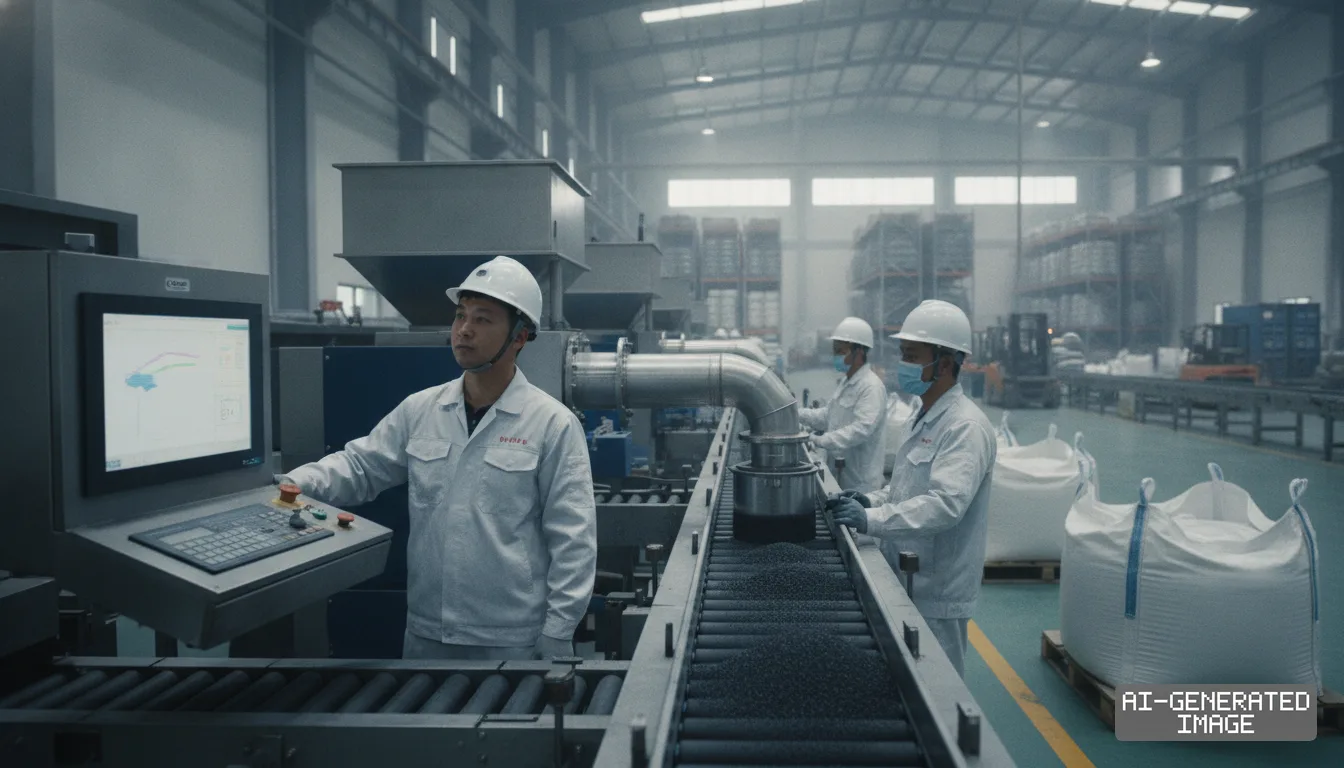
The paused rules also target advanced manufacturing hardware. They restrict overseas shipments of industrial centrifugal extractors, multi-stage separation columns and specialized hydrogen decrepitation furnaces used to mill magnetic alloys into sub-micron powders.
German magnet maker Vacuumschmelze operates approximately 1,500 metric tons of annual sintered magnet capacity across facilities in Hanau, Germany and Ulvila, Finland. The company relies on Chinese refiners for purified dysprosium and terbium feedstocks.
Those heavy rare earth additives allow neodymium-iron-boron magnets to retain magnetic performance under high temperatures. Without continuous deliveries of separated oxides, Western magnet producers cannot fulfill production contracts for aerospace and automotive clients.
Japanese magnet manufacturers face comparable supply risks. Shin-Etsu Chemical and TDK Corporation maintain advanced magnet processing operations in Japan, but remain dependent on Chinese state refiners for heavy rare earth concentrates and purified dysprosium.
Defense hardware is acutely sensitive to supply interruptions. Military aviation platforms like modern fighter aircraft require hundreds of kilograms of high-performance rare earth permanent magnets across their flight control actuators, generator systems and radar arrays.
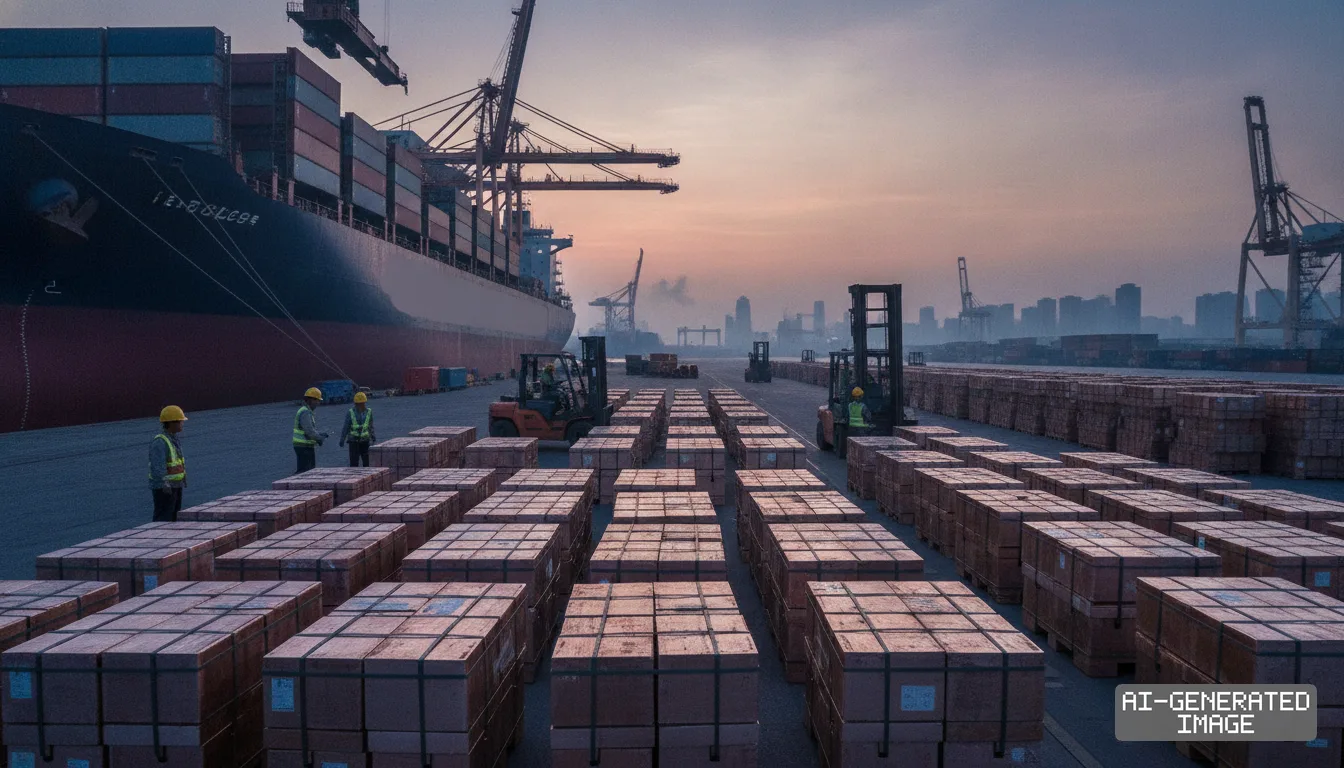
By extending the suspension in short two-month increments, Beijing uses rolling regulatory windows to maintain diplomatic pressure over Western capitals. A sudden expiration would immediately halt outbound shipments at Chinese border ports, stranding orders awaiting individual licence reviews.
European industrial groups have pressed Brussels to accelerate alternative supply initiatives under the European Critical Raw Materials Act. The regulation mandates that the European Union must refine at least 40% of its strategic raw material consumption domestically by 2030.
The European legislation also dictates that no single third country should supply more than 65% of the bloc's annual demand for any strategic mineral. European chemical refining and extraction projects remain years away from commercial scale.
Article 23(8) of the European act exempts member states from holding mandatory national mineral reserves. The absence of a coordinated European stockpile mechanism forces private manufacturers to manage inventory risks on their corporate balance sheets.
Most European automotive and industrial tier-one suppliers maintain less than 60 days of rare earth inventories, industry executives said. An abrupt resumption of export controls would deplete existing factory buffer stocks before alternate refining capacity becomes operational.
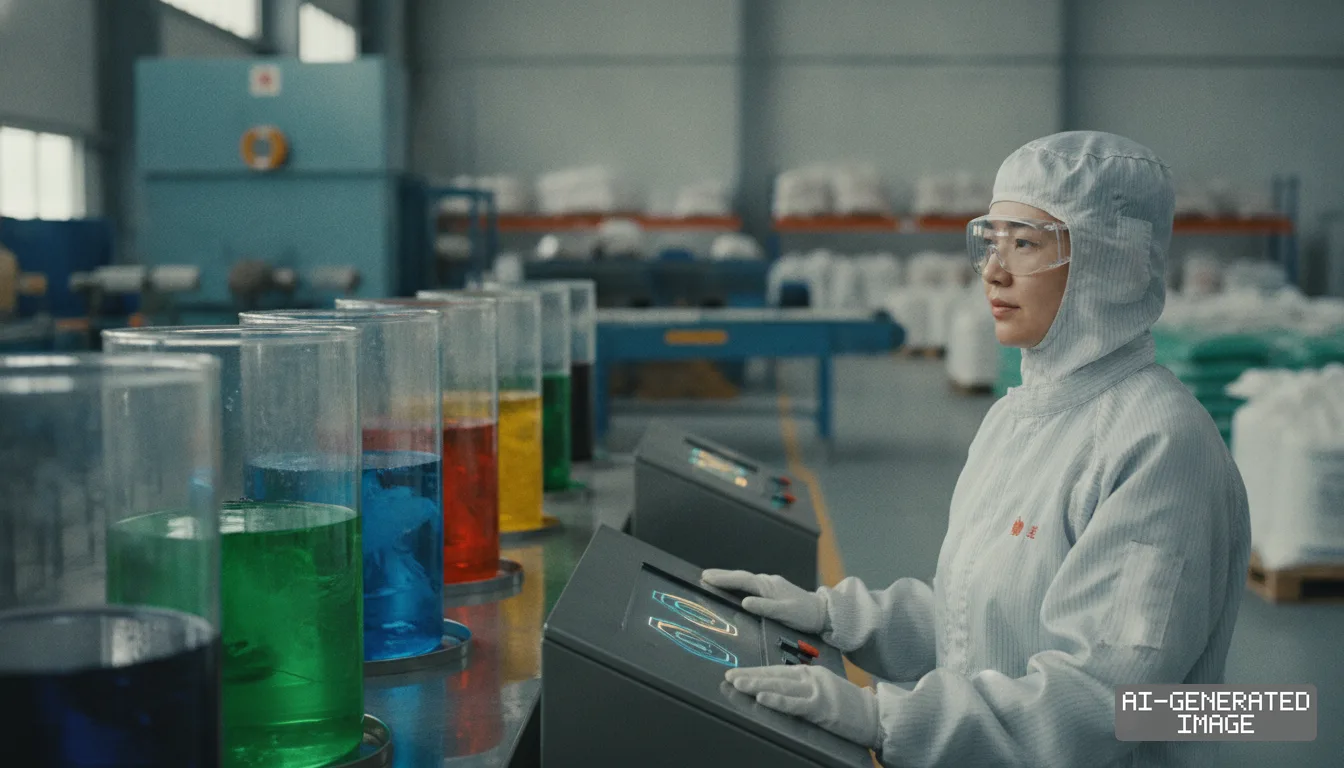
Commercial refiners outside China continue to struggle with heavy rare earth separation chemistry. Mining projects across North America and Australia still ship unseparated mixed carbonate concentrates to Chinese facilities for final cracking and multi-stage solvent extraction.
State-owned conglomerates China Northern Rare Earth Group and China Rare Earth Group control the vast majority of operational extraction patents. This technological barrier prevents overseas competitors from achieving cost-competitive refining of heavy rare earth fractions.
The commerce ministry has applied similar rolling suspensions to export curbs on high-density lithium battery cells and synthetic diamond tooling. The pattern preserves policy optionality while testing Western readiness to concede on broader bilateral trade disputes.
The ministry has not published the specific criteria it will apply after Jan. 10, 2027, nor has it disclosed the volume of export licences approved during earlier suspension windows.
Western procurement officers must now align supply contracts with the Jan. 10, 2027 deadline, when Chinese authorities will determine whether to extend the pause or mandate individual dual-use shipment reviews.
Impact map
How this development propagates across the region and out to global buyers.
| Event | Korea | China | Japan | Global impact |
|---|---|---|---|---|
| China rare earth export control suspension | no direct domestic mining exposure, refiners and magnet processors monitor Chinese oxide pricing | MOFCOM retains bilateral leverage while domestic producers book stable export quotas | Shin-Etsu Chemical and TDK secure heavy rare earth feedstocks through Jan. 10, 2027 | Vacuumschmelze and Western defense contractors avoid near-term shortages but hold under 60 days of stock |
In this story
- Companies
- VacuumschmelzeChina Northern Rare Earth GroupChina Rare Earth Group
- Tickers
- 600111.SS000831.SZ
- Exposed
- Shin-Etsu ChemicalTDK Corporation
- Policy
- Export Controls
- Impact
- Supply ChainCompliancePricing
Track every Export Controls development →
Related briefings
- China clears rare earth export permits for EU firms under pact Also on Vacuumschmelze, Export Controls, Compliance
- China Northern Rare Earth profit leaps 137% under output ceilings Also on Vacuumschmelze, Pricing
- China brings rare earth industry body under direct Communist Party rule Also on China Northern Rare Earth Group, China Rare Earth Group, Export Controls
- Chinese rare earth suppliers halt shipments to US customers Also on China Northern Rare Earth Group, China Rare Earth Group, Export Controls
Sources
Primary documents
Reporting
Confidence: high — how we grade this
The documents behind this briefing are linked above. East Asia Brief produces its English text with AI assistance under human editorial review, and does not translate or republish other outlets' articles. See our methodology and AI policy. Spotted an error? Tell us.
The Morning Brief
What changed in Korean, Chinese and Japanese industry overnight — and what it means for your supply chain. One email, weekday mornings, US time. Free.
The Morning Brief is in preparation. Leave your address and we will write to you once — when the first issue is ready. Nothing before that.