China Northern Rare Earth profit leaps 137% under output ceilings
Beijing quota restrictions centralized pricing power across magnet supply chains, driving nine-month revenue to 41.33 billion yuan at the state miner.
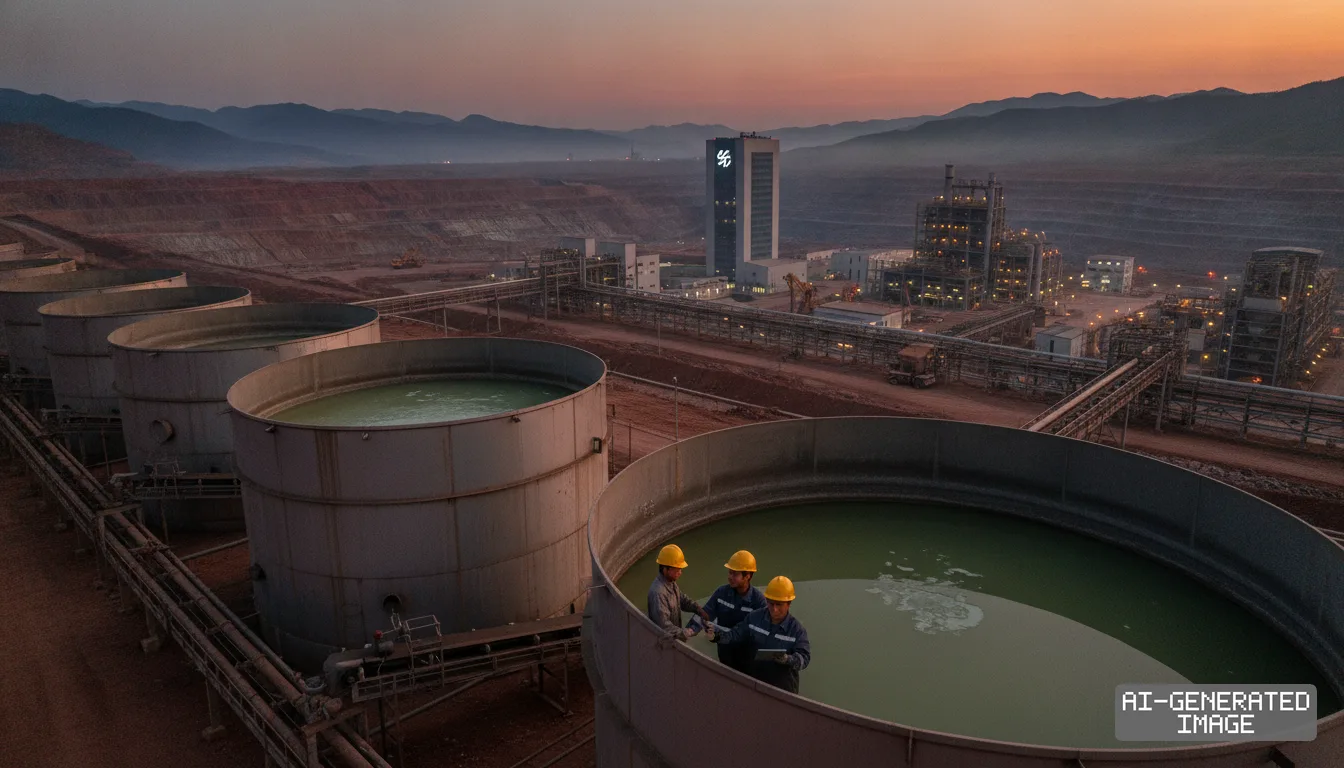
China Northern Rare Earth and China Rare Earth Group posted surging nine-month profits on Nov. 16, 2026, as Beijing's quota restrictions centralized pricing power across the magnet supply chain.
The earnings demonstrate how artificial production ceilings established by Chinese industrial regulators have insulated state miners from global cyclical downturns. Restricting output has systematically shifted profit margins from downstream magnet producers to domestic extraction champions.
China Northern Rare Earth, the country's primary light rare earth producer, generated 41.33 billion yuan ($5.75 billion) in cumulative revenue through September, an increase of 36.45% from the previous year.
The Shanghai-listed miner booked 3.65 billion yuan in nine-month net profit attributable to shareholders, representing a 136.55% surge over the identical period in 2025.
For the third quarter alone, China Northern Rare Earth recorded a net profit of 1.59 billion yuan, climbing 161.13% year-on-year. The result reflects widening operating margins on light rare earth compounds.
China Rare Earth Resources and Technology, the listed vehicle of state-owned China Rare Earth Group, showed a parallel trajectory in its regulatory disclosures.
The Shenzhen-listed firm recorded 408.1 million yuan in nine-month net profit, rising 112.37% year-on-year. That gain occurred even as broader industrial demand in foreign automotive assembly sectors softened.
China's Ministry of Industry and Information Technology and the Ministry of Natural Resources jointly administer the production quota regime. The agencies distribute annual volumetric limits covering domestic extraction, smelting and chemical separation.
Under previous regulatory iterations, Beijing distributed output limits across six distinct state conglomerates. Consolidation directives systematically compressed that operational structure into two dominant state entities.
China Northern Rare Earth exercises effective jurisdiction over northern light rare earth resources, drawing feedstock from the Bayan Obo deposit in Inner Mongolia. The site constitutes the world's largest known rare earth mineral reserve.
China Rare Earth Group controls southern ionic clay deposits, giving the enterprise a near-total domestic monopoly over heavy rare earth elements including dysprosium and terbium.
These heavy elements remain essential thermal stabilizers for high-output neodymium-iron-boron permanent magnets. Without dysprosium and terbium, permanent magnets in electric vehicle traction motors degrade under elevated operating temperatures.
Consolidating operational quotas into two state entities eliminated internal discounting among regional refiners. In earlier cycles, competing Chinese provincial smelters routinely undercut published benchmark prices to clear inventory.
The duopoly structure established formal floor pricing mechanisms. On Oct. 10, China Northern Rare Earth reset its fourth-quarter rare earth concentrate procurement pricing formula with its parent group, Baogang Group.
That revised formula stabilized concentrate purchasing costs while permitting refined oxide spot sales to track higher domestic transaction bands. Upstream state refiners captured the spread directly.
Downstream consumers of permanent magnets absorb the cost transmission without alternative procurement routes. China refines roughly 90% of global magnet rare earths and fabricates 94% of finished sintered permanent magnets.
Automotive motor suppliers and wind turbine manufacturers maintain extensive exposure to these state-managed material costs. Magnet purchases typically account for 20% to 35% of an electric drivetrain motor's bill of materials.
Independent magnet fabricators lack domestic mining concessions. These intermediate processors must purchase oxide and metallic inputs directly from the two designated quota holders at non-negotiable prices.
European and North American motor builders have sought to diversify magnet sourcing away from Chinese processors. However, ex-China processing facilities currently handle less than 15% of global chemical separation capacity.
German magnet producer Vacuumschmelze opened a domestic production facility in South Carolina in 2025 to supply North American automakers. Even so, non-Chinese fabricators continue to rely on imported separated feedstocks.
China Rare Earth disclosed a major corporate expansion step on Nov. 13, filing plans to acquire a 51% equity stake in its parent entity's Liangshan mining operations.
The transaction absorbs additional light rare earth mining rights in Sichuan province, bringing remaining independent regional extraction reserves under the direct control of China Rare Earth Group.
Trading of China Rare Earth shares on the Shenzhen Stock Exchange halted on Nov. 2 pending review of the asset acquisition documents. The company indicated trading resumes once full asset appraisal filings clear regulatory review.
The Ministry of Industry and Information Technology has not published a new formal rare earth production ceiling decree on Nov. 16, leaving the profit expansion tied entirely to previously disclosed corporate earnings and earlier quota caps.
Industrial purchasers now monitor the Ministry of Industry and Information Technology for its first-half 2027 quota allocation, which regulators typically finalize in January.
Impact map
How this development propagates across the region and out to global buyers.
| Event | Korea | China | Japan | Global impact |
|---|---|---|---|---|
| rare earth duopoly quota consolidation | motor fabricators absorb 8-12% higher NdFeB input costs without local refining | China Northern Rare Earth books 137% profit jump on state-backed concentrate pricing | magnet alloy makers face margin compression as raw oxide prices decouple from export tags | EV drivetrain makers face rigid BOM costs given China's 94% share of sintered magnet output |
In this story
- Companies
- China Northern Rare EarthChina Rare Earth Resources and Technology
- Tickers
- 600111.SH000831.SZ
- Exposed
- Baogang GroupVacuumschmelze
- Impact
- Supply ChainPricingCost Structure
Related briefings
- China clears rare earth export permits for EU firms under pact Also on Vacuumschmelze
- China Rare Earth Group tightens southern clay mining with MCC pact Also on China Rare Earth Resources and Technology, Pricing
- China smelters lift Myanmar rare earth imports to 5,021 tons in fall Also on China Rare Earth Resources and Technology, Pricing
- Neodymium holds at 922,500 yuan as magnet makers assess stocks Also on China Northern Rare Earth, Pricing, Cost Structure
Sources
Primary documents
Reporting
Confidence: high — how we grade this
The documents behind this briefing are linked above. East Asia Brief produces its English text with AI assistance under human editorial review, and does not translate or republish other outlets' articles. See our methodology and AI policy. Spotted an error? Tell us.
The Morning Brief
What changed in Korean, Chinese and Japanese industry overnight — and what it means for your supply chain. One email, weekday mornings, US time. Free.
The Morning Brief is in preparation. Leave your address and we will write to you once — when the first issue is ready. Nothing before that.