Tesla plans China capacity expansion following Shenzhen talks
Elon Musk flagged output growth at Gigafactory Shanghai after the facility shipped 810,889 vehicles in the first ten months of 2026.
Tesla Chief Executive Officer Elon Musk indicated Nov. 19, 2026, that the electric vehicle manufacturer will expand vehicle production capacity in China during discussions with trade officials in Shenzhen.
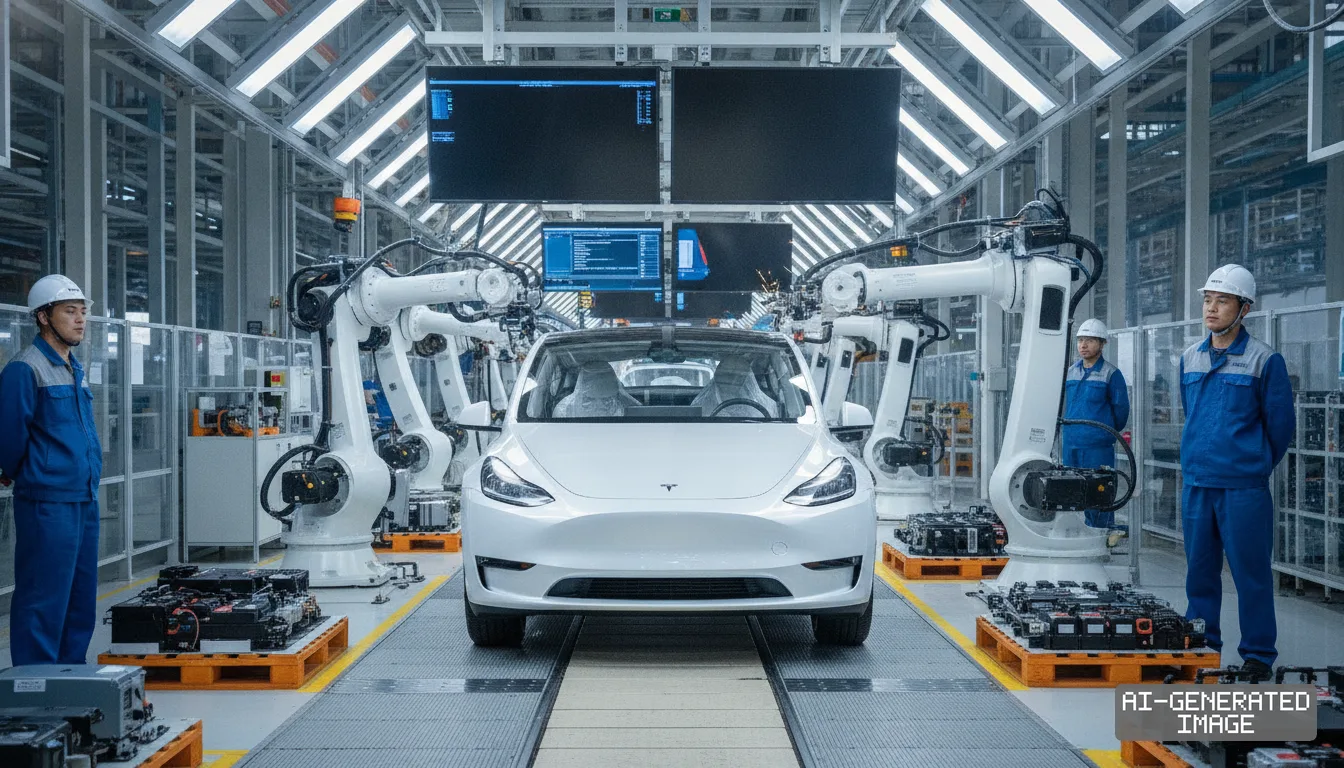
The carmaker operates an installed annual production capacity exceeding 950,000 Model 3 and Model Y vehicles at its Shanghai assembly complex, according to Tesla's third-quarter investor filing.
Gigafactory Shanghai generated 810,889 vehicle shipments during the first 10 months of 2026, marking a 21.4% increase from the prior year and representing over half of Tesla's worldwide vehicle output.
Musk stated during a meeting with Ren Hongbin, chairman of the China Council for the Promotion of International Trade, that Tesla plans to maintain consistent production increases within the country.
Grace Tao, Tesla vice president of external affairs, confirmed on social media that Musk traveled directly from Shenzhen to the Shanghai plant on Nov. 19 to review production operations.
During the site visit, Musk met factory line supervisors and reviewed local development work on Full Self-Driving software architectures and Optimus humanoid robotics programs, according to Tao's posting.
Tesla has not filed a Form 8-K disclosure or an official investor update confirming any approved capital expenditure allocation, building contract or equipment procurement tender for the Shanghai expansion.
The verbal commitment arrives as Western governments tighten trade restrictions on Chinese battery supply chains and review automotive software imports linked to Chinese data architectures.
Tesla disclosed Nov. 6 that the parts localization rate at the Shanghai factory reached 98%, up from earlier company statements describing local sourcing as over 95%.
The automaker published the updated localization figure in an official press notice distributed during the ninth China International Import Expo held in Shanghai.
More than 400 domestic tier-one component manufacturers supply parts directly to the Shanghai vehicle lines, the carmaker stated in official materials released at the expo.
More than 60 of those Chinese suppliers have entered Tesla's global supply chain network, exporting components to assembly plants in Fremont, Austin and Berlin, according to company disclosures.
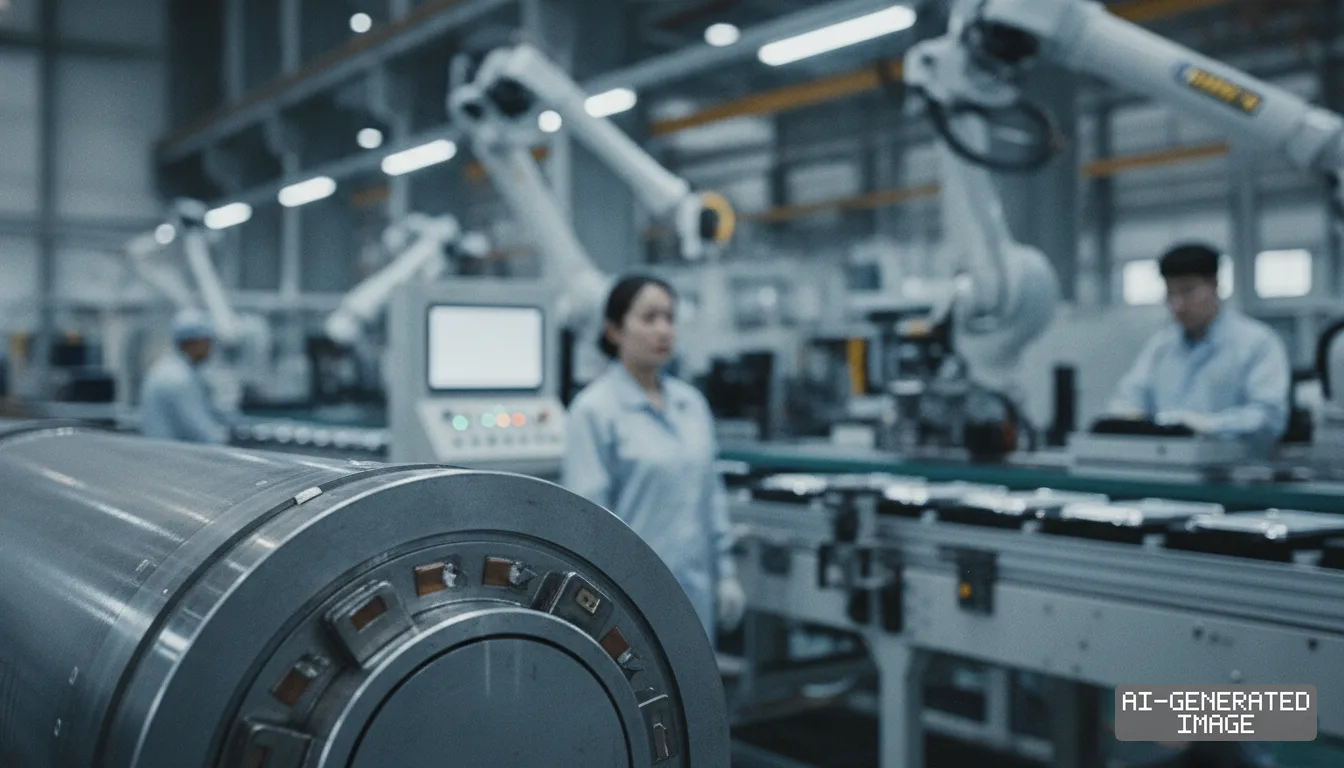
Contemporary Amperex Technology Co. Limited, known as CATL, serves as the primary battery cell supplier for the Shanghai facility, providing lithium iron phosphate packs for standard-range passenger models.
CATL also supplies energy storage cells for the 20-gigawatt-hour Shanghai Megapack installation, which Tesla confirmed as operational in its third-quarter financial report.
Localizing 98% of bill-of-materials procurement shields Tesla from foreign currency volatility, transpacific shipping bottlenecks and tariffs imposed on components sourced outside mainland manufacturing clusters.
The Chinese supply ecosystem also enables co-development of vehicle hardware, including specialized seat armrests and leg rests designed with local vendors for the long-wheelbase Model Y, Tesla said.
Factory floor metrics indicate production workshops occupy 93.3% of the roughly 730,000 square meters of total floor space at the Shanghai plant, maximizing space efficiency, according to company releases.
The assembly complex completes one finished electric vehicle every 30 seconds on average, while recycling more than 94% of its industrial waste, Tesla stated in manufacturing disclosures.
Trade and registration data demonstrate that Gigafactory Shanghai relies increasingly on export deliveries to sustain high capacity utilization rates as domestic Chinese retail sales volume contracts.
Tesla delivered 389,905 vehicles inside China between January and October 2026, representing a 15% decline from the previous year, according to national passenger car association records.
Vehicle exports from Shanghai rose 101.3% over the same 10-month timeframe to 420,984 units, reallocating excess vehicle output to markets across Europe, Canada and the Asia-Pacific region.
Expanding installed capacity allows Tesla to defend lower per-unit manufacturing costs despite aggressive retail price discounting by domestic rivals throughout the Chinese passenger vehicle sector.
What official documents do not state is whether Tesla has submitted construction applications to Shanghai municipal regulators or acquired additional land leases adjacent to the Lingang site.
Tesla plans to publish its audited full-year financial accounts and capital expenditure forecasts for 2027 in its annual investor filing on Jan. 27, 2027.
Impact map
How this development propagates across the region and out to global buyers.
| Event | Korea | China | Japan | Global impact |
|---|---|---|---|---|
| Shanghai Gigafactory capacity expansion | LG Energy Solution faces capped cylindrical cell share at Shanghai as CATL secures LFP volume | CATL preserves anchor battery supply contracts across Model 3, Model Y and Megapack lines | Panasonic sees Tesla EV battery mix tilt further toward Chinese LFP procurement | Western EV assembly cost gap widens as Tesla protects 98% localized manufacturing hub in Lingang |
In this story
- Companies
- Tesla
- Tickers
- TSLA
- Exposed
- Contemporary Amperex Technology
- Policy
- TariffsLocal Content Rules
- Impact
- Supply ChainCapexCost Structure
Track every Tariffs development → Track every Local Content Rules development →
Related briefings
- Mexico rejects China trade pact under Trump tariff threat Also on Tesla, Local Content Rules, Contemporary Amperex Technology
- US-China trade stays below 2018 peak at $41.1B in September Also on Tesla, Local Content Rules, Tariffs
- US warns it will bar Chinese electric vehicles via Canada Also on Tesla, Local Content Rules, Tariffs
- CATL widens global EV battery lead to 39.4% as Korean share slips Also on Tesla, Contemporary Amperex Technology, Tariffs
Sources
Primary documents
Reporting
Confidence: high — how we grade this
The documents behind this briefing are linked above. East Asia Brief produces its English text with AI assistance under human editorial review, and does not translate or republish other outlets' articles. See our methodology and AI policy. Spotted an error? Tell us.
The Morning Brief
What changed in Korean, Chinese and Japanese industry overnight — and what it means for your supply chain. One email, weekday mornings, US time. Free.
The Morning Brief is in preparation. Leave your address and we will write to you once — when the first issue is ready. Nothing before that.