US warns it will bar Chinese electric vehicles via Canada
Washington signals strict border enforcement against transshipped autos as Ottawa permits 49,000 Chinese electric vehicles under a 6.1% tariff quota ahead of the USMCA pact review.
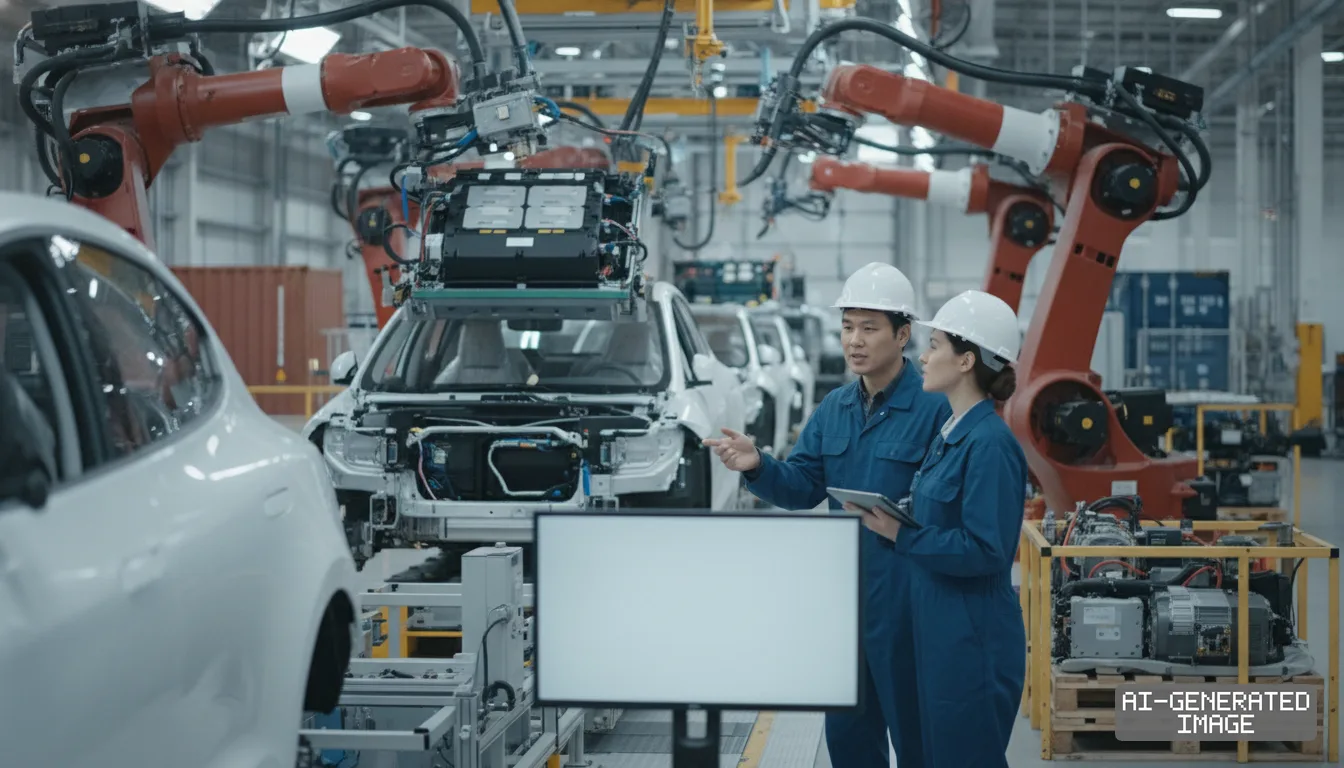
U.S. Ambassador to Canada Pete Hoekstra warned on Oct. 24, 2026, that Washington will block Chinese-made connected electric vehicles and key automotive components from crossing into the United States through Canadian border ports.
The friction follows an agreement Ottawa signed in January to replace its 100% surtax with a 6.1% tariff. The arrangement allows up to 49,000 Chinese electric vehicles annually, roughly 2.9% of Canada's new vehicle sales.
Washington maintains a 100% tariff under Section 301 on electric vehicles imported directly from China. U.S. trade officials argue that lower Canadian duties create a backdoor for Chinese supply chains into North America.
Hoekstra cited national security risks stemming from vehicle connectivity systems, including software that transmits location and infrastructure data. A U.S. Commerce Department rule prohibits vehicle connectivity hardware and software linked to China and Russia.
Canadian ports of entry handle billions of dollars in automotive trade each month. A border stoppage would halt shipments at crossings in Ontario and Michigan, where commercial trucks move components between integrated assembly plants.
Tesla has taken the largest initial share of Canada's import opening. The company imported Shanghai-built Model 3 sedans under the first six-month allocation, claiming about 61% of the 24,500 import permits issued through August.
Chinese automakers are also establishing footholds in the Canadian market. Geely Automobile imported initial test batches of Lotus electric vehicles, while Chery Automobile and BYD have begun evaluating retail networks and joint assembly options.
Detroit automakers face structural friction from the divergence in cross-border trade policy. Stellantis moved production of the Jeep Compass from Ontario to Illinois earlier this year, a shift that affected approximately 3,000 Canadian assembly jobs.
Vehicles built in North America must meet a 75% regional value content threshold to qualify for duty-free transit under the United States-Mexico-Canada Agreement. Cars that fall short of that threshold face regular most-favored-nation import duties.
The trade pact also requires core automotive parts to clear strict local manufacturing rules. Batteries, chassis systems and electric traction motors must contain verified North American origin value before crossing the border duty-free.
Trade officials caution that meeting origin rules alone will not bypass software restrictions. Connected vehicle hardware designed or manufactured by Chinese-controlled entities faces direct import prohibitions regardless of where a final vehicle is assembled.
Canadian Industry Minister Melanie Joly said Ottawa requires Chinese automakers seeking expansion beyond the quota to build domestic joint ventures. The framework requires majority Canadian equity ownership, local labor agreements and secure software compliance.
Ottawa agreed to the vehicle quota in exchange for Chinese tariff cuts on Canadian agricultural goods. China reduced import levies on Canadian canola seed from 85% to 15% under the bilateral deal.
Auto parts suppliers in Ontario send roughly 60% of their output to assembly lines in the United States. Suppliers warn that secondary inspection protocols at U.S. Customs checkpoints could create costly delays for cross-border logistics.
Washington applied similar trade pressure to Mexico earlier this year over potential Chinese assembly plants. Mexican economy officials subsequently paused federal investment incentives for Chinese electric vehicle manufacturers seeking land in northern border states.
The three governments met on July 1, 2026, for the mandatory six-year review of the USMCA. The United States declined to approve an unconditional 16-year extension, moving the pact into annual review consultations.
Trade negotiators from Washington, Ottawa and Mexico City are scheduled to convene the next annual USMCA joint review session on July 1, 2027, where rules of origin and vehicle connectivity will head the agenda.
The Office of the U.S. Trade Representative has not published an administrative directive implementing border blockades on Canadian transshipments, and U.S. Customs and Border Protection has not issued operational guidance defining vehicle seizure criteria.
The Canadian quota system remains operational under administration by Global Affairs Canada, with the second allocation window running through the conclusion of the trade year on Feb. 28, 2027.
Impact map
How this development propagates across the region and out to global buyers.
| Event | Korea | China | Japan | Global impact |
|---|---|---|---|---|
| Canada EV tariff opening | Hyundai Motor and battery cell suppliers face tighter cross-border compliance audits at Detroit crossings | BYD and Chery evaluate Canadian joint venture assembly to retain access to quota allotments | Toyota and Honda review parts supply lines crossing Ontario borders to verify origin thresholds | North American automotive logistics face higher administrative compliance overhead at land border checkpoints |
In this story
- Companies
- TeslaStellantis
- Tickers
- TSLASTLA
- Exposed
- BYDGeely AutomobileChery Automobile
- Policy
- TariffsLocal Content Rules
- Impact
- Supply ChainCompliancePricing
Track every Tariffs development → Track every Local Content Rules development →
Related briefings
- US blocks Chinese electric cars from entering via Canada Also on Geely Automobile, Chery Automobile, BYD
- Chinese EVs capture 35% Korea market share under 8% tariff Also on Geely Automobile, Tesla, BYD
- Stellantis pushes Leapmotor European parts past 40% in Spain Also on Chery Automobile, Local Content Rules, Stellantis
- BYD opens second-generation Seagull orders for 2026 rollout Also on Geely Automobile, BYD, Tariffs
Sources
Primary documents
Reporting
Confidence: high — how we grade this
The documents behind this briefing are linked above. East Asia Brief produces its English text with AI assistance under human editorial review, and does not translate or republish other outlets' articles. See our methodology and AI policy. Spotted an error? Tell us.
The Morning Brief
What changed in Korean, Chinese and Japanese industry overnight — and what it means for your supply chain. One email, weekday mornings, US time. Free.
The Morning Brief is in preparation. Leave your address and we will write to you once — when the first issue is ready. Nothing before that.