Suzuki prices e SKY minicar at $13,500 to blunt BYD in Japan
The 2.12 million yen micro-EV pairs a 26-kilowatt-hour battery with a 310-kilometer range, undercutting rival Chinese and domestic models ahead of deliveries on Nov. 16.
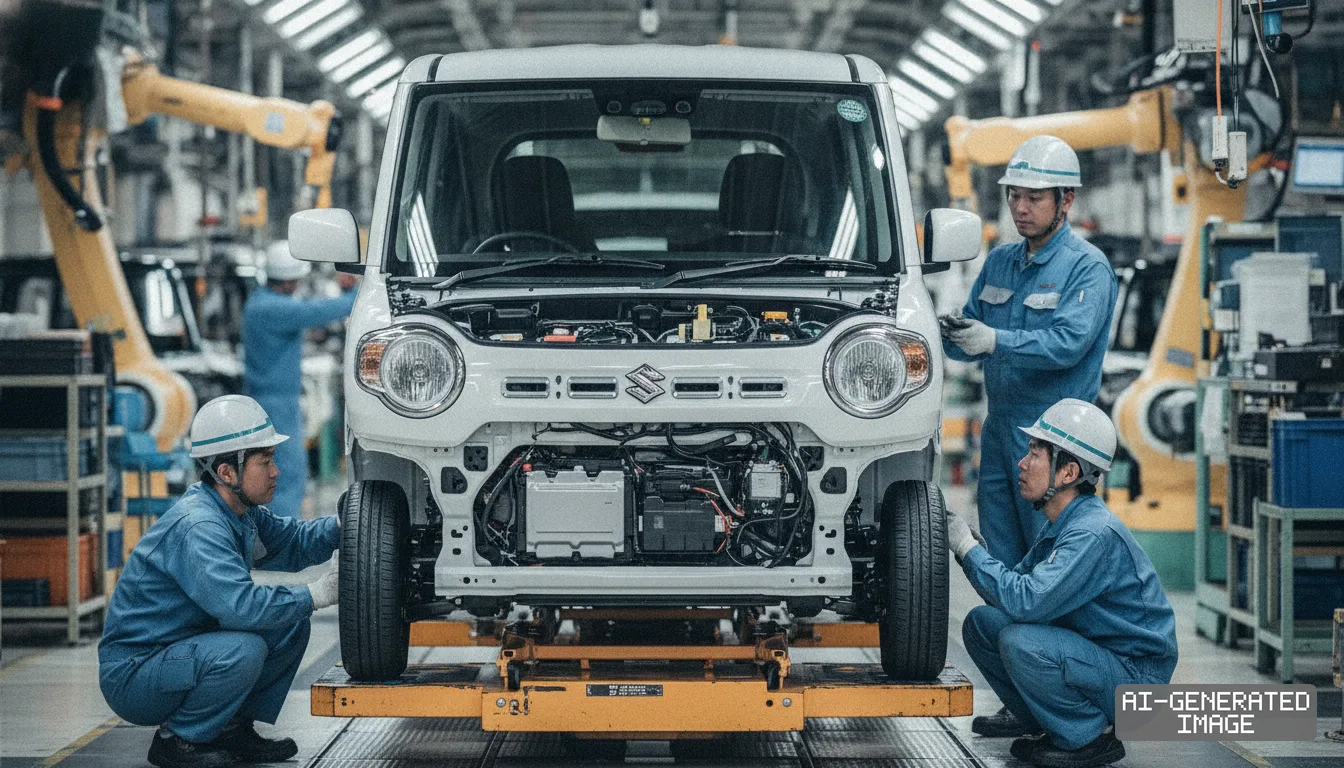
Suzuki Motor finalized dealer distribution terms on Oct. 15 for its first electric minicar, setting a base price of 2.12 million yen ($13,500) to lead Japan's compact EV market.
The price undercuts Chinese automaker BYD and established domestic rivals, positioning the model in the micro-vehicle segment that accounts for over a third of Japan's passenger vehicle sales.
The entry-level e SKY costs 25,000 yen less than the base BYD Racco 200, which entered the Japanese market in July at 2.145 million yen ($13,600).
Suzuki engineered the vehicle to deliver 310 kilometers of range under Japan's standard testing cycles, exceeding the base BYD model by 100 kilometers.
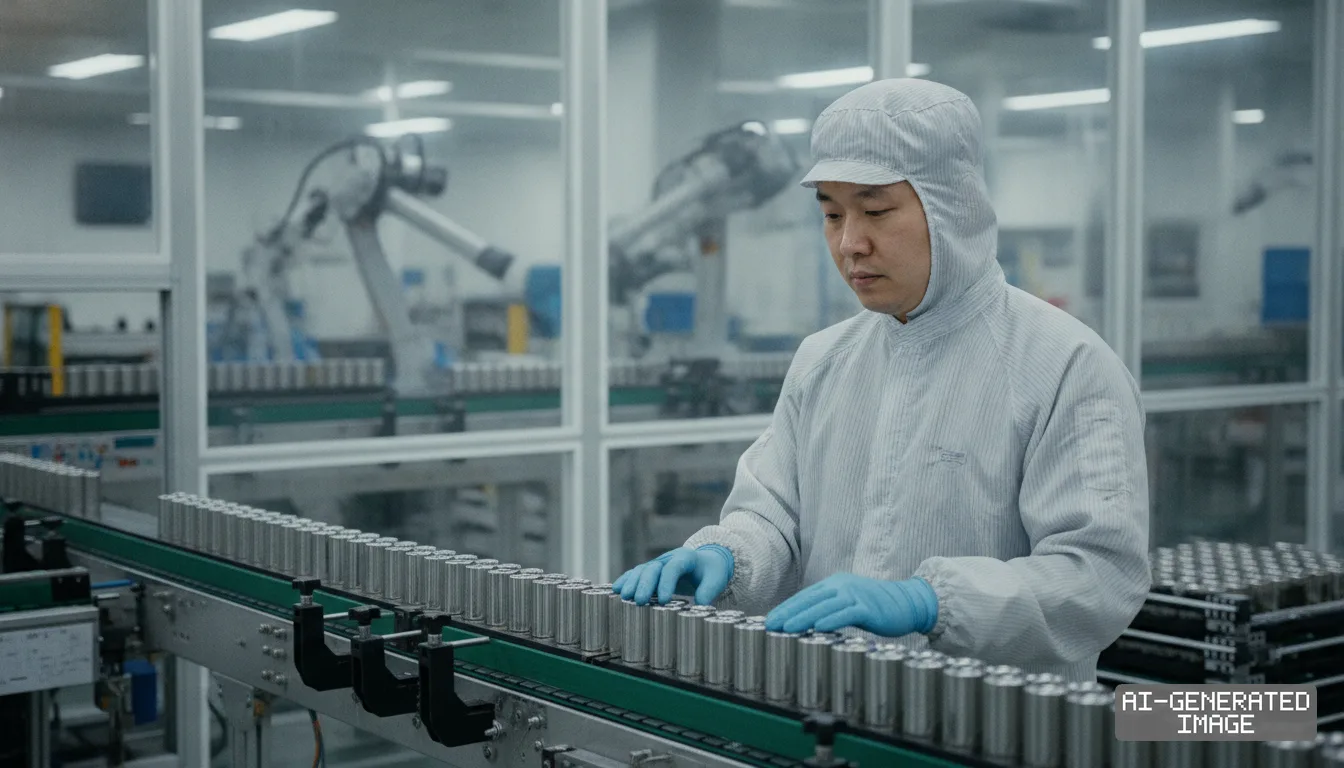
The model relies on a 26-kilowatt-hour lithium iron phosphate battery pack, paired with an integrated drive unit that bundles the electric motor, inverter and gear set.
Suzuki designed the vehicle around its lightweight HEARTECT-e architecture, limiting total curb weight to 1,030 kilograms.
The vehicle consumes 97 watt-hours per kilometer under domestic regulatory testing, which Suzuki described as the highest energy efficiency in Japan's electric minicar category.
A targeted federal incentive lowers the effective cost for retail buyers below the prices of mainstream gasoline vehicles.
The Clean Energy Vehicle subsidy from Japan's Ministry of Economy, Trade and Industry provides 568,000 yen ($3,600) per vehicle for qualifying registrations.
The credit reduces the entry purchase price to 1.552 million yen ($9,800), bringing the electric model to parity with Suzuki's gasoline Spacia lineup.
Commercial registrations also qualify for a statutory exemption from Japan's automobile weight tax, running through April 30, 2028.
Suzuki divided the product lineup into three trim levels to address both commercial fleet accounts and private suburban households.
The entry A grade is built to order and omits fast-charging capability to eliminate unnecessary hardware costs for commercial urban fleets.
The mid-tier G grade lists at 2.39 million yen ($15,200), adding standard fast-charging access for everyday suburban driving.
The top-tier X grade retails at 2.79 million yen ($17,700), incorporating advanced active safety systems and upgraded cabin technology.
Suzuki established an initial monthly sales target of 1,000 units across Japan's domestic dealership network.
The pricing structure intensifies competitive pressure on Japanese manufacturers that entered the electric minicar sector at higher price tiers.
Nissan Motor sells the market-leading Sakura minicar from 2,448,600 yen ($15,500), leaving the e SKY base tier 328,600 yen cheaper.
Honda Motor prices the entry G grade of its N-ONE e: minicar at 2,699,400 yen ($17,100), exceeding Suzuki's base price by 579,400 yen.
The pricing strategy directly challenges BYD's multi-tier product rollout in the Japanese market.
BYD's basic Racco 200 pairs a smaller 22.4-kilowatt-hour battery with a 210-kilometer range rating.
BYD sells larger 35.84-kilowatt-hour battery variants, designated as the Racco 300 Plus and Premium, offering 320 kilometers of range at premium prices.
The e SKY matches the range of BYD's premium versions while retaining the price point of an entry-level vehicle.
Suzuki achieved the target price by adopting lithium iron phosphate cells, avoiding costly nickel-manganese chemistries.
The powertrain delivers 47 kilowatts of maximum power output and 133 newton-meters of torque.
The integrated eAxle drive unit operates alongside an electronically controlled regenerative braking system to maximize kinetic energy recovery.
The exterior measures 3,395 millimeters in length, 1,475 millimeters in width and 1,625 millimeters in height.
A 2,460-millimeter wheelbase provides balanced interior passenger packaging within statutory dimensional limits for the domestic kei classification.
The chassis achieves a minimum turning radius of 4.4 meters, preserving maneuverability in narrow residential corridors.
The manufacturing program illustrates how Japanese carmakers adapt supply chains to defend their domestic market share.
Minicars represent roughly 40% of Japanese light passenger vehicle registrations, serving as a core profit driver for Suzuki and Daihatsu Motor.
Chinese manufacturers view the micro-vehicle segment as a primary entry point into Japan because urban commuting patterns align with compact battery capacities.
Suzuki countered the foreign influx by leveraging cost-efficient cell architectures while maintaining traditional domestic assembly and supplier ties.
The corporate notice does not name the specific manufacturing partner supplying the 26-kilowatt-hour lithium iron phosphate battery cells, though industry reports link the hardware to BYD's battery division.
Suzuki opens retail customer deliveries and showroom distribution nationwide on Nov. 16.
Impact map
How this development propagates across the region and out to global buyers.
| Event | Korea | China | Japan | Global impact |
|---|---|---|---|---|
| Suzuki e SKY micro-EV release | battery makers face price ceiling as LFP displaces high-nickel cells | BYD secures battery cell contracts while vehicle export pricing is undercut | Nissan and Honda face 300,000-yen pricing gap against Suzuki in kei segment | urban EV pricing resets toward $10,000 threshold under subsidized parity |
| Suzuki e SKY micro-EV release | battery makers face price ceiling as LFP displaces high-nickel cells | BYD secures battery cell contracts while vehicle export pricing is undercut | Nissan and Honda face 300,000-yen pricing gap against Suzuki in kei segment | urban EV pricing resets toward |
| Suzuki e SKY micro-EV release | battery makers face price ceiling as LFP displaces high-nickel cells | BYD secures battery cell contracts while vehicle export pricing is undercut | Nissan and Honda face 300,000-yen pricing gap against Suzuki in kei segment | urban EV pricing resets toward $10,000 threshold under subsidized parity |
In this story
- Companies
- Suzuki MotorBYD
- Tickers
- 7269.T002594.SZ
- Exposed
- Nissan MotorHonda Motor
- Policy
- SubsidiesTax Credits
- Impact
- PricingOrder BookCost Structure
Track every Subsidies development → Track every Tax Credits development →
Related briefings
- Suzuki selects BYD LFP battery cells for inaugural Japanese mini EV Also on Suzuki Motor, Nissan Motor, Honda Motor
- Suzuki launches Japan's cheapest mini EV using BYD batteries Also on Suzuki Motor, Nissan Motor, BYD
- Japan leads India FDI with $5.7 billion as factories expand Also on Suzuki Motor, Cost Structure
- Japanese automakers standardize prismatic battery cold tests as EV timelines advance Also on Nissan Motor, Honda Motor, Cost Structure
Sources
Reporting
Confidence: medium — how we grade this
The documents behind this briefing are linked above. East Asia Brief produces its English text with AI assistance under human editorial review, and does not translate or republish other outlets' articles. See our methodology and AI policy. Spotted an error? Tell us.
The Morning Brief
What changed in Korean, Chinese and Japanese industry overnight — and what it means for your supply chain. One email, weekday mornings, US time. Free.
The Morning Brief is in preparation. Leave your address and we will write to you once — when the first issue is ready. Nothing before that.