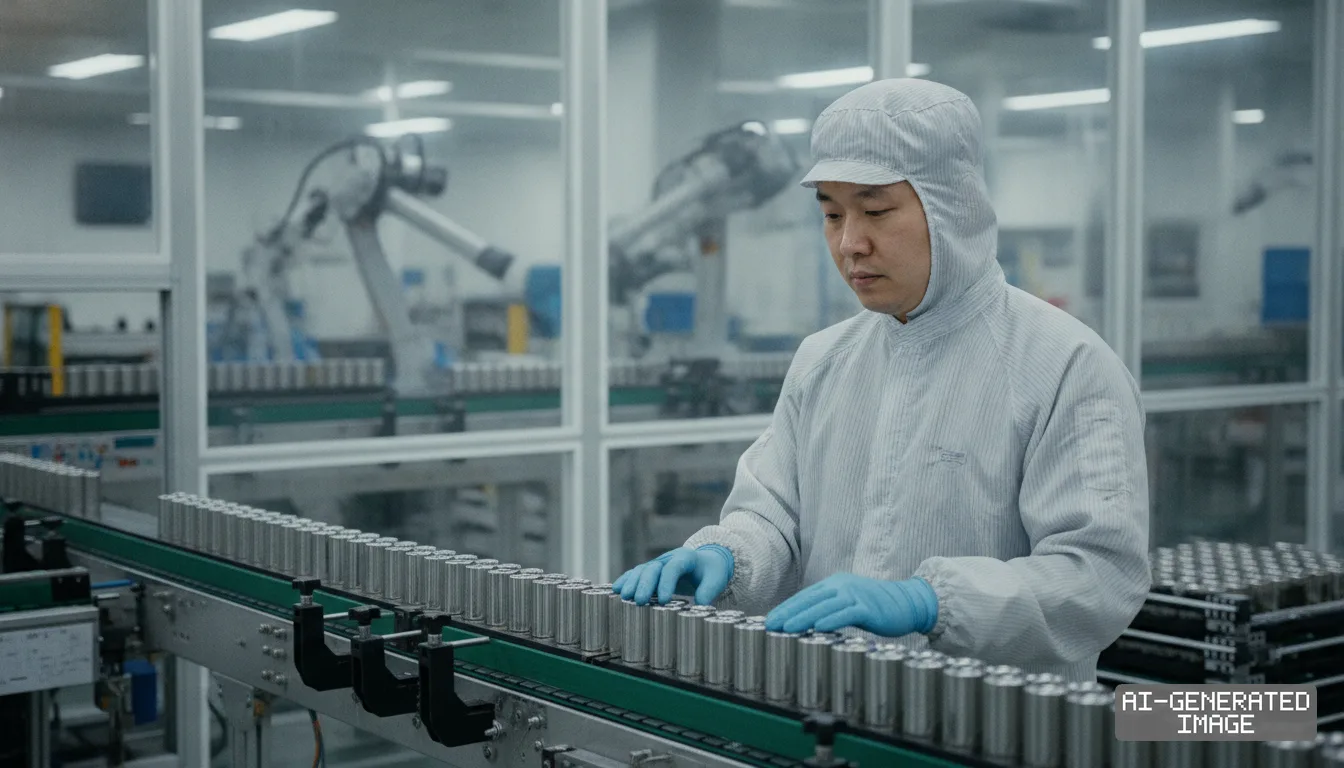
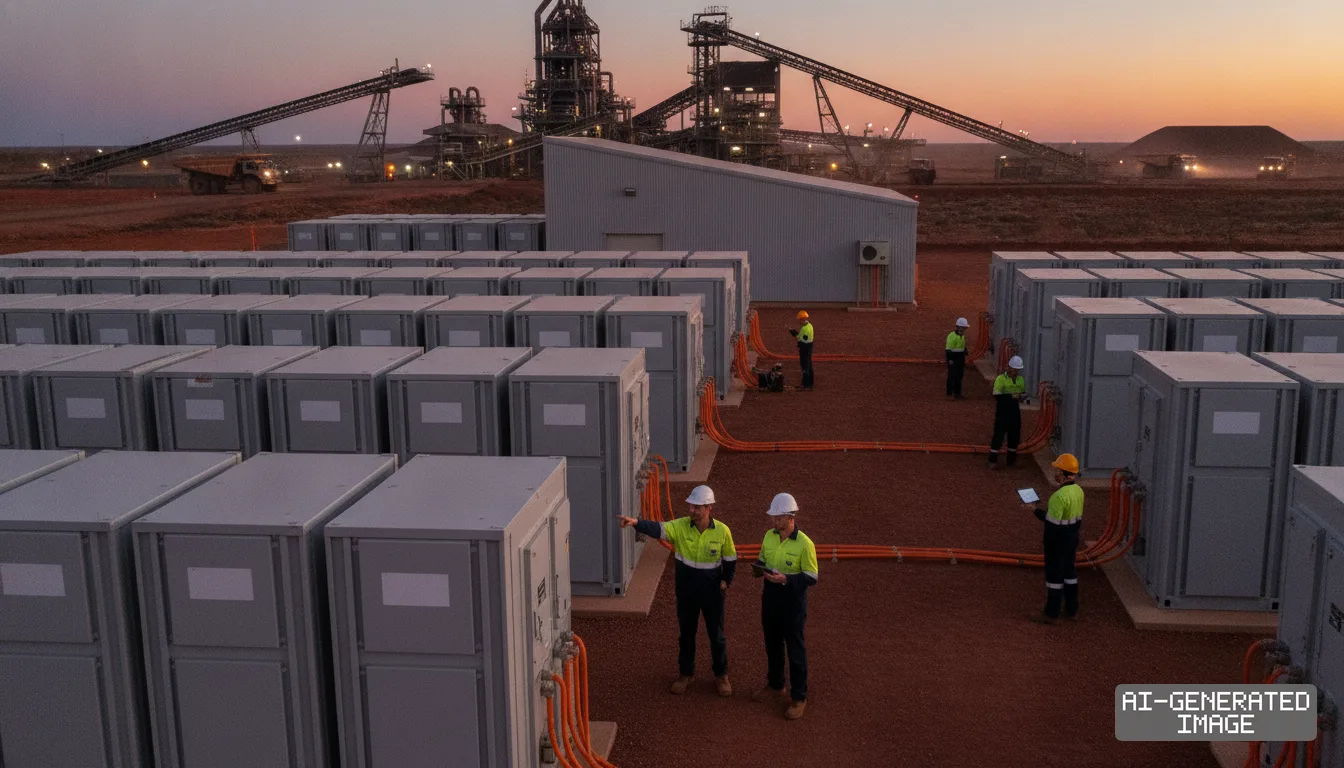
Korean battery makers localize LFP cathodes under US rules
Samsung SDI and SK On commit over 8.8 trillion won to domestic suppliers POSCO Future M and L&F to eliminate Chinese materials ahead of 2027 federal subsidy deadlines.
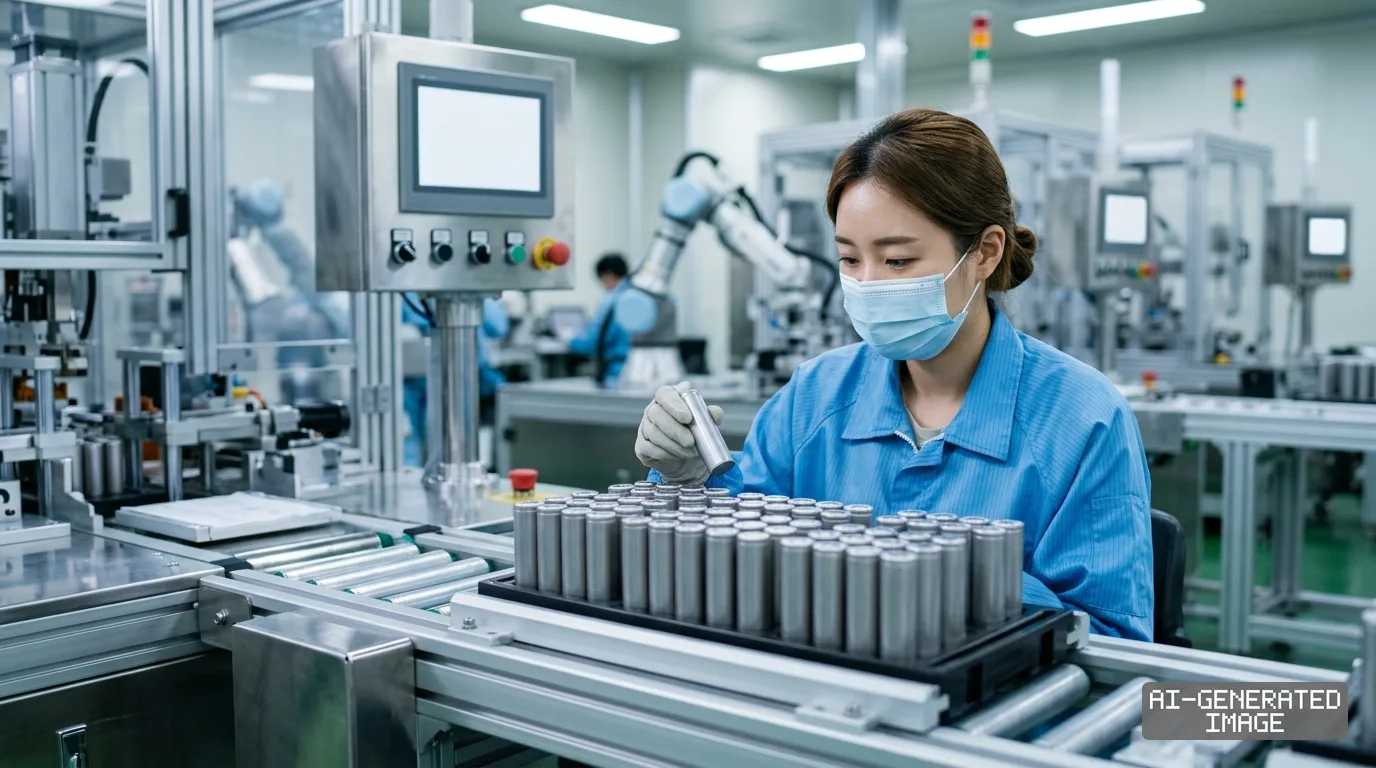
South Korean battery makers accelerated domestic supply agreements with cathode producers on Oct. 16, 2026, replacing Chinese suppliers to meet US Inflation Reduction Act subsidy rules for energy storage systems.
The shift follows tightening Foreign Entity of Concern guidelines issued by the US Department of the Treasury. Those rules disqualify battery cells using components manufactured or assembled by covered Chinese entities from federal clean energy tax credits.
The procurement commitments total more than 8.8 trillion won ($6.5 billion) across multi-year contracts. That figure covers at least 380,000 metric tons of domestic lithium iron phosphate cathode active materials.
Samsung SDI finalized an expanded supply contract with POSCO Future M on Oct. 6, 2026, committing 6.05 trillion won ($4.5 billion) for lithium iron phosphate materials. The agreement runs from Jan. 1, 2027 through Dec. 31, 2032.
The revised contract more than doubles the preliminary volume of 190,000 metric tons agreed upon in August. POSCO Future M will supply the materials for energy storage systems, expanding beyond high-nickel ternary chemistries.
Samsung SDI also maintains a cathode supply agreement with L&F valued at $1.07 billion (1.61 trillion won) signed on March 24, 2026. Deliveries run through Dec. 31, 2029, supplying energy storage batteries in North America.
SK On finalized an LFP cathode supply deal valued at 1.0742 trillion won ($791 million) with POSCO Future M on Sept. 22, 2026. The contract spans 2027 to 2029, with an option to extend for two years.
The materials feed SK On cell lines in Georgia, which manufacture dedicated batteries for US grid storage, according to regulatory filings. The company previously relied entirely on Chinese cathode makers for LFP products.
SK On signed an additional agreement with L&F on Sept. 17, 2026, securing $118.2 million (161.7 billion won) in LFP cathode active materials. That contract runs through Dec. 31, 2028, for plants in Seosan and Georgia.
Cathode active materials represent roughly 40% of the production cost of an industrial battery cell. In a lithium iron phosphate cathode, the precursor stage accounts for approximately 70% of processing and material expenses.
Chinese refiners control over 90% of global iron phosphate precursor manufacturing capacity. That dominance gives Chinese producers like Contemporary Amperex Technology Co. Limited a cost advantage of roughly 20% compared with Korean alternatives.
Korean cell manufacturers are absorbing those higher material costs to ensure their North American customers qualify for Section 45X production credits. The federal credit offers up to $35 per kilowatt-hour for domestically assembled cells.
To supply the contracted volumes, POSCO Future M converted high-nickel cathode lines at its Pohang plant to lithium iron phosphate. Mass production on the converted lines will begin by late 2026, the company said.
POSCO Future M is also constructing a dedicated cathode facility in Pohang with an annual capacity of 50,000 metric tons. Commercial shipments from the new facility are scheduled to start in 2027.
To eliminate upstream vulnerability to Chinese supply chains, POSCO Future M plans to manufacture iron phosphate precursors internally starting in 2029. The process will use iron chloride feedstocks from parent company POSCO Holdings.
L&F expanded its manufacturing subsidiary L&F Plus in Daegu, operating 30,000 metric tons of annual capacity. The producer plans to increase that site's output capacity to 60,000 metric tons by mid-2027.
Demand for energy storage systems in North America has surged as utility operators add power capacity for artificial intelligence data centers. LFP chemistry offers longer cycle life and lower thermal risks than high-nickel alternatives.
Korean battery companies previously directed capital toward high-nickel cells for passenger electric vehicles. Regulatory exclusion of Chinese inputs has forced those manufacturers to build parallel non-Chinese LFP lines for the American market.
The companies have not published procurement agreements for LG Energy Solution, and regulatory filings do not confirm reported multi-trillion-won supply negotiations between LG Energy Solution and domestic cathode producers.
The US Department of the Treasury begins full enforcement of foreign entity restrictions on critical minerals and battery components on Jan. 1, 2027, the same day POSCO Future M starts deliveries under the Samsung SDI contract.
Impact map
How this development propagates across the region and out to global buyers.
| Event | Korea | China | Japan | Global impact |
|---|---|---|---|---|
| IRA FEOC cathode compliance | Cell makers absorb 20% material premium via 8.8T won deals to retain US subsidies | Chinese precursor refiners face exclusion from North American grid storage supply chain | Panasonic remains focused on nickel chemistry, leaving US utility LFP market to rivals | US clean energy developers pay 10-15% cell premiums to secure non-Chinese grid tax credits |
In this story
- Companies
- Samsung SDISK OnPOSCO Future M
- Tickers
- 006400.KS096770.KS003670.KS066970.KS
- Exposed
- LG Energy Solution
- Policy
- Tax CreditsSubsidies
- Impact
- Supply ChainCost StructureCapex
Track every Tax Credits development → Track every Subsidies development →
Related briefings
- South Korea Expands Advanced Battery Tax Credits to Rebalance Domestic Fabs Also on POSCO Future M, Tax Credits, SK On
- Posco Holdings starts direct lithium extraction test runs for Korean cathode lines Also on Posco Future M, Tax Credits, Samsung SDI
- POSCO Future M Locks In $4.5B Cathode Pact With Samsung SDI to 2032 Also on POSCO Future M, SK On, Samsung SDI
- POSCO Future M signs $776M LFP cathode supply deal with SK On Also on POSCO Future M, SK On, Samsung SDI
Sources
Reporting
Confidence: medium — how we grade this
The documents behind this briefing are linked above. East Asia Brief produces its English text with AI assistance under human editorial review, and does not translate or republish other outlets' articles. See our methodology and AI policy. Spotted an error? Tell us.
The Morning Brief
What changed in Korean, Chinese and Japanese industry overnight — and what it means for your supply chain. One email, weekday mornings, US time. Free.
The Morning Brief is in preparation. Leave your address and we will write to you once — when the first issue is ready. Nothing before that.