Japan leads India FDI with $5.7 billion as factories expand
Ministry data shows Tokyo supplied 28.8% of New Delhi's $19.81 billion first-quarter equity inflows as automakers and component suppliers accelerate production shifts away from China.
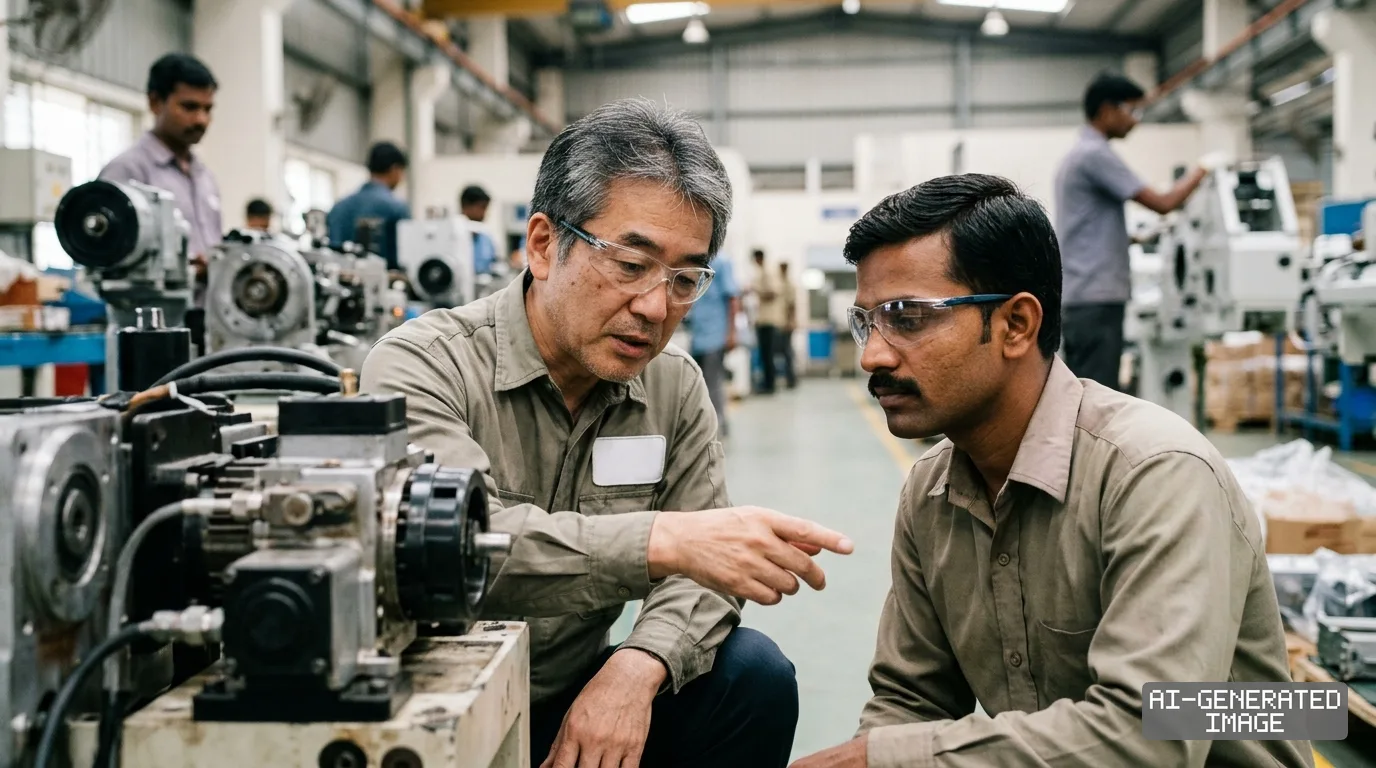
India's Department for Promotion of Industry and Internal Trade reported Oct. 3 that Japan emerged as the country's largest source of foreign direct investment during the first fiscal quarter.
Japan channelled $5.71 billion in equity capital into India between April and June, out of $19.81 billion in total inflows received from overseas investors.
That single-quarter sum gave Japanese corporations a 28.8% share of all foreign direct investment equity entering India during the three-month period.
The quarterly inflow placed Japan ahead of Singapore, which remitted $5.22 billion, and the United States, which contributed $1.34 billion after a 76% decline.
Total quarterly equity inflows into India rose 6% from the $18.62 billion recorded during the corresponding April to June quarter in 2025.
The surge marks a strategic reallocation of corporate balance sheets as Japanese manufacturers accelerate efforts to diversify supply networks away from China.
Geopolitical friction, strict regulatory enforcement and rising factory wages across Chinese coastal manufacturing hubs have prompted Tokyo boards to redirect expansion capital toward India.
Equity flows concentrated heavily in automobile manufacturing, electronic components, industrial machinery and telecommunications hardware, according to department data.
The automotive sector attracted the largest volume of Japanese industrial equity as vehicle makers and their tier-one suppliers expanded production capacity.
Suzuki Motor Corporation represents the largest Japanese industrial operator in India, where its subsidiary Maruti Suzuki India dominates passenger vehicle sales.
The Indian operation accounts for more than 40% of Suzuki's global revenue and roughly 60% of its worldwide vehicle output.
Maruti Suzuki agreed in January to acquire 1,750 acres in Sanand, Gujarat for 49.6 billion rupees ($598 million) for a greenfield car assembly plant.
The Sanand site will add 1 million units of annual vehicle capacity, supporting Suzuki's target to produce 4 million vehicles in India by 2030.
Suzuki also allocated 32 billion rupees ($385 million) to construct a dedicated electric vehicle production line at its Hansalpur facility in Gujarat.
Vehicle assemblers are pulling Japanese component specialists into local manufacturing clusters to satisfy domestic content mandates and lower import reliance.
Electronic component suppliers have expanded local production lines to serve both automotive factories and consumer hardware assemblers across northern and western industrial belts.
TDK Corporation invested 30 billion rupees ($340 million) to build a lithium-ion battery plant in Sohna, in the northern state of Haryana.
The Sohna facility produces 200 million battery packs each year, meeting roughly 40% of India's annual domestic demand for mobile devices and wearables.
Murata Manufacturing, which produces approximately 40% of the world's multilayer ceramic capacitors, opened its first Indian processing facility in Chennai.
The Kyoto-based component maker leased a 3,500-square-meter packaging plant at OneHub Chennai Industrial Park to supply local smartphone and electronics assembly lines.
Japanese component makers are responding to New Delhi's phased manufacturing programs, which impose escalating import tariffs on completely knocked-down electronic subassemblies.
Direct production in India allows parts vendors to preserve margins while qualifying customer shipments for central government production-linked cash incentives.
Japanese corporate planners also treat Indian plants as export bases serving automotive and electronic hardware demand across Africa and the Middle East.
Capital deployment remains tightly clustered in Gujarat, Haryana, Tamil Nadu and Maharashtra, where port connections and state incentives reduce logistical friction.
Operating inside Indian manufacturing corridors still presents structural hurdles for precision engineers accustomed to mature Japanese and Chinese supplier networks.
Factory operators continue to face intermittent municipal power fluctuations and clearance backlogs at domestic freight terminals, raising local operational overhead.
Secondary tier-two part fabrication remains underdeveloped locally, forcing Japanese plants to import specialized ceramic powders, semiconductor dies and synthetic resins from East Asia.
The capital influx nonetheless establishes India as a co-equal manufacturing hub alongside Southeast Asian factories in Japan's long-term supply chain architecture.
The quarterly release does not provide company-level transaction logs or state-level equity splits for Japanese capital, leaving individual corporate allocations unitemized.
The department will publish second-quarter investment totals covering July through September in late December, following Reserve Bank of India ledger reconciliations in November.
Impact map
How this development propagates across the region and out to global buyers.
| Event | Korea | China | Japan | Global impact |
|---|---|---|---|---|
| Japan tops India FDI inflows | Hyundai Motor faces expanded domestic vehicle production capacity from Maruti Suzuki | electronics and auto component supply chains lose export share to Indian facilities | Suzuki, TDK and Murata accelerate capital reallocation from mainland China to India | multinational supply chains establish dual-track manufacturing nodes across South Asia |
In this story
- Companies
- Suzuki MotorTDKMurata Manufacturing
- Tickers
- 7269.T6762.T6981.T
- Policy
- SubsidiesTariffs
- Impact
- CapexSupply ChainCost Structure
Track every Subsidies development → Track every Tariffs development →
Related briefings
- China mandates digital tracking codes for heavy rare earth shipments to tighten export control Also on TDK, Cost Structure
- Malaysia overtakes China in US drone market as tariffs bite Also on Tariffs, Cost Structure
- Corporate Clean Power Purchase Grid Fees Diverge Across East Asian Tech Hubs Also on Tariffs, Cost Structure
- Korean cathode makers retool production lines for LMFP chemistry as price war spreads Also on Tariffs, Cost Structure
Sources
Reporting
Confidence: medium — how we grade this
The documents behind this briefing are linked above. East Asia Brief produces its English text with AI assistance under human editorial review, and does not translate or republish other outlets' articles. See our methodology and AI policy. Spotted an error? Tell us.
The Morning Brief
What changed in Korean, Chinese and Japanese industry overnight — and what it means for your supply chain. One email, weekday mornings, US time. Free.
The Morning Brief is in preparation. Leave your address and we will write to you once — when the first issue is ready. Nothing before that.