South Korea battery pack makers standardize cell-to-pack designs for rural utility machinery
Consortiums led by KATECH and Daedong deploy modular structural packs and 48-volt swappable systems to electrify compact tractors and off-highway utility vehicles.
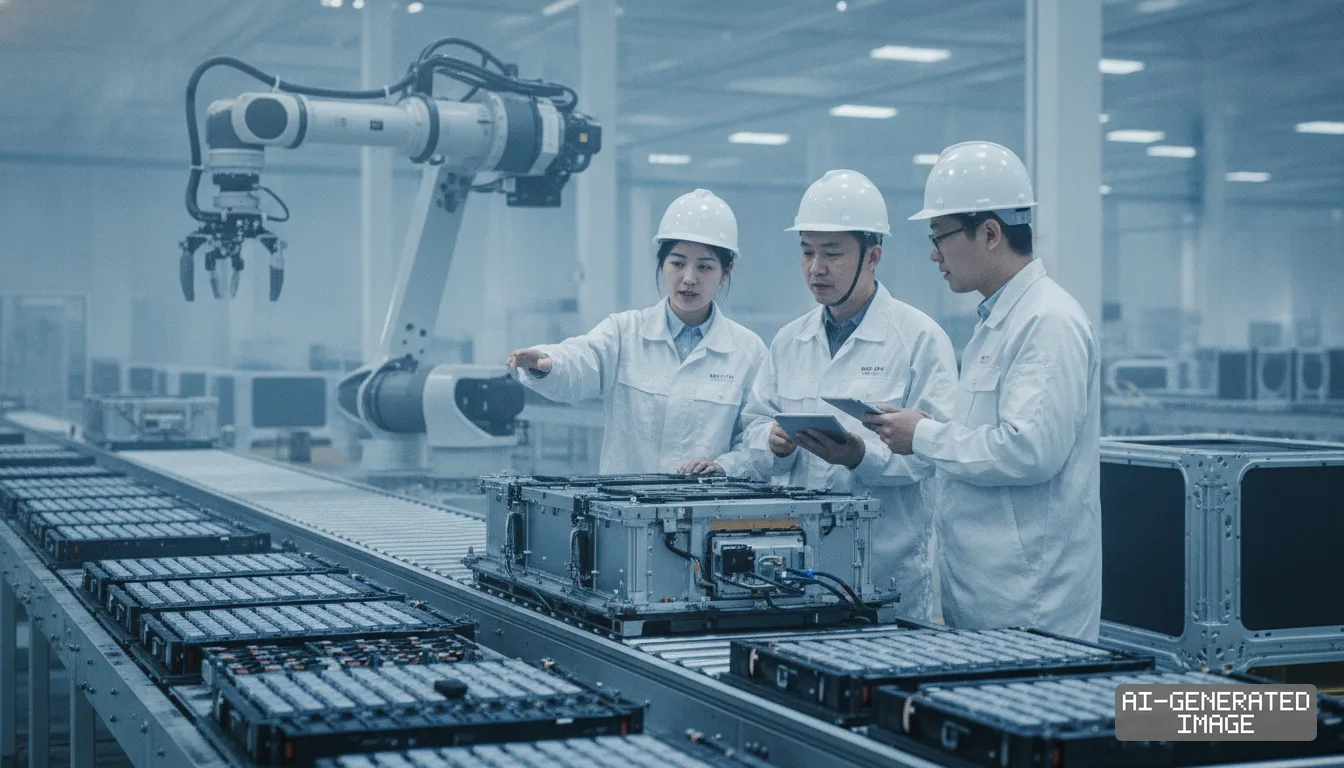
South Korean battery pack integrators and off-highway equipment manufacturers are standardizing modular structural architectures to accelerate the electrification of agricultural machinery and heavy rural utility vehicles. The shift moves pack engineering away from customized multi-module enclosures toward unified cell-to-pack configurations and swappable sub-pack formats designed to survive the severe mechanical shock, sustained duty cycles, and thermal profiles of non-road mobile machinery.
The transition addresses structural constraints unique to off-highway commercial platforms. Unlike passenger electric vehicles that rely on expansive underfloor skateboards, agricultural tractors and rural utility loaders operate with narrow track widths, high ground clearance requirements, and rigid mechanical interfaces for power take-off shafts and hydraulic pumps. Pack developers must deliver high volumetric energy density within constrained packaging envelopes while maintaining structural integrity against low-frequency chassis vibration and heavy field loads.
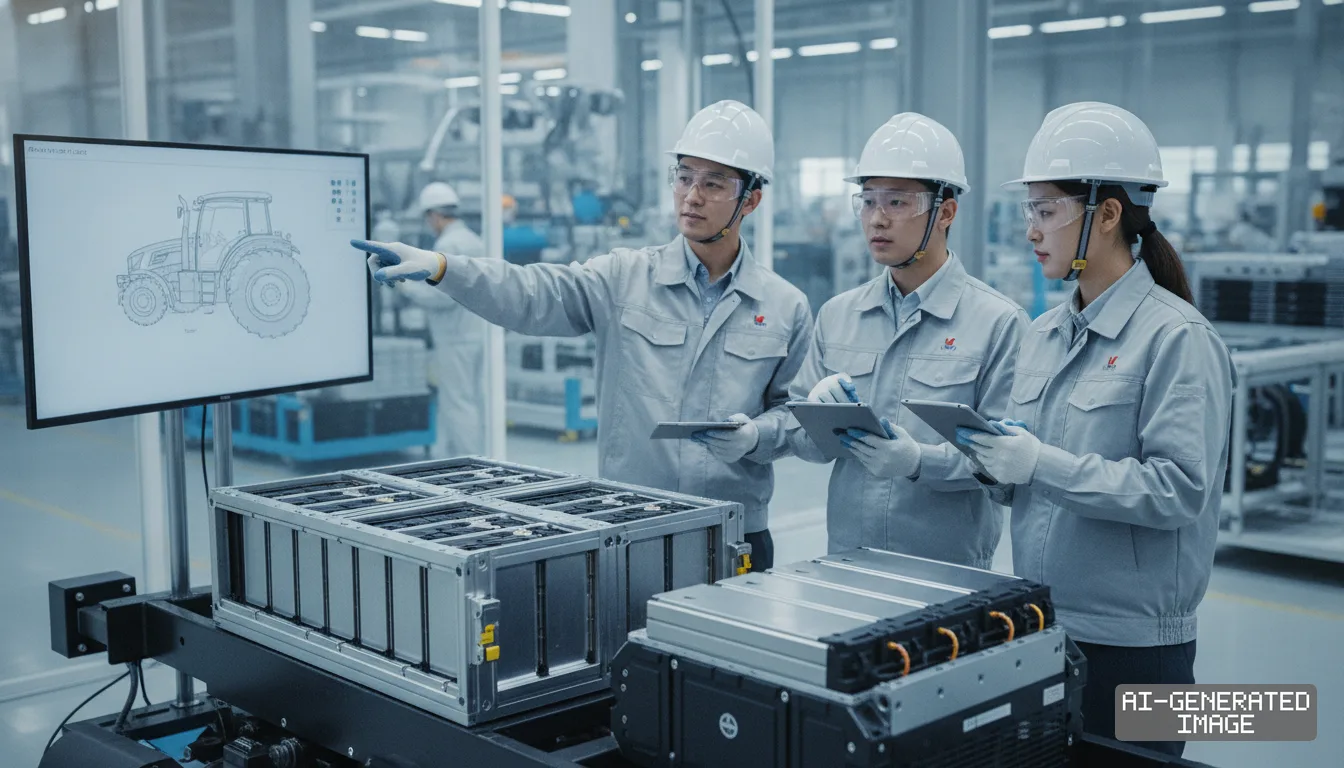
At the center of the standardization drive, the Korea Automotive Technology Institute is directing a state-backed development consortium under the Ministry of Trade, Industry and Energy. The consortium brings together Daedong, South Korea's largest agricultural machinery manufacturer, alongside specialized engineering firms Seoltech and Hygen RNM. The initiative focuses on validating universal swappable battery architectures and standardized charging interfaces for 35-kilowatt electric tractors, multi-purpose rural transporters, and logistics machinery.
Engineering teams within the consortium submitted a formal group standard proposal to the Korea Battery Industry Association titled Autonomous Mobile Robots for Industrial Logistics Swappable Battery Pack Part 1: Performance and General Requirements. The technical framework establishes electrical, communication, and mechanical boundaries for 48-volt, 30-ampere-hour and 96-volt modular pack units. The specification integrates Open Charge Point Protocol 2.0.1 compliance and bidirectional vehicle-to-grid capabilities, allowing agricultural vehicles to double as mobile energy storage assets during rural power disruptions.
Standardizing modular battery units allows agricultural original equipment manufacturers to resolve the cost penalty of low-volume, high-mix vehicle production. By utilizing uniform pack dimensions, interlocking physical latch mechanisms, and standardized controller area network communication protocols, machinery builders avoid designing bespoke battery enclosures for every tractor horsepower class and implement variant. Battery integrators can produce standardized blocks at higher production volumes, lowering procurement overhead for domestic machinery builders facing competition from lower-cost machinery imports.
In parallel with swappable modular platforms, major domestic vehicle manufacturers are adapting automotive cell-to-pack architectures for heavy-duty commercial utility duties. Hyundai Motor Group introduced structural cell-to-pack integration into its dedicated Purpose-Built Vehicle platform, eliminating intermediate module casings to optimize internal volumetric efficiency. The platform supports 51.5-kilowatt-hour and 71.2-kilowatt-hour pack capacities configured for cargo transport, refrigerated haulage, and municipal utility bodies, providing an engineering baseline for commercial field conversions.
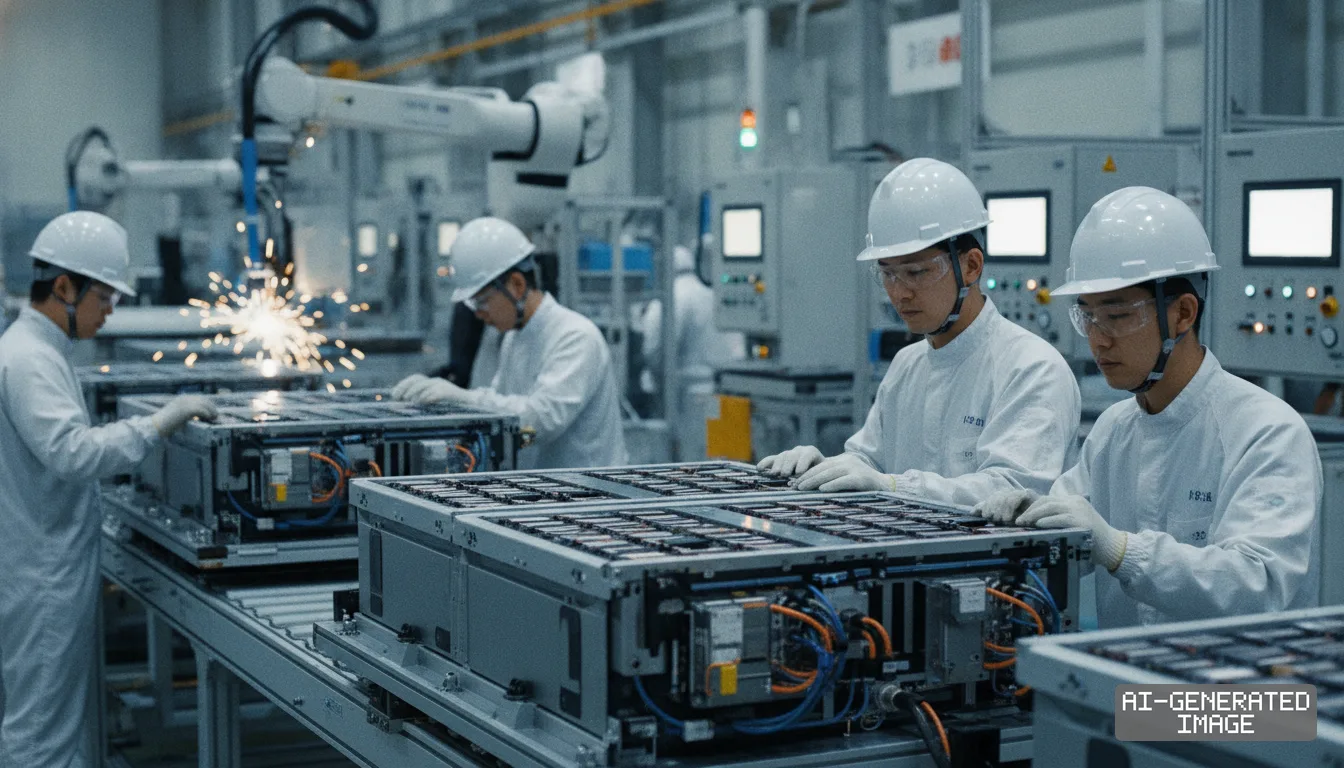
Heavy industrial equipment builders are deploying scalable module-less designs to meet the thermal and physical demands of off-highway duty cycles. HD Hyundai Infracore developed a modular battery pack configuration scalable up to 32 individual module assemblies, utilizing direct wire-bonding interconnects and high-thermal-conductivity structural adhesives. The structural design bonds cells directly into high-strength chassis-mounted frames, improving passive heat transfer during continuous high-load operations in excavators and heavy utility loaders while protecting cells from mechanical torsion.
Cell manufacturers Samsung SDI, LG Energy Solution, and SK On are aligning cell form factors with structural off-highway applications. The manufacturers are tailoring prismatic and large-format pouch cells with reinforced current collectors and direct liquid-cooling interfaces. By mounting cooling plates directly against cell faces within the outer pack housing, integrators eliminate intermediate cooling manifolds and reduce internal resistance, preventing localized thermal accumulation during prolonged power take-off usage in hot field conditions.
The elimination of intermediate module structures requires stricter thermal propagation barriers and advanced battery management system topologies. Off-highway equipment operates in remote rural environments where immediate access to specialized maintenance infrastructure is limited. Pack developers are integrating aerogel insulation sheets, directional pressure-relief venting ports, and cell-level voltage and temperature monitoring to isolate failing cells and prevent cascading thermal runaway across the pack.
Serviceability remains a critical trade-off in structural cell-to-pack deployment for non-road applications. While direct cell bonding delivers necessary gravimetric and volumetric gains, it complicates cell-level repair in rural dealerships. Consortium participants are balancing this trade-off by adopting hybrid structural approaches, grouping cells into standardized swappable sub-assemblies that retain structural bonding internally while mounting into the vehicle chassis via standardized quick-disconnect electrical couplings and mechanical rails.
Although industry consortiums and the Korea Battery Industry Association have established group standards for swappable logistics and agricultural packs, universal cell-to-pack integration across heavy off-highway equipment remains governed by proprietary OEM frameworks. South Korea has not enacted mandatory national Korean Industrial Standards for non-road structural battery packs, leaving equipment makers to establish de facto industry standards through commercial consortia and cross-licensing agreements.
Field demonstration trials for consortium-developed 35-kilowatt electric tractors and standardized 48-volt swappable power systems are scheduled across designated agricultural testing facilities in South Korea through the fourth quarter of 2026. The Ministry of Trade, Industry and Energy plans to review performance validation data from these trials before drafting expanded technical guidelines for non-road electric mobility subsidies.
Impact map
How this development propagates across the region and out to global buyers.
| Event | Korea | China | Japan | Global impact |
|---|---|---|---|---|
| Rural pack standardization | tractor builders adopt modular CTP | off-highway cell export competition | compact equipment electrification | non-road machinery cost reduction |
In this story
- Companies
- DaedongHD Hyundai InfracoreLG Energy SolutionSamsung SDISK On
- Tickers
- 000490.KS042670.KS000270.KS373220.KS006400.KS096770.KS
- Exposed
- SeoltechHygen RNM
- Policy
- SubsidiesEconomic Security
- Impact
- Supply ChainCapexCost StructureCompliance
Track every Subsidies development → Track every Economic Security development →
Related briefings
- Mobilint tests robot AI chips with Doosan to curb Nvidia costs Also on Daedong, Cost Structure
- LG taps Samsung Foundry for appliance AI chips under Korean state project Also on Daedong
- Korea Links Commercial Electric Van Grants to Battery Recyclability Also on SK On, Samsung SDI, LG Energy Solution
- Korean battery makers deploy directional venting to block thermal runaway in EV and ESS packs Also on SK On, Samsung SDI, LG Energy Solution
Sources
Primary documents
Reporting
Confidence: high — how we grade this
The documents behind this briefing are linked above. East Asia Brief produces its English text with AI assistance under human editorial review, and does not translate or republish other outlets' articles. See our methodology and AI policy. Spotted an error? Tell us.
The Morning Brief
What changed in Korean, Chinese and Japanese industry overnight — and what it means for your supply chain. One email, weekday mornings, US time. Free.
The Morning Brief is in preparation. Leave your address and we will write to you once — when the first issue is ready. Nothing before that.