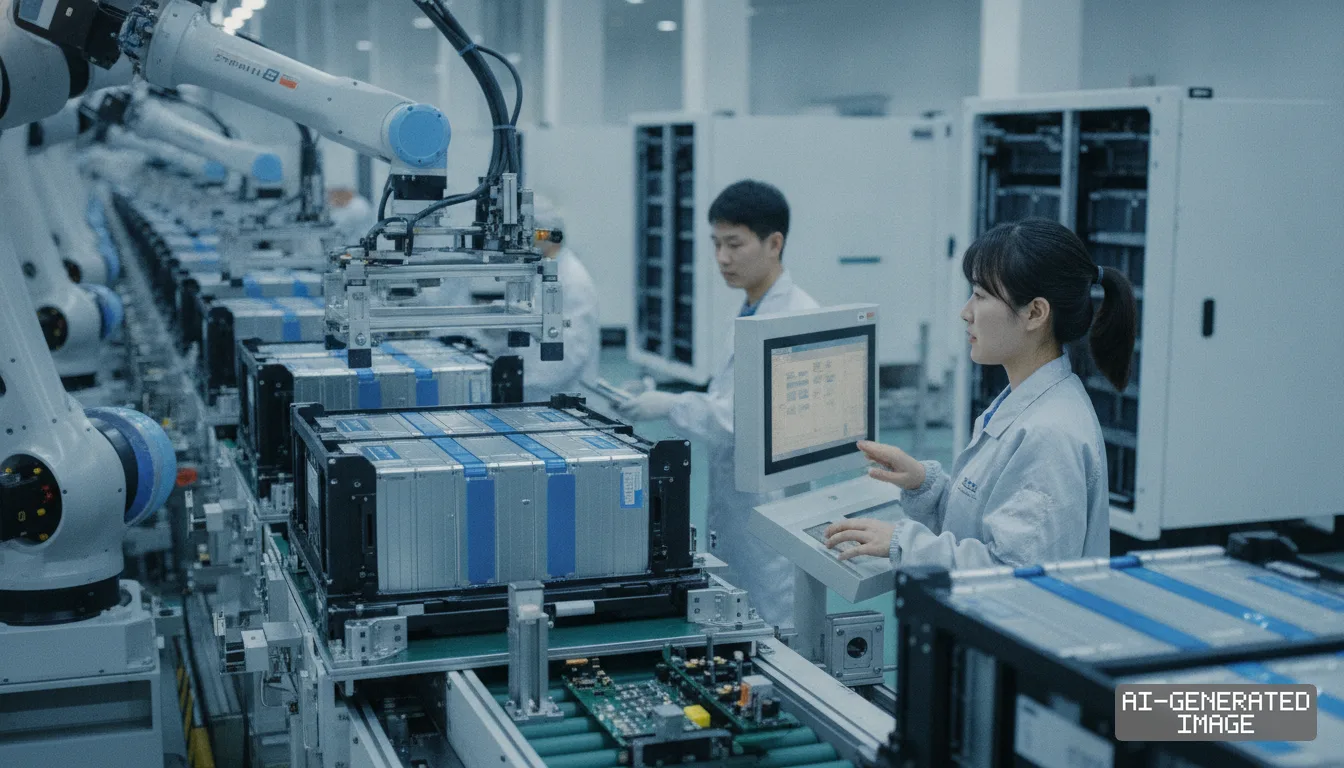
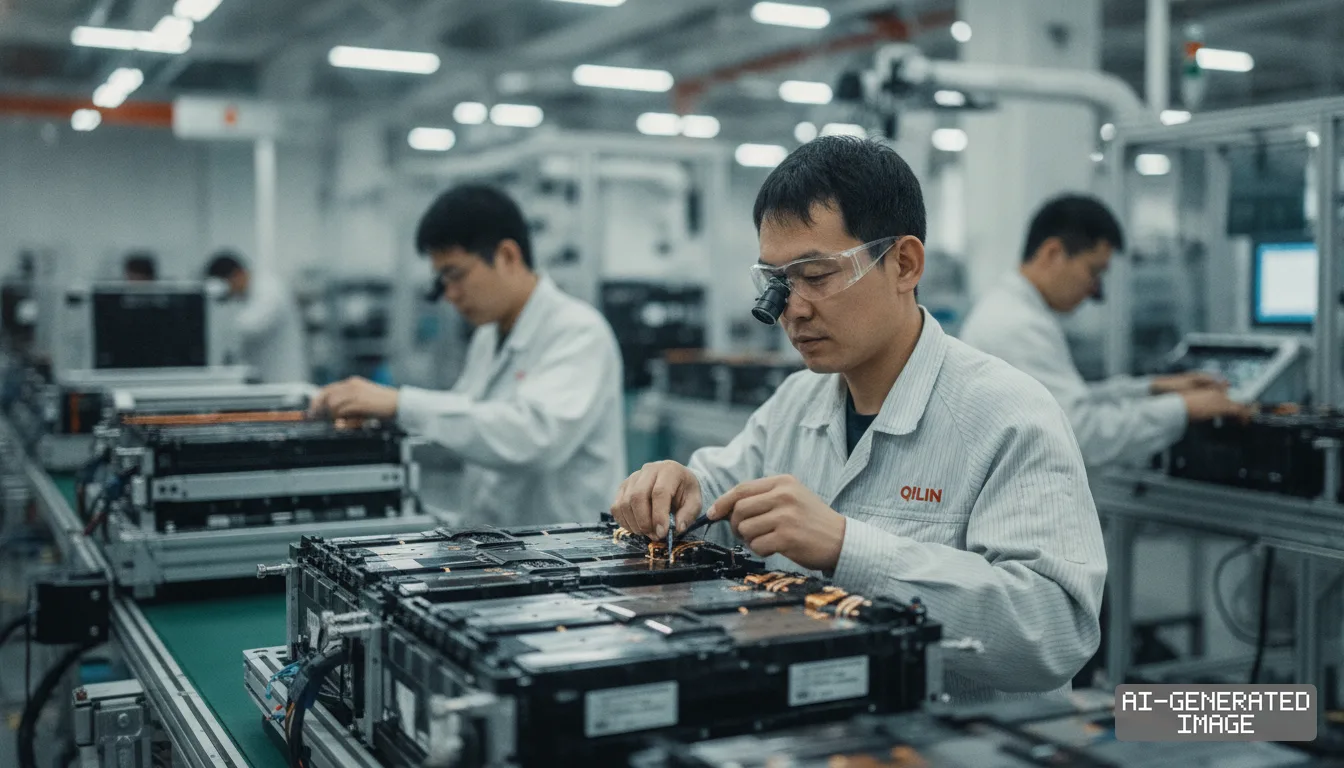
Samsung SDI pushes Indiana battery plant after buying out GM stake
The Korean cell maker is converting the planned 36-gigawatt-hour facility into a wholly owned base for energy storage systems as electric vehicle demand cools.
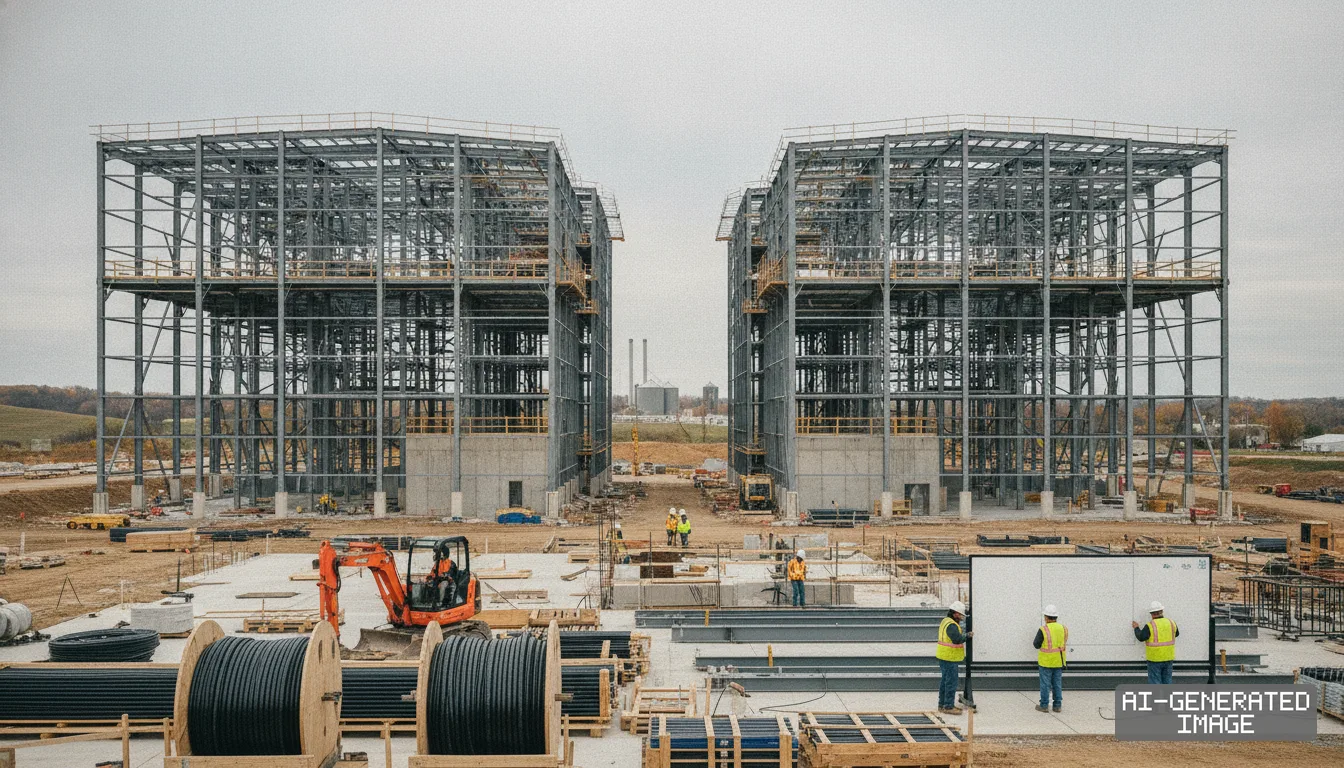
Samsung SDI advanced work on its New Carlisle battery plant on Oct. 24, 2026, proceeding as a wholly owned site after dissolving its joint venture with General Motors.
The project in St. Joseph County, Indiana, was originally planned as a $3.5 billion facility with an initial annual capacity of 27 gigawatt-hours expandable to 36 gigawatt-hours.
That capacity represents roughly a quarter of Samsung SDI's announced overseas manufacturing additions, originally designed to produce prismatic cells for electric pickup trucks and sport utility vehicles.
Samsung SDI agreed to acquire GM's entire 49.99% equity holding in the operating entity, SDI-GM Synergy Cells Holdings LLC, ending the joint ownership structure.
GM took approximately $6 billion in fourth-quarter accounting charges against electric vehicle programs, prompting the Detroit automaker to exit direct capital exposure in the Indiana complex.
The transaction leaves Samsung SDI with full ownership of the 680-acre site, marking the Korean manufacturer's first standalone cell fabrication base in North America.
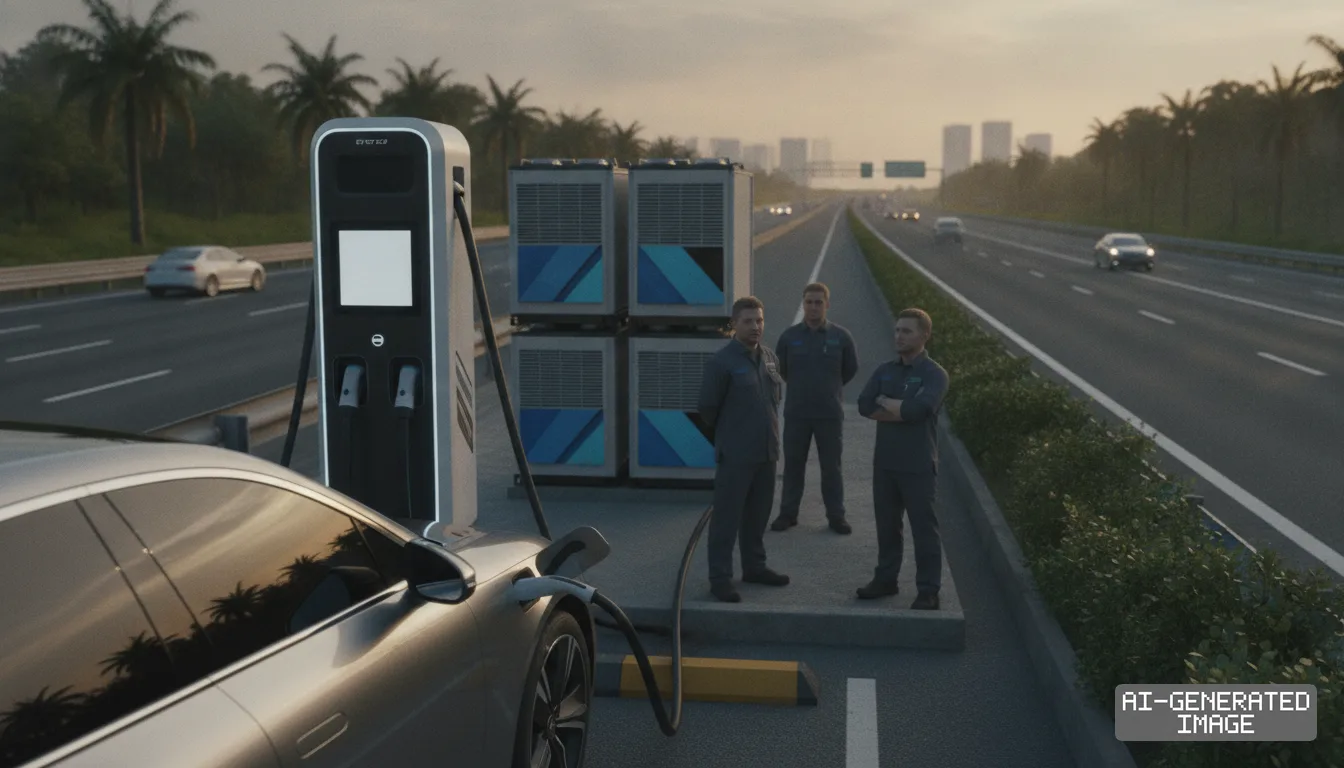
Instead of dedicating early lines solely to passenger electric vehicles, Samsung SDI plans to use the plant to produce batteries for utility-scale energy storage systems, the company said.
Energy storage systems — large rechargeable battery installations that store grid power for later dispatch — represent a rapidly expanding segment across the American utility sector.
United States grid-storage installations reached an annual record of 57.6 gigawatt-hours in 2025, supported by regional transmission upgrades and rising electricity consumption from data centers.
To finance the New Carlisle construction and broader regional spending, Samsung SDI raised 4.45 trillion won ($3.2 billion) by selling a 33% stake in Samsung Display back to the display unit.
The share transfer reduced Samsung SDI's holding in Samsung Display from 15.2% to 10.2%, generating cash reserves to proceed with factory construction without raising high-yield corporate debt.
Samsung SDI had injected $397 million into the New Carlisle venture before building work paused earlier this year to allow partners to reevaluate vehicle demand trends.
Crews finished the primary building shell on the property, but neither company installed manufacturing tools before GM completed its equity divestment, according to county records.
Tooling production lines for lithium iron phosphate chemistry used in grid storage requires different mixing, coating and winding equipment than nickel-cobalt-aluminum cells initially engineered for GM.
Lithium iron phosphate cells provide longer thermal stability and lower raw-material costs for stationary installations, while high-nickel chemistries emphasize higher driving range per unit weight.
Local officials in St. Joseph County confirmed on Oct. 24, 2026, that site activity remains under Samsung SDI's sole supervision while municipal boards await a revised project timetable.
The initial economic development agreement signed with county authorities projected 1,600 permanent manufacturing jobs on the site, situated inside the Indiana Enterprise Center industrial park.
County economic development officials noted the eventual operational headcount will depend on automation levels and line configurations selected for storage equipment.
Automotive companies across the United States have adjusted battery procurement schedules following the expiration of the federal $7,500 consumer clean vehicle credit on multiple battery-electric models.
Samsung SDI and GM preserved their technical cooperation by entering a joint development agreement to engineer next-generation prismatic cells featuring high energy density and faster charging capabilities.
Prismatic cells enclose battery chemistry in rectangular aluminum cans, offering structural rigidity and automated module assembly compared with pouch-format alternatives.
Under the joint research agreement, GM retains the option to source automotive cells from the New Carlisle plant if future passenger vehicle order volumes justify dedicated vehicle lines.
Samsung SDI also maintains a separate battery manufacturing joint venture in Kokomo, Indiana, operated alongside transatlantic vehicle manufacturer Stellantis under the corporate name StarPlus Energy.
The first StarPlus Energy facility commenced commercial battery manufacturing ahead of schedule, providing Samsung SDI with an active automotive production footprint in the Midwestern automotive corridor.
Retaining the New Carlisle footprint allows Samsung SDI to qualify for domestic manufacturing incentives created by Section 45X of the Internal Revenue Code.
Section 45X provides domestic battery manufacturers with production credits of $35 per kilowatt-hour for completed battery cells and $10 per kilowatt-hour for battery modules assembled locally.
For commercial energy developers, procuring domestically manufactured cells removes procurement exposure to higher federal tariffs enacted against imported Chinese lithium battery components.
Samsung SDI recorded revenue of 3.77 trillion won ($2.73 billion) and an operating profit of 203.8 billion won in the second quarter of 2026, ending seven consecutive loss-making quarters.
County development pacts approved by local government bodies established Dec. 31, 2027, as the substantial completion milestone for the New Carlisle manufacturing site.
The company has not published a revised capital spending total or a confirmed commercial operation date for the converted New Carlisle plant.
Samsung SDI plans to review equipment engineering specifications with machine tool vendors ahead of placing capital equipment purchase orders in early 2027.
Impact map
How this development propagates across the region and out to global buyers.
| Event | Korea | China | Japan | Global impact |
|---|---|---|---|---|
| New Carlisle battery facility restructuring | Samsung SDI takes 100% control of Indiana site and reallocates $3.2 billion from display share sale | Chinese energy storage cell makers encounter U.S.-made competition under Section 45X subsidies | Japanese equipment vendors re-engineer bids from automotive NCA tooling to utility-scale LFP lines | Battery procurement executives gain standalone U.S. cell capacity unencumbered by automaker venture restrictions |
In this story
- Companies
- Samsung SDIGeneral Motors
- Tickers
- 006400.KSGM
- Exposed
- StellantisSamsung Display
- Policy
- SubsidiesTax Credits
- Impact
- CapexSupply Chain
Track every Subsidies development → Track every Tax Credits development →
Related briefings
- Samsung SDI buys GM stake in Indiana battery venture for ESS Also on Samsung Display, Stellantis, General Motors
- Japan Display sells Mobara fab to Shinko for chip packaging Also on Samsung Display, Subsidies
- SFC clears KOSPI listing review ahead of 1 trillion won IPO Also on Samsung Display
- Posco Holdings starts direct lithium extraction test runs for Korean cathode lines Also on Stellantis, General Motors, Tax Credits
Sources
Reporting
Confidence: medium — how we grade this
The documents behind this briefing are linked above. East Asia Brief produces its English text with AI assistance under human editorial review, and does not translate or republish other outlets' articles. See our methodology and AI policy. Spotted an error? Tell us.
The Morning Brief
What changed in Korean, Chinese and Japanese industry overnight — and what it means for your supply chain. One email, weekday mornings, US time. Free.
The Morning Brief is in preparation. Leave your address and we will write to you once — when the first issue is ready. Nothing before that.