CATL Expands Energy Storage Share as Profit Growth Slows to 15%
Grid-scale storage batteries rose to a quarter of CATL shipments in the third quarter, partially offsetting electric-car pricing pressure while group margins narrowed.
Contemporary Amperex Technology Co. expanded energy storage shipments to a quarter of its quarterly battery volume on Oct. 23, 2026, offsetting electric vehicle price competition as profit growth slowed.
The Fujian-based manufacturer, known as CATL, holds 39.4% of the global automotive cell market. It also supplies 27.1% of global grid storage installations, according to industry consultancy SNE Research.
Group revenue rose 58.6% from a year earlier to 165.22 billion yuan ($23.2 billion) during the July-September period. Net profit attributable to shareholders reached 21.25 billion yuan ($3.16 billion), the company said.
The net earnings figure represented a 14.5% year-on-year increase. That marked CATL’s slowest profit expansion in nearly two years and missed the 26.03 billion yuan consensus forecast compiled by analysts by 18%.
Sequentially, third-quarter net income fell 5.77% compared to the 22.55 billion yuan booked in the second quarter. Blended gross profit margin contracted 5.11 percentage points year-on-year to 20.69%.
Total battery shipments recognized as revenue exceeded 260 gigawatt-hours in the quarter. Automotive traction battery deliveries reached approximately 195 gigawatt-hours, an increase of 48% over the prior year.
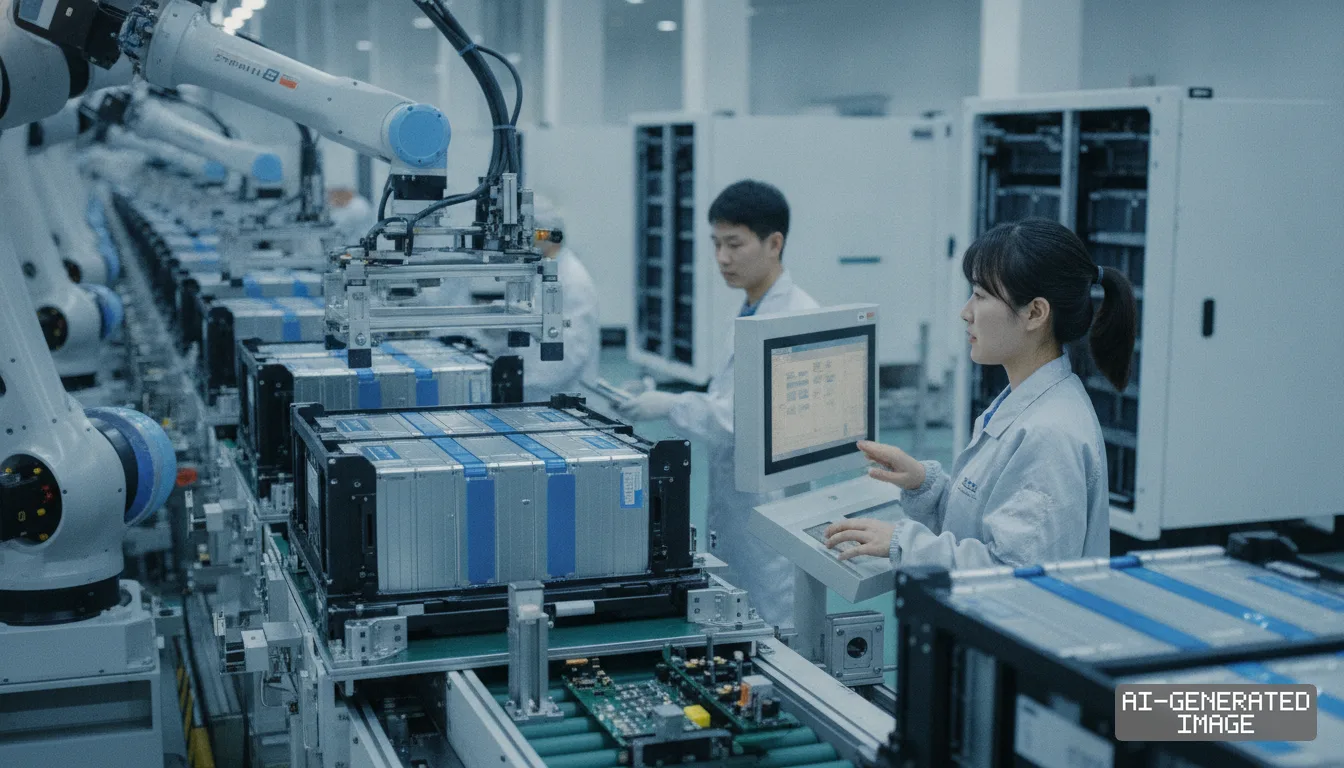
Shipments of energy storage system batteries reached roughly 65 gigawatt-hours. That volume almost doubled from the same period of 2025, taking 25% of all battery deliveries.
CATL has pushed storage sales to absorb factory capacity as Chinese electric vehicle makers discount finished cars. Domestic carmakers have simultaneously broadened procurement to second-tier cell fabricators.
The commercial shift supported top-line expansion, but it diluted manufacturing returns. Unit profitability dropped from 0.097 yuan per watt-hour in the second quarter to 0.082 yuan per watt-hour.
Grid projects carried a heavier mix of baseline cell hardware. These utility units generated lower gross spreads than specialized automotive packs, management said.
Longer revenue recognition cycles on grid projects also constrained working capital. Operating cash flow in the first nine months fell 23.6% to 61.63 billion yuan ($8.65 billion).
Total inventory rose 53.2% from the end of last year to 144.77 billion yuan ($20.3 billion). The company attributed that expansion to equipment staged for utility project delivery schedules.
Domestic tax policy created immediate friction across CATL’s operating cost base. Beijing introduced a 2% battery consumption tax on Sept. 1, 2026, targeting manufacturers directly.
Export incentives also narrowed earlier this year. Authorities lowered the value-added tax export rebate on lithium-ion cells from 9% to 6% on April 1, 2026.
These fiscal measures weighed on net returns during September. Cost of goods sold rose 61.6% across the first three quarters, outstripping the 56.2% increase in sales.
Chinese rivals hold a joint 47.5% share of the worldwide energy storage cell market. EVE Energy and Hi-Tium rank directly behind CATL in supplying overseas grid developments.
South Korean competitors maintain minimal traction in utility storage. LG Energy Solution accounted for 2.6% of shipments in the first half, while Samsung SDI held 1.4%.
South Korean cell producers rely on higher-cost nickel chemistries. That cost position has ceded global grid contracts to cheaper lithium iron phosphate designs.
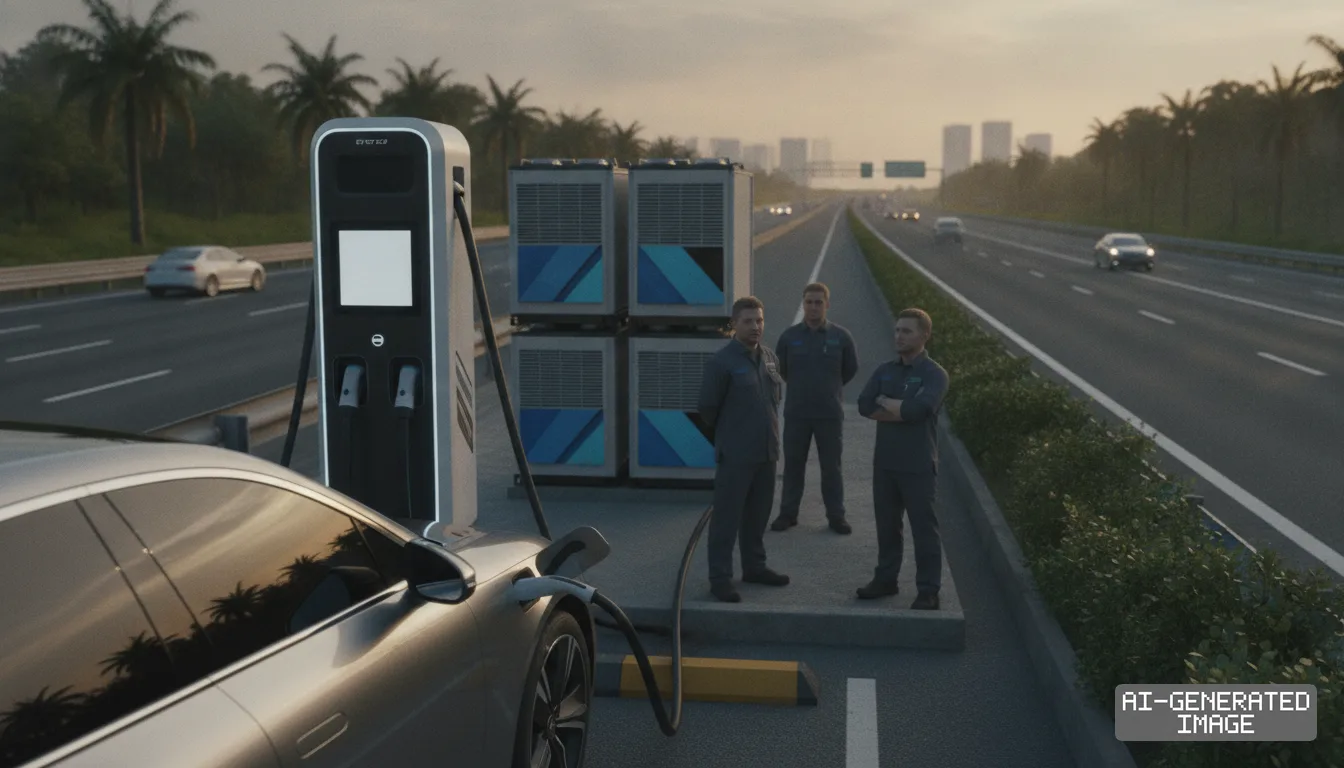
CATL has attempted to counter unit margin erosion by assembling complete alternating-current storage enclosures. Supplying power conversion gear alongside cells allows suppliers to capture field integration revenue.
The filing does not state quarterly revenue figures for the energy storage segment, as CATL only reported combined group turnover without divisional revenue splits.
Fiscal pressures will mount again over the next twelve months. The battery export rebate is scheduled to be eliminated on Jan. 1, 2027, according to published ministry schedules.
The domestic consumption tax on battery cells will double to 4% on Sept. 1, 2027. CATL management said the company is currently negotiating cost-sharing clauses with utility and automotive buyers.
Impact map
How this development propagates across the region and out to global buyers.
| Event | Korea | China | Japan | Global impact |
|---|---|---|---|---|
| CATL storage expansion | LG Energy Solution and Samsung SDI face price competition as Chinese LFP cells hold 47.5% of grid storage | CATL books 65 GWh in storage shipments to absorb excess cell capacity as domestic EV profit growth slows | Japanese equipment vendors see stable utility container build schedules offset by slower EV line expansion | Utility storage system prices decline as CATL and tier-two Chinese cell makers accelerate container exports |
In this story
- Companies
- Contemporary Amperex Technology Co.
- Tickers
- 300750.SZ
- Exposed
- LG Energy SolutionSamsung SDIEVE Energy
- Impact
- PricingCost Structure
Related briefings
- CATL lists 587Ah storage cells online to reset grid pricing at $65/kWh Also on EVE Energy, Samsung SDI, LG Energy Solution
- CATL opens direct online sales of 587Ah cells at $65 per kWh Also on EVE Energy, Samsung SDI, LG Energy Solution
- CATL holds 314Ah storage cell prices steady at 0.423 yuan Also on EVE Energy, Samsung SDI, LG Energy Solution
- CATL says 14-year-old LFP cells retain 85% capacity after tests Also on Contemporary Amperex Technology Co., Samsung SDI, LG Energy Solution
Sources
Primary documents
Reporting
Confidence: high — how we grade this
The documents behind this briefing are linked above. East Asia Brief produces its English text with AI assistance under human editorial review, and does not translate or republish other outlets' articles. See our methodology and AI policy. Spotted an error? Tell us.
The Morning Brief
What changed in Korean, Chinese and Japanese industry overnight — and what it means for your supply chain. One email, weekday mornings, US time. Free.
The Morning Brief is in preparation. Leave your address and we will write to you once — when the first issue is ready. Nothing before that.