Samsung SDI advances solid battery pilot while LG delays to 2029
South Korea's two leading cell makers diverge on sulfide chemistries, weighing pilot speed against mass manufacturing hurdles and high electrolyte procurement costs.
Samsung SDI reaffirmed on Oct. 25, 2026 that it will begin mass-producing 900-watt-hour-per-liter all-solid-state batteries next year, diverging sharply from LG Energy Solution's longer commercialization schedule.
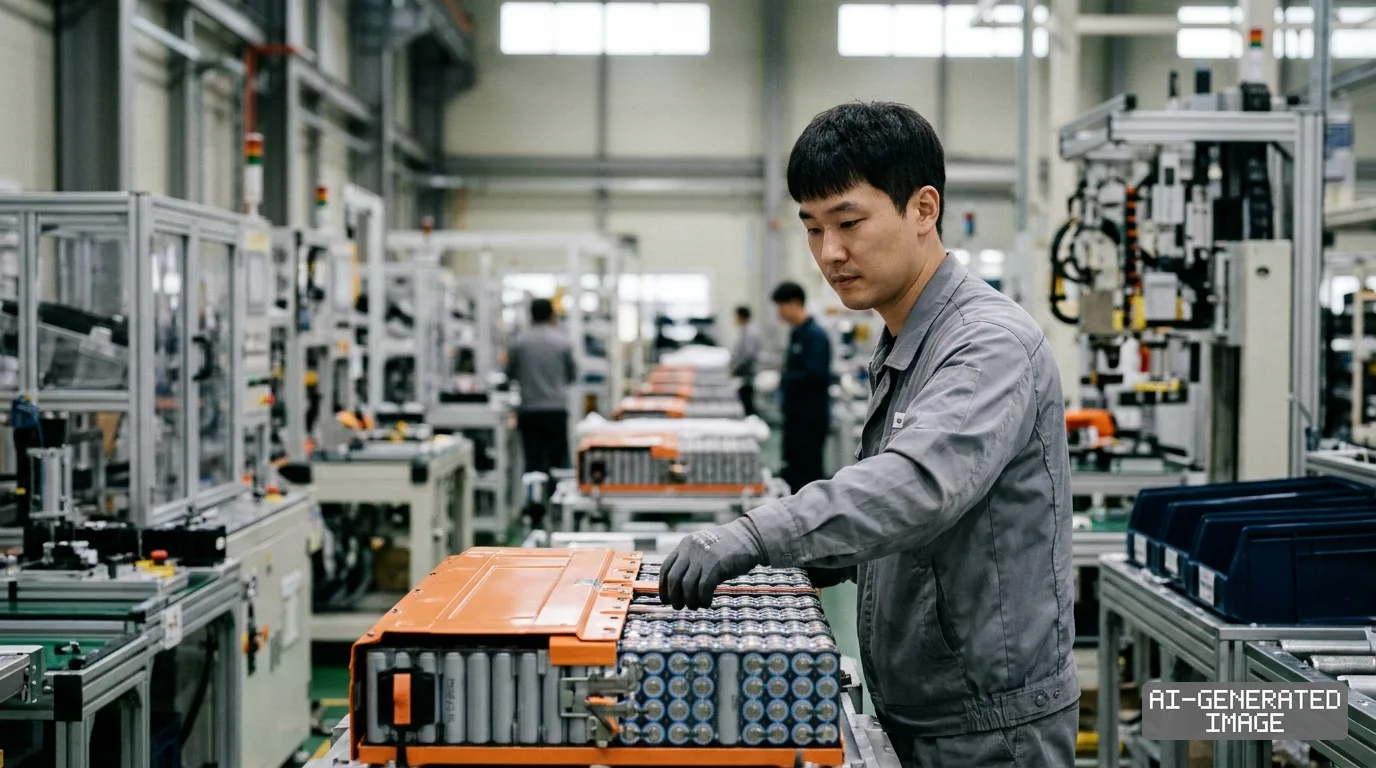
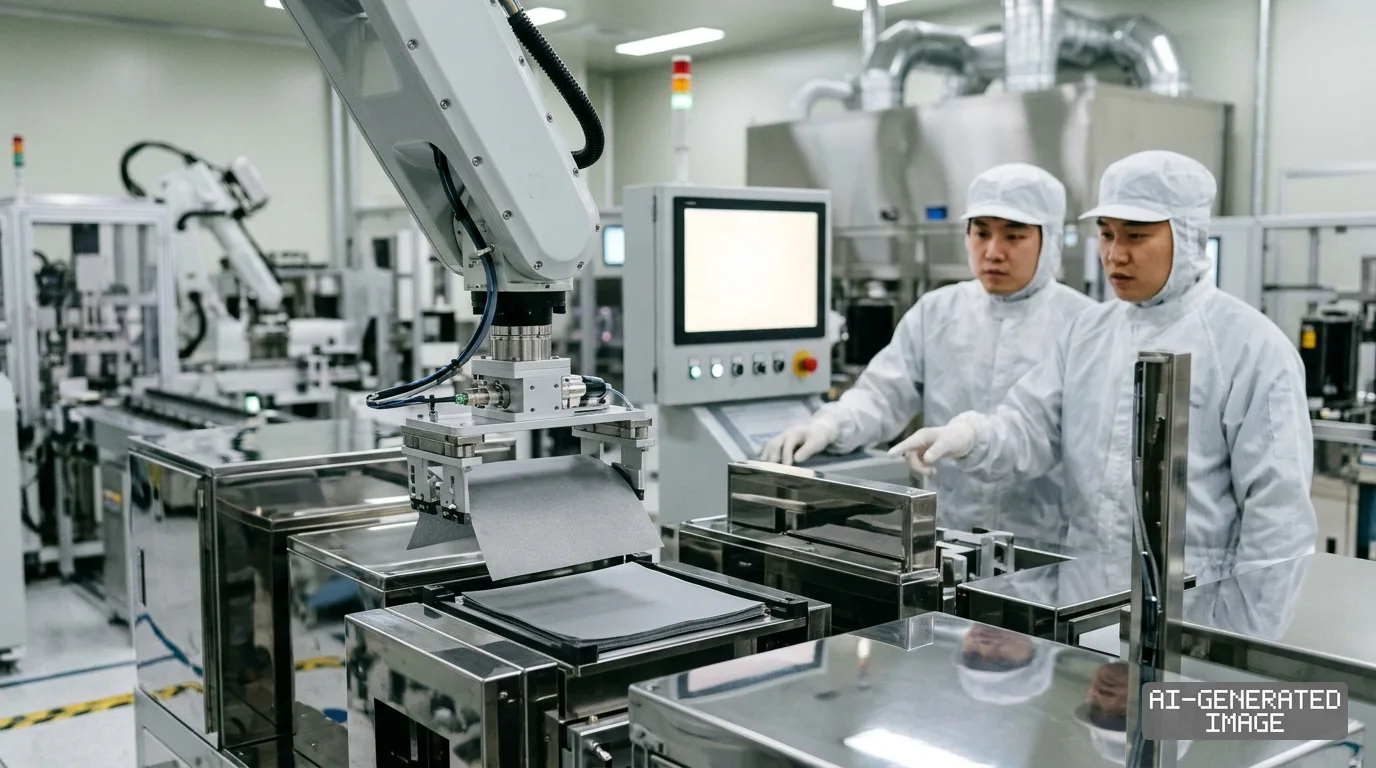
The company is running trial operations at its 6,500-square-meter pilot facility in Suwon, South Korea. The site serves as the proving ground for its proprietary sulfide-based solid electrolyte cells.
The 900-watt-hour-per-liter energy density represents a roughly 40% gain over commercial liquid-electrolyte cells, which deliver about 650 watt-hours per liter. Samsung SDI plans to begin commercial delivery in the second half of 2027.
LG Energy Solution is pursuing a slower timeline that prioritizes manufacturing scale over early deployment. The rival cell maker plans to commercialize graphite-based solid-state cells in 2029 before introducing anode-free configurations in 2030.
The split reflects contrasting bets on how quickly global automakers will pay for premium next-generation chemistry. Solid-state packs replace flammable liquid electrolytes with solid separators to prevent thermal runaway and extend driving range.
Samsung SDI is directing its initial capacity toward premium electric vehicles and industrial robotics. The company established a dedicated commercialization team in late 2023 and has shipped prototype cells to select automotive partners.
At trade exhibitions earlier this year, Samsung SDI introduced its SolidStack architecture. The platform combines an anode-free pouch and prismatic format designed to maximize cell interior volume while maintaining high cycle endurance.
By eliminating the graphite or silicon anode layer during initial fabrication, Samsung SDI cuts cell thickness. Lithium ions plate directly onto the current collector during the first charge, boosting volumetric storage efficiency.
LG Energy Solution argues that deploying sulfide electrolytes in volume before solving manufacturing costs risks uncompetitive vehicle pricing. Automakers are renegotiating battery procurement contracts to curb expenses as consumer electric vehicle adoption slows.
The Seoul-based supplier is coupling its solid-state development with dry-electrode coating processes. Dry coating removes energy-intensive drying ovens and toxic solvents, potentially reducing cell manufacturing costs by more than 15%.
Commercializing dry electrodes alongside sulfide electrolytes requires solving delicate adhesion problems. Sulfide materials degrade when exposed to ambient moisture, generating toxic hydrogen sulfide gas and requiring hermetically sealed cleanrooms that raise initial capital expenditure.
Solid-state cells also require uniform mechanical stack pressure to prevent void formation at the solid-electrolyte interface during lithium stripping. Pack designs must incorporate heavy spring fixtures or compression pads, which add dead weight to the vehicle chassis.
Samsung SDI absorbs those engineering trade-offs by aiming squarely at luxury vehicles and humanoid robotics. Those market tiers can absorb cell prices that exceed $150 per kilowatt-hour, well above current liquid lithium-ion prices.
LG Energy Solution is preserving capital expenditure across its joint-venture gigafactories, including its Lansing plant in Michigan. Diverting billions of dollars into unproven sulfide production lines could strain cash flow while standard lines ramp up.
Procurement costs for precursor materials remain another major barrier to immediate commercialization. Lithium sulfide, the core precursor for sulfide solid electrolytes, costs several times more than the liquid carbonates used in standard lithium-ion packs.
LG Energy Solution is conducting research through its Frontier Research Laboratory with the University of California San Diego and the University of Chicago. That work focuses on combining solid-state systems with sulfur-based cathodes to cut input costs.
Sulfur offers high theoretical storage capacity at a fraction of nickel and cobalt prices. However, sulfur cathodes experience rapid degradation during repeated cycling, an obstacle researchers are attempting to stabilize using specialized protective coatings.
Form factor differences further widen the operational divide between the two manufacturers. Samsung SDI builds on its expertise in prismatic metal cans, which provide rigid containment to help maintain internal stack pressure.
LG Energy Solution has historically concentrated on pouch cells. Maintaining uniform mechanical compression across large-format pouch cells during vehicle operation poses greater structural hurdles for automotive integration.
Automotive procurement officers face distinct trade-offs between the two Korean suppliers. Samsung SDI offers immediate prototype integration for low-volume flagship models, while LG Energy Solution positions its portfolio for high-volume vehicle platforms arriving after 2029.
Global competitors are tracking the Korean divergence closely. Japan's Toyota Motor is developing its own sulfide-based solid-state batteries, targeting limited pilot production in luxury vehicles before scaling up manufacturing lines later this decade.
Upstream chemical suppliers in South Korea are adjusting investment schedules to match the two timelines. Precursor refiners such as Posco Holdings are expanding pilot refining facilities for lithium sulfide, but full-scale plant commitments await verified commercial purchase orders.
Neither manufacturer published a regulatory filing or corporate statement on Oct. 25, 2026 altering the production schedules or contract volumes disclosed in previous briefings.
Samsung SDI is preparing its Suwon pilot line for pre-production customer validation runs scheduled for early 2027, while LG Energy Solution continues equipment qualification for its planned 2029 pilot deployment.
Impact map
How this development propagates across the region and out to global buyers.
| Event | Korea | China | Japan | Global impact |
|---|---|---|---|---|
| Solid-state battery commercialization split | Samsung SDI commits Suwon pilot capacity for 2027 while LG Energy Solution delays mass capex to 2029 | Domestic suppliers expand semi-solid pilot lines to match South Korean sulfide chemistry samples | Toyota Motor tracks rival pilot output ahead of planned luxury EV solid-state rollouts | Automaker procurement teams split contracts between early niche adoption and high-volume cost parity |
In this story
- Companies
- Samsung SDILG Energy Solution
- Tickers
- 006400.KS373220.KS
- Exposed
- Toyota MotorPosco Holdings
- Impact
- CapexSupply ChainPricing
Related briefings
- Posco Holdings starts direct lithium extraction test runs for Korean cathode lines Also on Posco Holdings, Samsung SDI, LG Energy Solution
- POSCO Future M signs $776M LFP cathode supply deal with SK On Also on POSCO Holdings, Samsung SDI, LG Energy Solution
- Samsung SDI explores Chinese suppliers for solid-state cells Also on POSCO Holdings, Samsung SDI
- Battery material makers expand CNT slurry lines to tame silicon anode expansion Also on POSCO Holdings, LG Energy Solution
Sources
Reporting
Confidence: medium — how we grade this
The documents behind this briefing are linked above. East Asia Brief produces its English text with AI assistance under human editorial review, and does not translate or republish other outlets' articles. See our methodology and AI policy. Spotted an error? Tell us.
The Morning Brief
What changed in Korean, Chinese and Japanese industry overnight — and what it means for your supply chain. One email, weekday mornings, US time. Free.
The Morning Brief is in preparation. Leave your address and we will write to you once — when the first issue is ready. Nothing before that.