Battery material makers expand CNT slurry lines to tame silicon anode expansion
Northeast Asian producers scale single-walled carbon nanotube dispersions and composite binders to resolve mechanical degradation during sub-10-minute fast charging.
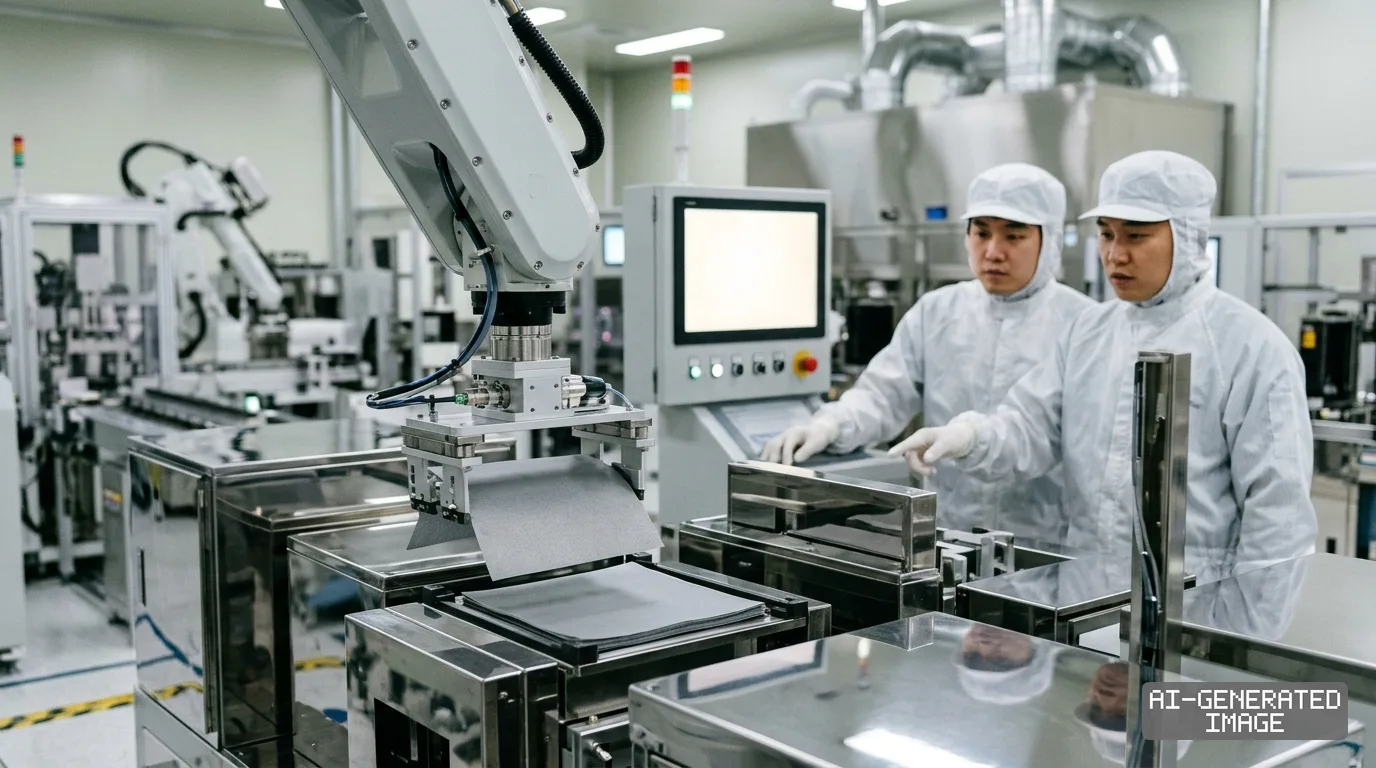
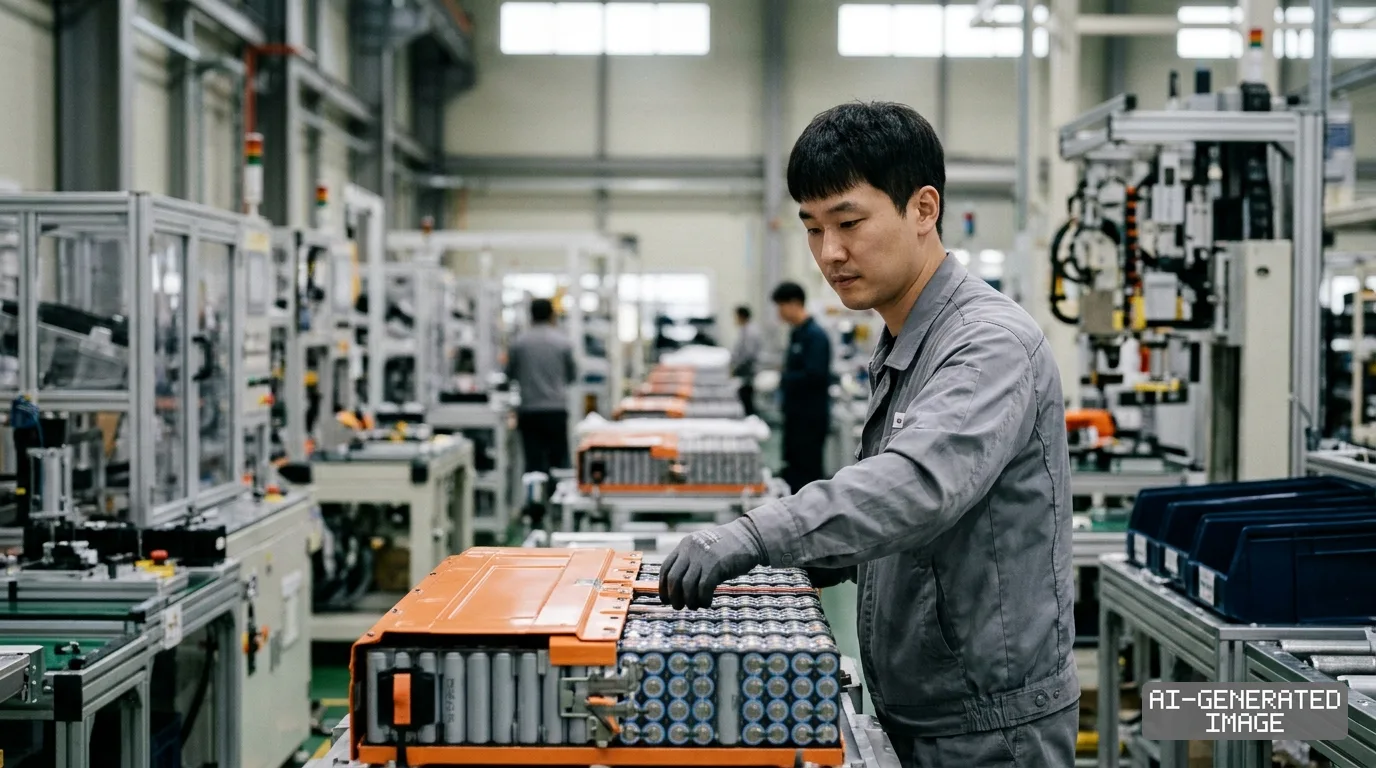
Northeast Asian battery material manufacturers expanded their dedicated conductive additive and binder production lines in May 2026, targeting the severe mechanical degradation that occurs when high-loading silicon anodes undergo ultra-fast charging cycles. The capacity additions reflect an industry-wide pivot among tier-one cell manufacturers to commercialize anode formulations capable of handling high C-rate inputs, where charging times drop below ten minutes.
The technological transition addresses a core physical bottleneck in lithium-ion battery architecture. While silicon active materials provide a theoretical gravimetric capacity of approximately 4,200 milliampere-hours per gram more than ten times that of conventional synthetic graphite silicon particles expand by up to 400 percent in volume during lithiation. Under aggressive charging rates, such as 4C to 8C profiles, this rapid expansion and subsequent contraction shatter the active particles, sever electron pathways, and cause continuous breakdown and reformation of the solid electrolyte interphase layer. To prevent rapid capacity loss and internal resistance spikes, material suppliers are integrating single-walled carbon nanotubes (SWCNT) and multi-walled carbon nanotubes (MWCNT) into specialized aqueous slurry systems and customized polymeric binders.
South Korea's Ministry of Trade, Industry and Energy established the regulatory and policy foundation for this material pivot on December 13, 2023, when it released the Industrial Supply Chain 3050 Strategy, which took legal effect on December 14, 2023. The strategy designated silicon anode materials and advanced conductive additives as core national priorities to reduce reliance on imported natural and synthetic graphite from an average of 70 percent in 2022 to under 50 percent by 2030. The policy framework accelerated capital expenditures by domestic chemical and advanced material processors seeking to qualify proprietary conductive networks with cell manufacturers in South Korea, North America, and Europe.
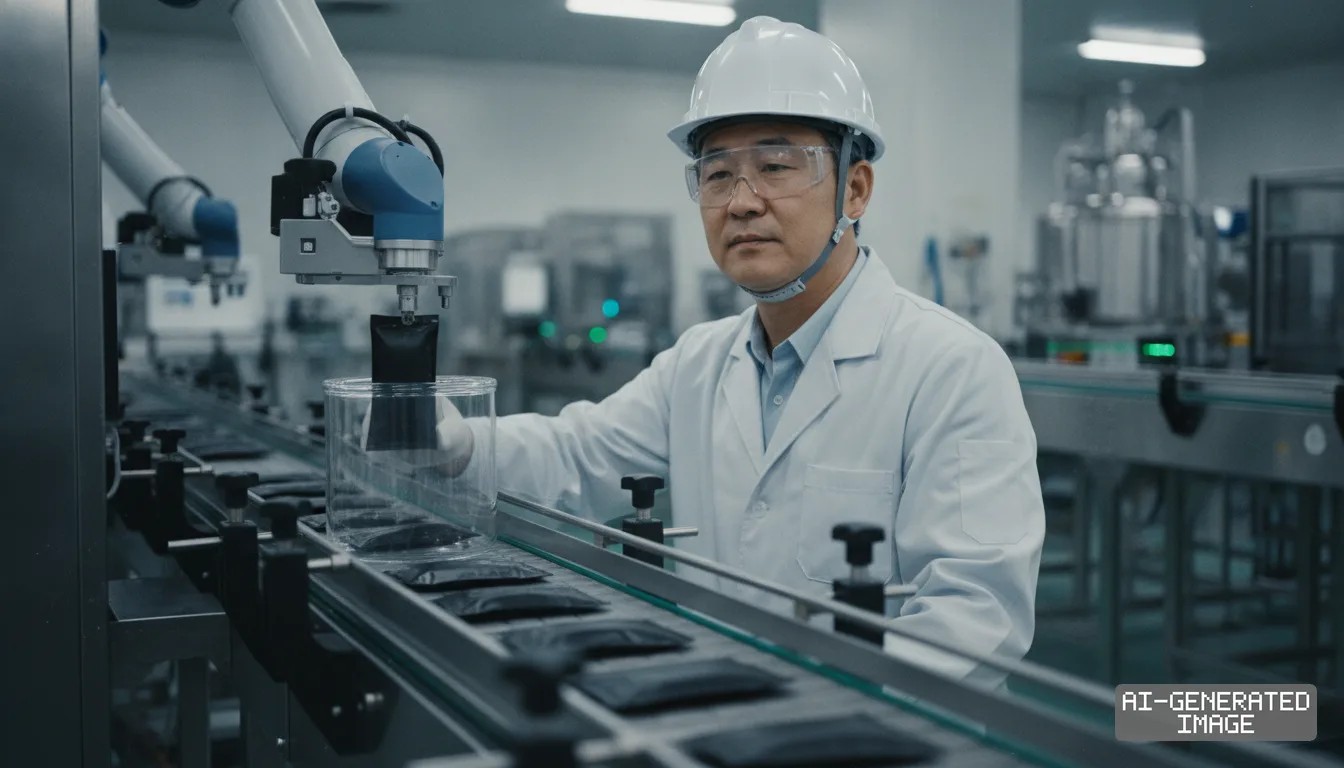
Advanced Nano Products confirmed on May 18, 2026, that it had scaled its global footprint for single-walled carbon nanotube slurries across manufacturing hubs in Sejong, South Korea, alongside dedicated production sites in China, Japan, Poland, and the United States. Single-walled carbon nanotubes exhibit high aspect ratios and mechanical tensile strength, enabling them to form a resilient electrical percolation web around silicon particles. Even as the silicon grains fracture and swell during rapid lithiation, the dispersed SWCNT network bridges the physical gaps, preserving electron conductivity across the electrode sheet while requiring less than 0.1 percent active material weight loading.
Electrolyte and specialty chemical manufacturer Enchem reported on April 15, 2026, that it had completed pilot testing at its Jecheon facility and established a 2,000-ton-per-year multi-walled CNT production facility at its site in Georgia, United States. Enchem secured intellectual property for aqueous SWCNT dispersion systems to complement its core electrolyte formulations, positioning the company to supply pre-dispersed conductive slurries directly to cell manufacturing plants in North America. By pairing specialized conductive dispersions with low-viscosity electrolyte blends, the company aims to reduce ionic diffusion resistance across high-power electrode interfaces.
Upstream material groups have simultaneously expanded their base active material infrastructure. POSCO Holdings initiated its integrated silicon anode roadmap on November 1, 2022, following its acquisition of Tera Technos in July 2022, which established POSCO Silicon Solution. The initiative integrated low-expansion silicon-carbon composite development with the group's synthetic graphite operations, creating an initial 8,000-ton production framework designed to feed pouch and cylindrical cell architectures. Hansol Chemical has likewise commercialized a specialized portfolio comprising high-capacity silicon anodes, specialized elastomeric anode binders, and CNT dispersants engineered to absorb volumetric strain during dynamic cycling.
The integration of advanced CNT networks and tailored binders alters battery production economics and material bills. Conventional carbon black conductive agents require higher mass ratios, often between 1.5 and 3.0 percent of total cathode or anode weight, which reduces active material volume and increases slurry viscosity during electrode coating. Replacing carbon black with highly dispersed single-walled and multi-walled carbon nanotube solutions frees up electrode volume for active lithium storage while lowering internal cell resistance, a prerequisite for mitigating thermal buildup during high-power fast charging.
For automotive original equipment manufacturers and procurement executives, the supply chain for advanced conductive additives presents operational trade-offs between dispersion stability and processing yield. Raw carbon nanotubes tend to aggregate due to van der Waals forces, requiring proprietary surfactant chemistries and high-shear milling equipment to produce stable slurries that do not settle during transport or clog coating nozzles. While laboratory evaluations demonstrate that composite binder-CNT networks can sustain 8C discharge and charge stress profiles in prototype single-layer cells, commercial supply contracts from major East Asian material suppliers remain focused on incremental 5 percent to 15 percent silicon blend ratios for production vehicles.
Material producers in South Korea, Japan, and China are continuing validation trials for multi-layer pouch, prismatic, and 46-series cylindrical cells. Procurement teams are tracking the qualification schedules of aqueous SWCNT slurries and high-elasticity binders as manufacturers install dedicated slurry mixing assets adjacent to gigafactories in Europe and North America through the second half of 2026.
Impact map
How this development propagates across the region and out to global buyers.
| Event | Korea | China | Japan | Global impact |
|---|---|---|---|---|
| Silicon anode & SWCNT scale-up | material makers expand slurry capacity | graphite export controls bypassed | precision dispersion competition | EV fast charging enabled |
In this story
- Companies
- Advanced Nano ProductsEnchemPOSCO HoldingsHansol Chemical
- Tickers
- 121600.KQ348370.KQ005490.KS014680.KS
- Exposed
- LG Energy Solution
- Policy
- Industrial Supply Chain 3050 Strategy
- Impact
- Supply ChainCapexCost Structure
Related briefings
- High-purity hydrogen peroxide supply chains face regional bottlenecks across East Asian fabs [90 characters] Also on Hansol Chemical, Cost Structure
- Posco Holdings starts direct lithium extraction test runs for Korean cathode lines Also on Posco Holdings, LG Energy Solution, Cost Structure
- POSCO Future M signs $776M LFP cathode supply deal with SK On Also on POSCO Holdings, LG Energy Solution, Cost Structure
- Samsung SDI advances solid battery pilot while LG delays to 2029 Also on Posco Holdings, LG Energy Solution
Sources
Primary documents
Reporting
Confidence: high — how we grade this
The documents behind this briefing are linked above. East Asia Brief produces its English text with AI assistance under human editorial review, and does not translate or republish other outlets' articles. See our methodology and AI policy. Spotted an error? Tell us.
The Morning Brief
What changed in Korean, Chinese and Japanese industry overnight — and what it means for your supply chain. One email, weekday mornings, US time. Free.
The Morning Brief is in preparation. Leave your address and we will write to you once — when the first issue is ready. Nothing before that.