LG Energy Solution Vertech debuts analytics suite for grid batteries
The AEROS platform cuts maintenance downtime by up to 90% and delays utility-scale battery cell replacement schedules by approximately 1.5 years.
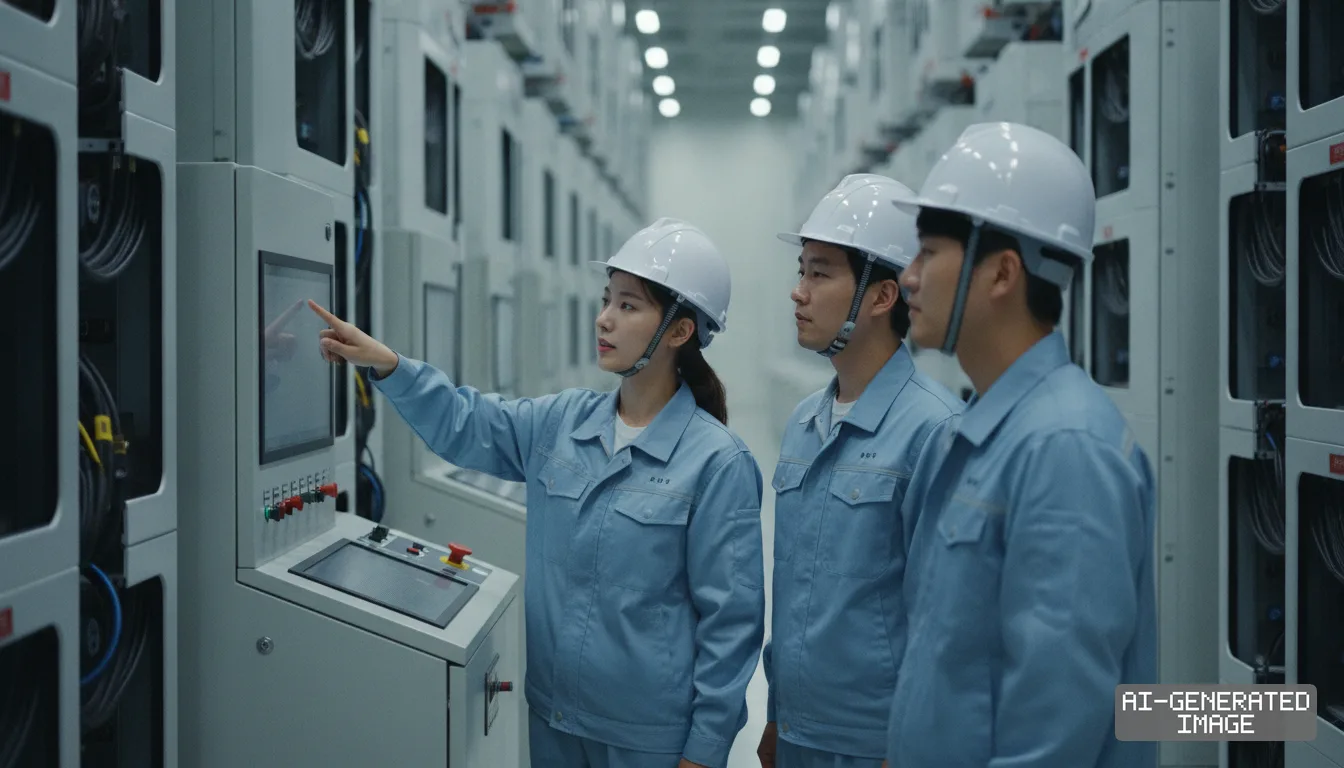
LG Energy Solution Vertech launched its AEROS Intelligence analytics platform on Nov. 12, deploying predictive asset-health software to cut operational downtime across utility-scale battery energy storage systems.
The new software cuts downtime for specific corrective maintenance tasks by up to 90%, the subsidiary said. It also lowers battery state-of-charge calculation errors by 30% to 50%.
Site-specific degradation tracking can delay battery augmentation—the costly addition of extra cells over time—by approximately 1.5 years. Vertech said this postponement preserves millions of dollars in capital value per installation.
The release builds on 17 years of operational storage records accumulated by the company. It serves as an analytics layer directly above the existing AEROS Onsite control system and AEROS Cloud monitoring architecture.
The platform integrates four operational modules into a single decision-support interface. These comprise BESS Health for early cell degradation tracking, Predictive Maintenance for outage prevention, Energy Optimizer and Warranty Hub.
The launch marks a deliberate shift away from standalone cell manufacturing toward integrated system software. South Korean battery makers face tightening margins on hardware as Chinese competitors expand lower-cost chemistry offerings.
LG Energy Solution established the Vertech unit in February 2022 after acquiring NEC Energy Solutions from Japan's NEC Corporation. That purchase transferred the proprietary AEROS control architecture to the South Korean battery group.
The acquired business booked $207 million in annual revenue in 2020 before the transaction closed. It gave the parent company an established base of engineering teams and utility installations across the United States.
Vertech uses a single-contract structure that packages cell hardware, power conversion systems, long-term warranties and proprietary software together. This integrated approach removes procurement fragmentation for renewable energy developers and utility asset owners.
The BESS Health tool analyzes electrochemical signals to identify underperforming racks before thermal runaway risks develop. Field operators can isolate weak modules without taking an entire grid-scale block offline during peak hours.
The Energy Optimizer module balances short-term wholesale power arbitrage against long-term cell wear. It recalculates charge schedules when power prices spike, preventing excessive degradation from aggressive grid dispatch cycles.
The Warranty Hub module cross-checks live operating temperatures and cycle counts against contracted manufacturer performance limits. The automated audit ensures system operators do not inadvertently void multi-year capacity guarantees during market dispatches.
Vertech secured 10 GWh of grid-scale energy storage projects across the United States within two years of its inception. The subsidiary deploys the AEROS control suite across its entire contracted deployment pipeline.
Excelsior Energy Capital signed an agreement in December 2024 to buy 7.5 GWh of integrated storage projects from Vertech. That contract requires domestic content compliance and bundles software integration through lifecycle operations.
Parent company LG Energy Solution plans to feed domestic cells into these utility projects from its Arizona manufacturing complex. Combining localized cell production with domestic system integration satisfies requirements under the U.S. Inflation Reduction Act.
Standard lithium iron phosphate container pricing fell below $100 per kilowatt-hour across wholesale utility markets this year. Software integration allows manufacturers to capture service revenues rather than absorbing pure hardware price erosion.
Utility storage operators face rising insurance premiums and stricter interconnection standards across regional transmission grids. Premature capacity fading often forces project developers to purchase supplementary battery racks sooner than planned financial models anticipated.
Cutting state-of-charge estimation errors by up to half allows operators to utilize more stored energy safely. Tighter calibration prevents batteries from tripping out unexpectedly when operating near empty or full thresholds.
Predictive maintenance algorithms isolate faulty cooling pumps and failing contactors days before hardware trips occur. Eliminating sudden outages protects project owners from severe grid penalties during mandatory peak capacity calls.
South Korean battery producers are repositioning their stationary storage divisions as grid software integrators. The strategy replicates industrial automation business models, where recurring software licenses yield higher operating margins than hardware fabrication.
Hardware sales deliver one-time revenue tied directly to commodity swings in lithium and nickel raw materials. Subscription analytics and long-term service agreements provide recurring cash flows over a 20-year project lifespan.
The company has not published individual software license pricing, and regulatory filings with the Korea Exchange did not specify projected revenue contributions from the platform.
Deliveries under Vertech's 7.5 GWh supply agreement with Excelsior Energy Capital remain scheduled to start in April 2026. Commercial fleet deployments of the AEROS Intelligence layer will accompany those project commissioning phases.
Impact map
How this development propagates across the region and out to global buyers.
| Event | Korea | China | Japan | Global impact |
|---|---|---|---|---|
| AEROS Intelligence launch | LG Energy Solution shifts from pure cell supply to higher-margin SI software | LFP cell exporters face integrated software barriers in US utility procurement | NEC Corporation legacy AEROS platform fully absorbed under Korean ownership | Grid storage operators cut downtime up to 90% and defer cell augmentation by 1.5 years |
In this story
- Companies
- LG Energy SolutionLG Energy Solution Vertech
- Tickers
- 373220.KS
- Exposed
- Excelsior Energy Capital
- Impact
- Cost StructureSupply ChainPricing
Related briefings
- LG Energy Solution teams with B2U to repurpose used EV packs for US grid Also on LG Energy Solution Vertech, LG Energy Solution, Cost Structure
- EU and UK enforce 2027 EV origin rules, risking 10% battery tariffs Also on LG Energy Solution, Pricing, Cost Structure
- Canada lobbies US on Section 232 tariffs, targeting auto exemptions Also on LG Energy Solution, Pricing, Cost Structure
- Lexus ES EV enters Korea with CATL pack priced below hybrid model Also on LG Energy Solution, Pricing, Cost Structure
Sources
Reporting
Confidence: medium — how we grade this
The documents behind this briefing are linked above. East Asia Brief produces its English text with AI assistance under human editorial review, and does not translate or republish other outlets' articles. See our methodology and AI policy. Spotted an error? Tell us.
The Morning Brief
What changed in Korean, Chinese and Japanese industry overnight — and what it means for your supply chain. One email, weekday mornings, US time. Free.
The Morning Brief is in preparation. Leave your address and we will write to you once — when the first issue is ready. Nothing before that.