LG Energy Solution converts EV lines to accelerate ESS LFP pouch cell output
The South Korean battery maker is ramping dedicated stationary storage capacity in China and the United States to secure grid-scale off-take contracts.
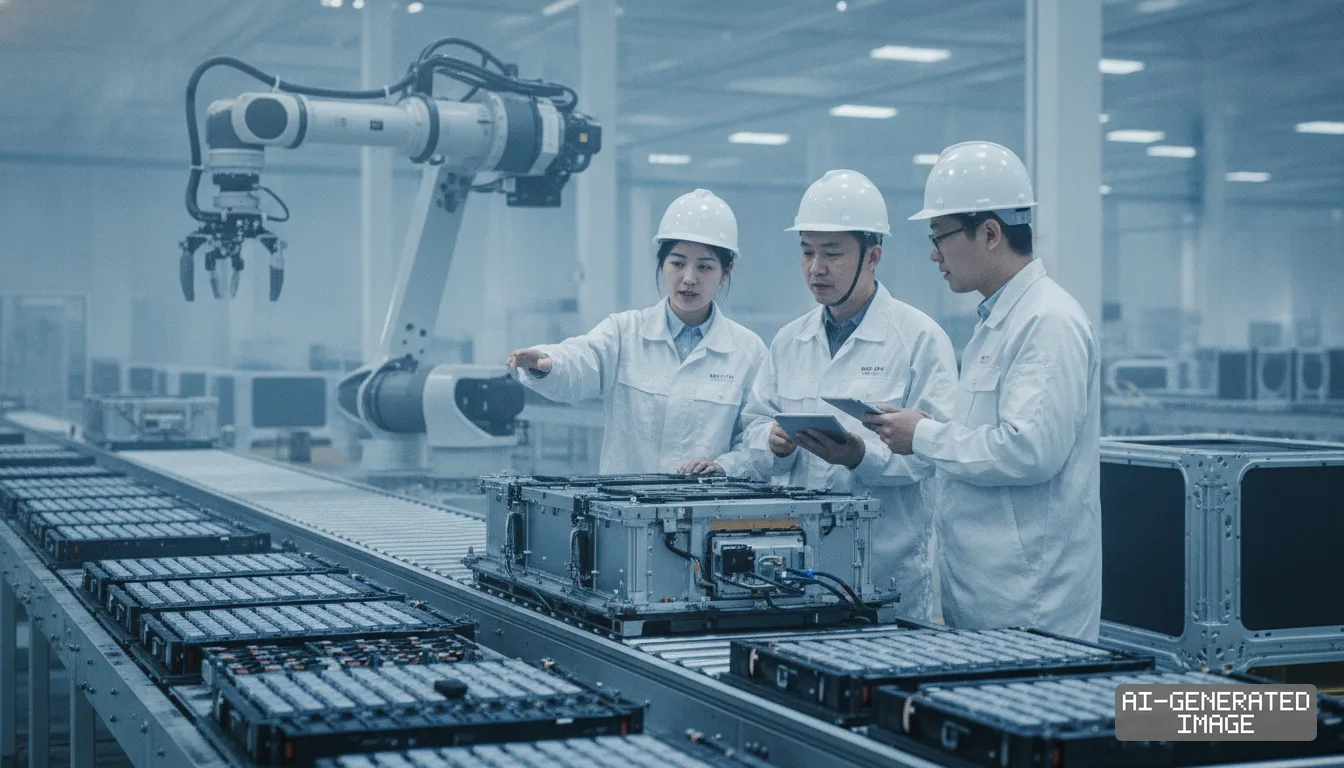
LG Energy Solution has begun retooling existing electric vehicle pouch cell manufacturing lines and accelerating dedicated production schedules for grid-scale lithium iron phosphate batteries. The capital reallocation shifts manufacturing capacity across manufacturing plants in South Korea, China, and North America toward utility-scale energy storage systems, addressing rapid procurement demand from renewable power developers and regional transmission operators.
The operational pivot reallocates production assets originally configured for high-nickel nickel-cobalt-manganese automotive pouch cells. With growth in passenger electric vehicle sales moderating across Western markets, LG Energy Solution has redirected factory floor space to stationary energy storage products, where lithium iron phosphate chemistries have captured the dominant market share due to thermal stability, cost structures, and operational cycle life.
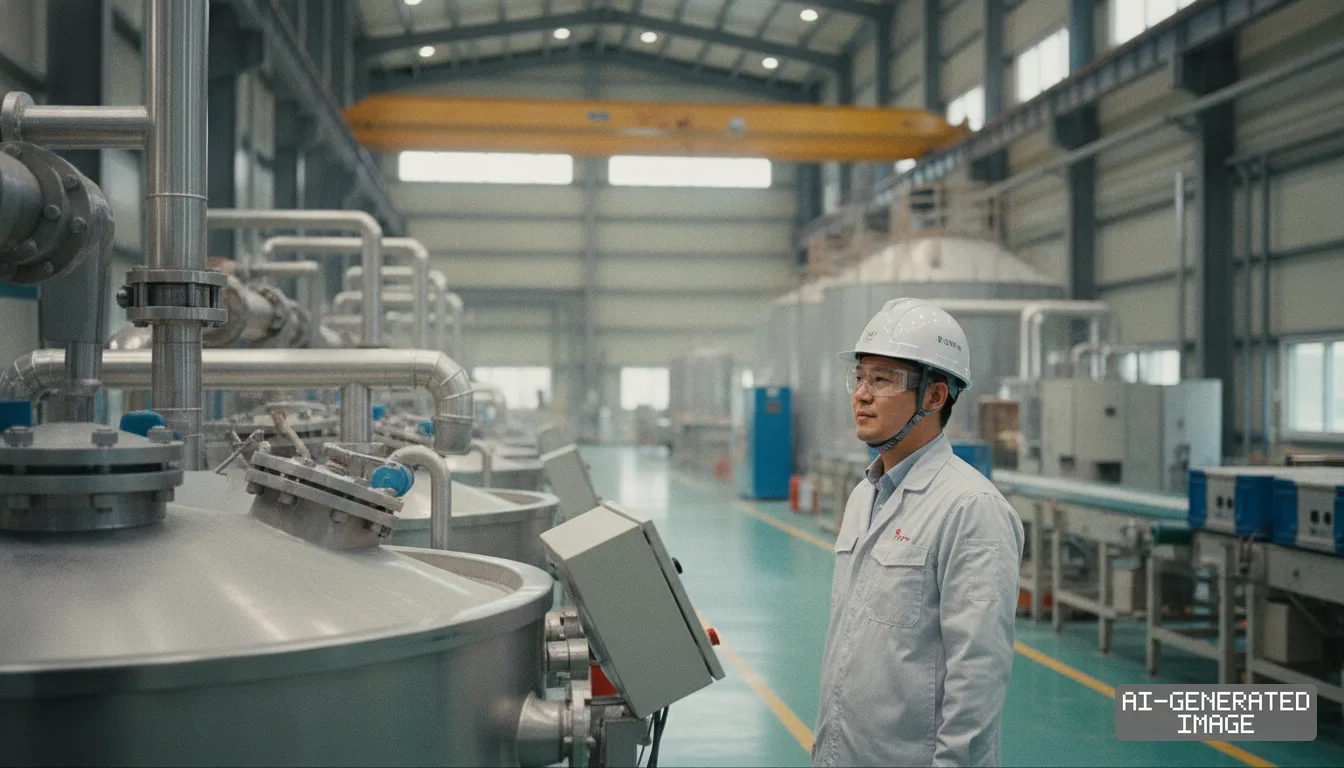
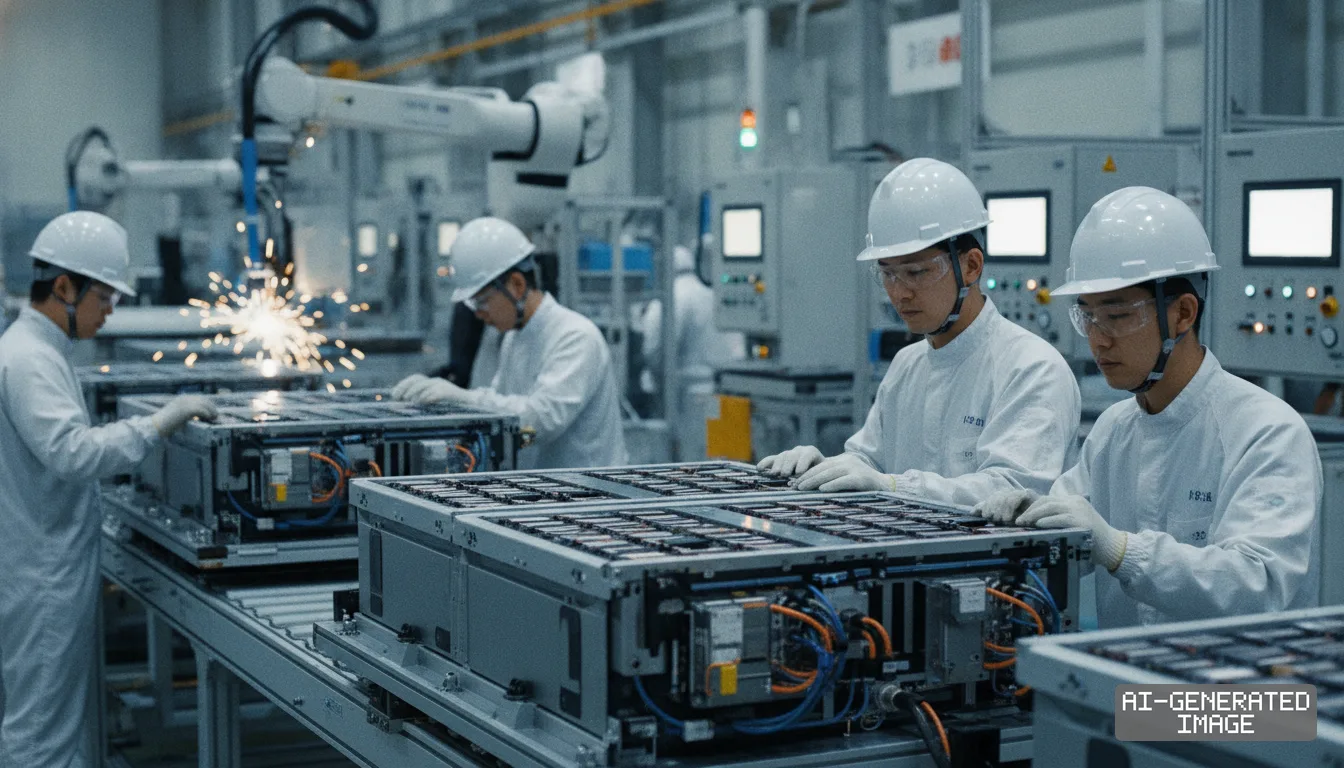
The company's Nanjing manufacturing complex in Jiangsu Province, China, serves as the operational focal point for the initial phase of converted line output. LG Energy Solution completed the structural line retrofits at Nanjing, installing modified pouch-stacking machinery, altered slitters, and updated electrolyte filling systems compatible with iron phosphate slurry viscosity and pouch dimensional requirements. The Nanjing site produces high-capacity LFP pouch cells engineered specifically for containerized utility storage enclosures, allowing the company to supply commercial volumes to grid project developers in international markets throughout 2026.
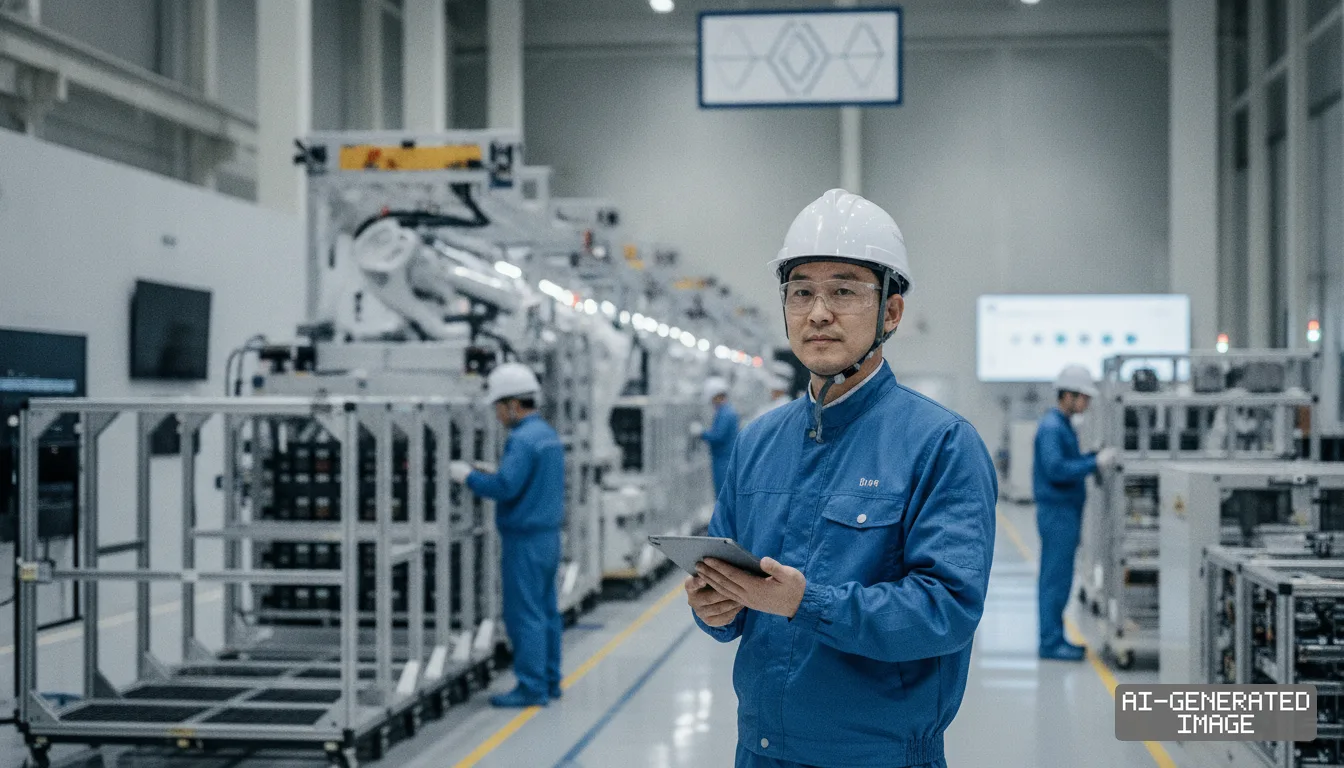
In North America, LG Energy Solution is executing a parallel deployment strategy centered on its stand-alone energy storage manufacturing facility in Queen Creek, Arizona. The Arizona plant, representing a capital commitment of 4.2 trillion won ($3.1 billion), is engineered with an annual production capacity of 17 gigawatt-hours dedicated exclusively to stationary energy storage lithium iron phosphate pouch cells. Structural construction and cleanroom installation at the Queen Creek site are proceeding toward equipment move-in, with commercial mass production scheduled to commence in late 2026.
The manufacturing transition requires structural changes to the company's pouch cell architecture. Unlike automotive pouch designs optimized for volumetric packaging within vehicle chassis, stationary storage pouch cells prioritize degradation resistance under sustained daily cycling. LG Energy Solution's stationary LFP pouch cells incorporate optimized cathode particle distributions, advanced electrolyte additives to suppress iron dissolution, and reinforced pouch foil packaging that withstands prolonged internal gas generation. The resulting cell design achieves an operational durability rating exceeding 7,000 full charge-discharge cycles at standard ambient operating temperatures while supporting continuous one-hour and two-hour discharge rates.
Cell-to-pack integration constitutes a second technical layer of the energy storage ramp. LG Energy Solution has integrated its proprietary high-capacity LFP pouch cells directly into containerized system enclosures without intermediary sub-module housings. This architecture, deployed in the company's JF1 and JF2 modular storage enclosures, integrates liquid-cooling cold plates directly beneath cell arrays to manage thermal gradients across the pack. The direct cell-to-pack design increases volumetric energy density per container footprint while incorporating isolated thermal propagation barriers between pouch cells to prevent thermal runaway propagation under cell failure conditions.
For utility grid operators and renewable power developers, the supply chain reconfiguration provides an alternative to Chinese cell manufacturers that currently control more than 85 percent of global stationary storage battery output. Project developers in the United States face elevated commercial pressure from revised Section 301 tariffs administered by the Office of the United States Trade Representative, which increase import duties on Chinese-manufactured non-automotive lithium-ion cells to 25 percent. The supply availability of non-Chinese manufactured LFP pouch cells allows project developers to satisfy domestic interconnection timelines without incurring prohibitive tariff penalties.
Industrial battery equity analysts note that the production reallocation alters the revenue composition of LG Energy Solution's energy storage division. Stationary storage accounted for less than 10 percent of the company's total battery sales during previous fiscal cycles, but the deployment of dedicated LFP lines is calculated to increase the segment's share of overall capacity utilization. The conversion of depreciated EV manufacturing lines in Nanjing shortens capital payback schedules compared to greenfield site construction, lowering unit capital expenditure per kilowatt-hour of installed manufacturing capacity.
Off-take qualification schedules are moving in tandem with the line conversions. LG Energy Solution has submitted validation batches of its utility LFP pouch cells and modular pack systems to independent certification bodies for testing under UL 1973 and UL 9540A safety standards. System-level large-scale fire testing protocols were executed to certify the thermal runaway mitigation characteristics of the liquid-cooled container architecture, a prerequisite for grid connection permits issued by utility regulators in North America and Western Europe.
Supply agreements for grid integration projects are tracking the manufacturing timetable. LG Energy Solution holds multi-gigawatt-hour master supply frameworks with renewable energy integrators and independent power producers in the United States, including supply commitments for solar-plus-storage installations located in the ERCOT, CAISO, and PJM transmission territories. Deliveries from the converted Nanjing lines are fulfilling initial delivery milestones under these utility contracts, while shipments for long-term project phases are scheduled for transition to the Arizona facility once the Queen Creek manufacturing lines clear operational qualification.
Upstream material procurement has been reconfigured to support the expanded lithium iron phosphate throughput. LG Energy Solution has established synthetic graphite and iron phosphate cathode precursor procurement channels that diversify raw material inputs away from restricted supply chains. The company's raw material contracts for the Arizona production line specify battery-grade lithium carbonate and processed iron phosphate precursors that meet local manufacturing value-retention thresholds under the Advanced Manufacturing Production Credit provisions of Section 45X of the Internal Revenue Code.
Factory acceptance testing and equipment calibration for the primary production lines at the Arizona facility are scheduled to begin during the fourth quarter of 2026. Concurrently, LG Energy Solution's domestic research and validation facility at the Ochang plant in North Chungcheong Province continues pilot-line trial runs on next-generation high-voltage lithium manganese iron phosphate (LMFP) pouch variants intended for subsequent commercial deployment.
Impact map
How this development propagates across the region and out to global buyers.
| Event | Korea | China | Japan | Global impact |
|---|---|---|---|---|
| LGES ESS LFP ramp | line conversions | plant output pivot | component sourcing | grid storage supply |
In this story
- Companies
- LG Energy Solution
- Tickers
- 373220.KS
- Policy
- TariffsSubsidiesEconomic Security
- Impact
- Supply ChainCapexOrder BookCompliance
Track every Tariffs development → Track every Subsidies development → Track every Economic Security development →
Related briefings
- LG Energy Solution wins NVIDIA DSX Ready status for AI power backup Also on LG Energy Solution, Tariffs, Compliance
- LG Energy Solution details $4.3B Tesla battery supply for US energy storage Also on LG Energy Solution, Tariffs, Compliance
- Hyundai accelerates Ulsan EV conversion to balance export lines with global demand Also on LG Energy Solution, Tariffs, Order Book
- CATL develops tall pickup batteries to bypass US tariffs Also on LG Energy Solution, Tariffs, Compliance
Sources
This briefing carries no sources block. It was written from our desks’ working knowledge of the sector rather than from documents retrieved for this piece. Read it as orientation and check any figure you intend to act on — how we source briefings.
This briefing carries no linked sources: it was written from our desks' working knowledge of the sector rather than from documents retrieved for this piece. East Asia Brief publishes no citation it cannot link. Our English text is produced with AI assistance under human editorial review. See our methodology and AI policy. Spotted an error? Tell us.
The Morning Brief
What changed in Korean, Chinese and Japanese industry overnight — and what it means for your supply chain. One email, weekday mornings, US time. Free.
The Morning Brief is in preparation. Leave your address and we will write to you once — when the first issue is ready. Nothing before that.