Korean battery trio splits on profit as grid storage surges
Federal manufacturing credits and stationary utility orders widened the gap between diversified cell producers and passenger-EV suppliers.
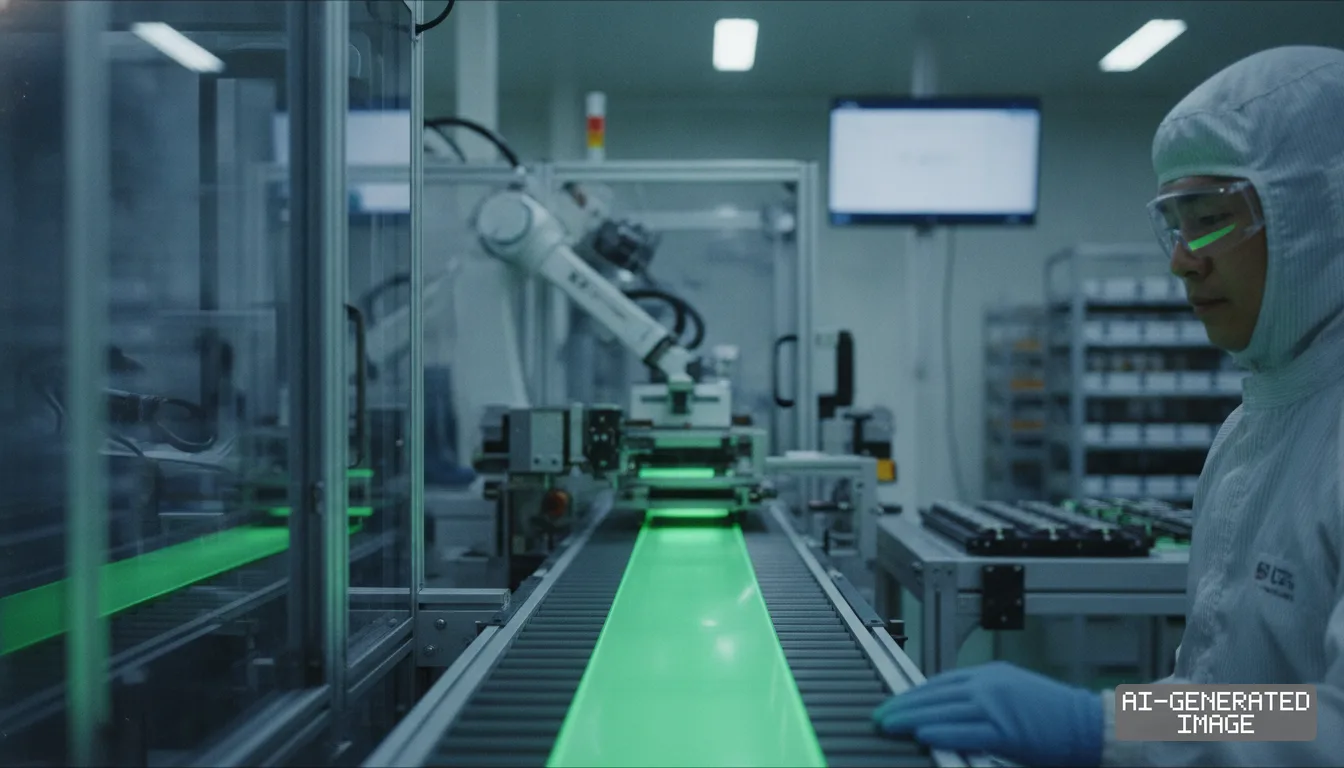
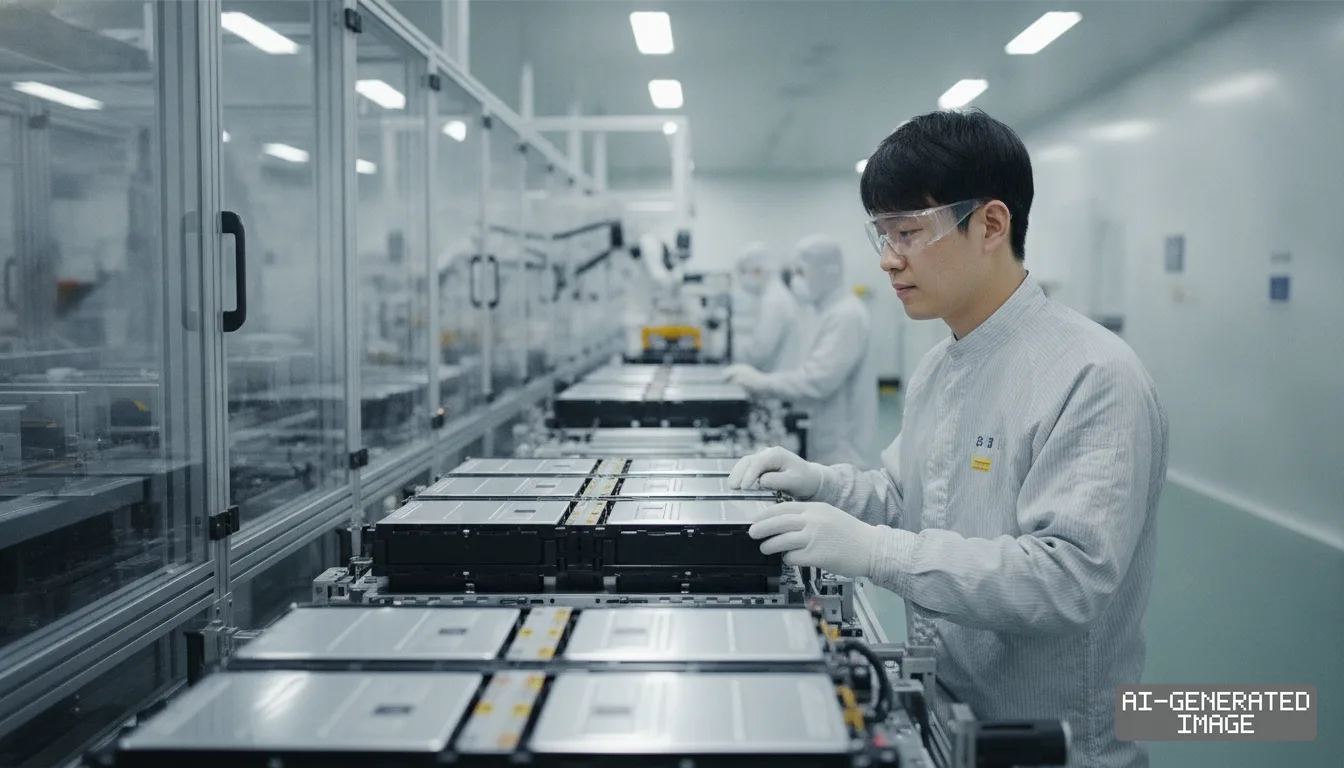
South Korea's three battery makers split sharply on third-quarter operating profit on Oct. 18, 2026, as grid storage shipments and United States tax credits shielded diversified producers while electric-vehicle lines lagged.
LG Energy Solution booked 416.9 billion won ($310.3 million) in Section 45X production credits under the U.S. Inflation Reduction Act. That subsidy accounted for 55.1% of its 756.0 billion won preliminary third-quarter operating profit.
Consolidated revenue reached 9.6434 trillion won ($7.18 billion) in the quarter ended Sept. 30, up 59.0% from a year earlier. Operating profit rose 25.7% year over year, the company said in an Oct. 8 regulatory filing.
Excluding the federal production credit, LG Energy Solution posted an underlying operating profit of 339.1 billion won. That performance gave the cell manufacturer an operating margin of 3.7%, reversing an ex-subsidy operating loss recorded in the second quarter.
Grid-scale battery energy storage systems drove the earnings recovery in North America. Meritz Securities estimated the manufacturer generated 3.1102 trillion won from storage sales during the third quarter, compared to between 1 trillion and 2 trillion won quarterly in the first half.
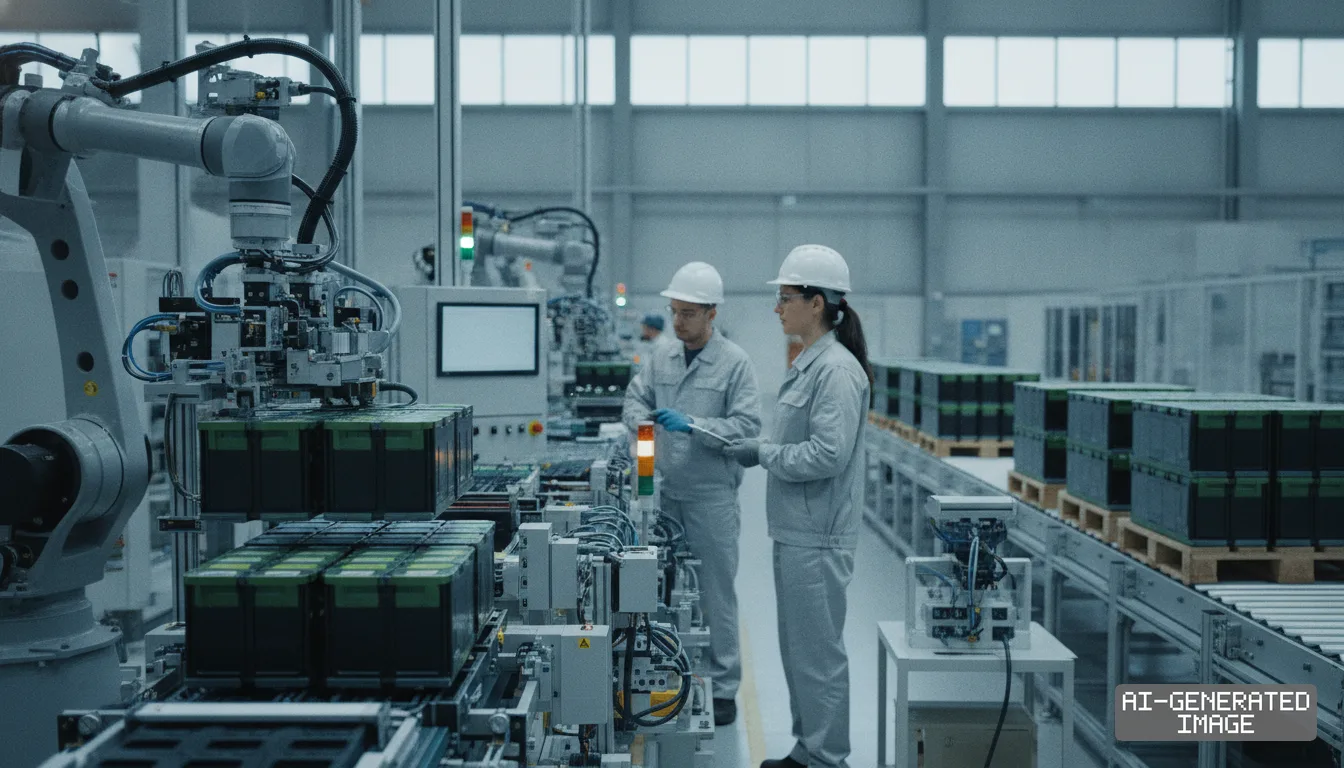
Deliveries of passenger electric-vehicle cells remained subdued across major Western automakers. To protect utilization rates, battery producers converted idle vehicle assembly lines into storage manufacturing cells for utility customers.
Samsung SDI maintained profitable operations during the third quarter by expanding sales of high-output cells and backup units, according to brokerage consensus data published Oct. 18. The company logged operating profit of 203.8 billion won in the second quarter.
A survey of 10 domestic securities firms projected Samsung SDI would report third-quarter revenue of 4.0135 trillion won and operating profit of 237 billion won. That estimate reverses an operating deficit of 591.3 billion won logged in the third quarter of 2025.
The forecast reflects shipments of battery backup units and cylindrical cells supplied to artificial intelligence data centers. Samsung SDI also benefited from customer compensation fees paid by automakers that failed to take minimum contracted battery volumes.
Samsung SDI plans to bring a dedicated North American storage assembly line online during the fourth quarter. The company announced earlier this year that it will begin manufacturing lithium iron phosphate cells in the United States to claim production credits and qualify buyers for domestic-content bonuses.
In contrast, SK On fell back into an operating deficit as consumer electric vehicle sales slowed in North America, according to brokerage analyses. Meritz Securities projected the unlisted battery producer would post a third-quarter operating loss of 179.4 billion won.
The brokerage estimated SK On generated third-quarter revenue of 1.5984 trillion won. That result marks a downturn from the second quarter, when the producer reported a temporary operating surplus on tariff refunds and automaker contract settlements.
SK On booked roughly 1.1 trillion won in one-off tariff refunds and customer compensation during the second quarter. Those non-operating credits expired by July, exposing the producer to low production run-rates at its passenger car plants.
The manufacturer has sought to enter the North American stationary storage sector to diversify beyond automotive packs. SK On signed a five-year contract in August to supply 9 gigawatt-hours of storage cells to American developer NeoVolta.
Those storage deliveries will not begin until 2027 from its factory in the state of Georgia. As a result, SK On derived minimal grid revenue during the third quarter to counter automotive weakness, according to IM Securities.
The financial divide between the three manufacturers traces directly to the rules of the U.S. Inflation Reduction Act. The statute awards an Advanced Manufacturing Production Credit of $35 per kilowatt-hour for battery cells manufactured at facilities within the United States.
Producers that build storage cells locally capture the full subsidy while supplying power grids that face acute electricity deficits. Data center operators require utility-scale batteries to prevent power disruptions as computational power consumption climbs.
American utilities added 76 gigawatt-hours of battery storage capacity during the first half of 2026, up 83% from the prior year, according to market tracker SNE Research. That surge absorbed Korean storage production even as carmakers slowed electric vehicle rollouts.
Automakers across the United States have renegotiated cell procurement targets with Korean joint-venture partners. Carmakers have paid cash compensation or sought to share Section 45X tax credits to offset their lower electric vehicle production totals.
Korean cell makers that lack operational storage facilities in North America face steep idle-capacity penalties. Unhedged passenger-car lines bear depreciation costs that outweigh manufacturing credits when factories run below break-even thresholds.
The filings from Samsung SDI and SK On have not been published, leaving their third-quarter operational margins and realized tax credits unconfirmed. Financial results for those two producers currently rely entirely on brokerage models.
Samsung SDI and SK Innovation, the parent firm of SK On, will report definitive third-quarter earnings disclosures on Oct. 29. LG Energy Solution is scheduled to host its final audited earnings call in early November.
Impact map
How this development propagates across the region and out to global buyers.
| Event | Korea | China | Japan | Global impact |
|---|---|---|---|---|
| IRA Section 45X and ESS divergence | LG Energy Solution gains 416.9 billion won in subsidies, SK On faces 179.4 billion won loss | CATL and BYD face tightening exclusion from North American utility battery tenders | Panasonic remains reliant on automotive cell contracts with Tesla | Utility storage developers secure non-Chinese cell supply while automotive cell lines face overcapacity |
In this story
- Companies
- LG Energy SolutionSamsung SDISK InnovationSK On
- Tickers
- 373220.KS006400.KS096770.KS
- Policy
- SubsidiesTax Credits
- Impact
- PricingCapexCost Structure
Track every Subsidies development → Track every Tax Credits development →
Related briefings
- SK On assumes $1.5 billion debt from US battery subsidiary Also on SK Innovation, SK On, Cost Structure
- Trump waives 100% secondary tariffs on Indian energy imports Also on SK Innovation, Pricing
- Chinese EVs capture 35% Korea market share under 8% tariff Also on Tax Credits, SK On, Samsung SDI
- Korean battery makers localize LFP cathodes under US rules Also on Tax Credits, SK On, Samsung SDI
Sources
Primary documents
Reporting
Confidence: high — how we grade this
The documents behind this briefing are linked above. East Asia Brief produces its English text with AI assistance under human editorial review, and does not translate or republish other outlets' articles. See our methodology and AI policy. Spotted an error? Tell us.
The Morning Brief
What changed in Korean, Chinese and Japanese industry overnight — and what it means for your supply chain. One email, weekday mornings, US time. Free.
The Morning Brief is in preparation. Leave your address and we will write to you once — when the first issue is ready. Nothing before that.