India halts black mass exports to feed 58 battery refiners
The trade ministry blocked outward shipments under code 85491400 to secure scrap for domestic plants processing 850,000 metric tons of EV waste.
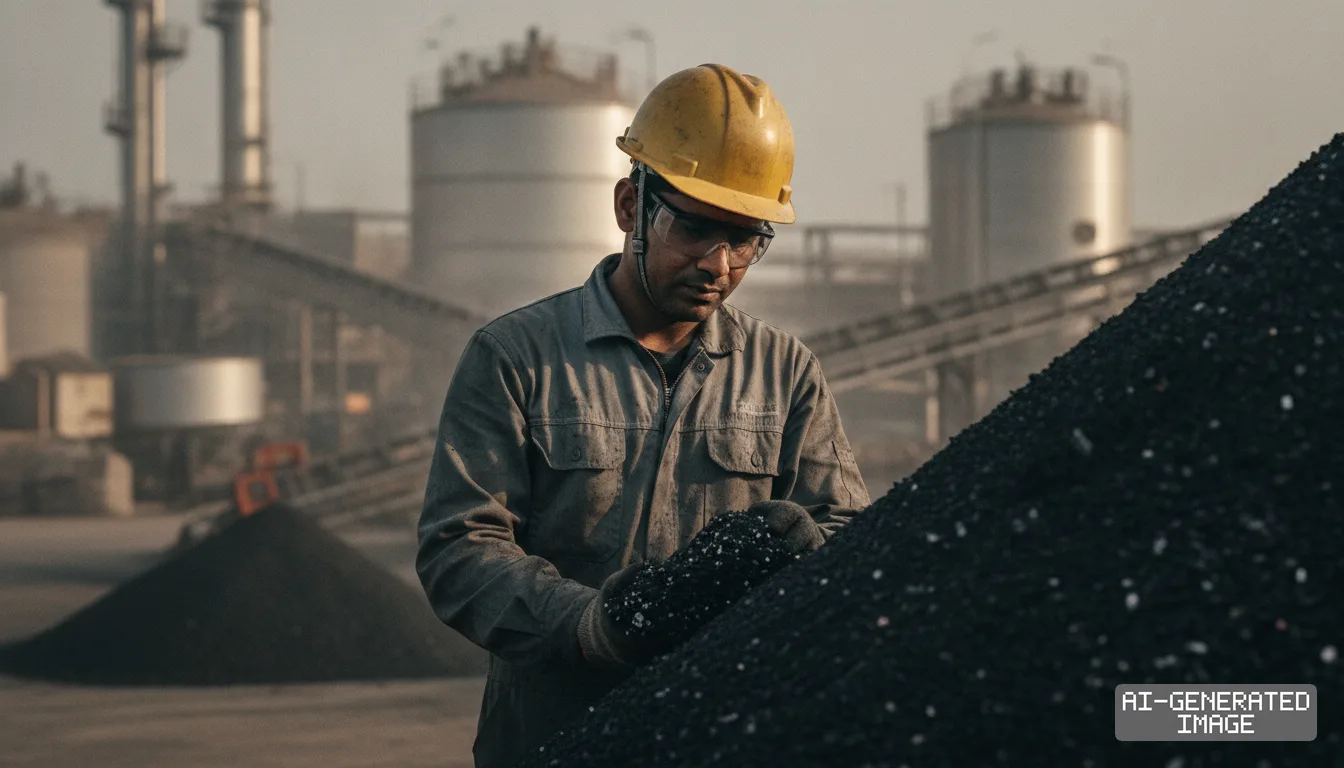
India's Ministry of Commerce and Industry tightened control over its battery supply chain on Nov. 29, 2026, enforcing a complete export ban on lithium-ion black mass to build domestic refining capacity.
The trade measure locks in raw material for local processing plants. India lacks commercial lithium and cobalt mines, leaving domestic electric vehicle manufacturing exposed to raw material supply shocks from dominant Chinese refiners.
The export prohibition halts outward shipments under trade code 85491400. That tariff line covers shredded waste and scrap of primary cells and electric accumulators containing recoverable amounts of lithium, cobalt and nickel.
The government backs this lockdown with a 15 billion rupee ($178 million) recycling incentive scheme. The Ministry of Mines approved 58 commercial entities under the initiative to build 850,000 metric tons of annual processing capacity.
Selected recycling firms pledged 50 billion rupees ($595 million) in private capital expenditure. The incentive framework grants capital subsidies covering up to 20% of equipment investments alongside production-linked operational incentives for five years.
India currently has roughly 75,500 metric tons of installed black mass refining capacity. However, domestic plants formally processed just 19,000 metric tons in 2025 because shredders exported unrefined black mass to East Asian hydrometallurgical processors.
Higher overseas spot bids regularly starved Indian hydrometallurgical plants of domestic feedstock. Refiners ran at depressed operating rates and occasionally imported scrap material from Europe and the Middle East to keep recovery circuits active.
LOHUM Cleantech operates 25,000 metric tons of annual battery processing capacity in Uttar Pradesh. The company ran lines at 70% to 75% utilization before the trade restriction took effect, the company said.
The company plans to expand its metal chemical output. It currently runs 1,000 metric tons of annual lithium refining capacity and targets a threefold increase in nickel chemical production to supply regional battery manufacturers.
Attero Recycling runs 16,500 metric tons of annual black mass refining capacity at its facilities. The processor announced plans to scale aggregate refining infrastructure to 60,000 metric tons over the next four years.
The company is committing 30 billion rupees ($357 million) toward critical mineral processing expansions. Roughly 40% of that capital spending will target lithium, nickel and cobalt chemical recovery, Chief Executive Nitin Gupta said.
Shredded black mass holds substantial recoverable metal content. A single metric ton of nickel-manganese-cobalt battery scrap yields roughly 36 kilograms of lithium, 241 kilograms of nickel and 30 kilograms of cobalt when treated through hydrometallurgical acid leaching.
Allowing unrefined black mass to leave domestic ports directly surrendered chemical refining value to foreign hubs. Retaining that scrap establishes a secondary domestic mineral reserve, the Ministry of Commerce and Industry said.
The trade restriction directly alters regional supply flows. Chinese and Southeast Asian chemical processors had relied on unrefined Indian scrap imports to supplement pyrometallurgical and hydrometallurgical smelting feeds at discounted collection prices.
Indian refiners must now prove they can deliver commercial volumes of battery-grade precursor salts. Less than 10% of chemical salts produced by Indian recyclers in 2025 achieved the chemical purity required by cathode manufacturers.
The export ban risks lowering domestic scrap collection prices in the near term. Independent shredding facilities that lack hydrometallurgical recovery lines now face a captive domestic market dominated by a handful of large chemical refiners.
To reinforce industrial absorption, the Union Cabinet cleared a separate 28.14 billion rupee ($335 million) capital support package on Nov. 4, 2026. That measure funds four large-scale domestic lithium and nickel refining installations.
The Ministry of Environment, Forest and Climate Change also tightened Extended Producer Responsibility rules for vehicle manufacturers. The revised rules enforce collection quotas equal to 70% of electric two-wheeler batteries sold three years prior.
Under transitional arrangements outlined in paragraph 1.05 of the Foreign Trade Policy 2023, export shipments backed by letters of credit registered before Nov. 10 must complete customs clearance by March 31, 2027.
The Directorate General of Foreign Trade has not published purity testing protocols for border customs audits. The agency has not settled how inspectors will differentiate unsorted battery scrap from semi-processed industrial metal salts.
The Ministry of Mines scheduled its first technical milestone audit for the 58 approved recycling projects on April 15, 2027. Recyclers must prove commercial chemical output at designated plant sites before claiming their initial disbursement.
Impact map
How this development propagates across the region and out to global buyers.
| Event | Korea | China | Japan | Global impact |
|---|---|---|---|---|
| India battery black mass export prohibition | Korean cathode producers face reduced merchant black mass imports from South Asia | Chinese hydrometallurgical processors lose unrefined Indian black mass feedstock supply | Japanese trading houses shift battery recycling sourcing toward Southeast Asian hubs | Battery recycling value chain pivots from cross-border scrap arbitrage to localized domestic chemical refining |
In this story
- Companies
- Attero RecyclingLOHUM Cleantech
- Policy
- Export ControlsSubsidies
- Impact
- Supply ChainCapex
Track every Export Controls development → Track every Subsidies development →
Related briefings
- India bans battery black mass exports under $180M recycling push Also on Attero Recycling, Lohum Cleantech, Export Controls
- USA Rare Earth slumps 27% as magnet unit posts $141M loss Also on Export Controls, Subsidies
- Japan's critical mineral sales hit 12.2B yen amid China export curbs Also on Export Controls, Subsidies
- Singapore pulls S$30B in semiconductor capital over three years Also on Export Controls, Subsidies
Sources
Reporting
Confidence: high — how we grade this
The documents behind this briefing are linked above. East Asia Brief produces its English text with AI assistance under human editorial review, and does not translate or republish other outlets' articles. See our methodology and AI policy. Spotted an error? Tell us.
The Morning Brief
What changed in Korean, Chinese and Japanese industry overnight — and what it means for your supply chain. One email, weekday mornings, US time. Free.
The Morning Brief is in preparation. Leave your address and we will write to you once — when the first issue is ready. Nothing before that.